

Phage Therapy vs Superbugs: The Future of Fighting Antibiotic Resistance
Antibiotic resistance is rising fast, turning once-treatable infections into life-threatening diseases. This in-depth article explains the global superbug crisis and explores phage therapy, a promising treatment that uses bacteriophages to target drug-resistant bacteria. Learn how phage therapy works, its advantages, challenges, real-world applications, and why it may become a key part of future medicine.
MODERN DISEASESSPACE/TECHHEALTH/DISEASEAI/FUTURE
Sachin K Chaurasiya
3/4/20264 min read
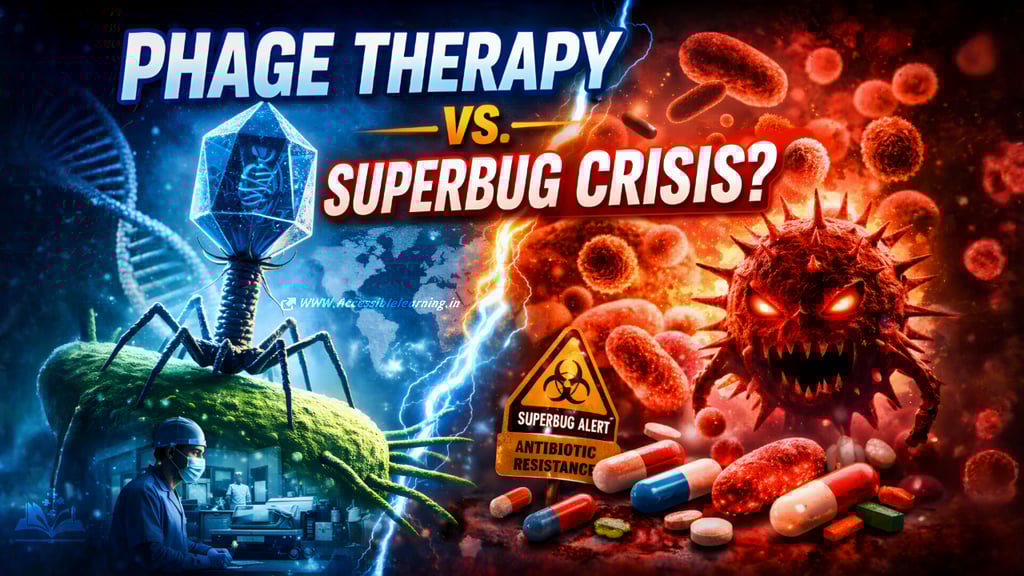
Antibiotics changed modern medicine. Simple infections stopped being deadly, surgeries became safer, and life expectancy improved. But bacteria are evolving resistance faster than we can develop new drugs. The result is a growing global emergency called the superbug crisis.
Phage therapy, which uses viruses that naturally kill bacteria, is now being explored as a serious alternative or companion to antibiotics. With new technology and urgent need, this century-old idea is gaining global attention again.
Understanding the Superbug Crisis
Superbugs are bacteria resistant to multiple antibiotics. Some common examples include drug-resistant tuberculosis, MRSA, and resistant strains of E. coli and Klebsiella.
Main Causes of Antibiotic Resistance
1. Overprescription in healthcare
Antibiotics are often given for viral infections, where they do not work.
2. Incomplete treatment courses
Stopping antibiotics early allows stronger bacteria to survive.
3. Agricultural overuse
Livestock are routinely given antibiotics, speeding resistance.
4. Poor sanitation and hygiene
Infections spread easily in crowded hospitals or communities.
5. Global travel
Resistant bacteria spread quickly across countries.
6. Lack of new antibiotics
Drug development is slow, expensive, and less profitable.
Impact on Society
Longer hospital stays
Higher medical costs
Increased death rates
Dangerous routine surgeries
Risk to cancer therapy and organ transplants
Experts warn that antibiotic resistance could cause millions more deaths annually by 2050 if no action is taken.
What Is Phage Therapy?
Phage therapy uses bacteriophages, viruses that infect and destroy specific bacteria while leaving human cells untouched.
How Phages Kill Bacteria
Attach to the bacterial surface
Inject genetic material
Multiply inside the cell
Burst the bacterium open
This natural process has existed for billions of years.
Types of Phages
Lytic phages – Immediately destroy bacteria and are used in therapy.
Lysogenic phages – Insert DNA into bacteria and are usually avoided in treatment.
History of Phage Therapy
Discovered in 1917
Used widely before antibiotics
Declined after penicillin
Continued in Eastern Europe
Revived due to antibiotic resistance
Today, research is active in the US, UK, India, and Europe.


Where Phage Therapy Can Be Used
Phage therapy has potential in many areas:
Hospital-acquired infections
Burn and wound infections
Diabetic ulcers
Lung infections in cystic fibrosis
Drug-resistant tuberculosis
Dental infections
Urinary tract infections
Food contamination control
Agriculture and livestock health
Phages are also studied for disinfecting medical equipment and water systems.
Advantages of Phage Therapy
Highly targeted: Kills only harmful bacteria.
Effective against resistant strains: Works where antibiotics fail.
Self-limiting: Phages disappear when bacteria are gone.
Lower side effects: Protects beneficial gut bacteria.
Biofilm penetration: Can break down protective bacterial layers on implants or wounds.
Adaptability: Phages evolve alongside bacteria.
Combination therapy: Works with antibiotics to improve results.
Limitations and Challenges
Phage therapy still faces real obstacles.
Narrow targeting: Doctors must identify the exact bacteria first.
Regulatory complexity: Phages are living organisms, making approval harder.
Immune system response: The body may neutralize phages.
Manufacturing standards: Producing stable and safe phage cocktails is complex.
Limited clinical trials: More large-scale studies are needed.
Storage and delivery: Phages must remain active in different environments.
Safety and Ethical Questions
Researchers are studying:
Long-term safety
Environmental impact
Gene transfer between bacteria
Quality control in phage banks
Personalized treatment approval
Clear global guidelines are still developing.
Modern Innovations in Phage Therapy
New technology is accelerating progress.
Genetically engineered phages: Designed to target resistant bacteria.
AI-based phage discovery: Machine learning helps identify effective phages quickly.
Phage libraries: Large collections ready for rapid treatment.
Phage-antibiotic synergy: Using both together for stronger results.
CRISPR-enhanced phages: Engineered to disable bacterial resistance genes.
Nanotechnology delivery systems: Helping phages reach deep infections.
Real-World Success Stories
Phage therapy has saved patients with untreatable infections, including:
Chronic bone infections
Severe burn wound infections
Drug-resistant lung infections
Hospitals in Georgia and Poland have used phage therapy for decades, and experimental treatments in Western countries are showing promising results.


Why Phage Therapy Is Not Yet Common
Despite promise, phage therapy is still rare because:
Antibiotics were easier to mass-produce
Pharmaceutical companies have limited incentives
Personalized phage therapy is complex
Regulatory systems are designed for chemical drugs
As resistance grows, interest in phage therapy is increasing rapidly.
The Future of Fighting Superbugs
Phage therapy will likely be part of a combined strategy that includes:
Responsible antibiotic use
Vaccines to prevent infections
Better hospital hygiene
Rapid diagnostic testing
New antibiotic discovery
Public awareness campaigns
Phages alone will not solve the crisis, but they may become a key tool.
The superbug crisis threatens modern medicine, but phage therapy offers a powerful and natural alternative. Using viruses to fight bacteria may sound unusual, yet it is based on biological systems older than humanity itself.
With continued research, regulation, and global cooperation, phage therapy could help prevent a future where common infections become untreatable. It may not replace antibiotics, but it could become one of the most important weapons we have against drug-resistant bacteria.
FAQ's
Q: What is phage therapy in simple terms?
Phage therapy is a treatment that uses special viruses called bacteriophages to kill harmful bacteria. These viruses target specific bacteria without harming human cells.
Q: Why are superbugs such a serious problem?
Superbugs are bacteria that resist multiple antibiotics. They make infections harder to treat, increase hospital stays, raise medical costs, and can turn routine surgeries into risky procedures.
Q: Is phage therapy safe for humans?
Early studies and clinical use in some countries show good safety results. However, more large-scale clinical trials are needed before it becomes widely approved worldwide.
Q: Can phage therapy replace antibiotics completely?
No. Most experts believe phage therapy will work alongside antibiotics. Using both together may be the most effective way to fight resistant infections.
Q: Why isn’t phage therapy widely available yet?
There are regulatory challenges, limited clinical trials, and the need for personalized treatments. Pharmaceutical companies also invested more in antibiotics historically.
Q: Do bacteria become resistant to phages too?
Yes, bacteria can develop resistance to phages. But scientists can discover new phages quickly, and phages can evolve naturally to keep up with bacteria.
Q: How is phage therapy given to patients?
It depends on the infection. Phages can be applied as creams, taken orally, injected, inhaled for lung infections, or used in wound dressings.
Q: Which infections could phage therapy treat?
Possible uses include hospital infections, diabetic wounds, lung infections, urinary tract infections, burn wounds, and drug-resistant tuberculosis.
Q: Are phages natural organisms?
Yes. Phages are the most abundant biological entities on Earth. They exist naturally in soil, water, and even inside the human body.
Q: When could phage therapy become common in hospitals?
If ongoing research continues to show strong results, phage therapy could become more widely available within the next decade, especially for drug-resistant infections.
Subscribe to Frontier Intelligence
All © Copyright reserved by Accessible-Learning Hub
| Terms & Conditions
Accessible Learning Hub — Actionable clarity for high-agency minds.
Weekly breakdowns on AI breakthroughs, capital flow, and human performance systems. Zero fluff.