

Palio di Siena: The Historic Bareback Horse Race That Defines Siena's Identity
Discover Palio di Siena, Italy's legendary bareback horse race held in Siena's Piazza del Campo. Explore its history, Contrade rivalries, traditions, travel tips, visitor guidelines, and cultural significance.
EVENT/SPECIALTRAVEL LIFEFRANCE
Anastasia
6/23/20266 min read
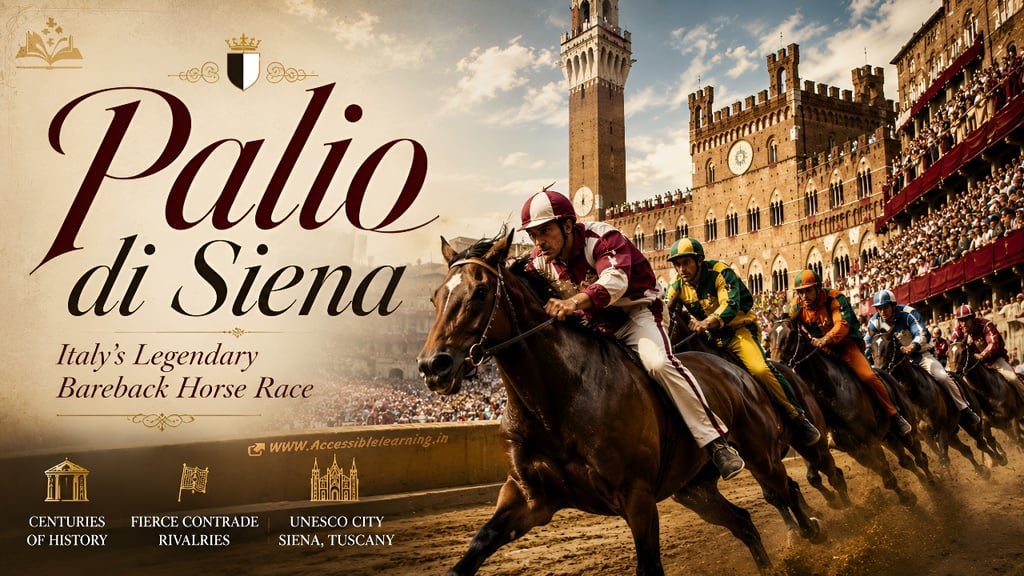
The Palio di Siena is not simply a horse race. It is one of the oldest and most intense cultural traditions in Europe, a centuries-old competition that transforms the medieval city of Siena into a stage of passion, rivalry, strategy, and civic pride.
Held twice every year in the heart of Tuscany, the Palio attracts visitors from around the world who come to witness ten riders racing bareback around the historic Piazza del Campo. What appears to be a race lasting less than two minutes is actually the climax of months of preparation and centuries of tradition.
Unlike modern sporting events focused on athletes and commercial sponsorships, the Palio is about community identity. Neighborhoods compete not for money but for honor. Winning can define local pride for years, while losing can fuel rivalries that have existed for generations.
For travelers seeking authentic Italian culture beyond famous landmarks and vineyards, few experiences are as powerful, emotional, or unforgettable as the Palio di Siena.
What Is the Palio di Siena?
The Palio di Siena is a historic bareback horse race held in Siena, a medieval city in Tuscany, Italy.
The race takes place in Piazza del Campo, Siena's iconic shell-shaped central square. Riders race three laps around a temporary dirt track laid over the stone pavement of the square.
The event is organized between Siena's traditional districts, known as Contrade.
There are 17 Contrade in total, but only 10 compete in each race.
The word "Palio" refers to the silk banner awarded to the winning Contrada. While the banner itself is valuable, its symbolic importance is far greater than any material reward.
Where Is Siena?
Siena is located in Tuscany, central Italy, approximately 70 kilometers south of Florence.
Known for its Gothic architecture, winding medieval streets, and UNESCO World Heritage status, Siena preserves much of its historic character.
The city becomes especially vibrant during Palio season when colorful flags, parades, and celebrations fill every corner.
History of the Palio di Siena
The origins of the Palio date back to the medieval period.
Horse competitions existed in Siena as early as the 13th century. However, the modern version of the race is generally traced to 1633, making it one of the world's oldest continuously celebrated sporting traditions.
Throughout the centuries, political changes, wars, and modernization transformed Italy, but the Palio survived.
The race remains deeply rooted in local identity because it represents more than entertainment. It symbolizes loyalty to one's neighborhood, family heritage, and collective history.
Many Sienese citizens inherit Contrada membership from birth and maintain that connection throughout their lives.
The Contrade: The Heart of the Competition
The true stars of the Palio are not the horses or riders. They are Siena's 17 Contrade. Each Contrada functions like a small community with its own:
Symbol
Colors
Museum
Church
Traditions
Leadership
Social activities
The 17 Contrade are:
Aquila (Eagle)
Bruco (Caterpillar)
Chiocciola (Snail)
Civetta (Owl)
Drago (Dragon)
Giraffa (Giraffe)
Istrice (Porcupine)
Leocorno (Unicorn)
Lupa (She-Wolf)
Nicchio (Seashell)
Oca (Goose)
Onda (Wave)
Pantera (Panther)
Selva (Forest)
Tartuca (Tortoise)
Torre (Tower)
Valdimontone (Ram)
Each district has allies and rivals, creating strategic alliances that influence race tactics. The rivalries are often centuries old and can become extremely emotional during race season.
When Does the Palio Take Place?
The Palio is held twice annually:
Palio di Provenzano
July 2
Palio dell'Assunta
August 16
A third race may occasionally be organized for special historical celebrations, but the July and August races are the traditional events. Each race honors a different religious dedication and includes ceremonies connected to Siena's cultural and spiritual heritage.
How the Race Works
The race itself is surprisingly short. After days of preparations and qualifying events, ten horses line up at the starting rope.
The race consists of:
Three laps
Around 90 seconds in duration
Bareback riding
Sharp turns
High-speed competition
One of the most unique rules is that a horse can win even if its rider falls off. As long as the horse crosses the finish line first, the Contrada is declared the winner. This rule often creates dramatic and unpredictable outcomes.
The Importance of the Horses
While jockeys receive significant attention, many locals believe the horse is the true champion.
Horses are selected through a lottery system and assigned to competing Contrade.
This system aims to reduce competitive imbalance and preserve fairness.
Before the race, horses receive blessings in Contrada churches, a tradition that combines faith and local culture.
The famous blessing often concludes with a phrase wishing the horse a victorious return.
The Spectacular Historical Pageant
Before the race begins, thousands gather to watch a magnificent historical procession. Participants wear elaborate medieval costumes representing Siena's past.
The parade includes:
Flag throwers
Drummers
Noble costumes
Historical banners
Ceremonial guards
This pageant is not merely entertainment. It reinforces Siena's connection to its medieval heritage and reminds spectators that the Palio is deeply intertwined with the city's history.
Why the Palio Is So Intense
Visitors are often surprised by the emotional atmosphere. For residents, the Palio is not a tourist attraction. It is personal. Families may support the same Contrada for generations.
Winning can lead to celebrations lasting for weeks, while losing to a rival Contrada can be deeply disappointing.
The emotional investment creates an atmosphere unlike most sporting events. People cheer, cry, sing, celebrate, and sometimes argue passionately over outcomes.
Understanding this intensity helps visitors appreciate why the Palio remains such an important cultural institution.

Controversies and Criticism
The Palio has also faced criticism, particularly regarding horse welfare. Over the years, concerns have been raised about:
High-speed racing conditions
Sharp corners
Rider falls
Horse injuries
Organizers have introduced numerous safety measures, including:
Improved track surfaces
Enhanced veterinary oversight
Medical monitoring
Safety barriers
The debate continues, reflecting broader discussions about tradition and animal welfare. Visitors should be aware that opinions on the event can vary significantly.
Cultural Significance of the Palio
The Palio survives because it remains meaningful to local communities.
It serves as:
A symbol of civic identity
A living historical tradition
A community-building institution
A cultural heritage event
Unlike festivals recreated for tourists, the Palio exists primarily for the people of Siena themselves. This authenticity is one reason it fascinates visitors from around the world.
Travel Guide: Visiting the Palio di Siena
Best Time to Visit
Plan your trip around:
July 2 race
August 16 race
Arrive several days early to experience:
Trial races
Contrada celebrations
Historical events
City decorations
The days before the race often provide a richer cultural experience than the race itself.
How to Get to Siena
From Florence:
Train: Approximately 1.5 hours
Bus: Approximately 1 hour 15 minutes
Car: Around 75 minutes
From Rome:
Train and regional connections
Car: Approximately 3 hours
Public transportation is generally recommended during Palio season due to heavy crowds.
Where to Watch the Race
Inside Piazza del Campo
Standing in the center offers the most immersive experience.
Pros:
Maximum atmosphere
Closest view of action
Cons:
Extremely crowded
Limited movement
Hours of waiting
Grandstand Seats
Reserved seating around the square.
Pros:
Better visibility
More comfort
Cons:
Expensive
Must be booked far in advance
Balcony Views
Some private residences and businesses rent viewing spaces.
Pros:
Excellent views
Comfortable experience
Cons:
Very costly
Essential Travel Tips
Arrive Early
The city becomes crowded quickly.
Arrive several days before race day for accommodations and better viewing opportunities.
Book Accommodation Months Ahead
Hotels often sell out long before July and August races.
Reserve accommodations as early as possible.
Wear Comfortable Shoes
Siena's streets are steep, narrow, and paved with stone.
Walking is unavoidable.
Carry Water
Summer temperatures in Tuscany can be very high.
Stay hydrated while exploring the city.
Respect Local Traditions
Remember that this is a cultural event, not merely a tourist attraction. Be respectful during:
Religious ceremonies
Contrada celebrations
Historical processions
Learn About the Contrade
Understanding the districts adds significant meaning to the experience.
Visit Contrada museums and observe local traditions whenever possible.

Visitor Guidelines
To enjoy the Palio responsibly:
Do:
Follow local instructions
Respect barriers and restricted areas
Arrive early
Stay aware of crowd movement
Respect cultural customs
Don't:
Push through crowded areas
Block local processions
Interfere with race preparations
Climb unauthorized structures
Treat Contrada rivalries as a joke
Understanding local sensitivities helps create a more rewarding experience.
Frequently Asked Questions
Q: How long does the Palio race last?
The actual race usually lasts around 90 seconds.
Q: Why do riders race bareback?
Bareback riding is part of the historic tradition and adds to the challenge.
Q: Can a horse win without a rider?
Yes. A riderless horse can still win if it crosses the finish line first.
Q: How many Contrade exist?
There are 17 Contrade in Siena.
Q: How many compete in each race?
Ten Contrade compete in each Palio.
Q: Is the Palio suitable for tourists?
Yes, but visitors should understand that it is a serious cultural tradition rather than a staged performance.
The Palio di Siena is one of the world's most remarkable surviving medieval traditions. It combines history, civic pride, religious customs, intense competition, and community identity into a spectacle unlike any other.
The race itself may last less than two minutes, but its significance stretches across centuries. To truly understand the Palio, visitors must look beyond the horses and crowds and recognize what it represents: the enduring spirit of Siena and the fierce loyalty of its Contrade.
For travelers seeking an authentic cultural experience in Italy, the Palio di Siena offers something increasingly rare in the modern world, a living tradition that remains as meaningful today as it was hundreds of years ago.
Subscribe To Our Newsletter
All © Copyright reserved by Accessible-Learning Hub
| Terms & Conditions
Knowledge is power. Learn with Us. 📚

