

Omizutori Festival Guide: History, Rituals, and Meaning of Nara’s Sacred Fire Ceremony
Discover the history, rituals, and spiritual meaning of Omizutori, Japan’s 1,250-year-old fire and water ceremony at Todai-ji in Nara. Learn about torch processions, sacred water rites, travel tips, and cultural significance in this complete guide.
CULTURE/TRADITIONEVENT/SPECIALTRAVEL LIFECELEBRATION/FESTIVALSJAPAN
Kim Shin
2/22/20265 min read
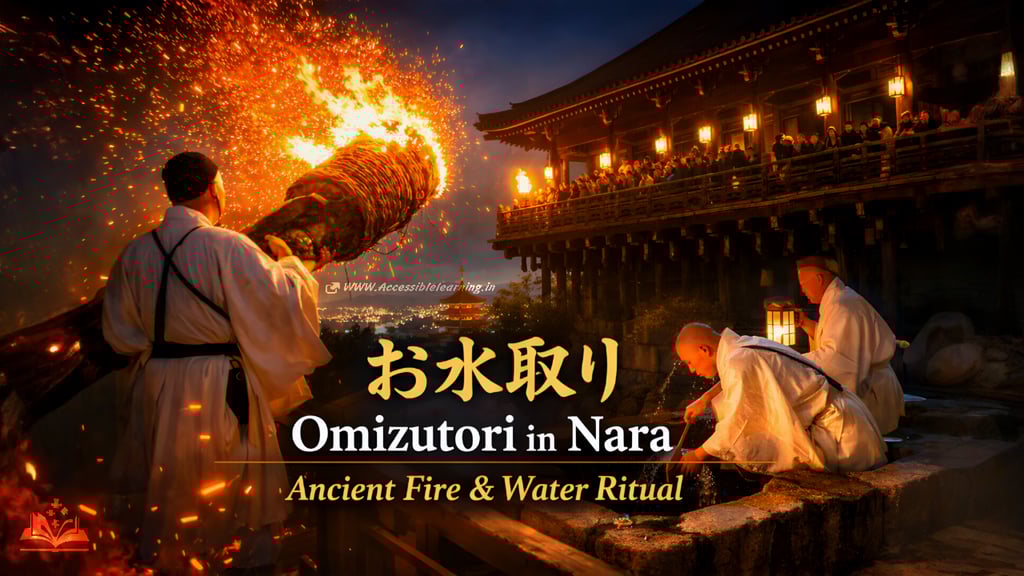
Every spring in Nara, flames rise into the night sky from the wooden balcony of Nigatsu-do Hall at Todai-ji Temple. Monks move through darkness with giant torches, sparks fall like shooting stars, and prayers echo across the hills. This is Omizutori, the final ceremony of the Buddhist ritual Shuni-e and one of Japan’s oldest continuous traditions.
Omizutori blends drama and devotion. It is not just a festival to watch. It is a spiritual practice about repentance, purification, and renewal for all humanity.
What Omizutori Means
The word "Omizutori" literally means “water drawing.” It refers to the sacred water ceremony held late at night on March 12–13. But Omizutori is only one part of the larger Shuni-e observance, which lasts from March 1 to March 14 every year.
Key Elements of the Ritual
Fire torches carried nightly
Buddhist repentance prayers
Sacred water drawn from a holy spring
Silent meditation and chanting
Together, these symbolize purification of body, mind, and society.
The Origins of Omizutori
Omizutori began in 752 CE during the Nara period. The monk Jitchu established Shuni-e under Emperor Shomu, who built Todai-ji to protect the nation spiritually.
According to legend, deities from all over Japan were invited to attend the ritual. One god arrived late and offered sacred water from a miraculous spring. That moment became Omizutori. Since then, monks have performed the ceremony every year without interruption. Even wars, fires, and earthquakes did not stop it.
The Torch Ceremony: Otaimatsu
Each evening during Shuni-e, huge pine torches called Otaimatsu are lit and carried along Nigatsu-do’s balcony.
Why the Sparks Are Important
People gather below because falling sparks are believed to bring:
Protection from illness
Good fortune
Blessings for the coming year
The biggest torches appear on March 12, when flames shoot high and crowds reach their peak.
Physical Details of the Torches
Length: up to 8 meters
Weight: up to 40–50 kg
Made from pine branches tied tightly
Carried by temple attendants
The sparks lighting the ancient hall create one of Japan’s most famous festival scenes.


The Sacred Water Ceremony
Late on March 12–13, monks draw water from a sacred well called Wakasa-i beneath Nigatsu-do. This moment is quiet and hidden from most spectators.
Meaning of the Water
Spiritual cleansing
Forgiveness
Renewal of life
Blessings for future generations
The water is stored carefully and used in rituals for years, symbolizing continuity.
The Structure of Shuni-e
Omizutori is only the final stage of Shuni-e. The two-week ritual includes many hidden practices.
Major Components
Keka (Repentance Rituals)
Monks confess humanity’s sins through chanting.Shomyo Chanting
Traditional Buddhist hymns performed late at night.Running Monks Ceremony
Monks move quickly between halls carrying sacred objects.Otaimatsu Torch Nights
Public torch processions.Omizutori Water Drawing
Final purification.
Each part represents humility and compassion.
Spiritual Philosophy Behind Omizutori
Omizutori follows Buddhist teachings about self-reflection.
Core Ideas
Humans make mistakes
Repentance brings wisdom
Fire burns away impurity
Water renews life
Prayer heals the world
Monks pray not just for Japan but for all living beings.
Cultural Importance in Japan
Omizutori marks the coming of spring in Japan. In Nara, people say winter ends after Omizutori. Artists, poets, and filmmakers often use its glowing torches as symbols of renewal. It also shows how Japan protects ancient traditions while living in modern times.
Architectural Importance of Nigatsu-do Hall
Nigatsu-do is a wooden hall rebuilt in 1669 after a fire. It sits on a hill overlooking Nara city. Features include:
Long wooden balcony for torch processions
Traditional Kakezukuri stage construction
Stone lantern paths
Views of Nara Park and Todai-ji
The hall itself is part of the ritual’s beauty.
The Role of Monks in Omizutori
The monks of Todai-ji’s Kegon Buddhist school train for years to perform Shuni-e. Their duties include:
Fasting and purification
Chanting through the night
Carrying sacred torches
Drawing water secretly
They follow strict discipline to maintain the ritual’s purity.
Why Omizutori Has Never Been Cancelled
Many Japanese traditions were interrupted by war or disaster, but Omizutori continued. Reasons include:
Deep national respect for Todai-ji
Strong Buddhist community
Cultural protection laws
Local support from Nara residents
Even during World War II, the ritual continued quietly.
Visiting Omizutori Today
Best Nights
March 1–14 every year
March 12 is the biggest torch event
Travel Tips
Arrive before sunset
Expect large crowds
Wear warm clothes
Walk carefully on stone paths
The ceremony is free to watch, but respect the sacred atmosphere.

Lesser-Known Facts About Omizutori
The ritual began over 1,250 years ago
Some prayers are unchanged since the 8th century
Only selected monks see the water drawing
Sparks rarely hurt spectators because attendants guide torches carefully
Nigatsu-do means “Hall of the Second Month,” referring to the old lunar calendar
These details show the ritual’s depth.
Omizutori in the Modern World
Today, Omizutori is broadcast online and studied by historians, yet its core remains unchanged. It reminds people of something simple: pause, reflect, purify, begin again. In a busy world, that message feels more important than ever.
Why Omizutori Captivates Visitors
People from around the world travel to Nara to see Omizutori because it offers something rare:
Real ancient tradition
Powerful visual spectacle
Deep spiritual meaning
Quiet reflection after excitement
Standing under falling sparks feels both thrilling and peaceful.
Omizutori is more than fire and water. It is a bridge across centuries. From Emperor Shomu’s time to today, monks still walk the same path with burning torches and whispered prayers. It reminds us that renewal is always possible. And in the glow of Omizutori’s sparks, the past still speaks to the present.
FAQs
Q: What is Omizutori?
Omizutori is a sacred Buddhist ritual held every March at Todai-ji Temple’s Nigatsu-do Hall in Nara, Japan.
It is the final ceremony of Shuni-e, a repentance ritual that has been performed continuously for more than 1,250 years.
Q: When does Omizutori take place?
The full Shuni-e observance runs from March 1 to March 14 every year.
The most famous night is March 12, when the largest torches are lit.
Q: Why are giant torches used during Omizutori?
The torches, called Otaimatsu, symbolize purification.
People believe sparks falling from them bring:
Good luck
Health
Protection from misfortune
The fire also represents burning away sins.
Q: What happens during the water-drawing ceremony?
Late at night on March 12–13, monks draw sacred water from a holy well under Nigatsu-do Hall.
This water represents spiritual cleansing and renewal and is stored for future rituals.
Q: Is Omizutori safe to watch?
Yes. Temple attendants carefully guide the torches.
While sparks fall, serious injuries are extremely rare. Still, visitors should follow safety instructions and stand where directed.
Q: Why is Omizutori important in Japanese culture?
Omizutori is one of Japan’s oldest living traditions.
It marks the coming of spring and reflects Buddhist teachings about repentance, compassion, and renewal.
Q: Has Omizutori ever been cancelled?
No. Since it began in 752 CE under Emperor Shomu, it has continued every year without interruption, even during wars and disasters.
Q: Can tourists attend Omizutori?
Yes, visitors are welcome. The torch ceremony is open to the public and free to watch.
However, the water-drawing part is private and performed only by monks.
Q: What is the best way to experience Omizutori?
Arrive early for a good spot
Wear warm clothes
Respect silence during prayers
Avoid flash photography
Watching from below Nigatsu-do Hall gives the best view of the sparks.
Q: What makes Omizutori unique compared to other festivals?
Omizutori combines dramatic fire displays with quiet spiritual rituals.
Its uninterrupted history, deep Buddhist meaning, and powerful atmosphere make it one of Japan’s most special ceremonies.
Subscribe to Frontier Intelligence
All © Copyright reserved by Accessible-Learning Hub
| Terms & Conditions
Accessible Learning Hub — Actionable clarity for high-agency minds.
Weekly breakdowns on AI breakthroughs, capital flow, and human performance systems. Zero fluff.