

Ogoh-Ogoh Parades Explained: Meaning, History, and Bali’s Sacred Monster Festival
Discover the meaning, history, rituals, and artistry behind Bali’s Ogoh-Ogoh Parades. Learn how these giant demon statues prepare the island for Nyepi and reflect Balinese culture, spirituality, and community life.
CULTURE/TRADITIONINDONESIACELEBRATION/FESTIVALS
Kim Shin
3/7/20267 min read
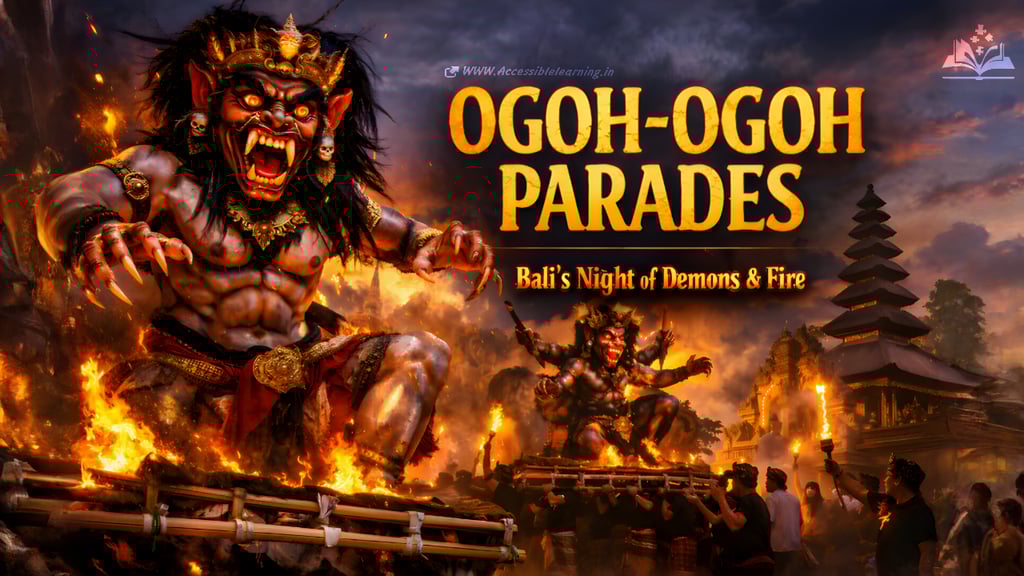
Ogoh-Ogoh Parades are one of Bali’s most dramatic and meaningful cultural traditions. Held on the evening before Nyepi, the Balinese Day of Silence, these giant demon statues are carried through the streets in loud, vibrant processions and then burned in symbolic purification rituals. While they may look like festival floats, Ogoh-Ogoh carry deep spiritual, artistic, and social meaning that connects Balinese Hindu beliefs, community life, and centuries-old storytelling.
This article explores the history, meaning, craftsmanship, rituals, and modern evolution of Ogoh-Ogoh parades in depth.
What Are Ogoh-Ogoh Parades?
Ogoh-Ogoh are giant papier-mâché statues built to represent evil spirits, negative energy, or mythological demons. On the night before Nyepi, called Pengrupukan, communities parade these statues through villages accompanied by traditional music, fire torches, chanting, and loud noise meant to scare away harmful spirits.
After the parade, most Ogoh-Ogoh are burned. This ritual symbolizes cleansing the world of negativity before Nyepi, a day devoted to silence, reflection, and spiritual reset.
In simple terms, Ogoh-Ogoh Parades are:
A spiritual purification ritual
A community art competition
A cultural celebration
A dramatic street performance
The Spiritual Meaning Behind Ogoh-Ogoh
Ogoh-Ogoh Parades are rooted in Balinese Hindu philosophy. In this belief system, balance between good and evil is essential. Humans must constantly work to maintain harmony between positive and negative forces in the universe.
Ogoh-Ogoh represent Bhuta Kala, chaotic spirits that disturb balance. By parading and burning them, communities symbolically remove harmful energy from the environment.
Key spiritual themes include:
Purification before Nyepi: cleansing the world before a day of silence
Balance of good and evil: acknowledging negative forces without ignoring them
Community karma: collective action to create harmony
Transformation: turning fear and negativity into spiritual renewal
The loud noises, fire, and movement are believed to confuse or drive away bad spirits before Nyepi begins.
Connection to Nyepi: Bali’s Day of Silence
Ogoh-Ogoh Parades cannot be understood without Nyepi. Nyepi is one of Bali’s most sacred days. For 24 hours, the entire island becomes silent. No flights land, streets are empty, lights are off, and people stay home for meditation.
The sequence is important:
Melasti – purification rituals at the sea
Ogoh-Ogoh Parade – expelling negative spirits
Nyepi – silence and reflection
Without the Ogoh-Ogoh ritual, Nyepi would lack its symbolic cleansing phase.
History of Ogoh-Ogoh Traditions
Many people assume Ogoh-Ogoh are ancient, but the parade tradition is relatively modern. While Balinese demon imagery and purification rituals are centuries old, public Ogoh-Ogoh parades became widespread in the 1980s.
This growth happened after Indonesia officially recognized Nyepi as a national holiday. Youth organizations called banjar began building giant statues as part of community celebrations.
Since then, Ogoh-Ogoh culture has evolved into an important artistic tradition and tourism attraction.


How Ogoh-Ogoh Statues Are Made
Creating an Ogoh-Ogoh is a major community project that can take weeks or months. Local youth groups design, build, and decorate the statues using traditional and modern techniques.
Materials Used
Bamboo frames
Styrofoam or papier-mâché
Cloth and paint
Wood supports
LED lights and mechanical parts (modern additions)
Design Themes
Common Ogoh-Ogoh characters include:
Hindu demons from epics like the Ramayana
Mythological creatures
Social satire figures
Corrupt politicians or modern villains
Environmental destruction symbols
This mix of tradition and commentary makes each parade unique every year.
The Night of the Parade: What Happens?
On Pengrupukan evening, streets fill with energy. Villagers dress in ceremonial clothing while gamelan orchestras play loud, rhythmic music.
The parade usually includes:
Youth carrying Ogoh-Ogoh on bamboo platforms
Torch flames and fireworks
Traditional dance performances
Loud noise-making to scare spirits
Community gatherings and food stalls
At the end, statues are burned or destroyed. Some villages keep them for competitions, but most follow the purification tradition. The atmosphere is both joyful and intense, mixing fear, laughter, art, and spirituality in one powerful experience.
Community and Social Importance
Ogoh-Ogoh Parades are not only religious events. They strengthen social bonds in Balinese villages.
Community Benefits
Youth teamwork and creativity
Cultural education for children
Local pride and identity
Fundraising and shared celebration
Artistic skill development
Building an Ogoh-Ogoh teaches sculpture, painting, engineering, and storytelling. It is like a cultural workshop for the entire village.
Tourism and Global Attention
Ogoh-Ogoh Parades attract visitors from around the world. Cities like Denpasar, Ubud, and Kuta host some of the most elaborate displays.
Tourists are drawn by:
Massive monster statues
Nighttime torch parades
Unique Balinese culture
Festival photography opportunities
The rare experience before Nyepi silence
However, visitors must respect local customs. Loud celebrations stop once Nyepi begins, and tourists are expected to stay inside hotels during the silent day.
Modern Changes and Creative Evolution
Today, Ogoh-Ogoh designs have become more complex. Some statues include moving parts, lights, and sound effects. Artists experiment with modern themes like climate change, technology addiction, and social issues. Despite innovation, villages still keep the core meaning of purification and spiritual balance.
Recent trends include:
Eco-friendly materials instead of Styrofoam
Giant mechanical sculptures
Digital design planning
Cultural competitions between villages
This shows how tradition adapts while keeping its soul.
When and Where to See Ogoh-Ogoh Parades
Ogoh-Ogoh Parades happen annually across Bali on the night before Nyepi, usually in March or April depending on the Balinese calendar.
Popular viewing areas include:
Denpasar town squares
Ubud village streets
Kuta and Legian main roads
Local banjar community parades
The best experience is often in smaller villages where the tradition feels more personal and authentic.
Cultural Etiquette for Visitors
If you plan to watch an Ogoh-Ogoh Parade, remember these tips:
Dress respectfully
Follow local instructions
Avoid touching statues
Do not block processions
Respect Nyepi silence the next day
Balinese communities welcome visitors who show respect and curiosity.
Why Ogoh-Ogoh Parades Matter Today
In a modern world filled with stress and conflict, Ogoh-Ogoh Parades offer a powerful reminder. Communities come together to face negativity, transform it into art, and release it through ritual. They show how culture can heal fear through creativity, unity, and spiritual meaning. Ogoh-Ogoh Parades are not just about giant monsters. They are about balance, renewal, and hope.


Regional Variations Across Bali
While Ogoh-Ogoh Parades happen across Bali, each region has its own style and personality. In Denpasar, parades are often massive with competitive artistic displays and large crowds. Ubud parades focus more on traditional storytelling and craftsmanship. Smaller villages create deeply spiritual and community-centered processions where everyone participates.
These regional differences make every Ogoh-Ogoh season unique and reflect the diversity within Balinese culture.
Music, Dance, and Performance Elements
Ogoh-Ogoh Parades are not silent marches. They are full performances that include traditional Balinese gamelan orchestras, drums, cymbals, and chants. The rhythm grows louder and faster as the statue moves through the streets.
Traditional dance groups often perform scenes from Hindu epics. Some villages create theatrical moments where dancers act out battles between good and evil. These performances make the parade both educational and entertaining.
Economic and Artistic Impact
Ogoh-Ogoh Parades support local economies and artists. Craftsmen, painters, musicians, costume makers, and food vendors all benefit from the season.
Key impacts include:
Temporary jobs for local artists
Tourism income for hotels and restaurants
Cultural preservation funding
Skill development for young creators
Many professional Balinese sculptors began their careers building Ogoh-Ogoh statues as teenagers.
Environmental Concerns and Eco-Friendly Changes
Traditional Ogoh-Ogoh sometimes used Styrofoam and plastic, which created waste when burned. Today, many villages are switching to bamboo, paper pulp, and natural dyes.
Eco-friendly Ogoh-Ogoh movements encourage:
Recyclable materials
Smaller statues
Reusable structures
Community clean-up programs after parades
This shows how Balinese culture adapts responsibly while keeping traditions alive.
Step-by-Step Timeline of the Ogoh-Ogoh Season
Understanding the preparation process shows how important these parades are to local communities.
Concept Design – Youth groups brainstorm themes and sketch ideas.
Fundraising – Villagers donate money or materials.
Building Phase – Frames are built with bamboo and layered with paper or foam.
Painting and Decoration – Artists add color, clothing, and details.
Music Practice – Gamelan groups rehearse for weeks.
Pengrupukan Night Parade – Statues are carried through the village.
Burning Ceremony – Symbolic destruction of negative energy.
Nyepi Day of Silence – Reflection and spiritual reset.
This timeline shows how Ogoh-Ogoh Parades are months of preparation for one powerful night.
Ogoh-Ogoh Parades are one of the most striking cultural traditions in the world. They combine myth, community art, spiritual belief, and dramatic performance into a single unforgettable night.
Understanding Ogoh-Ogoh means understanding Bali’s philosophy of balance, respect for unseen forces, and the power of community creativity.
Whether you are a traveler, artist, historian, or cultural enthusiast, Ogoh-Ogoh Parades offer a rare glimpse into how tradition and modern life can live together in harmony.
FAQ's
Q: Why are Ogoh-Ogoh statues made to look scary?
Ogoh-Ogoh are designed to represent negative forces, evil spirits, and chaos in Balinese Hindu belief. Their frightening appearance reminds people of inner fears, bad habits, and destructive energy that must be purified before Nyepi.
Q: Do all Ogoh-Ogoh get burned after the parade?
Most villages burn their Ogoh-Ogoh to symbolize cleansing and renewal. However, some statues are kept for competitions, exhibitions, or cultural documentation, especially those with exceptional craftsmanship.
Q: How big can an Ogoh-Ogoh statue be?
Some Ogoh-Ogoh reach over 20 feet tall and weigh hundreds of kilograms. Large statues often require dozens of people to carry them through the streets on bamboo platforms.
Q: Can tourists join an Ogoh-Ogoh parade?
Tourists can watch and photograph the parades, but joining the procession is usually limited to local community members. Visitors should dress modestly, respect rituals, and follow Nyepi rules the next day.
Q: Are Ogoh-Ogoh always demons from mythology?
Not always. Many Ogoh-Ogoh show modern themes like pollution, corruption, technology addiction, or global issues. This allows communities to express social concerns through traditional art.
Q: Why is the parade held at night?
Nighttime rituals with fire, loud music, and noise are believed to scare away harmful spirits more effectively. The dramatic lighting also adds to the theatrical power of the procession.
Q: Who builds the Ogoh-Ogoh statues?
Most Ogoh-Ogoh are built by local youth groups from the banjar, which are neighborhood community organizations in Bali. It is a major teamwork project that teaches art, engineering, and cultural values.
Q: How long does it take to make an Ogoh-Ogoh?
Small statues may take a few weeks, while large, detailed ones can take two to three months of planning, building, painting, and rehearsing for the parade.
Q: What happens on Bali after the Ogoh-Ogoh parade?
The next day is Nyepi, the Day of Silence. The entire island shuts down. No flights, no traffic, no lights at night. People stay home to meditate, reflect, and reset spiritually.
Q: Why are Ogoh-Ogoh Parades important today?
They bring communities together, preserve Balinese culture, teach young people traditional skills, and offer a powerful reminder to let go of negativity and start fresh.
Subscribe To Our Newsletter
All © Copyright reserved by Accessible-Learning Hub
| Terms & Conditions
Knowledge is power. Learn with Us. 📚

