

Nice Carnival: Complete Guide to France’s Most Colorful Winter Festival
Nice Carnival (Carnaval de Nice) is one of Europe’s most iconic winter festivals, famous for its giant themed floats, dazzling night parades, and the legendary Flower Battle, where blooms are thrown into the crowd. Discover its history, best events, traditions, travel tips, and fun local details in this complete guide.
CULTURE/TRADITIONEVENT/SPECIALTRAVEL LIFECELEBRATION/FESTIVALS
Kim Shin
2/2/20265 min read
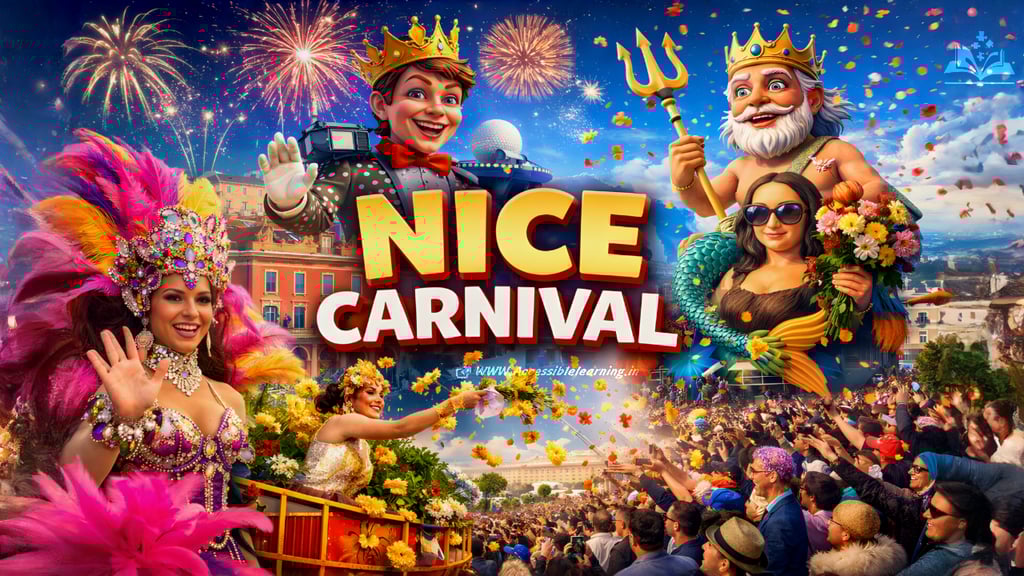
If you ever needed a reason to visit the French Riviera in winter, the Nice Carnival is it. This is not a small “local parade” type of celebration. It’s one of the world’s biggest carnivals, filled with giant moving floats, costumed dancers, confetti storms, and a unique tradition that turns the city into a living theatre.
Every year, Nice transforms into a massive outdoor showground where locals and travelers gather for two main experiences:
The grand float parades (often at night, with lights and music)
The famous flower battles where blooms are thrown into the crowd like joyful “floral fireworks”
It’s vibrant, artistic, loud, beautiful, and honestly… impossible to forget.
What is the Nice Carnival?
The Nice Carnival (Carnaval de Nice) is an annual festival held in Nice, France, usually during February, around the time of traditional pre-Lenten celebrations in Europe. But Nice doesn’t just “celebrate carnival.” It creates an entire seasonal universe. Expect:
Enormous satirical floats (often political, cultural, or humorous)
Themed street performances
Thousands of performers
Decorated city squares
Fireworks energy in the air (even without fireworks)
This carnival is built on two pillars: spectacle and symbolism.
A Short History of the Nice Carnival
Nice Carnival has a history that stretches back centuries.
Origins
Carnival celebrations in Nice were mentioned as far back as the Middle Ages, when people would gather in the streets for masked festivities before Lent.
Becoming a “Modern Carnival”
The carnival became more structured and internationally famous in the 19th century, especially when Nice became a fashionable winter destination for wealthy Europeans (aristocrats and elites escaping harsh winters).
Nice basically turned carnival into a cultural product:
a festival that locals loved and visitors traveled for.
A Living Tradition
Today, it’s still built with traditional craft, but modernized with:
contemporary themes
satire
music-driven choreography
bigger, better float engineering
When Does the Nice Carnival Take Place?
The Nice Carnival typically runs for about two weeks in February. Even if you don’t know the exact dates, you can plan around:
mid-February (best chance)
evenings for illuminated parades
weekends for peak energy
Pro tip: book accommodation early. Even in winter, Nice fills up fast during carnival.
The Main Theme: The “King” of the Carnival
Every year, Nice Carnival is built around a theme, and the festival’s symbol becomes a huge carnival character known as the King.
For example, you may see:
“King of Cinema”
“King of Music”
“King of Gastronomy”
“King of the Oceans”
“King of Pop Culture”
The King appears on enormous floats, posters, decorations, and the main parade.
Why the “King” matters
The King is more than decoration. It represents:
the spirit of the year’s theme
satire and humor
a carnival “ruler” who leads the madness
And in typical carnival tradition, the story ends dramatically (more on that below).
The Iconic Events of Nice Carnival
The Carnival Parades (Corsos Carnavalesques)
These are the main float parades.
What you’ll see
Massive moving floats (some as tall as buildings)
Dancers in themed costumes
Live bands and percussion
Giant puppet-like figures with exaggerated faces
Confetti, whistles, cheering, and constant music
Why they’re special
Nice parades are famous because their floats are:
huge
artistic
often satirical (sometimes political, sometimes cultural)
engineered like moving theatre stages
At night, these parades become even more cinematic due to lighting.
The Flower Battles (Bataille de Fleurs)
This is something most carnivals in the world don’t have.
What happens?
Performers ride decorated floats completely covered in flowers and then throw flowers into the crowd.
Yes, literally throw them. Like a battle.
But it’s friendly, playful, and very “Nice”.
Why flower battles exist
This tradition started to:
promote the region’s flower industry
celebrate the Riviera’s natural beauty
create a daytime carnival experience
What flowers are used?
Often:
carnations
gerberas
lilies
roses
seasonal local blooms
Fun detail: people take bouquets home like trophies.
Costumes, Masks, and Carnival Culture
You don’t have to be a performer to dress up. Many visitors and locals wear:
masks
wigs
glitter makeup
colorful coats and capes
It’s normal to see families, couples, and friend groups going full costume.
Human-centered tip: Even a simple mask helps you feel part of the event.
Street Shows and Performers Everywhere
Nice becomes more alive than usual during carnival. You’ll find:
musicians in squares
choreographed dance performances
street theatre
clowns and entertainers for kids
spontaneous mini parades
Even walking to get coffee feels like entering a performance.
The Grand Finale (Burning of the King)
This is one of the most dramatic and symbolic moments. At the end of the carnival, the king is often:
paraded one last time
then burned (traditionally in a ceremonial way)
What it represents
It symbolizes:
ending the winter carnival season
letting go of the old year’s troubles
cleansing the city’s spirit for renewal
It’s emotional, loud, and surprisingly powerful even for first-time visitors.

Where Does Nice Carnival Take Place?
Most key events happen in the heart of Nice:
Place Masséna (a central hub)
Promenade des Anglais (near the sea, iconic Nice views)
Albert 1er Gardens (often linked with flower events)
That’s what makes this carnival so special:
It’s not hidden away in a stadium. It belongs to the city itself.
Why Nice Carnival is Different from Other Carnivals
A lot of people compare carnivals like:
Venice Carnival (elegant masks)
Rio Carnival (samba stadium shows)
Cologne Carnival (German street party energy)
Nice Carnival is its own category because it combines:
✅ artistic float engineering
✅ street festival energy
✅ French Riviera elegance
✅ flower tradition (very rare globally)
✅ satire + spectacle
You get both: sophistication and chaos. That’s the magic.
Food and Local Fun During the Carnival
No carnival in France is complete without food.
What to try in Nice during Carnival
Socca (crispy chickpea pancake, iconic Niçoise street food)
Pissaladière (onion tart with anchovies/olives)
Pan bagnat (tuna/vegetable sandwich, super local)
Crêpes and waffles (carnival standard)
Hot chocolate from local cafés in winter evenings
Fun detail: locals often snack between parades like it’s a marathon. Because it is.
Best Time to Attend: Day vs Night
Daytime = Flower Battles + family vibe
Best for:
photography
kids/families
people who want a lighter festive experience
Nighttime = Illuminated Parades + full party energy
Best for:
cinematic visuals
music lovers
that “once-in-a-lifetime festival night” feeling
Ideal plan: attend one daytime event + one night parade.
Tips for First-Time Visitors (Practical + Real)
Here are the tips people only learn after going:
1) Arrive early for good viewing
The best spots fill up fast.
2) Wear layers
Nice is mild in winter, but evenings can get cold.
3) Protect your eyes if you hate confetti
Confetti gets everywhere.
Hair, bags, pockets, shoes… even inside jackets.
4) Don’t over-plan
Carnival is best enjoyed with flexibility. Let the city surprise you.
5) Bring a tote bag
Why? Flowers. Confetti. Snacks. Souvenirs.
You’ll thank yourself later.
Nice Carnival for Families, Couples, and Solo Travelers
Families
Great because:
day events are kid-friendly
costumes are encouraged
performers interact with crowds
Couples
It’s perfect for:
romantic Riviera winter evenings
glowing parade lights
seaside walks after events
Solo Travelers
Ideal because:
safe central locations
easy to meet people in crowds
the city feels welcoming and alive
Why the Nice Carnival is Worth It
Nice Carnival isn’t just entertainment. It’s an experience of:
artistic tradition
community celebration
French Riviera culture
winter travel at its most colorful
It proves something beautiful:
Even in the coldest months, humans still find ways to celebrate loudly If you want a festival that’s
visually stunning
deeply traditional
fun and energetic
culturally meaningful
Then Nice Carnival should be on your travel bucket list.
FAQ's
Q: When is the Nice Carnival held?
The Nice Carnival usually takes place in February and runs for around two weeks, including daytime flower parades and nighttime illuminated parades.
Q: What is the “Flower Battle” (Bataille de Fleurs)?
The Bataille de Fleurs is a famous daytime event where performers on flower-covered floats throw fresh flowers into the crowd. It’s one of the most unique traditions of the Nice Carnival.
Q: Where does the Nice Carnival take place?
Most main events happen in central Nice, especially around:
Place Masséna
Promenade des Anglais
Jardin Albert 1er
Q: Do you need tickets for Nice Carnival events?
Some major parades and seating areas may require tickets, while certain public areas allow free viewing. It’s best to check in advance if you want reserved seating.
Q: Is the Nice Carnival family-friendly?
Yes! The carnival is very family-friendly, especially the daytime flower parades, street performances, and costume celebrations.
Q: What should I wear to the Nice Carnival?
Wear comfortable shoes and warm layers for the evening. Many people also wear masks or costumes, which makes the experience even more fun.
Q: What makes Nice Carnival different from other carnivals?
Nice Carnival is famous for its:
giant artistic floats
satire-themed parade stories
unique flower battles
French Riviera winter atmosphere
Subscribe To Our Newsletter
All © Copyright reserved by Accessible-Learning Hub
| Terms & Conditions
Knowledge is power. Learn with Us. 📚

