

National Pearl Harbor Remembrance Day: Honoring History and Heroism
A thoughtful look at National Pearl Harbor Remembrance Day, its history, significance, and the acts of bravery that still inspire generations.
EVENT/SPECIALUSACELEBRATION/FESTIVALSHISTORY
Kim Shin
12/4/20253 min read
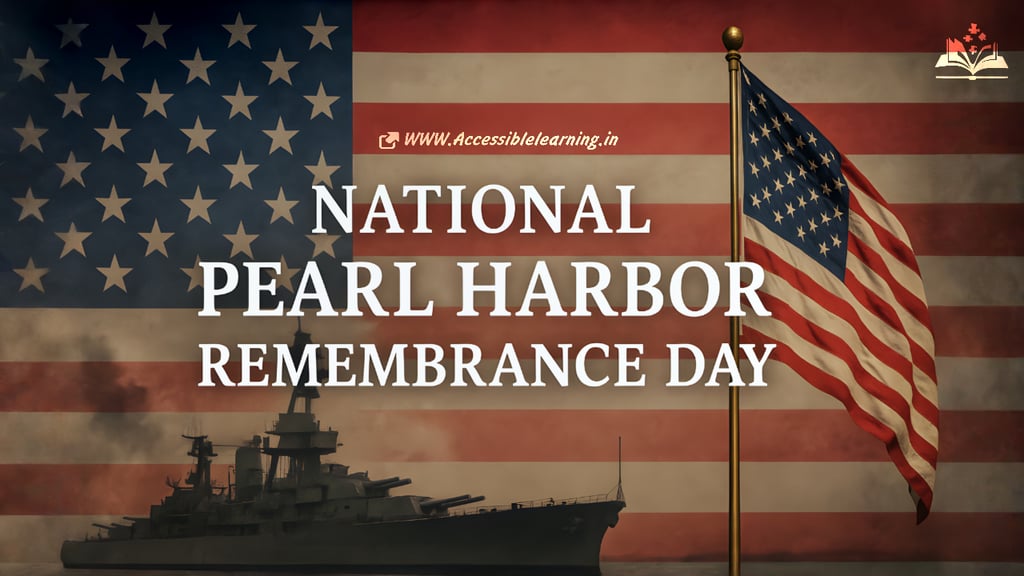
National Pearl Harbor Remembrance Day, observed on December 7 every year, honors the lives lost during the 1941 attack on Pearl Harbor and reflects on the event that reshaped global history. It’s a day rooted in solemn remembrance but also one that highlights resilience, unity, and the enduring lessons of a world transformed by war.
A Turning Point in History
On the peaceful Sunday morning of December 7, 1941, life at the U.S. naval base in Pearl Harbor followed its usual routine. Within minutes, everything changed. Japanese forces launched a coordinated surprise attack involving more than 350 aircraft. The assault struck battleships, airfields, and key military positions with the goal of crippling U.S. Pacific Fleet capability.
In the chaos that followed:
Over 2,400 Americans were killed
More than 1,100 were injured
Eight battleships were damaged or sunk
Hundreds of aircraft were destroyed
The attack directly led the United States into World War II, shifting the balance of global military strategy and forever altering the story of the 20th century.
Stories of Heroism That Still Inspire
Beyond the destruction, Pearl Harbor is remembered for incredible acts of bravery. Sailors risked their lives to rescue trapped shipmates. Medics worked through fire and smoke to treat the wounded. Many servicemen who had little time to prepare fought back with whatever they could access.
Some stories stand out:
Doris “Dorie” Miller, a mess attendant, manned anti-aircraft guns despite having no formal training and became one of the attack’s most celebrated heroes.
Crew members of the USS Arizona and USS Oklahoma fought back even as their ships were sinking.
Firefighters and civilians rushed in to help despite the continuing danger.
These stories remain an important part of why the day is commemorated: to honor courage, sacrifice, and duty in the face of overwhelming odds.
Why the Day Holds Emotional Weight
National Pearl Harbor Remembrance Day is not just about marking a historical event. It’s about acknowledging the personal and collective loss felt across the country. Families received sudden news that changed their lives. Communities rallied together to support the war effort. A generation was shaped by the uncertainty and urgency that followed.
The day carries emotional depth because it reminds people that freedom has costs, peace is fragile, and unity can grow from tragedy.
Modern Observances and Traditions
Across the United States, the day is marked in different ways:
Flags at half-staff to honor the deceased
Ceremonies at the Pearl Harbor National Memorial, including moments of silence at the exact time of the attack
Survivor gatherings where remaining veterans share memories
Educational programs in schools that highlight the importance of remembering
Documentaries and historical broadcasts that revisit the events in detail
The USS Arizona Memorial, standing above the wreckage of the battleship, remains a powerful symbol of the lives lost.


Preserving the Legacy for Future Generations
As the years pass, fewer survivors remain to tell their stories firsthand. This makes the day even more important. National Pearl Harbor Remembrance Day encourages people to study history not as distant facts but as human experiences shaped by courage, loss, and hope.
It also highlights broader lessons:
The impact of global conflict
The value of diplomacy
The importance of vigilance
The meaning of unity during crisis
Remembering Pearl Harbor is not only about honoring the past. It is also about learning how to build a more peaceful future.
FAQs
Q: What is National Pearl Harbor Remembrance Day?
It’s an annual observance on December 7 to honor the Americans who lost their lives in the 1941 attack on Pearl Harbor and to reflect on its historical impact.
Q: Why did the Pearl Harbor attack happen?
Japan launched the attack to weaken the U.S. Pacific Fleet and prevent interference with its expansion in the Pacific during World War II.
Q: How many people died during the attack?
More than 2,400 Americans were killed, including military personnel and civilians.
Q: Is it a federal holiday?
No, it is not a federal holiday, but it is widely recognized. Flags on government buildings are flown at half-staff.
Q: How do people observe the day?
People attend memorial ceremonies, visit historical sites, watch documentaries, or observe moments of silence.
Q: What is the USS Arizona Memorial?
It’s a floating memorial built over the remains of the USS Arizona. It honors the crew members who lost their lives during the attack.
Q: Why is Pearl Harbor still important today?
It serves as a reminder of the costs of war, the value of peace, and the importance of historical awareness and unity.
Subscribe To Our Newsletter
All © Copyright reserved by Accessible-Learning Hub
| Terms & Conditions
Knowledge is power. Learn with Us. 📚

