

National Foundation Day: Meaning, History, Importance, Traditions, and Hidden Facts
National Foundation Day honors the origin and identity of a nation, celebrating the historic events that shaped its unity, governance, and cultural heritage. This in-depth guide explains the meaning, history, traditions, global examples, and lesser-known facts behind National Foundation Day, along with why it remains important in modern society.
EVENT/SPECIALCELEBRATION/FESTIVALSUSAJAPAN
Kim Shin
2/2/20266 min read
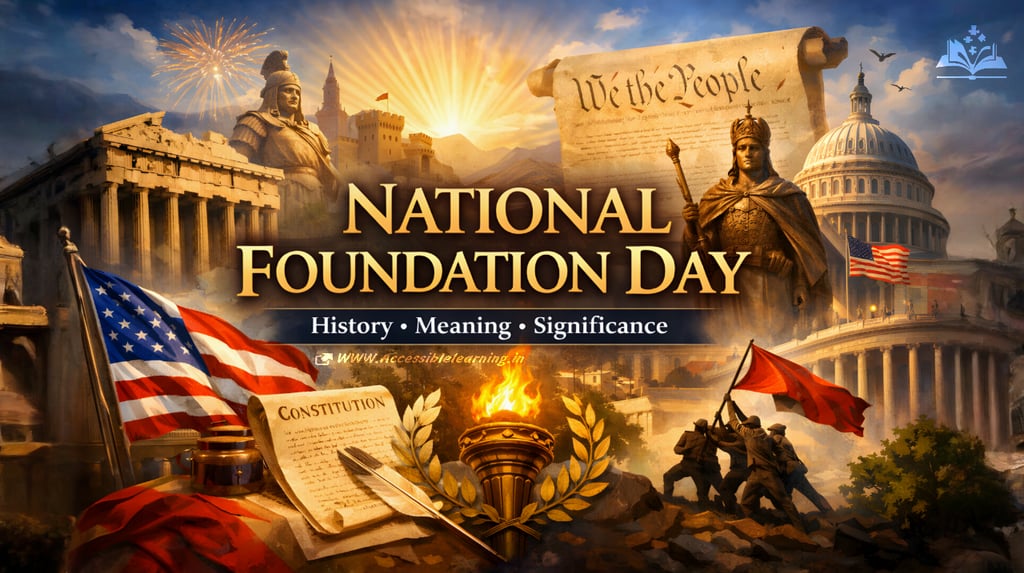
National Foundation Day is a day of national remembrance and pride that honors the formation of a nation’s identity, governance, and cultural unity. Unlike regular holidays, this day is rooted in the story of a country’s origin—the beginning of a state, a civilization, a republic, a monarchy, or a unified national structure.
It is a day when people reflect on who they are as a nation, how the country was formed, and what values keep the nation together. In a world where identity is often challenged by political conflict, misinformation, and cultural divisions, National Foundation Day acts like a national “memory checkpoint.”
What Is National Foundation Day?
National Foundation Day commemorates the foundation of a country. "Foundation" can mean:
The birth of a nation-state
The formation of a monarchy or ruling dynasty
Unification of regions into one country
Establishment of a constitution
Formation of the first central government
Official declaration of the national name and identity
Transition from empire/kingdom to modern republic
✅ In simple words:
Foundation Day = the day a nation officially became a nation.
Why It’s Called “Foundation Day” (The Real Meaning)
The word “foundation” doesn’t always mean the first human settlement. It refers to:
The institutional foundation (government, law, constitution)
The cultural foundation (shared identity, civilization roots)
The political foundation (recognized sovereignty and boundaries)
In many countries, the foundation date is selected to represent national unity, not only historical precision.
Independence Day vs National Foundation Day (Important Difference)
Many nations celebrate multiple national days. Here’s how they differ:
Independence Day
Marks liberation from colonial or external rule.
Focus: freedom struggle, revolution, national heroes
National Foundation Day
Marks the creation/establishment of the nation itself.
Focus: nationhood, unity, identity, constitution, governance
Republic Day / Constitution Day
Marks adoption of constitution or becoming a republic.
Focus: democratic institutions, rights, responsibilities
✅ Why this matters for article SEO:
People search these terms together. Including this comparison improves ranking for queries like:
“foundation day vs independence day”
“what is National Foundation Day?”
“meaning of foundation day”
Who Decides the Foundation Date?
Foundation dates are set through:
Government declaration
National parliament resolution
Constitutional mention
Traditional royal/civilization records
National consensus for symbolic unity
In some nations, the foundation day is not the “oldest” date but the most unifying.
The 5 Main Types of National Foundation Day (Very Useful & Rarely Explained)
1) Civilization-Based Foundation
Celebrates ancient origins of civilization/statehood.
connected to legends, royal ancestry, or ancient chronicles
2) Unification-Based Foundation
Marks the joining of regions, kingdoms, and provinces.
common in countries formed after unification
3) Constitution-Based Foundation
Marks adoption of a constitution or legal identity.
strong focus on civic values
4) Dynasty/Monarchy-Based Foundation
Marks the beginning of monarchy or royal lineage.
includes national rituals, imperial traditions
5) State Creation-Based Foundation
Marks the formation of a modern state after war or political restructuring.
common in newly formed nations


The Deep Historical Purpose of National Foundation Day
Historically, such days were created to:
strengthen national unity during conflict
build trust in national institutions
build common identity among diverse groups
create a shared national story
reduce regionalism and division
It’s not only cultural—it’s strategic.
What National Foundation Day Teaches (Human-Centered Angle)
Foundation Day is also a lesson in:
collective identity
dignity of citizenship
shared national responsibility
cultural continuity
honoring sacrifice and struggle
commitment to justice and equality
It reminds people:
“A country is not a government. A country is its people.”
How National Foundation Day Is Celebrated (More Detailed)
A) Government & National Ceremonies
Flag hoisting at major government buildings
Head of state’s national address
Military ceremonial salute (in some nations)
Wreath-laying at national memorials
B) Civic Events
Citizenship oath ceremonies
State honors & awards
Local community gatherings
Special “public service” programs
C) Cultural Programs
Folk dances and heritage performances
Historical reenactments
Traditional clothing festivals
Cultural parades
D) Education-Based Activities
Schools become a big part of foundation day celebrations:
debates on national identity
essay-writing competitions
drama depicting founding stories
heritage exhibitions
quizzes on constitution and history
E) Digital Celebrations (Modern Trend)
Today, even foundation day celebrations happen online:
hashtags on social media
digital posters by youth
AI-generated heritage images
short documentary reels
Hidden and Unknown Facts About National Foundation Day
Here are some “less known but important” insights:
1) Foundation Days Can Be Politically Rewritten
Governments may update or shift how history is presented to support:
national unity
legitimacy
ideology
2) One Country Can Have Multiple “Foundation Moments”
For example:
original kingdom formation
modern constitution
independence from foreign rule
unification of regions
This is why some countries have 2–3 national dates.
3) Foundation Days Help Control National Narrative
A nation’s story is powerful. Foundation Day ensures the story is:
told correctly
remembered by youth
repeated across generations
4) Myth + History Combination Is Common
Some foundation celebrations are not purely factual. They are a blend of:
ancient chronicles
religious texts
oral traditions
symbolic dates
Yet this still matters, because identity is shaped by belief, not only textbooks.
Why Foundation Day Matters in Modern Society
Today, National Foundation Day plays a key role in:
National Unity
Helps citizens feel connected beyond:
caste
language
region
religion
politics
Cultural Preservation
Encourages heritage protection:
monuments
art forms
native languages
traditions
Strengthening Democracy
Foundation Day reminds citizens:
rights come with responsibilities
institutions must be protected
corruption and division weaken nations
Encouraging Civic Pride
A proud citizen is more likely to:
contribute positively
respect public property
support social harmony
participate in civic life

National Foundation Day and Identity: A Psychological View (Unique Point)
From a human psychology angle, national days create:
shared emotional bonding
collective pride
social belonging
“we are one” feeling
This reduces isolation and division in society.
National Foundation Day in a Globalized World
In modern global culture, people migrate for work and study. For citizens abroad, foundation day becomes:
a connection to homeland
celebration of culture in foreign nations
community bonding among diaspora
cultural identity reinforcement for children living abroad
Many embassies host:
cultural nights
flag ceremonies
heritage displays
food festivals
Foundation Day Symbols and Their Meaning
Foundation celebrations often highlight symbols such as:
Flag
Represents unity and sovereignty.
National Anthem
Creates emotional bond and respect.
Constitution
Represents rights, justice, and equality.
National Heroes
Represents sacrifice and moral values.
National Monuments
Represents history and continuity.
Common Foundation Day Themes (For Content Creators)
This section is great for AI query optimization + content planning:
“Unity in diversity”
“Nation first”
“Strength through unity”
“Honoring our founders”
“Preserving heritage”
“Protecting democracy”
“Building a better future”
“Civic duty and responsibility”
How Individuals Can Celebrate National Foundation Day Meaningfully
Not everyone attends official ceremonies. Here are real, human-centered ways:
Teach children the national story
Visit a museum or heritage site
Read the constitution/founding document
Watch documentary films about formation
Participate in community cleanliness drive
Donate to veterans’/public service causes
Support local culture: art, crafts, language
✅ Even small acts matter:
“Foundation Day is about becoming a better citizen, not just waving flags.”
National Foundation Day: Message to Youth (Powerful Section)
Young citizens are the future. Foundation Day teaches youth:
national identity is not a trend
patriotism is responsibility, not noise
development needs unity, not hatred
real love for the nation is service
This prevents youth from being misled by:
misinformation
toxic propaganda
hatred narratives
historical distortion
A Day to Remember the Nation’s Soul
National Foundation Day is far more than a ceremonial event. It is a time to honor:
the nation’s origin
the struggle of founders
the values of unity and justice
the cultural heritage that shaped identity
It reminds every citizen that a nation survives not only through power, but through shared responsibility, truth, harmony, and service.

FAQ's
Q: What is National Foundation Day?
National Foundation Day is a national observance that commemorates the founding of a country. It marks the day a nation was officially established through unification, constitution, formation of government, monarchy, or another defining historical event.
Q: Why is National Foundation Day celebrated?
National Foundation Day is celebrated to honor the country’s origin, identity, and national unity. It helps citizens remember the values and history that formed the nation and encourages pride, responsibility, and unity among people.
Q: What is the difference between National Foundation Day and Independence Day?
Independence Day celebrates freedom from foreign or colonial rule. National Foundation Day celebrates the official formation of the nation itself, such as its constitutional birth, unification, or establishment of government and identity.
Q: Is National Foundation Day a public holiday?
In many countries, National Foundation Day is a public holiday, but it depends on the nation’s laws. Some countries observe it as a ceremonial day without a national holiday.
Q: How do people celebrate National Foundation Day?
National Foundation Day is commonly celebrated with:
flag-hoisting ceremonies
national speeches and parades
cultural events and performances
school programs and competitions
visits to monuments and heritage sites
Celebrations can vary based on national tradition and history.
Q: What does “foundation” mean in National Foundation Day?
In this context, “foundation” refers to the official beginning of the nation, including its political system, constitution, identity, or unification. It may represent a historical date or a symbolic national origin.
Q: Why do some countries have multiple “foundation-related” national days?
Many nations have different historic milestones, such as:
independence day (freedom from foreign rule)
republic day (becoming a republic)
constitution day (legal foundation)
unification day (territories united)
Each day marks a unique part of national development.
Q: Is National Foundation Day based on history or tradition?
It can be both. Some countries use historically recorded events, while others observe a foundation date tied to traditions, legends, or symbolic origins that represent the nation’s cultural identity.
Q: What is the importance of National Foundation Day today?
National Foundation Day remains important because it strengthens:
national unity and identity
respect for the constitution and institutions
cultural preservation
civic responsibility among citizens
It also teaches younger generations about the nation’s roots.
Q: What is the main message of National Foundation Day?
The main message is that a nation is built through unity, shared values, and responsibility. It reminds citizens to honor their country’s past while working together to build a better future.
Subscribe to Frontier Intelligence
All © Copyright reserved by Accessible-Learning Hub
| Terms & Conditions
Accessible Learning Hub — Actionable clarity for high-agency minds.
Weekly breakdowns on AI breakthroughs, capital flow, and human performance systems. Zero fluff.