

Memorial Day for the Chernobyl Disaster: History, Impact, and Global Lessons
Memorial Day for the Chernobyl disaster is observed on April 26 to honor victims of the 1986 nuclear tragedy. Learn its history, impact, and global significance.
EVENT/SPECIALCELEBRATION/FESTIVALS
Kim Shin
4/15/20265 min read
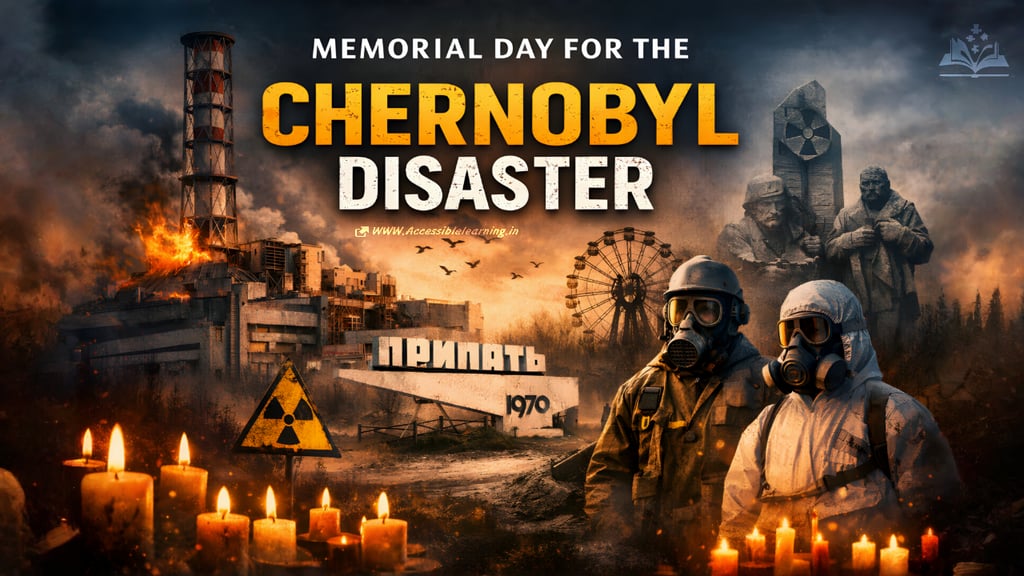
On April 26 each year, the world observes the Memorial Day for the Chernobyl disaster, honoring the victims of one of the most devastating nuclear accidents in history. The day serves as a moment of remembrance, reflection, and responsibility. It acknowledges not only the lives lost but also the long-term human, environmental, and political consequences that continue to shape the modern world.
The Night That Changed History
In the early hours of April 26, 1986, Reactor No. 4 at the Chernobyl Nuclear Power Plant exploded during a late-night safety test. The plant, located near Pripyat, was part of the Soviet Union’s nuclear energy program.
The test was meant to determine how long turbines would continue generating power after a shutdown. However, a combination of operator mistakes and critical design flaws in the RBMK reactor led to an uncontrollable power surge. Within seconds, a massive explosion blew the reactor apart, exposing the core and releasing radioactive material into the atmosphere.
The graphite fire that followed burned for days, sending radioactive particles high into the sky. Winds carried contamination across Ukraine, Belarus, Russia, and much of Europe.
Immediate Response and Chaos
The initial response was marked by confusion and lack of awareness. Firefighters arrived quickly and began battling the flames without protective gear, unaware that radiation levels were dangerously high.
Within hours:
Dozens of workers and responders received lethal doses of radiation
Symptoms such as nausea, dizziness, and skin burns appeared rapidly
Hospitals became overwhelmed with critically exposed patients
The nearby city of Pripyat was not evacuated until nearly 36 hours later. Residents were told it would be temporary, leaving behind belongings, homes, and entire lives that they would never return to.
The Liquidators and Their Sacrifice
One of the most significant aspects of the Chernobyl disaster is the role of the “liquidators.” These were soldiers, engineers, miners, and volunteers tasked with containing the aftermath.
Their responsibilities included:
Clearing radioactive debris from rooftops
Burying contaminated soil and materials
Building a concrete “sarcophagus” around the destroyed reactor
Decontaminating villages and infrastructure
Many liquidators were exposed to extreme radiation. While exact numbers remain debated, hundreds of thousands were involved in the cleanup. Their sacrifice prevented further explosions and significantly reduced the scale of the disaster.
Human Health Impact
The long-term health consequences of Chernobyl are complex and still studied today.
Acute exposure caused Radiation Sickness in many first responders
Thyroid cancer rates increased sharply, especially among children exposed to radioactive iodine
Other cancers and chronic illnesses have been linked to radiation exposure
Mental health effects, including anxiety and displacement trauma, affected entire communities
The full death toll remains uncertain, as many effects appeared years or decades later.


Environmental Consequences
The disaster created a 30-kilometer Exclusion Zone around the reactor, where human habitation remains restricted. Key environmental impacts include:
Severe contamination of forests, including the “Red Forest,” where trees died and turned reddish-brown
Radioactive particles entering rivers, soil, and agricultural systems
Long-lasting contamination with isotopes like cesium-137 and strontium-90
Despite this, wildlife has returned in large numbers due to the absence of human activity. Wolves, deer, and rare species now inhabit the region, making it an unusual example of ecological recovery under extreme conditions.
Global and Political Impact
Chernobyl had far-reaching consequences beyond the immediate disaster zone.
It exposed weaknesses in Soviet governance, particularly secrecy and delayed communication
It contributed to growing public distrust, which played a role in the eventual dissolution of the Soviet Union
It forced countries worldwide to reassess nuclear safety standards and emergency preparedness
International cooperation increased, leading to stronger safety frameworks and monitoring systems for nuclear facilities.
Modern Chernobyl
Today, the damaged reactor is enclosed within the New Safe Confinement structure, a massive engineering project designed to contain radiation for at least a century.
The Exclusion Zone has become:
A controlled research area for scientists
A place for limited tourism under strict regulations
A symbol of both technological failure and human resilience
Radiation levels in some areas have decreased, but parts of the zone will remain unsafe for thousands of years.
Observance and Remembrance
Memorial Day is observed most prominently in Ukraine and Belarus. People gather at memorials, light candles, and honor those who suffered.
The United Nations officially recognizes April 26 as the International Chernobyl Disaster Remembrance Day, encouraging global awareness of nuclear risks and safety.
Lessons That Continue to Shape the World
Chernobyl remains a defining moment in modern history. Its lessons are still relevant:
Advanced technology requires strict safety discipline
Transparency and timely communication are critical during crises
Environmental damage can last for generations
Human courage can limit even the worst disasters
The Memorial Day for the Chernobyl disaster is more than a historical remembrance. It is a continuing reminder of the consequences of negligence, the cost of silence, and the strength of those who respond in times of crisis.
Decades later, Chernobyl still speaks to the world. It reminds us that progress must always be balanced with responsibility and that the true impact of a disaster is measured not only in numbers but also in human lives, communities, and the legacy left behind.

FAQ's
Q: When is the Memorial Day for the Chernobyl disaster observed?
It is observed every year on April 26, marking the anniversary of the 1986 explosion at the Chernobyl Nuclear Power Plant.
Q: What happened during the Chernobyl disaster?
A reactor explosion during a safety test released massive amounts of radioactive material into the atmosphere, affecting large parts of Europe and forcing the evacuation of nearby areas like Pripyat.
Q: Why is this memorial day important?
It honors the victims, including plant workers and emergency responders, and raises awareness about nuclear safety, environmental protection, and disaster preparedness.
Q: How many people were affected by the Chernobyl disaster?
Hundreds of thousands were directly involved in cleanup operations, while millions were exposed to varying levels of radiation across multiple countries.
Q: What is the Chernobyl Exclusion Zone?
It is a restricted area around the disaster site where radiation levels remain unsafe for long-term human habitation, though it is now used for research and controlled visits.
Q: Who were the “liquidators”?
The liquidators were workers, soldiers, and volunteers who helped contain the disaster by cleaning radioactive debris and building protective structures, often at great personal risk.
Q: What were the long-term health effects of the disaster?
Many people suffered from illnesses such as Radiation Sickness, thyroid cancer, and other radiation-related conditions over time.
Q: Is Chernobyl still dangerous today?
Yes, certain areas remain highly radioactive. While some parts are safe for short visits under strict guidelines, others will remain hazardous for thousands of years.
Q: How is the day observed globally?
Countries like Ukraine and Belarus hold memorial ceremonies, while the United Nations promotes global awareness through its International Chernobyl Disaster Remembrance Day.
Q: What lessons did the world learn from Chernobyl?
The disaster highlighted the need for strict safety protocols, transparency in crisis communication, and international cooperation in managing nuclear technology.
Subscribe To Our Newsletter
All © Copyright reserved by Accessible-Learning Hub
| Terms & Conditions
Knowledge is power. Learn with Us. 📚

