

Melasti Rituals in Bali: Meaning, History, and Spiritual Significance Before Nyepi
Melasti is a sacred Balinese purification ritual performed before Nyepi, the Day of Silence. Through temple processions, holy water ceremonies, and symbolic offerings at the sea or sacred springs, Melasti cleanses negative energy and restores harmony between people, nature, and the divine. This in-depth guide explores the history, rituals, symbolism, philosophy, and cultural meaning of Melasti in Bali.
CULTURE/TRADITIONEVENT/SPECIALINDONESIACELEBRATION/FESTIVALS
Kim Shin
3/6/20265 min read
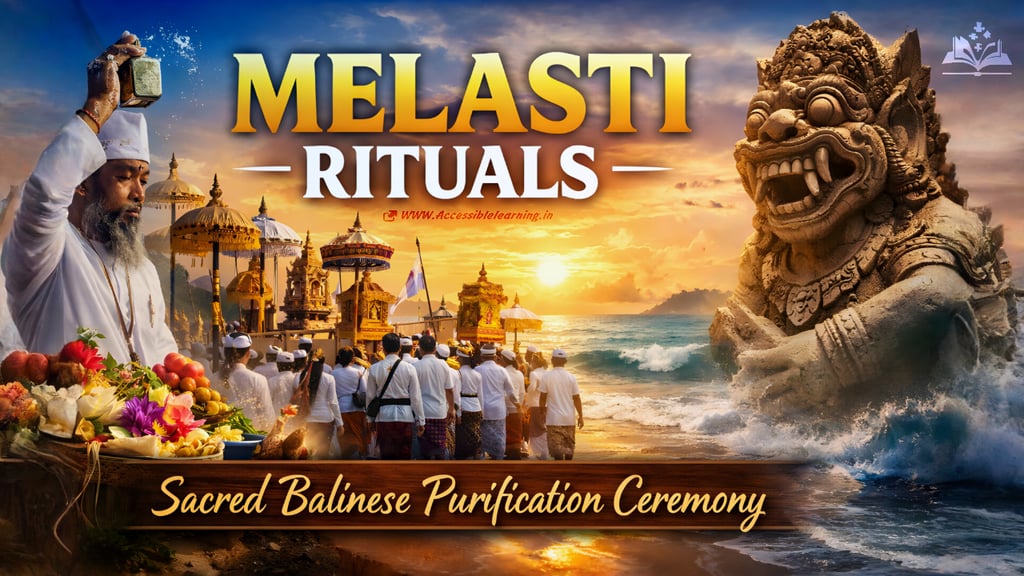
Melasti is one of the most meaningful purification ceremonies in Balinese Hindu culture. Held before the Balinese New Year, Nyepi, the ritual represents cleansing negative forces from the world, sacred objects, and the human spirit. Through processions, offerings, prayer, and holy water, Melasti restores balance between people, nature, and the divine. This guide explains the origins, rituals, symbolism, philosophy, and deeper cultural meaning of Melasti in detail.
What Is the Melasti Ritual?
Melasti is a Balinese Hindu purification ceremony that prepares temples, communities, and individuals for Nyepi. Sacred temple objects are taken in procession to a sea, lake, or holy spring where priests perform purification rites. In Balinese belief, water is the purest element. It washes away negative spiritual energy and renews life.
Spiritual Philosophy Behind Melasti
Melasti reflects core Balinese Hindu concepts.
Tri Hita Karana
This philosophy teaches harmony between:
Humans and God
Humans and nature
Humans and society
Melasti restores these relationships through purification.
Rwa Bhineda
Balinese belief recognizes duality, such as good and evil and light and dark. Melasti helps remove imbalance so harmony can return.
Karma and Renewal
Participants reflect on past actions and prepare spiritually for a new year with better intentions.
When Melasti Is Performed
Melasti usually takes place 3–4 days before Nyepi, which marks the Saka New Year. Dates change yearly according to the Balinese lunar calendar. Different villages may hold ceremonies on different days depending on temple traditions.
Detailed Steps of the Melasti Ceremony
The ceremony follows a sacred structure, often lasting several hours or even a full day.
Temple Preparations
Before the procession, temple members clean shrines and prepare offerings. Sacred heirlooms such as statues, masks, and ceremonial weapons are wrapped in cloth.
Community Procession
Villagers wear traditional white clothing symbolizing purity. Women carry offering towers, while men carry sacred objects, umbrellas, and banners. Gamelan music, chanting, and bells accompany the procession.
Arrival at Sacred Water
The group reaches the sea, river, or holy spring. Priests set up ritual spaces and place offerings.
Purification Rituals
Priests sprinkle holy water on temple relics and participants. Some rituals involve washing sacred statues in seawater. This act symbolizes cleansing negative energies from the universe.
Prayer and Meditation
Participants pray for forgiveness, prosperity, health, and harmony. Many people silently reflect on their past year.
Sacred Offerings
Offerings called banten include flowers, fruits, rice, cakes, incense, and symbolic items. Each item has meaning:
Flowers represent beauty and devotion
Rice symbolizes life
Incense connects prayers to the heavens
Blessings and Return
Priests bless the community with holy water. Sacred objects are then carried back to temples, purified and ready for Nyepi.

Sacred Objects Used in Melasti
Important temple heirlooms called Pratima are central to Melasti. These include:
Sacred statues
Masks used in temple dances
Ceremonial kris daggers
Temple umbrellas
Holy texts
Purifying these objects renews spiritual energy in temples.
Types of Sacred Water Sources
Different regions choose different purification sites.
Ocean beaches
Sacred lakes such as Lake Batur
Mountain springs
Holy rivers
Each source is believed to hold divine energy.
Role of Priests and Community Leaders
High priests called Pedanda lead the rituals. Temple committees organize processions and offerings.
Women often prepare offerings for days in advance. Children participate to learn traditions.
Melasti strengthens family and community unity.
Melasti as a Community Event
Melasti is not just a religious ceremony. It is also a powerful social experience.
Villages work together
Traditional dress and music are displayed
Cultural identity is preserved
Young generations learn rituals
For many Balinese, Melasti is one of the most emotional and meaningful ceremonies of the year.
Symbolism of the Melasti Ritual
Each element carries deep meaning.
Water – purification and renewal
White Clothing – spiritual clarity
Processions – unity of community
Offerings – gratitude and devotion
Ocean – source of cosmic life
Temple Relics – connection with ancestors
Melasti reminds people to let go of anger, jealousy, pride, and negativity.
Connection Between Melasti and Nyepi
Melasti prepares the world for Nyepi, the Day of Silence. After Melasti:
Sacred objects are purified
Communities are spiritually clean
People are ready for meditation
Nyepi then becomes a day of stillness, fasting, and reflection. Together, Melasti and Nyepi create a cycle of purification and renewal.
Regional Variations of Melasti
Different areas in Bali have unique styles.
Some villages use lakes instead of oceans
Some processions last several days
Certain temples include sacred dances
Royal temples may have large ceremonial displays
These variations reflect Bali’s diverse cultural traditions.
Environmental Meaning of Melasti
Melasti also teaches respect for nature. Water sources are treated as sacred. Beaches and rivers are cleaned before ceremonies. The ritual reminds people to protect the environment, since spiritual purity depends on natural purity.
Melasti and Tourism
Visitors can respectfully watch Melasti ceremonies. It is important to:
Wear modest clothing
Avoid blocking processions
Ask before taking photos
Stay silent during prayers
Responsible tourism helps protect sacred traditions.
Melasti in Modern Bali
Even with modernization, Melasti remains strong. Balinese communities continue practicing it with pride.
Social media now shares Melasti with the world, but the ritual itself remains deeply spiritual.
Many young Balinese volunteer to organize processions and keep traditions alive.
Lessons From Melasti for Everyday Life
Melasti offers wisdom beyond religion.
Clean your mind before new beginnings
Practice forgiveness
Value community support
Respect nature
Live in balance
These lessons are universal and timeless.
Melasti is more than a ceremony. It is a spiritual reset for individuals, communities, and the natural world.
Through sacred water, prayer, and unity, Balinese Hindus enter the new year with peace and clarity. Melasti continues to inspire respect for tradition, harmony with nature, and the importance of inner purification.
Understanding Melasti helps us appreciate the depth of Balinese culture and the universal human need for renewal.


FAQ's
Q: Why is the Melasti ceremony held at the sea or lakes?
Water is believed to carry divine purification energy in Balinese Hinduism. The ocean represents the origin of life and cosmic balance, so sacred objects and people are symbolically cleansed there before Nyepi.
Q: What happens if Melasti is not performed before Nyepi?
Melasti is considered an important spiritual preparation. Without it, sacred temple objects and communities are believed to carry negative energy into the new year, which disrupts harmony.
Q: Why do participants wear white clothing during Melasti?
White represents purity, peace, and spiritual clarity. Wearing white shows humility and readiness to cleanse the mind and soul.
Q: Are Melasti rituals only done in Bali?
Melasti is unique to Balinese Hindu culture, but similar purification rituals exist in many Hindu traditions across India and Southeast Asia.
Q: Do sacred temple objects really get washed in seawater?
Yes, many sacred heirlooms called Pratima are symbolically purified with seawater and holy water but always handled carefully by priests.
Q: Why are offerings so detailed and colorful?
Each item in an offering has meaning. Flowers symbolize devotion, fruits represent gratitude, rice stands for life, and incense connects prayers to the divine.
Q: Can tourists participate in Melasti or only watch?
Tourists are welcome to observe respectfully. Participation usually requires permission and proper traditional attire, since the ritual is sacred.
Q: Is Melasti the same in every Balinese village?
No. Each village may have unique traditions, procession routes, and rituals depending on temple customs and local history.
Q: How long does a Melasti ceremony last?
It can last from a few hours to an entire day, depending on the size of the community and the number of temples involved.
Q: What emotions do Balinese people feel during Melasti?
Many feel gratitude, peace, reflection, and unity. It is both a spiritual cleansing and a powerful community experience before the silent day of Nyepi.
Subscribe to Frontier Intelligence
All © Copyright reserved by Accessible-Learning Hub
| Terms & Conditions
Accessible Learning Hub — Actionable clarity for high-agency minds.
Weekly breakdowns on AI breakthroughs, capital flow, and human performance systems. Zero fluff.