

Maslenitsa (Pancake Week): History, Traditions, Food, and Modern Celebrations
Maslenitsa, also known as Pancake Week, is a vibrant Slavic festival celebrated before Orthodox Lent. Filled with blini (thin pancakes), folk traditions, winter games, and the powerful ritual of Forgiveness Sunday, Maslenitsa marks the farewell to winter and the welcoming of spring. In this guide, explore the history, symbolism, food culture, modern celebrations, and meaningful rituals that make Maslenitsa one of Eastern Europe’s most beloved seasonal festivals.
CULTURE/TRADITIONEVENT/SPECIALEUROPEAN UNIONCELEBRATION/FESTIVALSRUSSIA
Kim Shin
2/6/20266 min read
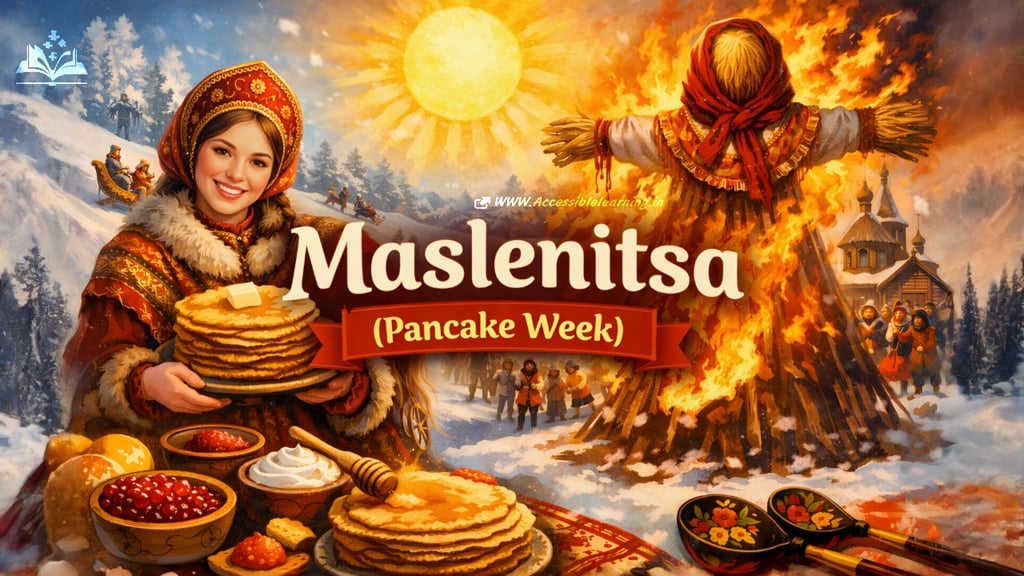
Maslenitsa, widely known as Pancake Week, is one of the most vibrant and emotionally rich festivals of the Slavic world. Celebrated primarily in Russia, Belarus, Ukraine, and other Eastern European regions, Maslenitsa marks the transition from winter to spring and the final festive pause before the solemn period of Great Lent in the Eastern Orthodox Christian calendar.
What makes Maslenitsa unique is its layered identity. It is at once ancient and modern, spiritual and playful, deeply symbolic yet joyfully indulgent. From snow-covered village squares to modern city festivals and social media pancake trends, Maslenitsa continues to evolve while holding onto its cultural core.
The Deep Historical Roots of Maslenitsa
Maslenitsa existed long before Christianity reached Slavic lands. In its earliest form, it was a pagan seasonal festival centered around the sun, agricultural cycles, fertility, and survival after harsh winters.
Winter in ancient Eastern Europe was brutal. Food was scarce, daylight was short, and survival depended on community cooperation. Maslenitsa emerged as a collective ritual of relief, celebrating the fact that people had endured another winter and that the sun was returning.
After Christianity
When Eastern Orthodoxy spread, Maslenitsa was not erased. Instead, it was absorbed into the religious calendar and reshaped as:
the final celebratory week before Lent
a time to prepare spiritually, socially, and physically
a bridge between joy and discipline
This blending of belief systems is why Maslenitsa feels both sacred and playful.
Why Maslenitsa Is Called Pancake Week
The nickname Pancake Week comes from Maslenitsa’s most iconic food: blini. Blini are thin pancakes made from flour, eggs, milk, and sometimes yeast. During Maslenitsa, meat is already restricted, but dairy is still allowed, making pancakes the perfect celebratory food.
Pancakes as a Symbol
Blini are not just eaten for taste. They represent:
the sun returning after winter
warmth and light
abundance and generosity
continuity of life
In older traditions, the first pancake was sometimes offered symbolically to ancestors, showing respect for those who came before.
The Structure of Maslenitsa: A Seven-Day Journey
Maslenitsa lasts seven days, and each day carries a social or symbolic role. Even though modern celebrations may simplify this structure, the meanings remain important.
Early Week: Social Opening
The first half of Maslenitsa focuses on:
visiting family
playful interactions
community games
matchmaking traditions
These days were historically important for young people seeking partners, as marriage discussions often followed Maslenitsa.
Midweek: Celebration Peaks
By Thursday, Maslenitsa enters its most energetic phase, often called “Wide Maslenitsa.”
village squares fill with music and dance
sledding, horse rides, and physical contests take place
work traditionally pauses
joy becomes collective and public
Final Days: Emotional and Spiritual Closure
As the week ends, Maslenitsa gradually shifts tone:
family visits become more intentional
hospitality becomes symbolic respect
people prepare emotionally for Lent
This transition prevents the festival from becoming purely indulgent. It gives it meaning.
Forgiveness Sunday: The Emotional Core of Maslenitsa
The final day of Maslenitsa, Forgiveness Sunday, is one of the most important aspects of the entire week.
On this day, people traditionally:
ask forgiveness from parents, friends, neighbors, and even strangers
let go of resentment before Lent
respond with phrases meaning “God forgives”
This practice creates emotional closure and resets relationships. In modern terms, it functions as:
conflict resolution
emotional decluttering
social healing
Even for non-religious people, this tradition remains deeply human and relevant.

Burning the Maslenitsa Effigy: Symbolism and Meaning
One of the most visually striking Maslenitsa rituals is the burning of a straw effigy, often dressed as a woman representing winter.
What the Ritual Represents
the end of winter hardship
destruction of stagnation
renewal and transformation
letting go of past burdens
The ashes were traditionally scattered over fields to symbolize fertility and future growth.
Modern Adaptations
Today, cities adapt this ritual with:
controlled fires or symbolic burnings
artistic installations
environmental considerations
The symbolism remains unchanged: out with the old, space for the new.
Maslenitsa Food Culture Beyond Pancakes
While pancakes dominate Maslenitsa, the food culture is broader and deeply communal.
Traditional Foods Include
blini with butter, sour cream, honey, jam
cottage cheese fillings (sweet or salted)
mushrooms and onions
fish-based toppings like herring or salmon
baked pastries and dumplings
hot tea, kvass, berry drinks
The act of sharing food matters more than the food itself. Maslenitsa meals are about generosity, abundance, and inclusion.
Regional Variations of Maslenitsa
Maslenitsa is not celebrated the same way everywhere.
Rural Celebrations
stronger focus on folk rituals
traditional costumes
physical games and snow competitions
closer ties to agricultural symbolism
Urban Celebrations
large public festivals
concerts and performances
restaurant specials and curated menus
cultural exhibitions
Outside Eastern Europe
In diaspora communities, Maslenitsa often becomes:
a cultural identity event
an educational festival
a way to preserve heritage for younger generations
Maslenitsa in the Modern World
Modern Maslenitsa has found new forms of expression without losing its essence.
Contemporary Elements Include
social media pancake challenges
modern blini recipes and fusion toppings
food bloggers and chefs reviving old recipes
schools teaching folk traditions
tourism-driven cultural festivals
Maslenitsa today balances nostalgia with creativity.
Maslenitsa and Seasonal Mental Health
From a modern psychological perspective, Maslenitsa plays a powerful role. Late winter is often associated with:
low energy
emotional fatigue
social isolation
Maslenitsa naturally counters this by:
encouraging social interaction
promoting outdoor activity
offering emotional closure before Lent
celebrating warmth and light
In many ways, Maslenitsa functions as a community-based mental reset.
Maslenitsa Compared to Other Pre-Lent Festivals
Maslenitsa shares similarities with other global traditions:
Shrove Tuesday
Carnival
Mardi Gras
But it stands apart because:
it lasts a full week
it blends folk ritual with religious meaning
it includes forgiveness as a core value
it centers seasonal change, not just indulgence

How Maslenitsa Can Be Celebrated Today, Anywhere
Maslenitsa doesn’t require geography. Its values are portable. Modern, simple ways to observe it:
cook pancakes with friends or family
learn one traditional recipe
reconnect with someone you’ve drifted from
reflect on what you want to release before spring
treat the week as a pause before a new personal cycle
These actions keep Maslenitsa alive beyond borders.
Why Maslenitsa Still Matters
Maslenitsa has lasted for centuries because it addresses something timeless:
the need for warmth after hardship
the need for community
the need for forgiveness
the need to mark change meaningfully
In a fast, fragmented modern world, Maslenitsa reminds us that transitions matter. Seasons matter. Relationships matter. And sometimes, the simplest ritual, sharing food, laughter, and forgiveness, is enough to prepare us for what comes next.
FAQ's
Q: Is Maslenitsa a pagan festival or a Christian holiday?
Maslenitsa is both. It began as a pre-Christian (pagan) seasonal festival celebrating the sun and the end of winter. Later, it was blended into the Eastern Orthodox calendar as the final festive week before Great Lent. That’s why Maslenitsa feels cultural, spiritual, and folkloric at the same time.
Q: Why are pancakes (blini) the symbol of Maslenitsa?
Blini are round, golden, and warm, which traditionally represents the sun returning after winter. In older Slavic culture, eating blini during Maslenitsa symbolized welcoming light, life, and spring.
Q: What is the difference between blini and regular pancakes?
Blini are usually:
thinner than American pancakes
sometimes yeast-based (traditional versions)
served with both sweet and savory toppings
often eaten as a cultural “main dish,” not just breakfast
So while Maslenitsa is called Pancake Week, blini are closer to traditional crepes with deeper symbolic meaning.
Q: Why do people burn the Maslenitsa effigy?
The straw doll represents winter (and the hardships of cold months). Burning it symbolizes:
saying goodbye to winter
cleansing the past
making space for renewal
welcoming spring
It’s not just a dramatic ritual; it’s a cultural “reset button.”
Q: What is Forgiveness Sunday, and why is it so important?
Forgiveness Sunday is the final day of Maslenitsa. People ask one another for forgiveness to enter Lent with a clean heart. Even in modern life, it serves a powerful purpose:
reducing emotional baggage
healing relationships
starting a new season without unresolved conflict
Q: Is Maslenitsa celebrated only in Russia?
No. While Russia is most famous for it, Maslenitsa is also celebrated in:
Belarus
Ukraine
parts of Poland, Lithuania, Latvia
Orthodox and Slavic diaspora communities worldwide
Q: What do people do during Maslenitsa besides eating pancakes?
Maslenitsa is not only about food. Traditional activities include:
winter games and sledding
folk music and dancing
fairs and public events
snow fort battles
visiting relatives (especially in-laws' traditions)
community gatherings
It’s basically a mix of festival + family week + seasonal farewell ritual.
Q: Can non-religious people celebrate Maslenitsa?
Yes, and many do. Maslenitsa works as a cultural and seasonal celebration even without religious meaning. For modern people, it can be celebrated as:
a “goodbye winter” week
a social bonding event
a mental reset before spring
a celebration of tradition and food
Q: Is Maslenitsa similar to Carnival or Mardi Gras?
Yes, in the sense that all are pre-Lent celebrations. But Maslenitsa is unique because:
it lasts a full week
it mixes folk rituals + spirituality
it strongly focuses on seasonal transition
it includes Forgiveness Sunday as a key ritual
Q: How can I celebrate Maslenitsa at home (modern version)?
A simple modern Maslenitsa celebration can look like:
making pancakes (blini-style if possible)
hosting a topping bar (honey, jam, sour cream, salmon, mushrooms)
inviting friends for a warm meal
doing a “winter release ritual” (journaling what you’re leaving behind)
texting someone: “If I ever upset you, forgive me”
This keeps Maslenitsa meaningful even outside Eastern Europe.
Subscribe to Frontier Intelligence
All © Copyright reserved by Accessible-Learning Hub
| Terms & Conditions
Accessible Learning Hub — Actionable clarity for high-agency minds.
Weekly breakdowns on AI breakthroughs, capital flow, and human performance systems. Zero fluff.