

Marine Day (Umi no Hi): Japan’s Holiday That Celebrates the Sea While Depending on It for Survival
Marine Day (Umi no Hi) is more than a Japanese holiday. Discover the history, economic impact, cultural significance, tourism boom, and environmental contradictions behind Japan's annual celebration of the sea.
CULTURE/TRADITIONTRAVEL LIFEJAPANCELEBRATION/FESTIVALS
Kim Shin
7/9/20264 min read
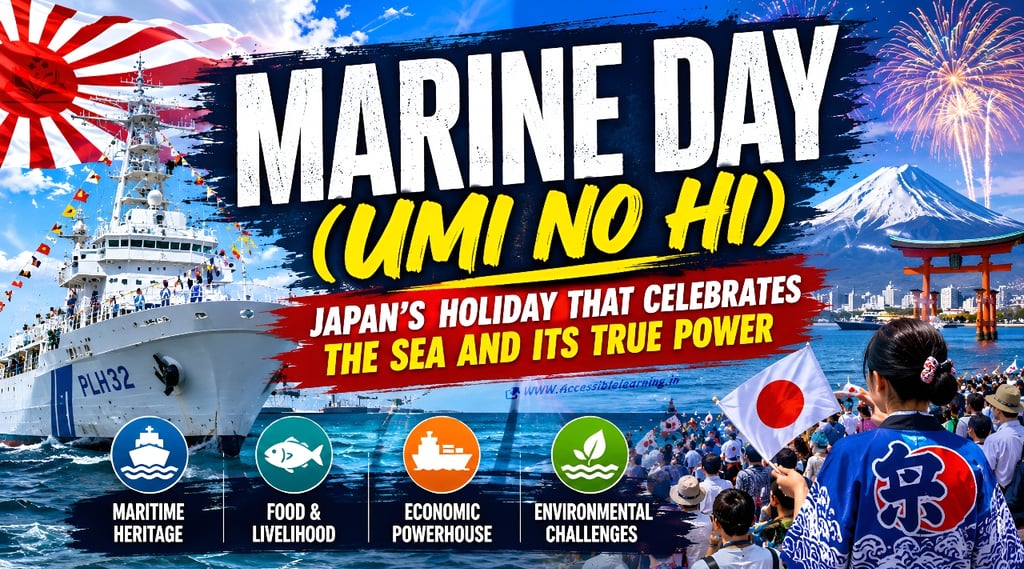
Japan doesn't celebrate the sea because it looks pretty on postcards. Japan celebrates the sea because without it, the country would not exist in its current form.
Every year in July, Marine Day, known as Umi no Hi, reminds more than 120 million people of a simple reality: Japan's economy, food supply, trade routes, and national identity remain tied to the ocean. That sounds romantic until you realize the same sea that feeds the nation also brings typhoons, tsunamis, maritime disputes, and environmental pressure.
The Brutal Truth: Marine Day Exists Because Japan Lives and Dies by the Ocean
Marine Day became a national holiday in 1996, making it one of Japan's newest public holidays. The government created it to express gratitude for the ocean's blessings and acknowledge Japan's maritime prosperity.
That official explanation tells only half the story.
Japan sits on an island chain with limited natural resources. Nearly every major chapter of Japanese history involves the sea. Fishing communities built local economies around it. International trade expanded through it. Naval power shaped political influence through it.
The holiday effectively serves as an annual reminder that Japan's relationship with the ocean is not optional. It is survival.
Why July Matters More Than Most Visitors Realize
Marine Day now falls on the third Monday of July, creating a long weekend that launches Japan's summer travel season.
Tourism campaigns love this timing. Businesses love it even more.
Beaches fill with families. Coastal cities host events. Aquariums report spikes in attendance. Maritime museums attract crowds that rarely visit during the rest of the year.
Behind the scenes, transportation networks prepare for massive movement. Trains, highways, ferries, hotels, and tourist destinations experience intense demand. What looks like a simple national holiday actually triggers a carefully managed logistical operation across the country.
Japan's tourism sector understands a basic truth: holidays create spending. Marine Day delivers exactly that.
The Festivals, Fireworks, and Harbor Events Tell Only Part of the Story
Many cities organize waterfront celebrations, ship tours, fishing demonstrations, marine sports competitions, and cultural performances.
Visitors often see colorful festivals and assume Marine Day functions like a traditional religious event. It doesn't.
Unlike many Japanese festivals rooted in Shinto shrines or Buddhist traditions, Marine Day operates primarily as a civic and national observance. It celebrates a relationship with geography rather than a specific deity.
Harbors often open facilities to the public. Maritime agencies showcase rescue operations. Coast Guard vessels sometimes welcome visitors. Educational programs teach children about marine industries.
The message remains consistent: understand the ocean because your country depends on it.
Japan Celebrates the Ocean While Facing Serious Marine Problems
This is where the glossy brochures stop talking.
Marine Day promotes appreciation for the sea, yet Japan faces major maritime challenges.
Overfishing threatens some fish populations.
Plastic pollution continues to affect coastal ecosystems.
Climate change alters ocean temperatures and marine biodiversity.
Rising sea levels create long-term concerns for coastal communities.
The contradiction remains obvious. Japan celebrates the ocean every year while simultaneously confronting environmental pressures that threaten the very resource being honored.
Many environmental groups use Marine Day to highlight conservation efforts rather than simple celebration. They understand that gratitude without responsibility means nothing.


The Economic Machine Behind Umi no Hi
Japan's maritime economy stretches far beyond fishing boats.
Commercial shipping carries enormous volumes of imports and exports. Ports connect Japan to global markets. Shipbuilding remains an important industrial sector. Marine tourism generates billions in economic activity.
Marine Day quietly reinforces public awareness of these industries.
Most people rarely think about container ships, port infrastructure, maritime law enforcement, or ocean logistics. Yet these systems keep supermarket shelves stocked and factories operating.
The holiday shines a spotlight on sectors that usually remain invisible until something goes wrong.
That visibility matters. A nation surrounded by water cannot afford maritime ignorance.
The Cultural Impact Runs Deeper Than Government Messaging
Marine Day has gradually become part of Japan's modern national identity.
Children learn about marine ecosystems. Families visit beaches together. Communities organize coastal events. Schools discuss maritime history. These activities create a shared cultural narrative.
The holiday tells Japanese citizens that the ocean is not merely scenery. It represents heritage, opportunity, risk, and responsibility. That message resonates because it reflects reality.
Japan's cuisine relies heavily on seafood. Coastal communities maintain centuries-old traditions. Maritime trade drives economic growth. Natural disasters remind citizens of the ocean's power.
Marine Day connects all those elements into a single national conversation.
The Final Verdict: More Than a Holiday, Less Than a Solution
Marine Day succeeds because it acknowledges an uncomfortable truth. Japan cannot separate itself from the sea.
The holiday encourages appreciation, education, tourism, and economic activity. It strengthens awareness of maritime industries and coastal culture.
But awareness alone solves nothing.
The real test comes after the fireworks end and the long weekend disappears. Protecting marine ecosystems, managing resources responsibly, and adapting to environmental change require action far beyond annual celebrations.
Marine Day matters because it forces Japan to remember what many nations forget.
The ocean is not just a backdrop.
It is infrastructure.
It is food.
It is history.
And for Japan, it remains one of the most important forces shaping the country's future.
Subscribe To Our Newsletter
All © Copyright reserved by Accessible-Learning Hub
| Terms & Conditions
Knowledge is power. Learn with Us. 📚

