

Makar Sankranti, Pongal, and Magh Bihu: How One Solar Event Shapes India’s Harvest Festivals
Makar Sankranti, Pongal, and Magh Bihu are harvest festivals that mark the sun’s transition into Capricorn and the beginning of Uttarayan. Celebrated across different regions of India, these festivals reflect gratitude toward nature, agricultural abundance, and community harmony, each expressed through unique rituals, foods, and traditions.
CULTURE/TRADITIONEVENT/SPECIALINDIA/BHARATCELEBRATION/FESTIVALS
Keshav Jha
1/4/20266 min read
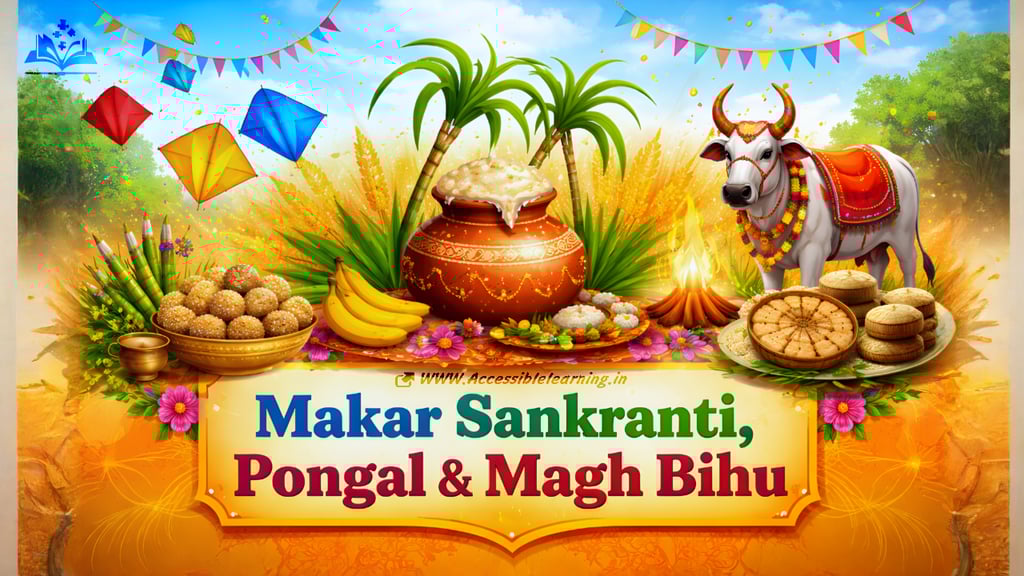
One Harvest Season, Many Cultural Expressions Across India
India’s agricultural calendar is deeply tied to festivals, and few occasions reflect this connection as beautifully as Makar Sankranti, Pongal, and Magh Bihu. Celebrated in different regions under different names, these festivals mark the same cosmic and seasonal shift: the sun’s transition into the zodiac sign Makara (Capricorn) and the beginning of Uttarayan, the sun’s northward journey.
While the rituals, foods, and names vary, the soul of these festivals remains the same. Gratitude for the harvest, respect for nature, community bonding, and hope for prosperity.
The Astronomical and Seasonal Significance
Unlike many Indian festivals that follow the lunar calendar, Makar Sankranti is based on the solar calendar, which is why it falls on January 14 (or occasionally January 15) almost every year.
This day is considered highly auspicious because:
The sun enters Capricorn (Makara Rashi)
Days start becoming longer than nights
Winter slowly gives way to spring
Agricultural cycles move from harvesting to renewal
For farming communities, this shift symbolizes reward after months of hard labor.
Makar Sankranti: North and Central India’s Festival of Transition
Cultural Meaning
In much of North, West, and Central India, the festival is known as Makar Sankranti. It represents spiritual awakening, discipline, and the idea of moving toward light, both literally and symbolically.
In Hindu tradition, Uttarayan is believed to be a favorable time for spiritual growth, charity, and self-reflection.
Rituals and Customs
Holy river baths, especially in the Ganga, Yamuna, Godavari, and Shipra
Charity (daan) of food, clothes, and money
Worship of the Sun God, Surya
Kite Flying Tradition
States like Gujarat, Rajasthan, and Maharashtra are famous for vibrant kite festivals. The sky fills with colorful kites, symbolizing freedom, joy, and the triumph of light over darkness.
Traditional Foods
Til (sesame) and jaggery sweets like laddoos and chikkis
These ingredients represent warmth, unity, and harmony during winter
Pongal: Tamil Nadu’s Thanksgiving to Nature
What Is Pongal?
Pongal is a four-day harvest festival celebrated primarily in Tamil Nadu. The word “Pongal” means “to boil over,” symbolizing abundance and overflowing prosperity.
It is one of the most important cultural festivals of South India.
The Four Days of Pongal
Bhogi Pongal
Discarding old belongings
Celebrating new beginnings
Surya Pongal
Dedicated to the Sun God
Preparation of the traditional Pongal dish in open sunlight
Mattu Pongal
Honoring cattle for their role in agriculture
Cows and bulls are decorated and worshipped
Kaanum Pongal
Social gatherings, family visits, and community bonding
Pongal Food Tradition
The iconic dish Pongal is made with:
Newly harvested rice
Milk
Jaggery or spices (sweet and savory versions)
It reflects gratitude to nature, farmers, and animals.
Magh Bihu: Assam’s Festival of Harvest and Community
Cultural Context
In Assam, the festival is known as Magh Bihu or Bhogali Bihu, with “Bhog” meaning enjoyment and feasting. It marks the end of the harvesting season and celebrates abundance.
Unique Traditions
Construction of Bhelaghar (temporary huts) using bamboo and hay
Community feasts held around Meji bonfires
Singing folk songs and traditional dances
On the morning after the bonfire night, people pray for prosperity and well-being.
Food and Feasting
Magh Bihu is rich in traditional Assamese foods:
Pitha (rice cakes)
Laru (laddoos made from sesame or coconut)
Smoked fish and local delicacies
Food is central to the celebration, symbolizing the joy of a successful harvest.
One Festival, Many Names: A Pan-Indian Connection
Though celebrated differently, Makar Sankranti, Pongal, and Magh Bihu share common themes:
Gratitude for agricultural abundance
Respect for the sun, earth, animals, and water
Community harmony and social bonding
Transition from hardship to hope
Similar harvest festivals are observed across India:
Lohri in Punjab
Uttarayan in Gujarat
Khichdi Parv in parts of Uttar Pradesh and Bihar
Each version reflects local geography, crops, and traditions.
Spiritual and Social Relevance Today
In modern times, these festivals serve as reminders of:
Sustainable living and respect for nature
The importance of farmers and rural communities
Slowing down to celebrate shared human values
Even in urban settings, kite flying, traditional meals, and family gatherings keep the spirit alive.


Historical Roots Beyond Mythology
Archaeological and literary evidence suggests that harvest celebrations aligned with the sun’s movement existed in India long before organized religious structures. Ancient agrarian societies tracked solar cycles to plan sowing and harvesting. Makar Sankranti stands out as one of the few festivals that preserved this scientific solar alignment, making it historically stable across centuries.
Connection With Ancient Indian Science
Indian astronomy (Jyotisha) identified Uttarayan as a period of increasing solar energy. Traditionally, this phase was believed to improve digestion, immunity, and mental clarity. That belief influenced food choices and lifestyle practices during the festival season.
Symbolism of Seasonal Foods
The widespread use of sesame, jaggery, rice, and milk is not just cultural. These ingredients:
Provide warmth during peak winter
Improve energy and metabolism
Balance seasonal nutritional needs
This reflects an early understanding of seasonal eating, long before the concept became popular globally.
Role of Women in Harvest Celebrations
In many regions, women lead rituals connected to food preparation, cattle worship, and household blessings. In Tamil culture, kolams drawn during Pongal symbolize fertility, protection, and positive energy. These practices highlight women as custodians of tradition and household prosperity.
Community Economics and Local Trade
Harvest festivals historically functioned as informal economic resets:
Farmers assessed surplus and storage
Barter systems were active during these periods
Local artisans and potters saw peak demand
This seasonal economic rhythm supported village self-sufficiency.
Environmental Consciousness Embedded in Rituals
Many rituals encourage balance with nature:
Controlled bonfires using biodegradable materials
Worship of cattle instead of animal sacrifice
Thanking natural elements rather than exploiting them
These customs promote respect for ecological cycles rather than domination over them.
Regional Crop Influence on Celebration Style
The nature of the crop directly shapes how the festival is celebrated:
Rice-growing regions focus on cooking rituals
Sugarcane belts emphasize sweets and sharing
Pastoral communities highlight cattle and livestock
This shows how culture adapts organically to geography.
Social Equality and Collective Participation
Unlike festivals centered on temples or elites, harvest festivals are largely community-driven. Participation does not depend on caste, wealth, or status. Shared meals and open gatherings reinforce social unity.
Changing Expressions in Urban India
Urban celebrations have evolved:
Kite festivals turned into tourism events
Cultural programs replace agricultural rituals
Eco-friendly celebrations are gaining popularity
Despite these changes, the core idea of gratitude remains intact.
Global Recognition and Diaspora Celebrations
Indian communities worldwide celebrate these festivals in new forms:
Pongal events in Southeast Asia and the US
Kite festivals in international cultural fairs
Magh Bihu celebrations within Assamese diaspora groups
These festivals now act as cultural bridges across generations and borders.
Deeper Spiritual Interpretation
Beyond rituals, the festivals symbolize:
Letting go of negativity (winter darkness)
Welcoming clarity and discipline (solar transition)
Aligning daily life with natural rhythms
This inner transformation aspect is often overlooked but deeply significant.
Why These Festivals Are Timeless
They survive because they are practical, not rigid. As long as humans depend on food, seasons, and sunlight, harvest festivals will remain relevant. Their ability to evolve without losing meaning makes them timeless cultural anchors.
Why These Festivals Still Matter
Makar Sankranti, Pongal, and Magh Bihu are not just cultural events. They are living traditions that connect astronomy, agriculture, spirituality, and human relationships.
In a fast-paced world, these festivals gently remind us to pause, give thanks, share food, and look forward with optimism.
Different names, different rituals, but one shared emotion: gratitude.
These harvest festivals show how India celebrates diversity while staying rooted in a common cultural rhythm guided by nature itself.

FAQ's
Q: Why are Makar Sankranti, Pongal, and Magh Bihu celebrated on the same date?
All three festivals are linked to the sun’s movement into the zodiac sign Capricorn. Since this transition is based on the solar calendar, the date remains almost fixed each year, usually on January 14.
Q: Is Makar Sankranti a religious festival or a seasonal one?
It is primarily a seasonal and agricultural festival. While religious rituals are associated with it, the core purpose is to mark the harvest season and the sun’s northward journey.
Q: What makes Pongal different from Makar Sankranti?
Pongal is a multi-day celebration that places strong emphasis on farmers, cattle, and nature. It includes detailed rituals like cattle worship and traditional cooking, making it more agrarian-focused compared to the broader spiritual observance of Makar Sankranti.
Q: Why is Magh Bihu also called Bhogali Bihu?
The word “Bhogali” comes from “Bhog,” meaning enjoyment or feasting. Magh Bihu celebrates abundance after harvest, with a strong focus on community meals and traditional Assamese foods.
Q: Why are sesame and jaggery used in these festivals?
Sesame and jaggery are warming foods suitable for winter. Symbolically, they represent unity, sweetness in relationships, and protection from seasonal illnesses.
Q: What is the importance of Uttarayan in these festivals?
Uttarayan marks the sun’s northward movement, which is considered a period of positive energy, growth, and renewal. Many traditions see it as a favorable phase for spiritual and personal progress.
Q: How are these festivals relevant in modern urban life?
Even in cities, they promote family bonding, cultural identity, and mindfulness toward nature. Modern celebrations may be simpler, but the values of gratitude and renewal remain unchanged.
Q: Are these festivals celebrated outside India?
Yes, Indian communities across the world celebrate them through cultural events, temple gatherings, and community feasts, keeping regional traditions alive abroad.
Q: Do these festivals have environmental significance?
Yes, many customs encourage seasonal eating, respect for animals, and sustainable use of natural resources, reflecting an early understanding of ecological balance.
Q: What is the common message behind all three festivals?
The shared message is gratitude for nature’s abundance, respect for agricultural labor, and hope for prosperity, health, and harmony in the coming months.
Subscribe to Frontier Intelligence
All © Copyright reserved by Accessible-Learning Hub
| Terms & Conditions
Accessible Learning Hub — Actionable clarity for high-agency minds.
Weekly breakdowns on AI breakthroughs, capital flow, and human performance systems. Zero fluff.