

Mahavir Jayanti: The Life, Lessons, and Living Legacy of Mahavira Ji
Discover the meaning of Mahavir Jayanti, Mahavira Ji’s life story, the teachings of Ahimsa, traditions, history, and why his message matters today.
CULTURE/TRADITIONINDIA/BHARATCELEBRATION/FESTIVALS
Jagdish Nishad
3/21/20267 min read
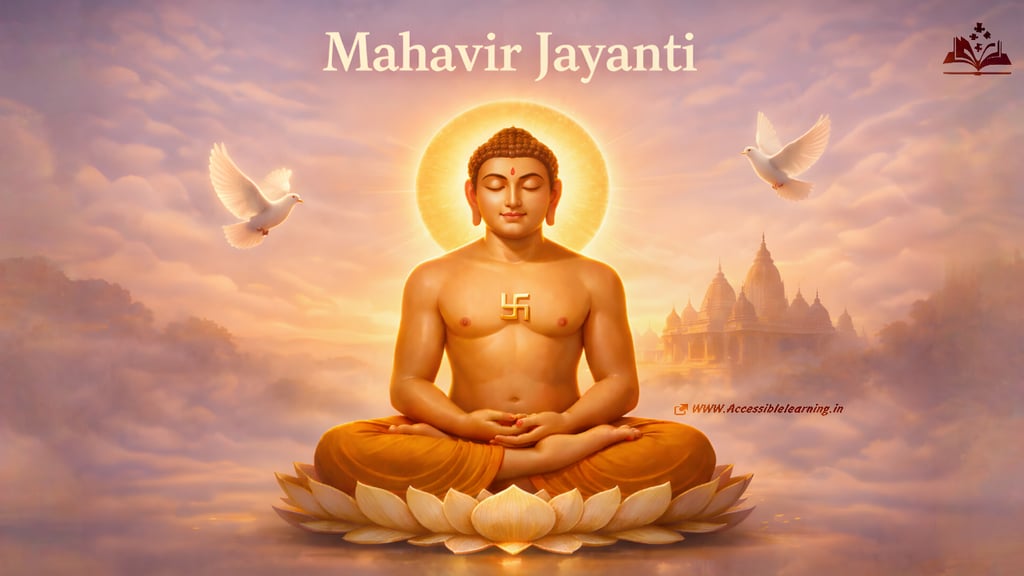
Mahavir Jayanti is one of the most sacred festivals for followers of Jainism. It celebrates the birth of Mahavira Ji, the 24th and last Tirthankara of the current time cycle. But beyond rituals and processions, Mahavir Jayanti is about a powerful idea: living with compassion, discipline, and awareness in a world filled with noise and speed.
This article explores not only the history of Mahavir Jayanti but also lesser-known facts, deep teachings, cultural practices, and why Mahavira’s philosophy matters even today.
Who Was Mahavira Ji?
Mahavira Ji was born in 599 BCE in Kundagrama near present-day Vaishali in Bihar, India. His birth name was Vardhamana, meaning “one who grows,” symbolizing prosperity.
Key Facts About Mahavira
Parents: King Siddhartha and Queen Trishala
Clan: Ikshvaku dynasty
Renunciation: At age 30, he left his royal life
Enlightenment: After 12 years of meditation and penance
Title: "Mahavira," meaning “Great Hero”
Nirvana: At Pavapuri in Bihar
He is not the founder of Jainism. Jainism existed before him, but Mahavira reorganized and strengthened its teachings.
Why Mahavir Jayanti Is Celebrated
Mahavir Jayanti marks the birth of a spiritual teacher who showed humanity how to live without harming others.
It usually falls in March or April during the Chaitra month according to the Jain calendar.
The Purpose Behind the Festival
To remember Mahavira’s teachings
To practice non-violence
To reflect on self-discipline
To spread compassion and kindness
It is not only a celebration. It is a day of introspection.
Mahavira’s Core Teachings
Mahavira’s philosophy is surprisingly modern. His ideas touch ethics, mental health, sustainability, and social harmony.
Ahimsa: Non-Violence
Ahimsa is not just about avoiding physical harm. It includes thoughts, words, and intentions. Mahavira taught that harming even small creatures affects our soul.
Hidden insight: Ahimsa is one of the earliest environmental ethics. It teaches respect for all living beings and promotes vegetarianism and sustainable living.
Anekantavada: Many-Sided Truth
Mahavira believed truth has many perspectives. No single viewpoint is complete. This idea is very relevant in today’s world of arguments and polarization. It encourages listening and humility.
Aparigraha Non-Attachment
Mahavira warned against excessive possessions and desires. In modern life, this teaching connects with minimalism, mental peace, and responsible consumption.
Satya, Asteya, Brahmacharya
These are the five vows of Jainism:
Truthfulness
Non-stealing
Celibacy or self-control
Non-violence
Non-possessiveness
These vows are the ethical backbone of Jain practice.

Lesser-Known Facts About Mahavira
Here are some interesting points rarely mentioned:
He Practiced Extreme Silence
Mahavira observed long periods of silence. This helped him master emotions and thoughts.
He Faced Real Hardships
During his 12-year meditation, he endured hunger, heat, mockery, and attacks. His discipline was intense.
Women in Jainism
Mahavira allowed women into the monastic order. This was progressive for ancient India.
Jain Logic Influenced Science
The concept of multiple perspectives influenced Indian philosophy, logic, and even modern conflict resolution ideas.
How Mahavir Jayanti Is Celebrated
Celebrations are peaceful but meaningful.
Rituals
Early morning prayers in Jain temples
Processions with Mahavira idols
Reading of Jain scriptures
Charity and feeding the poor
Meditation and fasting
Unique Traditions
Rath Yatra: Chariot procession of Mahavira idol
Abhisheka: Ritual bathing of idol with milk and water
Ahimsa Walks: Peace marches promoting non-violence
Families also avoid cooking root vegetables to reduce harm to tiny life forms.
Mahavir Jayanti Across India
Different regions celebrate in their own style.
Gujarat and Rajasthan
Large temple events and community meals.
Maharashtra
Peace rallies and educational talks in cities like Mumbai and Pune.
Bihar
Pilgrimage to Pavapuri and Vaishali.
Karnataka
Ancient Jain temples host special rituals.
The Hidden Philosophy Behind Mahavir Jayanti
Mahavir Jayanti is not just religious. It is psychological and social.
Mental Health Insight
Mahavira’s focus on self-control reduces anxiety caused by desire and comparison.
Environmental Lesson
Aparigraha and Ahimsa promote eco-friendly living and respect for nature.
Social Harmony
Anekantavada encourages understanding between different religions and cultures.
Mahavir Jayanti in the Modern World
Mahavira’s teachings are more relevant today than ever.
In Business
Ethical leadership, honesty, and minimal greed.
In Technology
Responsible innovation without harming society.
In Personal Life
Mindfulness, compassion, and simplicity.
Even global leaders study Jain philosophy for conflict resolution.
Important Places Linked to Mahavira
Kundagrama (Birthplace)
Vaishali
Rajgir
Pavapuri (Nirvana site)
Pilgrims visit these places on Mahavir Jayanti.

Historical Context: India in Mahavira’s Time
To truly understand Mahavira, we must look at the society he lived in.
India Around 600 BCE
Rise of kingdoms like Magadha and Vajji
Growth of cities and trade routes
Social inequality and rigid caste practices
Many people questioning rituals and sacrifices
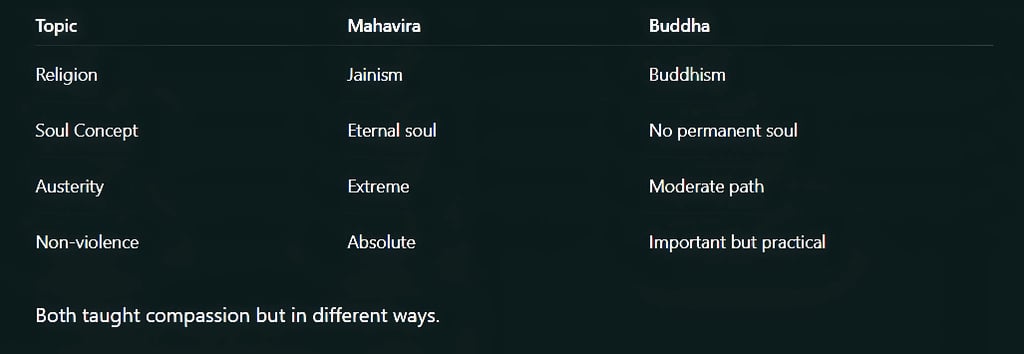
Mahavira was part of a larger spiritual movement that included thinkers like Buddha. People were searching for inner truth instead of external rituals. Hidden insight: Jainism and Buddhism both emerged as responses to violence in animal sacrifices and rigid social systems.
How Mahavir Jayanti? Date Is Calculated
Many readers wonder why the Mahavir Jayanti date changes every year. It is celebrated on Chaitra Shukla Trayodashi in the Jain calendar. The Gregorian date varies between March and April because Jainism follows a lunar calendar.
Differences Between Digambara and Shwetambara Celebrations
Jainism has two main sects:
Shwetambara
Monks wear white clothes
Women can achieve liberation
Mahavira depicted with open eyes
Digambara
Monks do not wear clothes
Liberation only possible as male in this life
Mahavira depicted with downcast eyes
Both celebrate Mahavir Jayanti but with slight ritual differences. This section adds depth most articles skip.
Symbolism of Lord Mahavira
Understanding symbols helps readers connect emotionally.
Main Symbols
Lion – Courage and strength
Ashoka Tree – Enlightenment
24 Spokes Wheel – 24 Tirthankaras
Swastika – Four states of existence
Raised Palm (Ahimsa Hand) – Non-violence
Hidden insight: The Jain Swastika is ancient and spiritual, unrelated to modern misuse.
Types of Fasting During Mahavir Jayanti
Fasting is a major part of the festival.
Common Fasts
Upvas – Full-day fast
Ekashana – One meal a day
Beasana – Two simple meals
Ayambil – Very simple tasteless food
Purpose is not punishment. It is self-control and awareness.
Food Traditions on Mahavir Jayanti
Jain food reflects Ahimsa.
Foods Avoided
Root vegetables like potato, onion, garlic
Honey
Fermented foods
Why? Because uprooting plants kills many microorganisms. Hidden insight: The Jain diet is one of the oldest plant-based ethical diets in history.
Children and Mahavir Jayanti
Families use this day to teach values.
Activities for Kids
Storytelling of Mahavira’s life
Drawing Ahimsa symbol
Charity activities
Meditation practice
Teaching kindness early is part of Jain culture.
Economic Impact of Jain Values
This is rarely discussed. Many Jain communities are known for ethical business practices.
Jain Business Principles
Honest trade
No cheating
Charity donations
Community service
Cities like Ahmedabad, Jaipur, and Mumbai have strong Jain business communities influenced by Mahavira’s teachings.

Inspirational Quotes of Mahavira
“All living beings desire to live. Do not harm them.”
“One who neglects or disregards the existence of earth, air, fire, water and vegetation disregards his own existence.”
“A man is seated on top of a tree in the midst of a burning forest. He sees all living beings perish. But he does not realize that the same fate is soon to overtake him also.”
These lines remind us of compassion and awareness.
Why Mahavir Jayanti Matters Today
In a world of conflict, consumerism, and stress, Mahavira offers a calm path. He teaches us to pause, reflect, and live responsibly. Mahavir Jayanti is not only about remembering a great teacher. It is about practicing kindness every day.
How You Can Observe Mahavir Jayanti Meaningfully
Even if you are not Jain, you can celebrate in a thoughtful way:
Practice non-violence in speech
Donate food or clothes
Avoid unnecessary consumption
Spend time in silence
Forgive someone
Small acts can reflect Mahavira’s wisdom.
Mahavir Jayanti is more than a festival. It is a reminder of humanity’s highest potential. Lord Mahavira showed that true victory is over anger, ego, and greed. His message is simple but powerful: live gently, think deeply, and act with compassion. That is the real celebration of Mahavir Jayanti.
FAQ's
Q: What is Mahavir Jayanti?
Mahavir Jayanti is the birth anniversary of Mahavira Ji, the 24th Tirthankara of Jainism. It is one of the most important festivals for Jains and celebrates his teachings of non-violence, truth, and self-discipline.
Q: When is Mahavir Jayanti celebrated?
Mahavir Jayanti is celebrated on Chaitra Shukla Trayodashi according to the Jain lunar calendar. In the Gregorian calendar, it usually falls in March or April.
Q: Why is Mahavir Jayanti celebrated?
It is celebrated to honor the birth and teachings of Mahavira Ji and to promote values like compassion, Ahimsa, honesty, and non-attachment.
Q: Who was Mahavira Ji?
Mahavira Ji was a spiritual teacher born in 599 BCE in Bihar. He renounced royal life, practiced deep meditation for 12 years, attained enlightenment, and taught the path of liberation in Jainism.
Q: Is Mahavir Jayanti a public holiday?
Yes, Mahavir Jayanti is a public holiday in several Indian states and a gazetted holiday for central government offices in India.
Q: How is Mahavir Jayanti celebrated?
Common celebrations include:
Temple prayers and rituals
Processions with Mahavira idols
Charity and food donation
Meditation and fasting
Reading Jain scriptures
Q: What are the main teachings of Mahavira Ji?
The five main teachings are:
Ahimsa (Non-violence)
Satya (Truthfulness)
Asteya (Non-stealing)
Brahmacharya (Self-control)
Aparigraha (Non-attachment)
Q: What is Ahimsa in Jainism?
Ahimsa means non-violence toward all living beings through thoughts, words, and actions. It is the most important teaching of Lord Mahavira.
Q: What is a Tirthankara?
A Tirthankara is a spiritual teacher who shows the path to liberation from the cycle of birth and death. Lord Mahavira is the 24th Tirthankara of Jainism.
Q: Where was Mahavira Ji born?
Mahavira Ji was born in Kundagrama near Vaishali in present-day Bihar, India.
Q: What food is eaten on Mahavir Jayanti?
Jains eat pure vegetarian food and avoid root vegetables like onions, garlic, and potatoes to prevent harm to microorganisms.
Q: Do people fast on Mahavir Jayanti?
Yes, many Jains observe fasting, such as full-day fasts or eating simple meals to practice self-control and spiritual discipline.
Q: How do Jains decorate temples on Mahavir Jayanti?
Temples are decorated with flowers, lights, rangoli, and flags. Idols of Mahavira are bathed in a ritual called Abhisheka.
Q: What is the message of Mahavir Jayanti?
The message is to live peacefully, avoid harming others, reduce greed, and seek inner purity.
Q: Can non-Jains celebrate Mahavir Jayanti?
Yes. Anyone can honor Mahavira’s teachings by practicing kindness, charity, and non-violence.
Q: What are famous places linked to Mahavira Ji?
Important pilgrimage sites include:
Pavapuri (Nirvana site)
Vaishali
Rajgir
Palitana
Shravanabelagola
Q: What is the difference between Mahavir Jayanti and Diwali in Jainism?
Mahavir Jayanti celebrates Mahavira’s birth, while Jain Diwali marks his Nirvana (liberation) at Pavapuri.
Q: Why is Mahavira called “Mahavira”?
He was called Mahavira, meaning “Great Hero,” because of his courage in conquering fear, pain, and desire.
Q: How is Mahavir Jayanti celebrated outside India?
Jain communities in the USA, UK, Canada, and other countries celebrate with temple events, peace marches, and charity programs.
Q: What life lessons can we learn from Mahavir Jayanti?
Speak kindly
Control anger
Reduce consumption
Help others
Respect nature
These teachings are relevant in modern life.
Subscribe to Frontier Intelligence
All © Copyright reserved by Accessible-Learning Hub
| Terms & Conditions
Accessible Learning Hub — Actionable clarity for high-agency minds.
Weekly breakdowns on AI breakthroughs, capital flow, and human performance systems. Zero fluff.