

Maha Shivratri: Strange, Powerful, and Little-Known Truths That Make This Night Extraordinary
Maha Shivratri is a powerful night of inner awakening, stillness, and transformation. This article explores the deeper meaning of Maha Shivratri beyond rituals, uncovering lesser-known spiritual insights, symbolic interpretations, hidden yogic science, and modern relevance. It explains why this ancient knight continues to guide people toward clarity, balance, and conscious living.
CULTURE/TRADITIONINDIA/BHARATCELEBRATION/FESTIVALS
Sachin K Chaurasiya
2/5/20265 min read
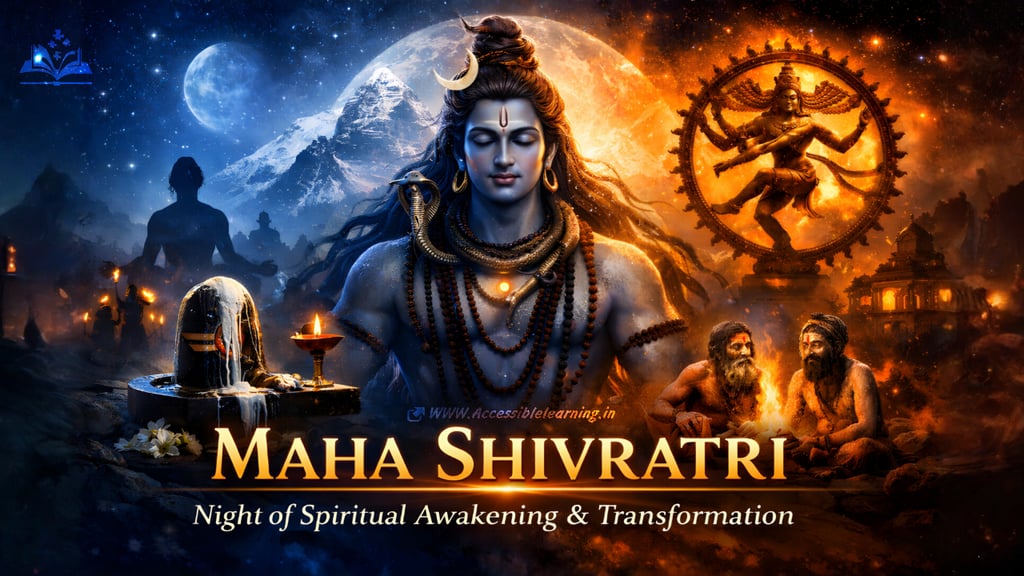
Most people know Maha Shivratri as a night of fasting, temples, and chanting. But beneath the surface lies a layer of ideas that are rarely discussed. Some are spiritual, some symbolic, and some are so unusual that they sound almost unreal. This is where Maha Shivratri becomes truly fascinating.
Let’s go deeper into the lesser-known side of this night.
Maha Shivratri Is Linked to a Natural Energy Surge
Ancient yogic traditions say Maha Shivratri is not chosen randomly. It falls on a night when the position of the moon creates a natural upward pull in the human spine. This is why many yogis insist on sitting upright, meditating, or staying awake.
The belief is simple. When gravity inside the body shifts upward, spiritual growth becomes easier. That is also why lying down and sleeping is discouraged. It is considered a missed opportunity for inner alignment.
This idea sounds mystical, but it reflects how closely ancient wisdom observed nature and the human body.
Shiva Is Not a God in the Usual Sense
One of the most misunderstood facts is that Shiv is not traditionally described as a god with a personality. In many ancient texts, Shiva is referred to as a state of consciousness.
Shiv means “that which is not.” No form. No identity. No limits.
Maha Shivratri celebrates emptiness, stillness, and silence. In a world obsessed with identity and labels, this idea feels radical even today.
The Shiv Lingam Is a Cosmic Diagram, Not an Idol
Many people assume the Shiv Lingam is just an object of worship. In reality, it represents the formless nature of existence.
The oval shape symbolizes infinite energy with no beginning or end. The base represents the grounding force of creation. Together, they reflect how the universe exists as both energy and structure.
This makes the Shiva Lingam less of a religious symbol and more of a visual philosophy of existence.
Maha Shivratri Is a Favorite Night for Aghori Sadhus
Aghori sadhus, known for living beyond social norms, consider Maha Shivratri the most powerful night of the year. Many of their intense spiritual practices are performed only on this night.
Why? Because Shiva represents complete detachment. Aghoris seek liberation by facing fear, death, and illusion directly. Maha Shivratri amplifies this process.
This side of the festival is rarely shown, but it reveals how deep and extreme the spiritual roots of this night truly are.
Staying Awake Is Symbolic of Overcoming Ignorance
Spiritually, sleep represents unconscious living. Staying awake on Maha Shivratri is not about physical endurance. It symbolizes waking up to reality.
The message is subtle but powerful. Most suffering comes from living on autopilot. This night encourages awareness over habit.
Even if someone stays awake simply by being mindful or reflective, they are participating in the deeper meaning of Shivratri.
Shiva’s Dance Represents Physics, Not Myth
The cosmic dance of Shiv is often described poetically, but it also aligns with modern physics in an eerie way.
Creation, preservation, and destruction are not separate events. They happen simultaneously at the atomic level. Shiv Ji’s dance symbolizes this continuous process.
Long before scientific language existed, this idea was expressed through symbolism and movement.
Maha Shivratri Is Considered a Night of “Spiritual Marriage”
Beyond mythology, this night represents the inner union of masculine and feminine energies within a human being. Logic and emotion. Stillness and movement. Awareness and action.
When these forces align, inner conflict reduces.
This is why many spiritual traditions see Maha Shivratri as a night for emotional healing and inner balance, not just devotion.
The Festival Is About Destruction, But Not in a Dark Way
Shiv is often misunderstood as a destroyer. In reality, destruction here means removal.
Removing ignorance.
Removing ego.
Removing outdated identities.
Maha Shivratri encourages voluntary destruction of what no longer serves you. This is why many people feel unusually clear or emotionally lighter after observing the night consciously.
Even Silence Is Considered a Form of Worship
Unlike many festivals filled with sound and celebration, silence is considered sacred on Maha Shivratri.
Not speaking unnecessarily. Not reacting impulsively. Not consuming noise.
Silence itself is seen as an offering to Shiv. In modern life, this might be the rarest and most powerful ritual of all.

You Don’t Need Belief for Maha Shivratri to Work
Perhaps the most unexpected truth is this. Maha Shivratri does not demand belief. It invites experience.
Whether someone sees Shiva as a god, an idea, or a symbol, the practices of stillness, awareness, fasting, and reflection naturally create clarity.
That is why this night has survived thousands of years without losing relevance.
Why Maha Shivratri Still Feels Different
Maha Shivratri stands apart because it does not promise rewards. It does not demand celebration. It does not rely on fear or hope.
It simply offers a moment.
A moment to stop fighting life.
A moment to sit with yourself.
A moment to dissolve what limits you.
That is why this night feels powerful, strange, calm, and transformative all at once. And that is why Maha Shivratri continues to matter, especially in a world that has forgotten the value of stillness.
FAQ's
Q: What is the real purpose of Maha Shivratri?
The deeper purpose of Maha Shivratri is inner awakening. It is meant to help a person become more conscious, aware, and still. The night is symbolic of moving from darkness to clarity, from unconscious habits to mindful living. Rituals exist only to support this inner shift.
Q: Why is Maha Shivratri celebrated at night and not during the day?
Night naturally slows the body and mind. Ancient yogic traditions believed this makes self-observation easier. Spiritually, night represents silence and emptiness, which aligns with the nature of Shiv. Staying awake is a reminder to remain aware instead of slipping into unconscious living.
Q: Is fasting on Maha Shivratri compulsory?
No, fasting is not compulsory. It is optional and should be done based on physical capacity. The real idea behind fasting is discipline and simplicity, not suffering. Even eating light food mindfully is considered meaningful if done with awareness.
Q: Can Maha Shivratri be observed without visiting a temple?
Yes, absolutely. Maha Shivratri is more about inner space than external location. Sitting quietly, meditating, reflecting, chanting softly, or even maintaining silence at home is considered equally powerful. Temples support collective energy, but they are not mandatory.
Q: Why is the Shiva Lingam worshipped instead of a human-like form?
The Shiv Lingam represents the formless nature of existence. It symbolizes infinite energy with no beginning or end. Unlike idols with faces and expressions, the Lingam reminds devotees that ultimate reality goes beyond shape, name, and identity.
Q: Is Maha Shivratri only for religious people?
No. Maha Shivratri is for anyone interested in self-awareness, balance, and inner calm. You do not need to follow a religion to benefit from stillness, reflection, and conscious practices. Many people observe it as a night of mindfulness rather than devotion.
Q: What happens if someone sleeps during Maha Shivratri?
Nothing negative happens. There is no punishment or bad luck. However, spiritually, sleeping is seen as missing the opportunity the night offers. Even staying awake for a few mindful hours is considered valuable.
Q: Why is silence considered important on Maha Shivratri?
Silence reduces mental noise. On Maha Shivratri, silence is treated as a form of worship because it helps a person observe thoughts without reacting. In modern life filled with constant sound and stimulation, silence itself becomes a powerful spiritual act.
Q: Is Maha Shivratri connected to astrology or science?
Yes, indirectly. The festival aligns with lunar positions believed to support upward energy movement in the human system. This is why sitting upright, meditating, or staying alert is emphasized. While ancient explanations were spiritual, they were rooted in observation of nature and the body.
Q: What is the most meaningful way to observe Maha Shivratri today?
The most meaningful way is simple and personal. Reduce distractions. Avoid unnecessary consumption. Spend time in reflection. Let go of something that no longer serves you. Even one honest intention made in stillness carries the essence of Maha Shivratri.
Subscribe To Our Newsletter
All © Copyright reserved by Accessible-Learning Hub
| Terms & Conditions
Knowledge is power. Learn with Us. 📚

