

M. S. Golwalkar: The Visionary Leader Who Transformed RSS Into a National Movement
Discover M. S. Golwalkar's 33-year leadership of RSS, his controversial ideology, organizational genius, and enduring impact on Indian nationalism and politics.
INDIAN HISTORYBIOGRAPHY/HISTORYBJPRSS
Keshav Jha
1/6/202610 min read
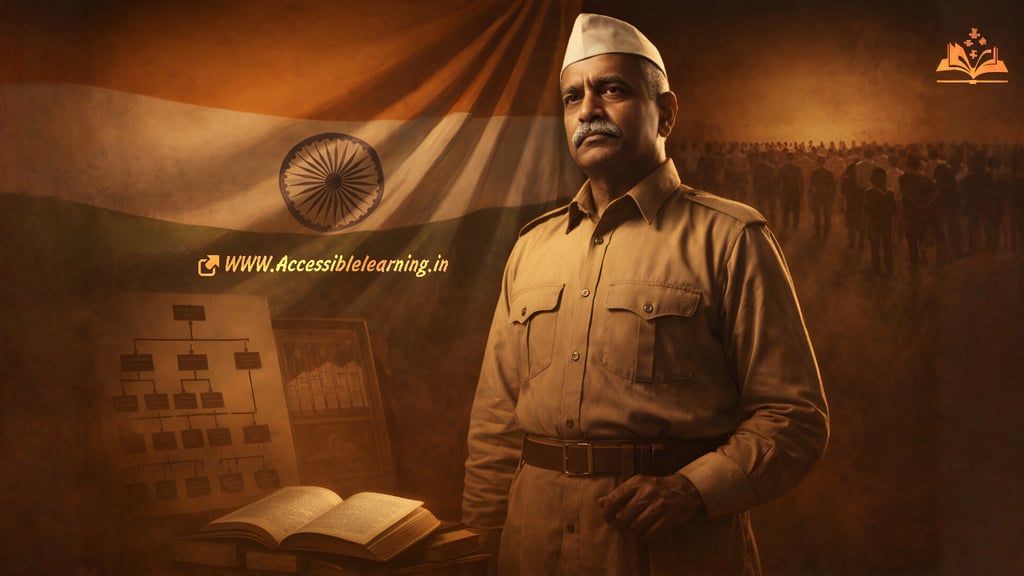
Who Was M. S. Golwalkar, and Why Does His Legacy Matter Today?
Madhav Sadashiv Golwalkar, reverentially known as "Guruji" by his followers, served as the second Sarsanghchalak (supreme leader) of the Rashtriya Swayamsevak Sangh (RSS) from 1940 to 1973. During his 33-year tenure, Golwalkar transformed the RSS from a localized organization with 100,000 members into a powerful nationwide movement with over one million members, establishing influence across political, social, religious, educational, and labor sectors through 50 affiliated organizations.
His ideological footprint continues to shape contemporary Indian politics, making him one of the most influential yet controversial figures in modern Indian history. Understanding Golwalkar's life, philosophy, and organizational innovations provides essential context for comprehending the current landscape of Hindu nationalism in India.
Early Life and Educational Background of M. S. Golwalkar
Birth and Family Origins
Madhav Sadashiv Golwalkar was born on February 19, 1906, at Ramtek near Nagpur into a Brahmin family. He was the only surviving son among nine children, a circumstance that likely shaped his early worldview and sense of responsibility.
Academic Journey: From Science to Ideology
Golwalkar earned a Master of Science degree from Banaras Hindu University in 1927, where he studied biology. His academic pursuits initially seemed destined for a scientific career, but his exposure to nationalist ideologies would redirect his life's trajectory.
During his time at BHU, Golwalkar came under the influence of Madan Mohan Malaviya, the nationalist leader and founder of the university. This mentorship planted the seeds of his later ideological convictions, though he hadn't yet fully engaged with the RSS at this stage.
The Turning Point: Meeting K. B. Hedgewar
The pivotal moment in Golwalkar's life occurred in 1931 when he met K. B. Hedgewar, the founder and Sarsanghchalak of the RSS, who was visiting Benares. This encounter would forever alter his path from academic pursuits to organizational leadership.
Rise to Leadership: From Pracharak to Sarsanghchalak
Grooming for Leadership (1934-1940)
Hedgewar recognized something unique in Golwalkar's abilities. According to RSS sources, Hedgewar encouraged Golwalkar to pursue a law degree because it would give him the reputation required of an RSS leader. This strategic career guidance demonstrates Hedgewar's long-term vision for his protégé.
Between 1937 and 1939, Golwalkar was placed in charge of the All-India Officers' Training Camp, where his abilities in managing complex organizational details, public speaking, reading, and writing were appreciated. These camps became crucibles for RSS leadership development.
The Authorship Controversy: "We, or Our Nationhood Defined"
In 1938, a book was published under Golwalkar's name that would become both his calling card and his albatross. Golwalkar was asked to translate G. D. Savarkar's 1934 Marathi work "Rashtra Mimansa" (Nationalism) into Hindi and English, resulting in "We, or Our Nationhood Defined," which was published in Golwalkar's name and regarded as a systematic treatment of RSS ideology.
The book drew heavily from European fascist ideologies and identified India as a Hindu Rashtra ("Hindu Nation"), arguing that the country's identity is tied to Hindu culture and considering non-Hindus as outsiders unless they assimilate with Hindu culture. This controversial text would haunt both Golwalkar and the RSS for decades.
Interestingly, Golwalkar only claimed in a 1963 speech that the book was an abridged translation, raising questions about authorship that persist to this day. In 2006, the RSS officially distanced itself from the book, attempting to separate the organization from its most inflammatory ideological statement.
The Unexpected Succession
A day before his death on June 21, 1940, Hedgewar gave Golwalkar a sheet of paper asking him to be the RSS leader. On July 3, five state-level sanghchalak directors in Nagpur announced Hedgewar's decision.
The appointment shocked many within the organization. Golwalkar's choice stunned RSS volunteers, as Hedgewar had passed over several senior activists. His background, training, and interests made him an unlikely successor, and several RSS leaders were skeptical about his ability as sarsanghchalak.
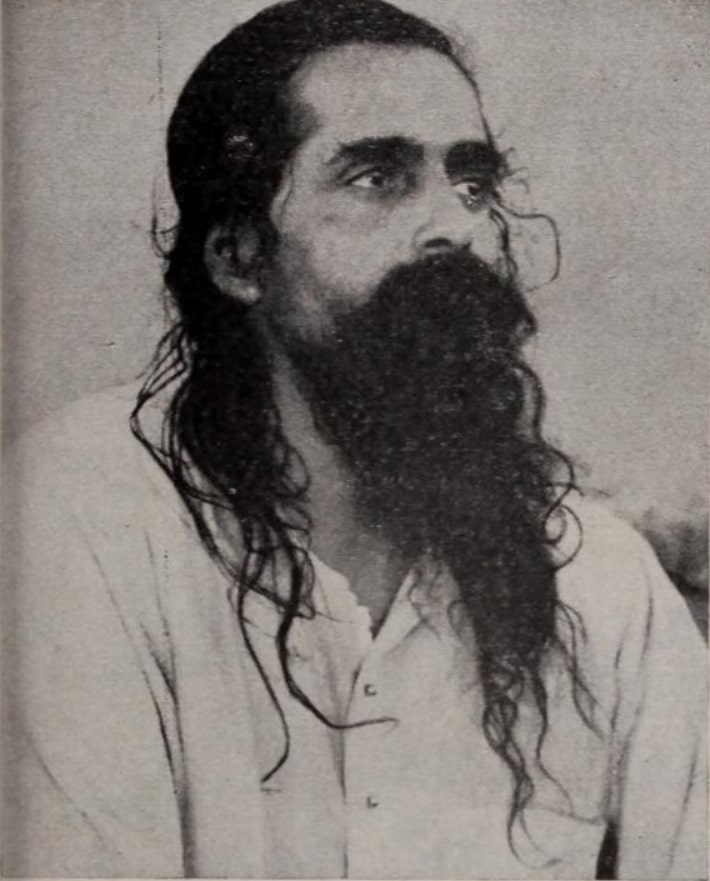
Transforming the RSS: Golwalkar's Organizational Innovations
Institutional Expansion and Structural Reforms
Golwalkar's genius lay not in charismatic public leadership but in organizational architecture. He created systematic mechanisms that ensured the RSS's growth and sustainability beyond individual personalities.
One of Golwalkar's major innovations was introducing an anti-communist, anti-socialist ideology, with the slogan "Not socialism but Hinduism." This anti-Marxist stance made the RSS popular with wealthy sections of society, who generously supported it.
He also established a network of prant pracharaks (provincial organizers) who would report directly to him rather than to the sanghchalaks, centralizing control and ensuring ideological consistency across the expanding organization.
Geographic and Sectoral Expansion
Under Golwalkar's leadership, the RSS extended its reach far beyond its Nagpur origins. The RSS expanded into Jammu and Kashmir in 1940, marking its entry into one of India's most sensitive regions.
The RSS extended to foreign countries, where Hindus were recruited into organizations such as the Bharatiya Swayamsevak Sangh or the Hindu Swayamsevak Sangh, establishing a global network that continues to influence diaspora politics today.
Educational and Social Welfare Initiatives
In 1952, Golwalkar urged his swayamsevaks to move into the field of education, leading to the establishment of the first Saraswati Shishu Mandir at Gorakhpur. Today, this movement encompasses over 20,000 schools educating more than 3.5 million students.
This educational network became a powerful tool for ideological transmission, ensuring that RSS values reached millions of young Indians through formal schooling.
The Controversial Legacy: Gandhi's Assassination and the RSS Ban
The Quit India Movement and Non-Participation
In 1942, Golwalkar forbade RSS volunteers from taking part in the Gandhi-led Quit India Movement, stating that fighting against the British was not part of the RSS's mission. This decision drew severe criticism and raised questions about the organization's commitment to Indian independence.
The Gandhi Meeting and Aftermath
In September 1947, as India underwent Partition, Gandhi met Golwalkar after hearing about the RSS's alleged involvement in communal violence. Golwalkar assured Gandhi that the RSS didn't stand for killing Muslims and only wanted to protect Hindustan.
Gandhi remained unconvinced. In a letter to Sardar Patel, Prime Minister Jawaharlal Nehru stated that Gandhi told him he didn't find Golwalkar convincing.
The Ban and Its Aftermath
After Gandhi's assassination on January 30, 1948, by Nathuram Godse (who had RSS connections), Golwalkar and RSS members were arrested in February 1948, and the organization was banned by Home Minister Patel.
Golwalkar challenged the ban with a satyagraha launched on December 9, 1948, in Delhi. The ban was finally revoked in July 1949 after the RSS pledged allegiance to the Indian Constitution. This episode forced the RSS to adopt a more constitutionally compliant public posture while maintaining its ideological core.
Golwalkar's Ideological Framework: "Bunch of Thoughts"
The RSS Manifesto
In his 1966 book "Bunch of Thoughts," Golwalkar discussed the role of the RSS, Hindu culture and nationalism, national unity, and religious minorities. This work became the ideological bible for the RSS, replacing the discredited "We, or Our Nationhood Defined."
The book controversially categorized Muslims, Christians, and communists as "internal threats" to India, a position that generated significant criticism from secular intellectuals and minority communities.
Despite being considered the RSS manifesto, the organization rejected controversial aspects of the book in 2018, demonstrating an ongoing tension between Golwalkar's original formulations and the RSS's contemporary public positioning.
Core Ideological Principles
Golwalkar's vision centered on several key concepts:
Hindu Rashtra: The idea that India's national identity is inseparable from Hindu civilization and culture.
Cultural Nationalism: A belief that true nationalism requires cultural homogeneity based on Hindu traditions.
Organic Unity: The concept that Indian society should function as a unified organism rather than a collection of competing interests.
Disciplined Organization: The RSS structure itself embodied Golwalkar's belief in hierarchical, disciplined organization as the vehicle for social transformation.
M. S. Golwalkar's Leadership Style and Personal Characteristics
The "Guruji" Persona
Though never formally a professor, Golwalkar presented himself as a professor to enhance popular admiration and glorify his personality. His acquaintances and followers referred to him as "Guruji" (meaning "Teacher"), largely due to his image as a former professor and intellectual.
This carefully cultivated image of scholarly authority gave him credibility beyond mere organizational credentials, allowing him to position the RSS as an intellectually serious movement rather than merely a political organization.
Spiritual Leadership Without Renunciation
Unlike traditional spiritual leaders who retreat from worldly affairs, Golwalkar remained deeply engaged with organizational and political matters while maintaining a spiritual persona. This synthesis of the worldly and spiritual created a unique leadership model that appealed to those seeking both nationalist activism and spiritual meaning.
Management and Organizational Genius
Golwalkar's real genius was organizational. He created systematic training programs, established clear hierarchies, developed reproducible methods for expansion, and built institutional memory that allowed the RSS to survive leadership transitions and external challenges.
The Historical Context: Golwalkar in Post-Independence India
Navigating the Nehruvian Era
Golwalkar led the RSS during India's foundational Nehruvian period (1947-1964), when secular nationalism dominated official discourse. His strategy involved building grassroots strength while avoiding direct political confrontation, creating the infrastructure that would later support explicit political mobilization.
The Emergency and RSS Resilience
Though Golwalkar died in 1973, just before the Emergency (1975-1977), his organizational innovations ensured the RSS survived this period of state repression and emerged stronger, demonstrating the durability of the structures he created.

Critical Perspectives and Controversies
The Nazi Connection Debate
"We, or Our Nationhood Defined," published in 1939 under Golwalkar's name, took inspiration from Adolf Hitler and asserted that India belongs to Hindus and that minorities should be treated along the lines of the Nazis' treatment of Jews.
This association with Nazi ideology remains one of the most damaging aspects of Golwalkar's legacy. While defenders point to the later authorship controversy and organizational disavowal, critics argue these ideological foundations continue to influence RSS thinking.
The Minority Question
Golwalkar's views on religious minorities remain deeply controversial. His framework consistently positioned non-Hindus as potential threats to national unity unless they fully assimilated into Hindu culture, a position critics view as fundamentally exclusionary and antithetical to Indian constitutional values.
Political Influence Without Political Office
Golwalkar seemed on a mission to convert the RSS into a powerful instrument, prompted by ideas borrowed from Nazism. He believed he must quietly wait for the British to leave before setting out to overthrow the present order and seize political power under his own leadership.
His strategy of building power without holding political office created a model that continues today, with the RSS wielding enormous influence while maintaining organizational separation from direct political activity.
Golwalkar's Death and Enduring Legacy
Final Years and Passing
M. S. Golwalkar died on June 5, 1973, in Nagpur, ending an era in RSS history. His 33-year tenure remains the longest leadership period in the organization's history, fundamentally shaping its character and trajectory.
Institutional Legacy
Golwalkar's most significant achievement was creating an institutional framework that transcended individual leadership. The training camps, pracharak system, affiliate organizations, and ideological clarity he established continue to define the RSS decades after his death.
Contemporary Relevance
The RSS today, with its close relationship to India's ruling Bharatiya Janata Party (BJP), represents the fruition of Golwalkar's long-term vision. The organizational methods, ideological frameworks, and strategic patience he championed have proven remarkably effective in contemporary Indian politics.
M. S. Golwalkar remains one of modern India's most influential and controversial figures. His 33-year leadership of the RSS created institutional structures and ideological frameworks that continue to shape Indian politics today. While supporters celebrate him as a visionary nationalist who preserved Hindu culture, critics condemn his exclusionary ideology and organizational methods that undermined India's secular, pluralistic traditions.
Understanding Golwalkar requires acknowledging this complexity—recognizing both his organizational genius and the troubling aspects of his ideology. His legacy cannot be separated from contemporary debates about Indian identity, nationalism, and the role of religion in public life.
As India continues to grapple with questions of national identity and pluralism, Golwalkar's vision and the organization he built remain central to these discussions, ensuring that his influence extends far beyond his 1973 death.
Frequently Asked Questions
Q: Who was M. S. Golwalkar, and what was his role in RSS?
M. S. Golwalkar was the second Sarsanghchalak (supreme leader) of the Rashtriya Swayamsevak Sangh, serving from 1940 to 1973. He transformed the RSS from a small regional organization into a nationwide movement with over one million members and 50 affiliated organizations across various sectors.
Q: What is Guruji's contribution to Indian nationalism?
Golwalkar developed a distinctive vision of cultural nationalism centered on Hindu civilization. He created organizational structures that allowed the RSS to expand throughout India and established educational, social, and labor organizations that spread Hindu nationalist ideology across multiple sectors of Indian society.
Q: Why was RSS banned after Gandhi's assassination?
The RSS was banned in February 1948 following Mahatma Gandhi's assassination by Nathuram Godse, who had RSS connections. Though the RSS maintained Godse had left the organization before the assassination, the government saw the RSS's ideology as contributing to the climate that enabled the murder. The ban was lifted in July 1949 after the RSS pledged allegiance to the Indian Constitution.
Q: What are M. S. Golwalkar's famous books?
Golwalkar's two most famous works are "We, or Our Nationhood Defined" (1939), which outlined a controversial vision of India as a Hindu nation, and "Bunch of Thoughts" (1966), which became the ideological manifesto of the RSS. Both books remain controversial for their treatment of religious minorities and their vision of Hindu nationalism.
Q: How did Golwalkar expand RSS across India?
Golwalkar created a systematic network of prant pracharaks (provincial organizers), established rigorous training camps, developed affiliate organizations in education, labor, and social welfare, and adopted an anti-communist ideology that attracted support from wealthy sections of society. This multi-pronged approach enabled the RSS to expand from 100,000 to over one million members during his tenure.
Q: What was Golwalkar's relationship with Gandhi?
Golwalkar had a limited and ultimately unsuccessful relationship with Gandhi. They met in September 1947, when Gandhi confronted Golwalkar about the RSS's alleged role in communal violence. Golwalkar denied the accusations, but Gandhi remained unconvinced. The relationship became permanently strained after Gandhi's assassination by an individual with RSS connections.
Q: Did M. S. Golwalkar support India's freedom struggle?
Golwalkar's relationship with the independence movement was ambivalent. In 1942, he forbade RSS volunteers from participating in Gandhi's Quit India Movement, stating that fighting the British was not part of the RSS mission. This non-participation drew criticism from nationalists and remains controversial in assessments of his legacy.
Q: What is the controversy around "We, or Our Nationhood Defined"?
The book, published under Golwalkar's name in 1939, drew heavily from Nazi ideology and argued for India as a Hindu nation where minorities should assimilate or be treated as subordinate. Golwalkar later claimed it was merely a translation of G. D. Savarkar's work, but this claim came only in 1963. The RSS officially distanced itself from the book in 2006, but its ideas shaped the organization's early ideology.
Q: How is M. S. Golwalkar viewed today?
Golwalkar remains a polarizing figure. RSS supporters revere him as "Guruji," a visionary who built a powerful nationalist organization and preserved Hindu culture. Critics view him as a divisive ideologue whose exclusionary nationalism and admiration for fascist models undermined India's secular, pluralistic foundations. His legacy continues to shape debates about Indian identity and nationalism.
Q: What was Golwalkar's vision for India?
Golwalkar envisioned India as a Hindu Rashtra where national identity would be based on Hindu civilization and culture. He believed in cultural nationalism rather than territorial or civic nationalism, arguing that India's unity required cultural homogeneity. This vision emphasized discipline, organizational strength, and the supremacy of Hindu cultural values in defining Indian nationhood.
Subscribe to Frontier Intelligence
All © Copyright reserved by Accessible-Learning Hub
| Terms & Conditions
Accessible Learning Hub — Actionable clarity for high-agency minds.
Weekly breakdowns on AI breakthroughs, capital flow, and human performance systems. Zero fluff.