

Losar (Tibetan New Year): A Complete Guide to Meaning, History, Rituals, and Living Traditions
Losar, the Tibetan New Year, is a deeply spiritual and cultural festival that marks renewal, reflection, and fresh beginnings. Celebrated across Tibet, India, Nepal, and Himalayan regions, Losar blends ancient traditions, Buddhist rituals, symbolic foods, and community gatherings. This article explores the meaning, history, rituals, and modern relevance of Losar in a clear way.
CULTURE/TRADITIONEVENT/SPECIALCELEBRATION/FESTIVALS
Kim Shin
2/8/20266 min read
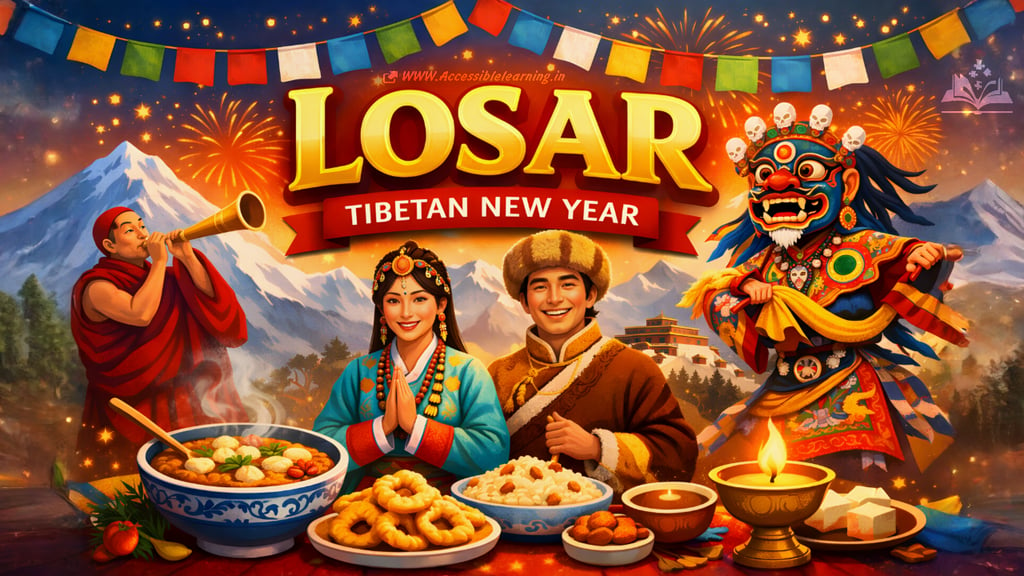
Losar, the Tibetan New Year, is one of the oldest and most meaningful festivals in the Himalayan cultural world. It is not only a celebration of time but also a reflection of how Tibetans understand life, nature, and spiritual balance. Losar brings together prayer, family, food, ritual, and joy in a way that feels deeply human and grounded.
Celebrated by Tibetans across Tibet, Nepal, Bhutan, and India, especially in Ladakh, Sikkim, Arunachal Pradesh, and Dharamshala, Losar is also observed by Tibetan communities around the world. Despite regional variations, the heart of the festival remains the same: renewal, gratitude, and harmony.
What Is Losar?
Losar means “New Year” in the Tibetan language. It follows the Tibetan lunar calendar, which is influenced by both lunar phases and solar cycles. Because of this, Losar usually falls between late January and early March.
Unlike many modern New Year celebrations that last a single night, Losar unfolds over several days, sometimes even weeks. The first three days are considered the most sacred and symbolically powerful, while the remaining days focus on social connection and public celebration.
Losar is not about fireworks or countdowns. It is about intention. Tibetans believe that how one thinks, speaks, and acts during Losar shapes the energy of the entire year ahead.
Ancient Origins of Losar
Losar began long before Buddhism reached Tibet. Its earliest roots lie in the Bon religion, an indigenous spiritual tradition centered on nature worship, seasonal cycles, and protective rituals. Farmers marked the end of winter with ceremonies to honor mountain spirits and pray for fertile land.
When Buddhism entered Tibet in the 7th century, these older customs blended with Buddhist philosophy. Over time, Losar became a festival that combines ritual purification, ethical reflection, and devotion to enlightened beings.
This blending of belief systems is why Losar feels both deeply spiritual and closely connected to everyday life.
Structure of Losar: The Festival in Stages
Pre-Losar: Clearing the Old
The days leading up to Losar are focused on cleansing. Homes are cleaned thoroughly, not just physically but symbolically. Old items may be discarded, and spaces are reorganized to allow positive energy to flow.
A key ritual during this time is the preparation of Guthuk, a special noodle soup eaten on the eve of Losar. Guthuk contains dumplings with hidden symbolic items such as:
Wool, representing kindness
Charcoal, symbolizing negativity
Rice or grains, suggesting prosperity
These symbols encourage self-awareness. The ritual is often lighthearted, filled with laughter, but it carries a deeper message about personal growth.
On the final night before Losar, protective rituals are performed to drive away bad spirits and misfortune from the previous year.
First Day of Losar: Welcoming the New Year
The first day of Losar is calm, sacred, and family-centered. People wake up early, often before sunrise. Traditional clothes are worn, and offerings are made at household altars.
Typical offerings include:
Butter lamps for wisdom and clarity
Barley flour for abundance
Incense to purify the environment
Families sit together to drink chang or butter tea and share special meals. The greeting “Tashi Delek” is exchanged, wishing good fortune and auspiciousness.
This day is usually reserved for close family. Loud celebrations are avoided to keep the energy peaceful and focused.
Second and Third Days: Community and Culture
The following days are more outward-facing. People visit relatives, neighbors, and monasteries. Public prayers and ceremonial gatherings take place.
One of the most visually striking elements of Losar is the Cham dance, performed by monks wearing elaborate masks and costumes. These dances are not entertainment alone. They represent the destruction of ignorance, fear, and ego.
Villages and towns come alive with music, traditional songs, and symbolic games that strengthen social bonds.

Traditional Foods of Losar and Their Meaning
Food during Losar is deeply symbolic. Each dish reflects wishes for health, wealth, and harmony. Common Losar foods include:
Guthuk: Ritual soup for purification
Khapse: Fried pastries shaped into knots, flowers, or braids
Dresi: Sweet rice with butter, sugar, and dried fruits
Butter tea: A daily staple symbolizing warmth and nourishment
Preparing food together is an important part of the festival. It reinforces cooperation and shared responsibility within families.
Spiritual Philosophy Behind Losar
At its heart, Losar is a spiritual reset. Many Tibetans use this time to reflect on the past year, acknowledge mistakes, and renew their commitment to ethical living.
Visiting monasteries, offering prayers, and making donations are common practices. Lighting butter lamps represents the wish for enlightenment, while prayer flags spread blessings through the wind.
Losar teaches that outer celebration should be balanced with inner awareness. Happiness is seen as something cultivated, not consumed.
Regional Variations of Losar
Losar is celebrated differently depending on the region:
In Ladakh, Losar includes archery, folk music, and community feasts
In Central Tibet, monastic rituals play a dominant role
In Arunachal Pradesh and Sikkim, Losar blends with local tribal traditions
Despite these differences, the spirit of renewal remains universal.
Losar in the Modern World
Today, Losar continues to adapt while staying rooted in tradition. In cities and diaspora communities, celebrations may be shorter, but rituals remain meaningful.
For younger generations, Losar is a way to stay connected to heritage. For outsiders, it offers insight into a culture that values mindfulness, balance, and collective well-being over excess.
Losar also serves as a reminder that time is cyclical, not rushed. Every year offers a chance to begin again with clarity and purpose.
Why Losar Still Matters
In a world driven by speed and distraction, Losar stands for pause and presence. It encourages people to clean their surroundings, reflect on their actions, and reconnect with both community and self.
Losar is not just a Tibetan festival. It is a lesson in living with intention.
Losar, the Tibetan New Year, is a celebration of life in its fullest sense. It honors the past, grounds the present, and opens the door to a hopeful future. Through prayer, food, ritual, and togetherness, Losar reminds us that renewal begins from within.
Whether observed in the Himalayas or across the globe, the essence of Losar remains unchanged: let go of what no longer serves you, welcome clarity, and move forward with compassion and balance.

FAQ's
Q: What is Losar, and why is it celebrated?
Losar is the Tibetan New Year, celebrated to mark the beginning of a new lunar year. It represents spiritual renewal, purification of past negativity, and the welcoming of peace, prosperity, and positive energy. Losar blends ancient Bon traditions with Tibetan Buddhist practices, making it both a cultural and spiritual festival.
Q: When is Losar celebrated each year?
Losar is celebrated according to the Tibetan lunar calendar, usually between late January and early March. The exact date changes every year based on lunar cycles, which is why Losar does not have a fixed date in the Gregorian calendar.
Q: How long does the Losar festival last?
Losar typically lasts between 3 and 15 days, depending on region and tradition. The first three days are the most important and focus on family rituals, prayers, and offerings, while later days involve social visits, cultural events, and community celebrations.
Q: What is the spiritual significance of Losar?
Losar is considered a time for inner cleansing and ethical renewal. People believe that thoughts and actions during Losar influence the entire year ahead. Practices like lighting butter lamps, visiting monasteries, and offering prayers symbolize wisdom, compassion, and the removal of ignorance.
Q: What is Guthuk, and why is it eaten during Losar?
Guthuk is a traditional noodle soup eaten on the eve of Losar. It contains dumplings with hidden symbolic items that reflect personal traits or future fortunes. Eating Guthuk is meant to cleanse negative energy from the past year and encourage self-reflection in a light-hearted way.
Q: How is Losar celebrated in India?
In India, Losar is widely celebrated in Ladakh, Sikkim, Arunachal Pradesh, and Dharamshala. Celebrations include monastery rituals, traditional dances, family feasts, and public cultural programs, often blending Tibetan customs with local traditions.
Q: What are the main foods eaten during Losar?
Common Losar foods include Guthuk, Khapse (fried pastries), Dresi (sweet rice with butter and dried fruits), and butter tea. These foods symbolize abundance, warmth, and togetherness and are often prepared and shared with family and guests.
Q: How is Losar different from other New Year celebrations?
Unlike many modern New Year celebrations focused on entertainment, Losar emphasizes mindfulness, spiritual reflection, and community harmony. It is less about spectacle and more about setting intentions, practicing gratitude, and renewing one’s values for the year ahead.
Q: Is Losar only celebrated by Tibetans?
While Losar is a Tibetan festival, it is also celebrated by related Himalayan communities in Nepal, Bhutan, and parts of India. In addition, people from other cultures often participate in Losar events to learn about Tibetan traditions and spirituality.
Q: Why is Losar still relevant in modern times?
Losar remains relevant because it encourages balance in a fast-paced world. Its focus on reflection, simplicity, and human connection offers a meaningful alternative to rushed celebrations, reminding people that true renewal starts from within.
Subscribe to Frontier Intelligence
All © Copyright reserved by Accessible-Learning Hub
| Terms & Conditions
Accessible Learning Hub — Actionable clarity for high-agency minds.
Weekly breakdowns on AI breakthroughs, capital flow, and human performance systems. Zero fluff.