

Little New Year (Xiaonian): Meaning, Traditions, Foods, Rituals, and How It Begins Chinese New Year Preparations
Little New Year (Xiaonian) is a traditional Chinese festival celebrated before Chinese New Year that marks the beginning of Lunar New Year preparations. Learn its meaning, dates, Kitchen God rituals, food traditions, taboos, and how Xiaonian is celebrated across Northern and Southern China today.
CULTURE/TRADITIONEVENT/SPECIALCHINACELEBRATION/FESTIVALS
Kim Shin
2/1/20267 min read
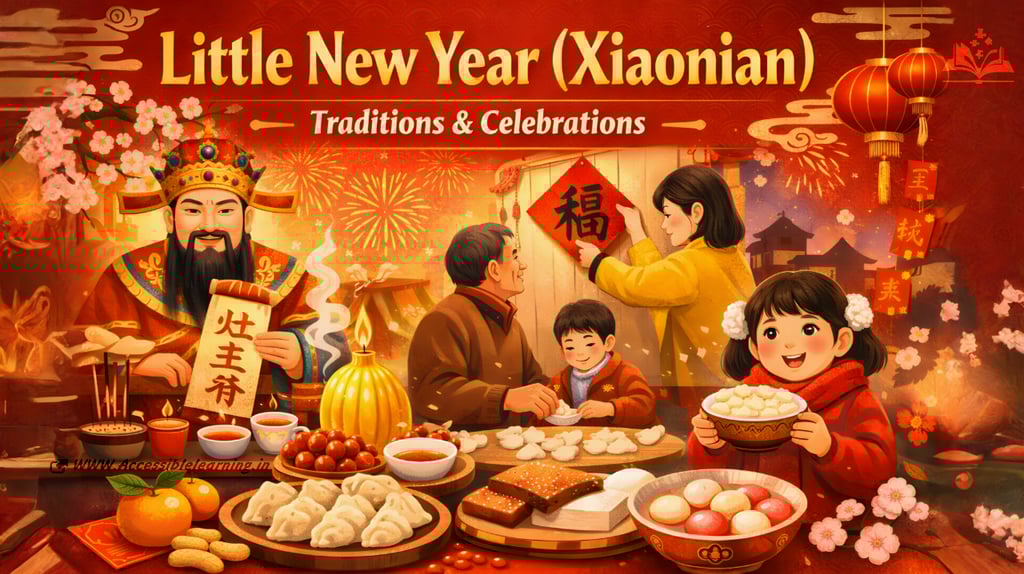
Chinese New Year (Spring Festival) is known worldwide for lanterns, fireworks, red decorations, and family reunions. But in China, the New Year season doesn’t begin on the official New Year’s Day. It starts earlier, with a special festival that acts like a cultural gateway into the celebration.
That festival is Little New Year, called Xiaonian (小年). Xiaonian is the moment when Chinese households begin the serious work of preparing for the New Year. It combines spiritual traditions, family rituals, home purification customs, and joyful food culture. In many ways, it’s the most underrated festival of the entire New Year season because it sets the tone for everything that follows.
This article explores Xiaonian in-depth — including its meaning, origins, dates, key customs like the Kitchen God ritual, regional variations, food traditions, taboos, and its role in modern Chinese life.
What Is Little New Year (Xiaonian)?
Xiaonian (小年) literally translates to “Little Year.” It is a traditional Chinese festival celebrated in the final days of the lunar year, usually about one week before Chinese New Year.
In simple terms:
Chinese New Year = the big celebration
Xiaonian = the beginning of the New Year season
Xiaonian is not just another holiday. It marks the shift from regular daily life to the New Year mindset, where families start focusing on:
cleaning and renewal
gratitude and worship
preparing food and supplies
creating a welcoming home for good fortune
Why Is Xiaonian Important?
Xiaonian is important because it officially starts the “New Year ritual cycle.” It is believed that after this day, the household enters a sacred preparation phase — the home must become clean, respectful, and ready to receive luck.
Xiaonian represents three powerful themes:
1) Spiritual transition
It involves offering prayers and sending divine messengers (especially the Kitchen God) to Heaven.
2) Physical renewal
Deep cleaning removes old dust — both literally and symbolically.
3) Social preparation
Families begin shopping, organizing, and planning for reunion meals and travel.
When Is Xiaonian Celebrated? (Dates and Regional Differences)
One of the most common questions online is:
What date is Xiaonian?
Xiaonian doesn’t have one fixed universal date. It varies by region and tradition, but it always falls in the 12th lunar month.
Most common dates:
23rd day of the 12th lunar month (Northern China)
24th day of the 12th lunar month (Southern China)
Some areas may observe it on other days due to historic regional customs.
Why the difference?
Historically, ceremonial calendars varied between regions and social classes. Over centuries, these practices became local identity traditions. So today it’s normal to hear both:
“Xiaonian is on the 23rd”
“Xiaonian is on the 24th”
Origins of Xiaonian: Where It Comes From
Xiaonian comes from older Chinese spiritual beliefs and folk religion practices, especially connected to household worship.
The festival is deeply tied to:
Daoist traditions
folk deity worship
family ancestor respect
seasonal renewal customs
But the strongest and most famous origin is linked with the Kitchen God.


The Kitchen God (Zao Jun): The Heart of Xiaonian
The most iconic tradition of Xiaonian is the Kitchen God ritual.
The Kitchen God is known as:
Zao Jun (灶君)
Zao Shen (灶神)
Zao Wang Ye (灶王爷)
What does the Kitchen God represent?
In Chinese tradition, the kitchen is not just a cooking place — it’s the heart of family survival. So the deity of the kitchen becomes a guardian of household well-being.
Belief:
The Kitchen God observes the family throughout the year and then travels to Heaven just before the New Year to report to the Jade Emperor (a heavenly ruler figure).
The report may influence:
family luck
wealth
health
peace
harmony
So Xiaonian is both:
a farewell ceremony to the deity
and a request for blessings
Major Xiaonian Traditions and Rituals (Step-by-Step)
Here are the most important Xiaonian customs, explained clearly and in detail.
1) Worshipping the Kitchen God (祭灶 / Jizao)
This ritual is performed to honor the Kitchen God and ensure a positive report in Heaven.
Common offerings include:
candy
sticky sweets
honey
fruits
tea or rice wine
sweet rice cakes
Why sticky sweets?
Many people believe sticky offerings help in two symbolic ways:
they “sweeten” the deity’s words
they “stick the mouth,” preventing bad reports
This tradition makes Xiaonian culturally unique: it blends morality, humor, and spiritual faith.
2) Deep Cleaning the Home (扫尘 / Sao Chen)
After worship, most families begin big New Year cleaning. This cleaning is not random. It has symbolic meaning:
sweeping away bad luck
removing negativity from the past year
resetting the environment for prosperity
Typical cleaning activities:
washing windows and doors
cleaning kitchens thoroughly
dusting altars and shelves
removing clutter and old items
repairing broken things
organizing storage
In many ways, this tradition mirrors a powerful life lesson:
you can’t welcome new blessings while holding onto old mess.
3) Preparing New Year Supplies (办年货 / Ban Nian Huo)
Xiaonian also begins the big seasonal purchase cycle. People buy:
nuts (peanuts, melon seeds)
dried fruit and sweets
tea and festive drinks
festive ingredients (flour, rice, meats, sauces)
gifts for elders and relatives
incense and worship materials
In local markets, this creates a strong festival atmosphere — crowded streets, colorful stalls, and the smell of roasted snacks.
4) Creating a Festive Home (Decorations and Symbolism)
Right after Xiaonian, decoration work often begins.
Common decorations:
Spring Festival couplets (春联): red banners with poetic blessings
Fu character (福): fortune sign pasted on doors
Paper cuttings (剪纸): decorative art on windows
Red lanterns (灯笼)
Door Gods (门神): protect the house from evil spirits
Why is “福” pasted upside down?
Because “upside down” (倒 / dao) sounds like “arrive” (到 / dao).
So “福倒了” sounds like “福到了” → fortune has arrived.
5) Family Dinner and Togetherness
Although not as grand as New Year’s Eve dinner, Xiaonian often includes a meaningful family meal. This meal symbolizes:
unity
early reunion
gratitude
a peaceful start to the New Year cycle
For migrant workers and students, this moment also triggers emotional planning for travel back home.
Xiaonian Foods: What People Eat on Little New Year
Food is one of the strongest cultural expressions in Chinese festivals.
Different regions celebrate with different flavors — but the theme is the same:
sweetness, unity, and rising fortune.
Northern China: Dumplings and Sugar Melon
Dumplings (饺子 / Jiaozi)
resembles ancient gold ingots
symbolizes wealth and reunion
Sugar Melon / Sticky Malt Candy (糖瓜 / Tanggua)
associated directly with the Kitchen God ritual
sweet and sticky (symbolic value)
Southern China: Rice Cakes and Sweet Balls
Glutinous Rice Cake (年糕 / Niangao)
“Gao” sounds like “higher”
symbolizes growth, promotions, progress
Tangyuan (汤圆)
sweet rice balls
symbolize family togetherness and harmony
Other common Xiaonian treats:
steamed buns
citrus fruits (symbol of luck)
peanuts and seeds (abundance)
fish dishes (“surplus every year” symbolism)

Xiaonian Taboos: What Not to Do
Traditional Chinese festivals often include symbolic warnings to avoid inviting bad luck.
Common taboos on Xiaonian:
avoid arguing or cursing
avoid speaking negativity
avoid breaking dishes or glass
avoid laziness after cleaning begins
avoid disrespecting the kitchen or food
The deeper idea is simple:
Xiaonian is a time to be mindful, grateful, and disciplined.
Xiaonian in Different Regions of China
Xiaonian traditions vary widely, and that variety makes it culturally rich.
In Northern China
stronger focus on the Kitchen God ritual
dumplings are essential
family worship tends to be more formal
In Southern China
more focus on rice-based festival foods
some regions emphasize ancestor offerings and local deities more
In rural communities
rituals remain more detailed and traditional
handmade decorations are common
people prepare food in large batches
In major cities
traditions are simplified
many buy decorations and food online
professional cleaning services become popular after Xiaonian
Xiaonian vs Chinese New Year: Key Difference
Many people confuse Xiaonian with the New Year itself. They’re connected but not the same.
Xiaonian
preparation festival
worship + cleaning
beginning of New Year rituals
Chinese New Year (Spring Festival)
main celebration
reunion dinner + fireworks
official new year begins
Xiaonian is like “starting the engine” before the New Year journey.
Modern Meaning of Xiaonian (Why It Still Matters)
Even in modern China, Xiaonian remains important because it keeps cultural identity alive.
Today, many people may not fully believe the literal deity story, but the festival still matters because it symbolizes:
clearing stress and chaos
making time for family
starting fresh
preparing with intention
honoring tradition in a fast modern world
Interesting Facts About Xiaonian
Here are some engaging points that make the article richer (and great for SEO/AI queries):
Xiaonian is often called the unofficial start of the Spring Festival season
It triggers the early part of Chunyun (Spring Festival travel rush) planning
Many families treat Xiaonian as the day to stop “ordinary life habits” and begin holiday discipline
Sticky sweet offerings are one of the few global festival traditions directly designed to influence a deity’s “report”
Xiaonian Is the Quiet Beginning of a Grand Celebration
Little New Year (Xiaonian) is not about fireworks or huge ceremonies. It’s about something deeper:
preparing your home, your relationships, and your spirit for a new beginning.
From honoring the Kitchen God to deep cleaning and sharing sweet foods, Xiaonian helps families reset their lives with intention. It shows that Chinese New Year isn’t just a day — it’s a journey, and Xiaonian is the first step.


FAQ's
Q: What is Little New Year (Xiaonian)?
Little New Year (Xiaonian) is a traditional Chinese festival celebrated about a week before Chinese New Year. It marks the beginning of Lunar New Year preparations, including worship rituals, home cleaning, shopping for New Year supplies, and family gatherings.
Q: When is Xiaonian celebrated?
Xiaonian is celebrated in the 12th lunar month, usually on:
the 23rd day in Northern China
the 24th day in Southern China
The exact date changes each year because it follows the lunar calendar.
Q: Why is Xiaonian important in Chinese culture?
Xiaonian is important because it signals the official start of Chinese New Year preparations. It focuses on purification, renewal, and welcoming good fortune by cleaning the home and performing rituals to honor household deities, especially the Kitchen God.
Q: What is the Kitchen God ritual during Xiaonian?
The Kitchen God ritual is a traditional practice where families offer sweets, fruits, or incense to Zao Jun (Kitchen God). According to belief, the Kitchen God reports the household’s behavior to Heaven, influencing the family’s luck in the new year.
Q: Why do people eat sticky sweets on Xiaonian?
Sticky sweets are eaten and offered because they symbolize “sweetening” the Kitchen God’s report. In folk belief, sticky candy may also “seal” the deity’s mouth so only good things are reported, bringing good luck for the new year.
Q: What do people do on Xiaonian?
On Xiaonian, people typically:
worship or offer food to the Kitchen God
deep clean the home (sweeping away bad luck)
buy New Year goods and festive food
start decorating with red couplets and lanterns
share a family meal
Q: What food is traditionally eaten on Little New Year?
Common Xiaonian foods include:
dumplings (jiaozi) in Northern China
sticky malt candy (tanggua) for the Kitchen God
glutinous rice cake (niangao) in Southern China
sweet rice balls (tangyuan) symbolizing family unity
Q: Is Xiaonian the same as Chinese New Year?
No. Xiaonian is a preparation festival held before Chinese New Year. It focuses on rituals, cleaning, and getting ready for Spring Festival, while Chinese New Year is the main celebration with reunions, feasts, and major traditions.
Q: What are the taboos of Xiaonian?
Common Xiaonian taboos include:
avoiding arguments or negative speech
avoiding breaking dishes or glass
avoiding disrespectful behavior toward family or the kitchen
These taboos reflect the idea of starting the New Year season peacefully and positively.
Q: How is Xiaonian celebrated today in modern China?
Modern Xiaonian celebrations often mix tradition and convenience. Families may still worship the Kitchen God and clean their homes, but many now:
order New Year snacks online
hire professional cleaners
celebrate with a simple family meal due to busy work schedules
Subscribe To Our Newsletter
All © Copyright reserved by Accessible-Learning Hub
| Terms & Conditions
Knowledge is power. Learn with Us. 📚

