

Las Fallas Festival Guide: History, Events, Travel Tips, and What to Expect in Valencia
Discover Las Fallas in Valencia, Spain. Learn its history, traditions, major events, travel tips, and local food in this fun, practical guide for first-time travelers planning an unforgettable festival trip.
EVENT/SPECIALTRAVEL LIFE
Kim Shin
3/3/20264 min read
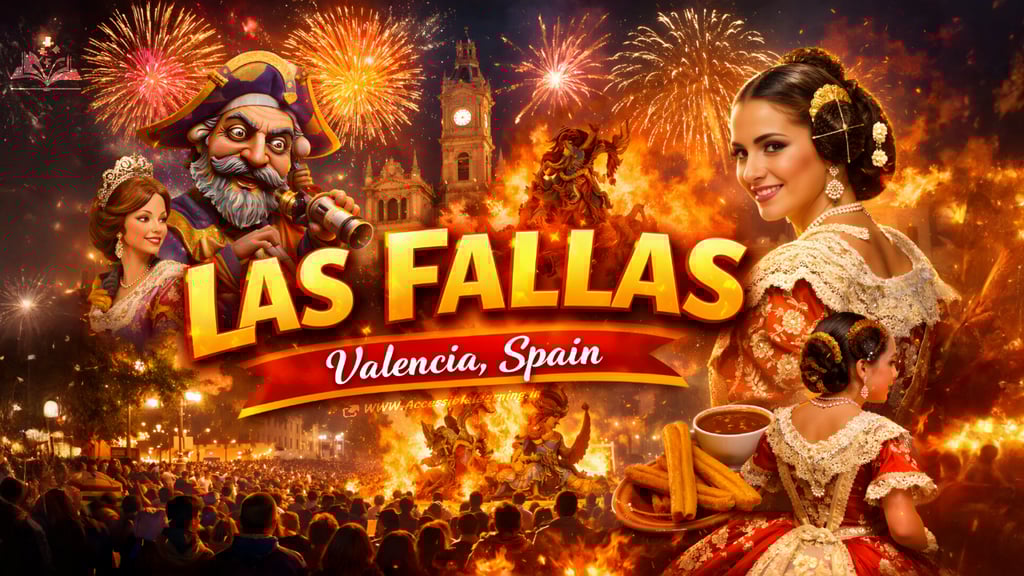
If you love art, fire, music, and pure street energy, Las Fallas in Valencia, Spain, is one of the most unforgettable festivals you can experience. Every March, the city becomes an open-air gallery of giant sculptures that end in a dramatic finale of flames.
This guide gives you a deeper look at the festival’s roots, events, traditions, and travel tips so you can enjoy Las Fallas with real understanding.
What Is Las Fallas?
Las Fallas is Valencia’s biggest cultural festival, celebrated from March 1 to March 19, ending on Saint Joseph’s Day, the patron saint of carpenters.
The festival mixes:
Street art and satire
Fireworks and sound shows
Traditional Valencian culture
Community celebrations
Think of it as an art exhibition that intentionally destroys its own masterpieces.
Origins and History of Las Fallas
Las Fallas began as a simple seasonal ritual.
Early Tradition
In medieval Valencia, carpenters burned wooden lamp stands called parots at the end of winter. These stands held candles during the dark months.
Before burning them, workers dressed them in old clothes and hats, turning them into funny human figures.
Growth into Art and Satire
By the 18th century:
Locals began decorating the figures more creatively.
Sculptures mocked politicians, social habits, and famous people.
Neighborhood groups started competing to build the best falla.
By the 19th century, the festival became organized with official judging and prizes.
Modern Era
In the 20th century:
Artists began using cardboard, wood, and later polystyrene.
Sculptures grew massive and highly detailed.
The festival gained international attention.
In 2016, UNESCO recognized Las Fallas as an Intangible Cultural Heritage of Humanity, honoring its community spirit and artistic value.
Why Everything Burns
Burning the fallas symbolizes:
Letting go of the past
Welcoming spring
Renewal and creativity
It is both emotional and symbolic. Artists work all year, knowing their creation will last only a few days.
What Are Fallas and Ninots?
Each neighborhood builds its own sculpture.
Falla: the full giant installation
Ninots: smaller figures inside it
They often show:
Political satire
Pop culture jokes
Social commentary
Fantasy characters
One ninot is saved each year through public voting and placed in the Fallas Museum.
Main Events You Should See
La Mascletà
Daily at 2 PM in City Hall Square.
A powerful rhythmic explosion show. You feel the sound in your chest.
The Flower Offering (Ofrenda)
Locals in traditional dress bring flowers to the Virgin Mary.
Thousands of bouquets create a giant floral cloak.
Night Fireworks (Castillos)
Huge sky shows along the Turia riverbed.
La Nit del Foc
The biggest fireworks night before the finale.
La Cremà: The Grand Burning
On March 19, every sculpture burns.
Small ones first, then the biggest at midnight.
Bands play, crowds cheer, and artists cry.
Then the cycle begins again next year.

Cultural Traditions You’ll Notice
Women wear beautiful silk dresses called fallera costumes.
Bands march through streets day and night.
Children set off small firecrackers early in the morning.
Neighborhood clubs called casals fallers organize events and meals.
The festival belongs to the community, not just tourists.
Traditional Las Fallas Food
During Las Fallas, streets smell amazing.
Must-try dishes:
Paella Valenciana – original version with rabbit and chicken
Buñuelos – pumpkin fritters with sugar
Churros with hot chocolate
Horchata – sweet tiger nut drink
Fideuà – noodle paella
Late-night churros after fireworks are a must.
Best Time to Visit
March 15–19: Full experience
March 18: Peak fireworks
March 19: The Cremà finale
Book hotels 4–6 months early.
Travel Tips for First-Time Visitors
Bring earplugs. Fireworks start early in the morning.
Wear comfortable shoes. Streets close to traffic.
Carry some cash for food stalls.
Respect safety barriers during burnings.
Explore different neighborhoods. Each falla is unique.
Why Las Fallas Is Special
Las Fallas is not just a festival. It is a living tradition that combines humor, craftsmanship, faith, and community pride. For someone creative like you, it’s especially inspiring. Imagine hundreds of artists building massive storytelling sculptures, lighting them with dramatic fire, and resetting them every year. It feels like a giant cinematic installation across an entire city.
Las Fallas is loud, chaotic, emotional, and beautiful all at once. You will see art you’ve never imagined, taste amazing food, and experience a celebration that truly belongs to the people of Valencia. If you ever get the chance to go, take it. It is one of those festivals that stays in your memory forever.
FAQ's
Q: When exactly is Las Fallas celebrated?
Las Fallas runs from March 1 to March 19 every year, with the biggest events happening between March 15 and March 19.
Q: Do I need tickets to attend Las Fallas?
Most events are free and happen in public streets.
Some grandstand seating for fireworks or Mascletà may require tickets.
Q: Is Las Fallas safe for tourists?
Yes. Valencia manages the festival very well.
Just follow police and firefighter instructions during fireworks and burnings.
Q: How loud are the fireworks?
Very loud. Firecrackers start early morning and continue late night.
Bring earplugs if you are sensitive to noise.
Q: Where is the best place to watch La Cremà?
The biggest burning happens in City Hall Square, but every neighborhood has its own falla burning. Smaller local burnings are often more comfortable and less crowded.
Q: What should I wear during the festival?
Wear comfortable walking shoes and light clothes.
Expect smoke, crowds, and long walking distances. A small backpack and water bottle help a lot.
Q: How early should I book hotels?
At least 4 to 6 months in advance.
Prices rise quickly because Las Fallas is Valencia’s busiest season.
Q: Can I visit fallas during the daytime?
Yes, and it’s a great idea.
Daytime lets you see the artistic details of sculptures before they burn at night.
Q: Is Las Fallas family-friendly?
Yes, but loud fireworks and big crowds may be difficult for small children. Choose quieter neighborhoods if travelling with kids.
Q: Why do they burn the sculptures?
Burning symbolizes renewal and the arrival of spring. It reflects the festival’s roots in carpenters’ traditions of burning old wooden materials after winter.
Q: What food should I definitely try?
Don’t miss:
Paella Valenciana
Buñuelos with sugar
Churros and hot chocolate
Horchata
Street food during Las Fallas is part of the experience.
Q: How many fallas are there in Valencia?
Around 700+ sculptures across the city every year, from small neighborhood pieces to huge award-winning installations.
Subscribe to Frontier Intelligence
All © Copyright reserved by Accessible-Learning Hub
| Terms & Conditions
Accessible Learning Hub — Actionable clarity for high-agency minds.
Weekly breakdowns on AI breakthroughs, capital flow, and human performance systems. Zero fluff.