

Laba Festival Explained: History, Meaning, and Cultural Importance
The Laba Festival is a traditional Chinese observance held in the twelfth lunar month, marking the beginning of New Year preparations. Rooted in ancient sacrificial rites and Buddhist tradition, the festival highlights gratitude, nourishment, seasonal awareness, and cultural continuity through customs such as Laba porridge and communal sharing.
CULTURE/TRADITIONEVENT/SPECIALCELEBRATION/FESTIVALSCHINA
Kim Shin
1/17/20264 min read
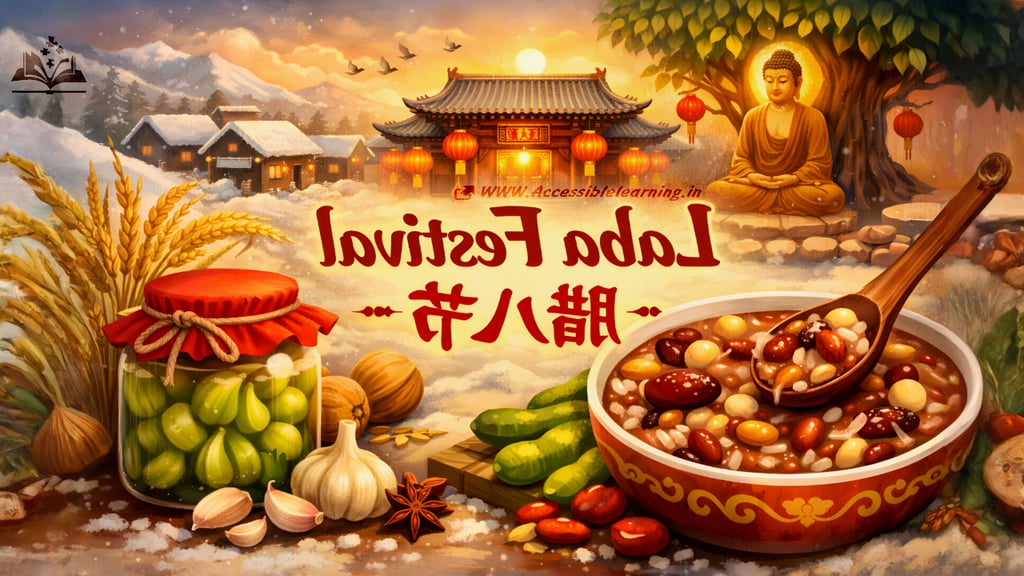
The Laba Festival is a traditional Chinese observance held on the eighth day of the twelfth lunar month. It is one of the earliest markers of the year-end festival cycle and plays an important role in preparing society, households, and religious communities for the upcoming Lunar New Year. Though modest in outward celebration, the festival carries layered historical, cultural, and symbolic meaning.
Origins and Early Development
The earliest form of the Laba Festival can be traced to pre-Qin sacrificial rites. Ancient communities performed winter offerings to thank gods and ancestors for harvests and protection from disease and natural disasters. These ceremonies were conducted during the final lunar month, which was traditionally associated with preservation, storage, and closure.
The specific designation of the eighth day gained prominence later, as the festival gradually standardized during imperial times.
Connection With Buddhism
The Laba Festival holds strong significance in Chinese Buddhism. It is believed to mark the day when Sakyamuni Buddha attained enlightenment after abandoning extreme asceticism and accepting nourishment. This narrative elevated food from a material necessity to a symbol of balance and wisdom.
Because of this association:
Buddhist temples prepare large quantities of Laba porridge
Porridge distribution is seen as an act of merit
The festival emphasizes moderation rather than austerity
This Buddhist influence helped spread Laba customs beyond rural communities into urban and monastic life.
Symbolism of Laba Porridge Ingredients
Laba porridge is not only a seasonal dish but also a symbolic one. Each category of ingredients carries meaning:
Grains represent agricultural stability and survival through winter
Beans symbolize diligence and vitality
Nuts and seeds suggest continuity and family lineage
Dried fruits stand for sweetness and good fortune
Historically, families used whatever ingredients remained from the year, making the porridge a reflection of both resourcefulness and gratitude.
Laba Garlic and Economic Traditions
In northern China, especially in Beijing, Laba garlic has cultural and economic symbolism. Garlic cloves are soaked in vinegar beginning on Laba Day. By the time of the Spring Festival, they turn green and develop a mild flavor.
This practice is linked to:
Seasonal food preservation methods
Wordplay between “garlic” and “counting” in Chinese, symbolizing financial settlement
The traditional timing of debt collection and wage payments before the New Year
Thus, Laba also functioned as a practical checkpoint for financial closure.
Laba Festival as a Seasonal Health Marker
In traditional Chinese thought, Laba occurs during a period of extreme cold. Warm, slow-cooked foods like porridge were believed to:
Strengthen digestion
Improve circulation
Help the body adapt to winter conditions
This made Laba Festival an informal seasonal health practice long before modern nutrition science.
Role in Household Preparation
After Laba, households traditionally began intensive preparation for the New Year:
Drying meats and preserved vegetables
Repairing tools and household items
Planning ceremonial offerings
Cleaning storage areas
The festival effectively signaled the transition from routine labor to ritual readiness.
Regional Diversity
Laba customs vary widely across China:
In the north, porridge and garlic dominate traditions
In parts of central China, meat preservation rituals are emphasized
Some southern regions focus more on ancestor offerings than food customs
Ethnic minority groups adapt Laba into their own winter observances
Despite variations, the core themes remain consistent.


Social and Communal Functions
Historically, Laba was also a community-based festival:
Wealthier households and temples distributed food to the poor
Villages shared collective meals
Elderly and vulnerable members were given priority
This reinforced social bonds and mutual responsibility during winter.
Laba Festival in Modern Society
Today, Laba Festival is less ritualized but still widely recognized. It appears in:
School cultural education programs
Media features on traditional food
Community welfare activities
Digital sharing of recipes and customs
While lifestyles have changed, the festival’s identity as a moment of preparation and reflection remains intact.
Cultural Importance
The Laba Festival stands out among Chinese festivals for its functional role rather than spectacle. It represents closure, nourishment, and readiness. By connecting agriculture, spirituality, health, and community, it serves as a quiet foundation for the more celebratory festivals that follow.
Interesting Facts
The Laba Festival is older than many well-known Chinese festivals and dates back over two thousand years to ancient winter sacrificial rites.
Laba porridge has no fixed recipe. Traditionally, families used at least eight ingredients, but the number and type depended on local crops and household conditions.
Buddhist temples across China still prepare Laba porridge in very large quantities, sometimes serving thousands of people in a single day.
In imperial times, Laba marked a deadline for settling debts and paying wages before the New Year preparations began.
The green color of Laba garlic is a natural chemical reaction between garlic compounds and vinegar, not artificial coloring.
Historically, Laba was considered an important seasonal health checkpoint, encouraging people to consume warm and nourishing foods during the coldest period of winter.
Some regions believed that eating Laba porridge could protect against illness in the coming year.
The festival informally signals the countdown to the Lunar New Year, often influencing when markets and workshops began shifting focus to holiday goods.
FAQs
Q: When is the Laba Festival celebrated?
The Laba Festival is observed on the eighth day of the twelfth month of the Chinese lunar calendar, usually falling in January.
Q: What is the main purpose of the Laba Festival?
Its main purpose is to express gratitude for the past year, honor ancestors and spiritual traditions, and prepare for the upcoming Lunar New Year.
Q: Is Laba Festival a religious festival?
It has both religious and cultural aspects. While it is significant in Buddhism, it also originated from ancient folk and agricultural practices.
Q: Why is Laba porridge important?
Laba porridge symbolizes nourishment, abundance, and balance. It also reflects practical winter food preservation and sharing traditions.
Q: Is the Laba Festival a public holiday in China?
No, it is not an official public holiday, but it is widely recognized and observed culturally.
Q: How is Laba Festival celebrated today?
Today it is mainly observed through preparing and eating traditional foods, temple charity activities, and cultural education rather than formal ceremonies.
Subscribe to Frontier Intelligence
All © Copyright reserved by Accessible-Learning Hub
| Terms & Conditions
Accessible Learning Hub — Actionable clarity for high-agency minds.
Weekly breakdowns on AI breakthroughs, capital flow, and human performance systems. Zero fluff.