

Konark Dance & Music Festival: India’s Classical Heritage Live on Stage
Experience the Konark Dance & Music Festival, a five-day celebration of India’s classical dance and musical traditions set against the majestic Konark Sun Temple in Odisha. Discover the history, performances, ambience, and cultural charm that make this festival one of the country’s most unforgettable artistic events.
EVENT/SPECIALINDIA/BHARATCELEBRATION/FESTIVALSCULTURE/TRADITION
Keshav Jha
11/26/20253 min read
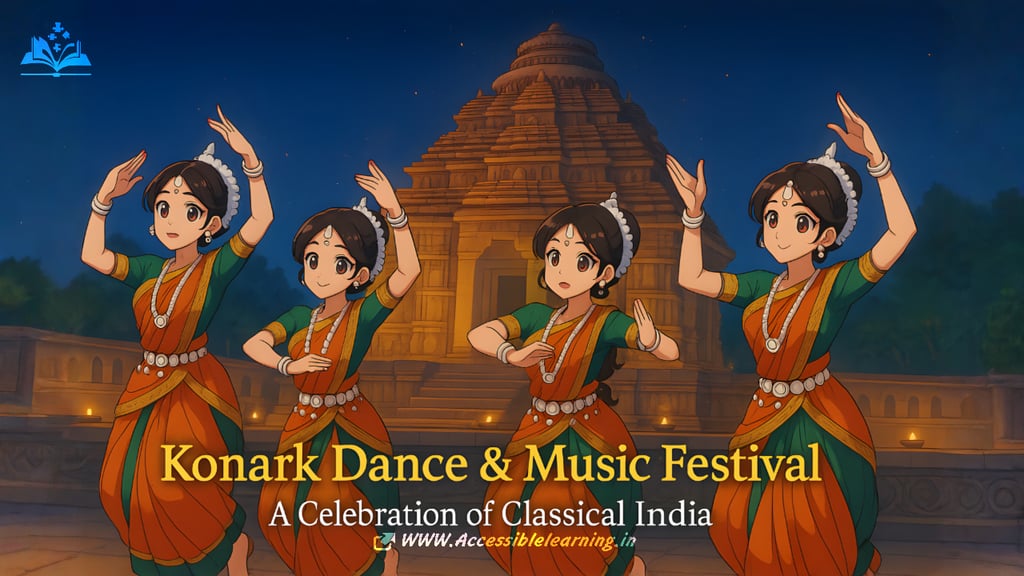
The Konark Dance & Music Festival is one of India’s most captivating cultural gatherings, taking place each February at the iconic Konark Sun Temple in Odisha. With its glowing sandstone backdrop, evening lights, and classical music echoing through the open air, the festival brings together centuries of Indian art, mythology, and heritage in a single experience.
A Stage Steeped in History
The festival’s open-air stage is built near the Natyamandapa of the Sun Temple, a structure historically dedicated to dance performances for the Sun God. The temple walls feature dancers frozen in stone, making the venue feel like a bridge between past and present.
The UNESCO World Heritage site sets a spiritual tone. Many performers describe it as dancing in conversation with history itself.
The Dances That Define the Festival
The festival presents India’s classical dance traditions in their purest form:
Odissi
The heart of the event. With its fluid torso movements, sculpturesque poses, and deep spiritual roots in Odisha, Odissi feels almost native to the temple itself.
Bharatanatyam
Known for expressive storytelling, geometric patterns, and rhythmic footwork. It adds sharpness and drama to the lineup.
Kathak
Fast spins, intricate rhythm play, and expressive storytelling create a spellbinding contrast.
Kuchipudi
Known for its graceful movements, expressive drama, and lively energy.
Manipuri
Soft, spiritual, and inspired by Vaishnav traditions. It brings a serene change of pace.
Mohiniyattam
Slow, emotive, and elegant. The white-gold costume glows beautifully under the stage lights.
Kathakali
Powerful, theatrical, and larger-than-life, with elaborate makeup and mythological stories.
Each night blends multiple dance forms, giving audiences a complete tour of India’s classical heritage.
A Rich Musical Landscape
Music plays a central role, with performances that include
Hindustani instrumental: sitar, sarod, flute
Carnatic classical: veena, violin, and soulful ragas
Odissi music featuring Mardala, Bansuri, and Manjira
Solo vocal recitals
Percussion ensembles with tabla, mridangam, pakhawaj
The acoustics of the space, especially on chilly February evenings, enhance the emotional connection between artists and audiences.
The Festival’s Journey Through Time
The Konark Dance & Music Festival was founded in 1986 by Guru Kelucharan Mohapatra and Odisha Tourism. It was created to revive classical dance in the region where it once flourished under the Eastern Ganga dynasty.
Today, it continues to evolve while staying rooted in tradition:
It welcomes both emerging artists and celebrated maestros.
International collaborations are common, connecting Indian classical arts with global traditions.
The festival now incorporates multimedia elements while keeping choreography authentic.
It supports the preservation of Odissi schools across Odisha.
Cultural Experiences Beyond the Stage
Handicraft Hubs
Visitors can explore stalls offering local crafts:
Pattachitra scroll paintings
Silver filigree jewellery from Cuttack
Sambalpuri and Bomkai textiles
Stone and wood carvings
Terracotta art
These add a vibrant craft village atmosphere to the festival ground.
Local Food Culture
Traditional Odia food stalls offer comforting flavors:
Pakhala
Chhena poda
Kakara pitha
Dalma
Rasabali
Khichdi with ghee and papad
The mix of dance, music, and food makes the event feel wholesome.
Workshops and Demonstrations
The festival sometimes hosts:
Odissi dance workshops
Raga appreciation sessions
Classical rhythm demonstrations
Artisan craft demos
These interactive experiences help visitors understand the depth of Indian traditions.
Atmosphere and Visual Appeal
The temple’s carvings glow under warm orange light, creating surreal visual frames.
Sea breeze from the nearby coast adds freshness to the evening shows.
The audience often includes travelers, photographers, scholars, and students of classical dance.
The performances start at sunset, turning the entire venue into a dramatic play of silhouettes and shadows.
Lesser-Known Interesting Facts
The Sun Temple once had magnetic stones that aligned with astronomical precision.
Many sequences performed at the festival are inspired by the Gita Govinda, a text deeply tied to Odissi.
Odissi dancers often recreate temple sculptures in their poses during performances.
The Natyamandapa platform originally hosted temple dancers (Maharis) who dedicated their art to the Sun God.
The festival has become a major documentary subject for channels like Discovery and National Geographic.
FAQs
Q: How long does the festival last?
It spans five days, usually from February 1 to 5.
Q: Is photography allowed for audiences?
Yes, but without flash to avoid distracting performers.
Q: Can foreign tourists attend easily?
Absolutely. Odisha Tourism organizes seating, security, and cultural tours around the event.
Q: What time do performances begin?
Most start around 5:30 PM, continuing into the evening.
Q: Is the event suitable for first-time classical dance viewers?
Yes. The festival is one of the most accessible and visually engaging introductions to classical Indian arts.
Subscribe to Frontier Intelligence
All © Copyright reserved by Accessible-Learning Hub
| Terms & Conditions
Accessible Learning Hub — Actionable clarity for high-agency minds.
Weekly breakdowns on AI breakthroughs, capital flow, and human performance systems. Zero fluff.