

King’s Day Netherlands: History, Traditions, and How It’s Celebrated
Discover everything about King’s Day (Koningsdag) in the Netherlands, celebrated every April 27 in honor of King Willem-Alexander. Explore its history, traditions, orange-themed celebrations, street markets, canal parties, and travel tips to experience one of Europe’s most vibrant national holidays.
EVENT/SPECIALCELEBRATION/FESTIVALSEUROPEAN UNION
Kim Shin
4/17/20266 min read
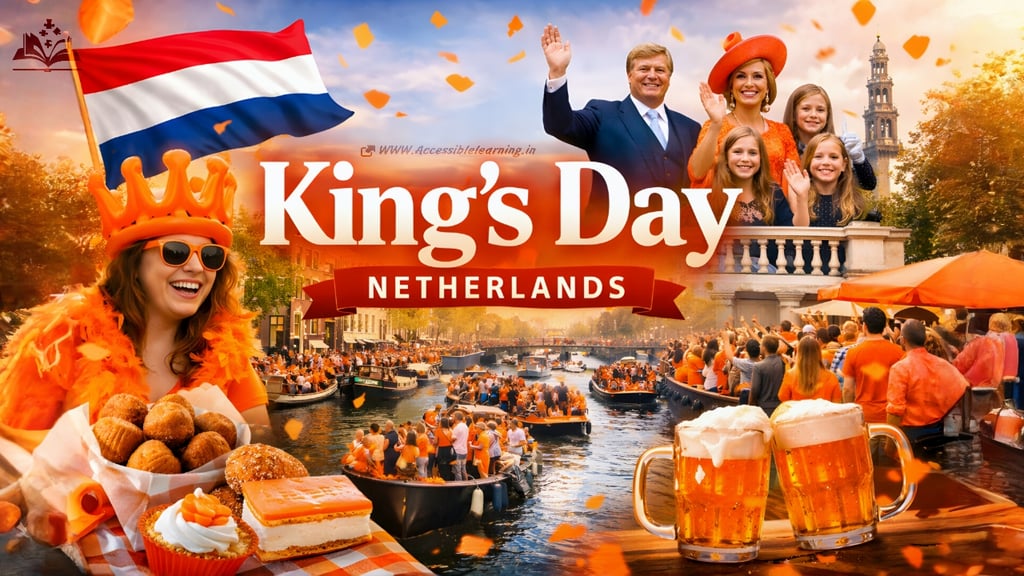
King’s Day (Koningsdag) is one of the most vibrant and widely celebrated national holidays in the Netherlands. Held every year on April 27, it marks the birthday of King Willem-Alexander, transforming the entire country into a sea of orange, music, and street festivities.
From massive street markets to canal parties in Amsterdam, King’s Day blends royal tradition with a free-spirited public celebration that attracts both locals and international visitors.
What is King’s Day?
King’s Day is the official birthday celebration of the Dutch monarch. It is a public holiday celebrated nationwide with unmatched enthusiasm. The Dutch refer to it as "Koningsdag," and it is known for its informal, inclusive, and festive atmosphere.
The color orange dominates the day, representing the Dutch royal family, the House of Orange-Nassau. People dress in orange clothing and accessories and even dye their hair in shades of orange.
Historical Background
The origins of King’s Day date back to 1885, when it was first celebrated as Princess’s Day in honor of Princess Wilhelmina. Over time, the holiday evolved:
It became Queen’s Day during the reigns of Queen Juliana and Queen Beatrix
In 2013, after the accession of King Willem-Alexander, it was officially renamed King’s Day
This transition marked the first time in over a century that the Netherlands had a male monarch, making the celebration historically significant.
When and How It’s Celebrated
King’s Day is observed annually on April 27. If the date falls on a Sunday, celebrations are shifted to April 26. The festivities typically begin the night before, known as “King’s Night” (Koningsnacht), with concerts, parties, and events across major cities.
Key Traditions
Wearing Orange
People across the country proudly wear orange outfits, symbolizing unity and national pride.
Vrijmarkt (Free Market)
One of the most unique traditions is the vrijmarkt, where anyone can sell second-hand goods on the streets without a permit. It’s like a nationwide garage sale.
Music and Festivals
Live performances, DJs, and open-air concerts fill the streets. Cities like Utrecht and Rotterdam host large-scale music events.
Canal Parties
In Amsterdam, boats crowd the canals, turning them into floating parties with music and dancing.
Royal Family Visits
Each year, the Dutch royal family visits a different town, interacting with citizens and participating in games and local traditions.

The color orange comes from the House of Orange-Nassau, the Dutch royal family’s lineage. It has become a symbol of national identity, pride, and unity.
On King’s Day, the country visually transforms into an orange-themed celebration, often referred to as an “orange fever” or Oranjegekte.
Food and Drinks on King’s Day
No celebration is complete without traditional Dutch treats:
Stroopwafel – A sweet syrup-filled waffle
Bitterballen – Crispy meat-based snacks
Tompoes – Often dyed orange for the occasion
Orange-colored drinks, including beer and cocktails
Street food stalls and pop-up vendors make it easy to enjoy local flavors while celebrating.
Best Places to Experience King’s Day
1. Amsterdam
The heart of the celebration, known for its canal parties and massive crowds.
2. Utrecht
Offers a slightly more relaxed vibe with beautiful canalside markets.
3. Rotterdam
Modern, energetic celebrations with music festivals and nightlife.
4. The Hague
A family-friendly atmosphere with cultural events and street fairs.
Cultural Significance
King’s Day is more than just a birthday celebration. It reflects the Dutch values of
Freedom and equality – Anyone can participate in the vrijmarkt
Community spirit – Streets become shared spaces for celebration
National pride – Symbolized through orange attire and unity
It is one of the few days when the entire country feels collectively connected.
Travel Tips for Visitors
If you’re planning to experience King’s Day:
Arrive early to avoid overcrowding
Use public transport as roads are often closed
Carry cash for street purchases
Dress in orange to blend in with locals
Stay hydrated and safe in crowded areas
King’s Day in the Netherlands is a rare mix of royal tradition and open public celebration. Whether you’re exploring street markets, dancing on canal boats, or simply enjoying Dutch snacks in orange attire, the experience is unforgettable.
It’s not just a holiday. It’s a national expression of joy, identity, and togetherness that turns the Netherlands into one big festival every April.

Lesser-Known Facts About King’s Day (Koningsdag)
Children Take the Spotlight
King’s Day isn’t just for adults. Kids actively participate by setting up mini stalls, performing music, or playing games to earn money. For many Dutch children, it’s their first taste of entrepreneurship and public interaction.
You Can Sell Without Rules (Almost)
The vrijmarkt is one of the only days in the Netherlands when selling on the street is completely permit-free. People sell everything from handmade crafts to vintage items, musical performances, or even personal services like face painting.
The Night Before is Just as Big
King’s Night (Koningsnacht) often rivals the main day. Cities transform into massive party zones with electronic music festivals, open-air bars, and street dancing that lasts until sunrise.
Toilets Become a National Challenge
With millions celebrating outdoors, public toilets become scarce. Many homes, cafés, and businesses offer paid access to restrooms. It’s a surprisingly practical part of planning your day.
Boats Need Permits in Amsterdam
While it looks spontaneous, canal parties in Amsterdam are regulated. Boats must follow specific routes and rules to prevent overcrowding and ensure safety.
Unsold Items Often Get Donated
At the end of the day, many people donate leftover goods to charities instead of taking them back home. This adds a subtle layer of social responsibility to the celebration.
Temporary Orange Makeovers Everywhere
From hair sprays and wigs to dyed fountains and themed decorations, entire neighborhoods transform visually. Even food, desserts, and drinks are often recolored to match the orange theme.
It’s One of the Few Days of True Informality
The Dutch royal family steps away from strict protocol. King Willem-Alexander and his family engage directly with citizens, play games, and walk through crowds, creating a rare sense of accessibility.
Music Ranges from Street Talent to Global DJs
You’ll hear everything from local buskers and amateur bands to internationally recognized DJs performing at large-scale festivals. This mix gives the day a unique, layered soundscape.
It’s a Photographer’s Dream
The explosion of color, candid street scenes, and lively crowds make King’s Day one of the most visually rich events in Europe. Many photographers travel specifically to capture the atmosphere.
Weather Shapes the Entire Experience
Since it’s an outdoor celebration, good weather amplifies everything. Sunny King’s Days are legendary, while rainy ones still go on but feel noticeably different.
It Boosts the Dutch Economy (Quietly)
From tourism and hospitality to street-level selling, King’s Day generates significant economic activity in a single day without feeling commercialized.
There’s an Unwritten Code of Respect
Despite the massive crowds and partying, the event is generally safe and respectful. The Dutch culture of order and responsibility keeps things surprisingly well-managed.
Visitors Are Fully Welcomed
Unlike some national holidays that feel local-only, King’s Day openly embraces tourists. Anyone can join the vrijmarkt, wear orange, and participate without barriers.
It Reflects the Dutch Way of Life
At its core, King’s Day blends freedom, creativity, and community. It shows how a nation can celebrate tradition without rigidity and joy without chaos.
FAQ's
Q: What is King’s Day in the Netherlands?
King’s Day, or Koningsdag, is a national holiday celebrated on April 27 to honor the birthday of King Willem-Alexander. It is known for nationwide street parties, orange-themed celebrations, and open-air markets.
Q: Why do people wear orange on King’s Day?
Orange represents the Dutch royal family, the House of Orange-Nassau. Wearing orange symbolizes national pride and unity during the celebration.
Q: When is King’s Day celebrated?
King’s Day is held every year on April 27. If it falls on a Sunday, celebrations are moved to April 26.
Q: What is the vrijmarkt on King’s Day?
The vrijmarkt (free market) is a unique tradition where anyone can sell goods on the streets without a permit. It turns cities into massive flea markets across the country.
Q: Where is the best place to celebrate King’s Day?
The biggest celebrations happen in Amsterdam, known for canal parties and large crowds. Other great cities include Utrecht and Rotterdam for vibrant but slightly less crowded experiences.
Q: What happens on King’s Night (Koningsnacht)?
King’s Night is celebrated on April 26, the evening before King’s Day. It features music festivals, nightlife events, and street parties across major Dutch cities.
Q: Is King’s Day suitable for tourists?
Yes, King’s Day is very tourist-friendly. Visitors are welcome to join the festivities, explore markets, and experience Dutch culture without restrictions.
Q: What food is popular during King’s Day?
Popular treats include Stroopwafel, Bitterballen, and orange-themed desserts like Tompoes.
Q: How crowded does it get on King’s Day?
It can get extremely crowded, especially in central areas of major cities. Planning ahead and arriving early helps avoid peak congestion.
Q: What makes King’s Day unique compared to other holidays?
King’s Day stands out for its mix of royal tradition and public freedom. The open markets, nationwide participation, and informal atmosphere make it one of Europe’s most distinctive celebrations.
Subscribe To Our Newsletter
All © Copyright reserved by Accessible-Learning Hub
| Terms & Conditions
Knowledge is power. Learn with Us. 📚

