

Khajuraho Dance Festival: A Deeper Look into India’s Most Symbolic Classical Dance Celebration
The Khajuraho Dance Festival is a world-renowned celebration of Indian classical dance set against the iconic Khajuraho temples. Held annually in Madhya Pradesh, the festival brings together ancient architecture, spiritual philosophy, and living performance traditions, offering visitors a rare cultural experience where history, art, and human expression meet.
CULTURE/TRADITIONTRAVEL LIFECELEBRATION/FESTIVALSINDIA/BHARAT
Keshav Jha
2/11/20264 min read
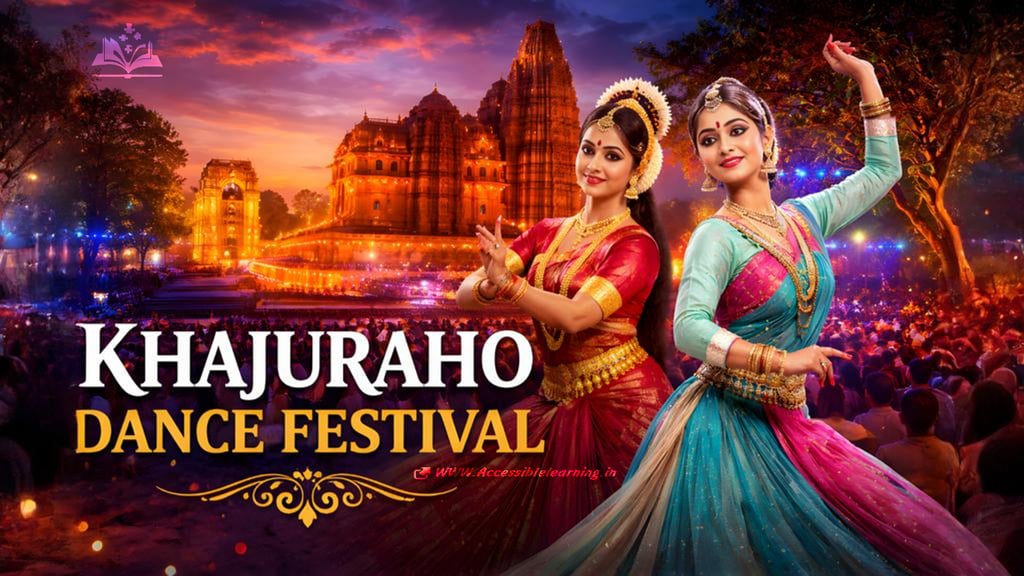
The Khajuraho Dance Festival is often described as a classical dance event, but that definition barely scratches the surface. At its core, the festival is a cultural dialogue between ancient architecture and living performance. It shows how Indian traditions evolve without breaking their roots.
Held annually in the temple town of Khajuraho, the festival transforms the Khajuraho Group of Monuments into a breathing cultural space rather than a silent historical site.
The Philosophy Behind the Festival
Unlike conventional stage performances, the Khajuraho Dance Festival is rooted in the Indian idea that art is a spiritual practice. In classical Indian thought, dance is not separate from worship. Movements, gestures, and expressions are designed to communicate ideas such as balance, devotion, love, conflict, and liberation.
By placing classical dance in front of temples built between the 9th and 12th centuries, the festival restores the original purpose of these spaces, which were once centers of music, dance, and learning.
Symbolism of Dance Against Temple Architecture
One of the most fascinating aspects of the festival is how closely dance mirrors the sculptures carved into the temple walls. Many Odissi and Bharatanatyam poses directly resemble postures seen in Khajuraho carvings.
This visual continuity creates a powerful effect. The dancer appears as an extension of the stone, and the stone appears alive. For many art historians and students, the festival becomes a live classroom where theory and practice meet.
More Than Performances: Cultural Exchange
The festival is not limited to evening shows. Around the main performances, visitors often find:
Informal interactions between artists and audiences
Cultural discussions and interviews with dancers
Art and handicraft exhibitions featuring local artisans
Photography opportunities that document living heritage
These elements turn the festival into a multi-layered cultural exchange rather than a one-directional show.
Role in Preserving Classical Dance Forms
Many Indian classical dance forms faced decline during colonial times and early modernization. Festivals like this play a quiet but powerful role in their survival.
By featuring senior gurus alongside emerging artists, the Khajuraho Dance Festival helps pass knowledge across generations. Young dancers gain visibility, while audiences learn to appreciate styles beyond popular or commercial performances.
Inclusivity and National Representation
A notable strength of the festival is its pan-Indian representation. Performers are selected from different regions, linguistic backgrounds, and gharanas. This diversity reinforces the idea that Indian culture is not singular but interconnected.
Dance forms commonly featured include Bharatanatyam, Kathak, Odissi, Kuchipudi, Manipuri, and Mohiniyattam, each bringing its own rhythm, costume language, and storytelling method.
Night Performances and Sensory Experience
Performances are held after sunset, which is a deliberate choice. Soft lighting highlights temple carvings, traditional instruments echo in the open air, and the cool February breeze adds comfort to long performances.
This sensory balance makes the experience deeply immersive. Many visitors report that even without understanding the technical language of dance, they can still feel the emotion and narrative.
Tourism Impact and Local Economy
Beyond culture, the festival plays an important economic role. Hotels, guides, transport providers, craftsmen, and local food vendors all benefit from the influx of domestic and international tourists.
The festival is supported by the Madhya Pradesh Tourism Board, which positions it as a flagship cultural tourism event. This approach encourages responsible travel focused on heritage appreciation rather than mass tourism.
Educational Value for Students and Researchers
For students of dance, architecture, or Indian history, the Khajuraho Dance Festival offers rare learning opportunities:
Observing classical techniques in an authentic setting
Understanding the relationship between movement and sculpture
Studying costume design, musical structure, and rhythm systems
Experiencing how tradition adapts to contemporary audiences
Many universities and cultural institutions recommend the festival as part of experiential learning.

Sustainability and Cultural Responsibility
In recent years, organizers have also emphasized sustainability. Efforts include controlled lighting, preservation-focused event layouts, and awareness around protecting temple structures.
This balance between celebration and conservation ensures that the festival does not harm the very heritage it seeks to honor.
Why the Festival Still Feels Relevant
The Khajuraho Dance Festival remains relevant because it does not chase trends. It stays rooted in depth, patience, and meaning. In a time of short attention spans, it invites people to slow down, observe, and reflect.
It proves that tradition does not need reinvention to survive. It needs respect, space, and sincere participation.
The Khajuraho Dance Festival is not just about watching dance. It is about understanding continuity. Past and present, stone and movement, and silence and rhythm all come together in one shared moment.
For anyone seeking an authentic cultural experience that goes beyond sightseeing, this festival offers something rare: a sense of belonging to a story much older than ourselves.
FAQ's
Q: What is the Khajuraho Dance Festival, and why is it famous?
The Khajuraho Dance Festival is an annual cultural event in Madhya Pradesh that celebrates Indian classical dance forms in front of the ancient Khajuraho temples. It is famous for blending live classical performances with UNESCO-listed temple architecture, creating a rare connection between heritage and living art.
Q: When is the Khajuraho Dance Festival held?
The Khajuraho Dance Festival is usually held in February every year. The timing is ideal due to pleasant weather and evening performances, which enhance the visual experience of the illuminated temples.
Q: Which classical dance forms are performed at the Khajuraho Dance Festival?
The festival showcases major Indian classical dance styles such as Bharatanatyam, Kathak, Odissi, Kuchipudi, Manipuri, and Mohiniyattam. Each performance represents a different regional tradition and storytelling technique.
Q: Where does the Khajuraho Dance Festival take place?
The performances are held in the open-air temple complex of the Khajuraho Group of Monuments, often near temples like Chitragupta and Vishvanatha. The heritage setting is a key part of the festival’s identity.
Q: Who organizes the Khajuraho Dance Festival?
The festival is organized by the Madhya Pradesh Tourism Board, along with state cultural departments. Their goal is to promote classical arts while preserving historical heritage.
Q: Is the Khajuraho Dance Festival suitable for international tourists?
Yes. The festival attracts visitors from around the world. Even without deep knowledge of Indian classical dance, audiences can enjoy the music, visuals, and atmosphere. English-friendly guides and tourism support are widely available.
Q: Why is the Khajuraho Dance Festival important for Indian culture?
The festival helps preserve classical dance traditions, supports senior and emerging artists, and reconnects temple architecture with its original cultural purpose. It plays a major role in keeping India’s intangible cultural heritage alive.
Q: Can students and researchers benefit from attending the festival?
Absolutely. The festival offers valuable learning opportunities in dance, architecture, history, costume design, and music. Many students and scholars attend to study how classical art forms interact with ancient temple symbolism.
Q: How long does the Khajuraho Dance Festival last?
The festival typically runs for five to seven days, with evening performances scheduled daily. Each night usually features multiple dance styles.
Q: Is photography allowed during the Khajuraho Dance Festival?
Photography is generally allowed, but restrictions may apply during live performances. Professional equipment may require permission. Visitors are advised to respect artists and temple guidelines.
Subscribe to Frontier Intelligence
All © Copyright reserved by Accessible-Learning Hub
| Terms & Conditions
Accessible Learning Hub — Actionable clarity for high-agency minds.
Weekly breakdowns on AI breakthroughs, capital flow, and human performance systems. Zero fluff.