

Jumpers and Jazz in July, Warwick: Australia's Most Unique Winter Festival
Discover why Jumpers and Jazz in July transforms Warwick into Australia's most creative winter destination with yarn art, live jazz, and regional culture.
CULTURE/TRADITIONTRAVEL LIFEAUSTRALIACELEBRATION/FESTIVALS
Kim Shin
7/5/20263 min read
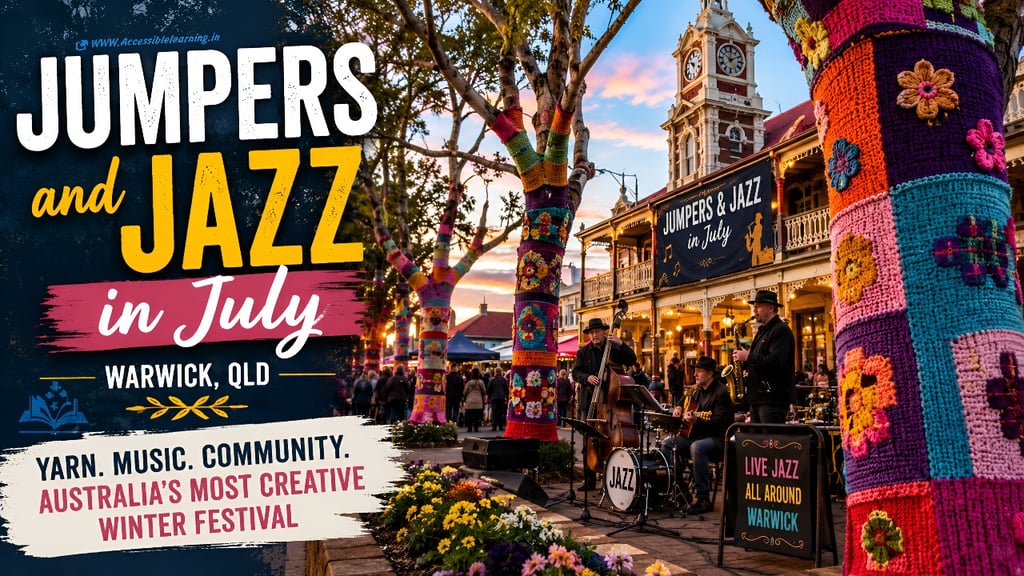
Every July, thousands of knitted artworks take over the streets of Warwick, Queensland. Trees wear oversized jumpers. Public spaces explode with yarn bombing. Tourists flood the region. What looks like a quirky winter attraction actually generates millions for the local economy while proving that rural Australia can outthink major cities when it comes to community-driven cultural festivals.
This Festival Turned Cold Weather Into an Economic Weapon
Most regional towns dread winter. Warwick weaponized it.
Jumpers and Jazz in July began in 2004 with a straightforward idea: combine live jazz with large-scale textile art to attract visitors during Queensland's quiet tourism season. Instead of competing with beaches or tropical escapes, Warwick embraced cold mornings, hot coffee, handmade wool, and live music.
That decision changed everything.
Today, the festival attracts tens of thousands of visitors over ten days, filling accommodations, restaurants, cafés, galleries, and local shops. Small businesses receive one of their strongest annual boosts without relying on expensive celebrity performances or flashy marketing campaigns.
Unlike many festivals that depend almost entirely on government funding, Jumpers and Jazz built its reputation through volunteers, artists, community groups, and local businesses working together.
That grassroots model deserves attention.
The Tree Jumpers Became More Famous Than the Music
Let's be honest. Most first-time visitors discover Jumpers and Jazz because of the knitted trees.
Hundreds of trees across Warwick receive elaborate hand-crafted jumpers designed by knitting groups from across Australia. Some celebrate Australian wildlife. Others reference history, farming, Indigenous culture, literature, environmental issues, or pure artistic imagination.
Calling it "yarn bombing" barely explains the scale.
Many installations require months of planning, thousands of hours of knitting, and careful installation before opening day. Every design transforms ordinary streets into outdoor galleries that anyone can experience without buying a ticket.
Ironically, the textile art often overshadows the jazz itself. That isn't necessarily a problem. It simply shows how public art has become the festival's defining identity.
Jazz Still Matters More Than Many Visitors Realize
The festival name still means something.
Live jazz performances remain central to the program, featuring Australian musicians across traditional jazz, swing, blues, big band, Latin jazz, contemporary jazz, and experimental performances.
Instead of confining concerts to formal venues, Warwick spreads performances throughout parks, cafés, churches, galleries, wineries, pubs, and public streets.
That approach lowers the barrier for audiences who might never buy tickets to a dedicated jazz festival.
Some visitors arrive for knitting and accidentally discover jazz.
Others come for music and leave talking about yarn-covered trees.
Very few festivals manage that crossover successfully.
Warwick Benefits Far Beyond Tourism Numbers
The strongest argument for Jumpers and Jazz isn't visitor statistics.
It's community ownership. Schools participate.
Craft groups collaborate. Businesses decorate storefronts.
Local artists exhibit work. Volunteers coordinate logistics.
Regional producers showcase food and wine.
Instead of importing entertainment, Warwick builds the event around its own people.
That matters because many regional festivals slowly become commercial products disconnected from their hometowns. Jumpers and Jazz continues to feel unmistakably local despite its growing national reputation.
Visitors don't simply consume entertainment. They enter a town actively participating in its own celebration.

Don't Romanticize the Festival's Logistics
Social media loves colorful photos. Reality involves serious planning.
Installing hundreds of textile artworks across public streets demands engineering checks, weather planning, volunteer coordination, insurance, maintenance, and safety inspections.
Queensland's winter weather remains unpredictable. Rain, frost, and wind can damage knitted installations quickly.
Parking becomes difficult during peak weekends.
Accommodation books out months ahead.
Popular workshops and concerts often sell out early.
Visitors expecting a casual, spontaneous trip frequently underestimate demand.
Good planning separates an enjoyable experience from a frustrating one.
The Festival Isn't Perfect
Every successful event develops growing pains. Crowded weekends reduce the relaxed atmosphere many long-time visitors remember. Commercial vendors have increased alongside community exhibitors.
Some critics argue that Instagram culture now drives attendance more than genuine interest in jazz or textile arts. Others question whether yarn bombing risks becoming repetitive after two decades.
Those criticisms carry some truth.
Yet none erase the festival's broader achievement.
Very few regional festivals remain culturally relevant after twenty years while continuing to attract new audiences.
Why This Festival Matters Nationally
Australia often concentrates cultural investment in Sydney, Melbourne, Brisbane, and Perth. Jumpers and Jazz challenges that mindset. It demonstrates that creativity doesn't require skyscrapers, billion-dollar museums, or international celebrities.
A regional town with committed volunteers, skilled artists, and a distinctive idea can build an internationally recognised event that strengthens local identity while generating real economic returns.
That lesson extends far beyond Warwick. Communities across Australia searching for sustainable tourism models should study this festival carefully. Authenticity scales better than imitation.
Should You Visit?
Yes, but visit for the right reasons.
Don't expect a luxury music festival.
Don't expect nonstop entertainment every hour.
Don't expect polished corporate production.
Expect genuine community spirit.
Expect remarkable public art.
Expect conversations with artists.
Expect live jazz in unexpected places.
Expect regional hospitality that feels earned rather than manufactured. Jumpers and Jazz in July succeeds because it refuses to imitate larger festivals.
Warwick didn't chase trends.
It knitted its own identity, wrapped it around hundreds of trees, added world-class jazz, and turned winter into its greatest competitive advantage.
That isn't just clever marketing. It's one of Australia's smartest examples of regional cultural resilience.
Subscribe To Our Newsletter
All © Copyright reserved by Accessible-Learning Hub
| Terms & Conditions
Knowledge is power. Learn with Us. 📚

