

Joinville Dance Festival: The World's Biggest Dance Event Isn't Just About Ballet. It's a Cultural Machine.
Discover why the Joinville Dance Festival in Brazil became the world's largest dance festival, exposing fierce competition, hidden logistics, and its lasting cultural impact.
EVENT/SPECIALTRAVEL LIFEBRAZILCELEBRATION/FESTIVALS
Helena | Kim Shin
7/10/20264 min read
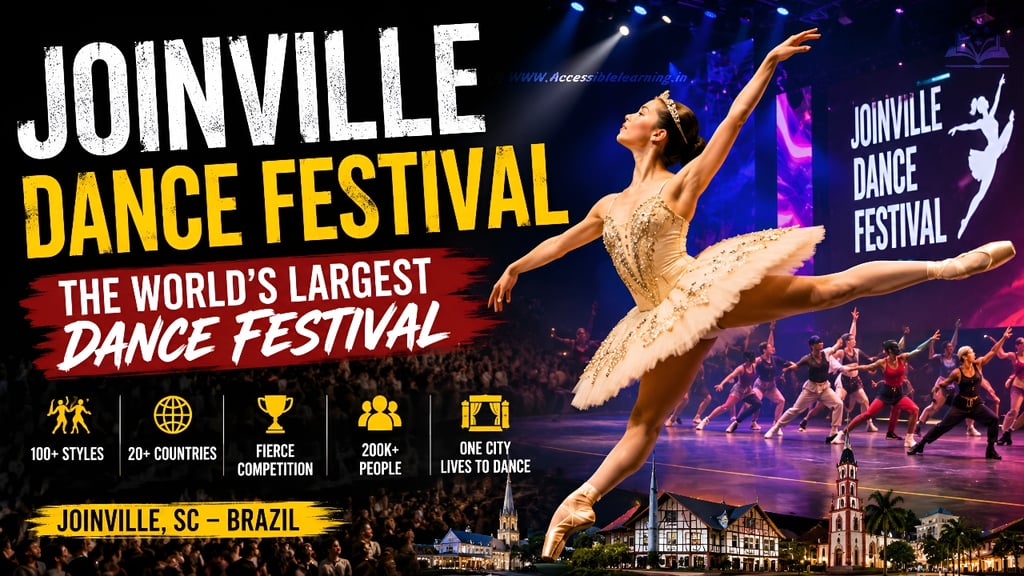
Every year, more than 200,000 people flood Joinville in southern Brazil for the Joinville Dance Festival, officially recognized by Guinness World Records as the world's largest dance festival. That title sounds glamorous until you see the logistical marathon, brutal competition, and relentless discipline hiding behind the applause.
The Festival Built a City's Identity
Most festivals borrow identity from their host city. Joinville did the opposite.
Long known as an industrial hub in Santa Catarina, Joinville transformed itself into Brazil's dance capital through decades of investment in performance, education, and cultural infrastructure. What began in 1983 now attracts thousands of dancers, instructors, choreographers, judges, photographers, vendors, and dance enthusiasts from across Brazil and around the world.
The festival isn't simply entertainment. It functions as an economic engine, educational platform, and national talent pipeline.
Hotels fill months in advance. Restaurants extend operating hours. Transportation networks stretch under the demand. Local businesses depend on the festival season almost as much as dancers do.
Competition Is Brutal, Not Romantic
Forget the polished highlight reels. Behind every flawless performance sits months or even years of exhausting preparation.
Dance schools spend entire seasons preparing choreography that may receive only a few minutes on stage. Costumes require massive investment. Families often finance travel, accommodation, rehearsal space, and equipment themselves.
Competition categories cover nearly every major style:
Classical Ballet
Contemporary Dance
Jazz Dance
Urban Dance
Folk Dance
Tap Dance
Character Dance
Ballroom Dance
Judging standards remain unforgiving. Precision, musicality, synchronization, technique, creativity, stage presence, and artistic interpretation all matter. Small mistakes separate champions from forgotten competitors.
Winning at Joinville often opens professional doors. Losing usually means returning home with experience instead of trophies.
The Real Heart of the Festival Lives Outside the Theater
The main performances receive headlines, but the city itself becomes one enormous dance campus.
Public squares host free performances.
Shopping centers organize demonstrations.
Outdoor stages remain active throughout the day.
Master classes attract students eager to learn from internationally respected instructors.
Street performances constantly remind visitors that dance here belongs to everyone, not only elite companies. This accessibility explains why the festival continues growing while many cultural events struggle to stay relevant.
Dance Tourism Fuels the Local Economy
The economic impact reaches far beyond ticket sales.
Visitors spend money on:
Hotels and guesthouses
Restaurants and cafés
Costume suppliers
Dance shoes and apparel
Photography services
Transportation
Local attractions
Retail shopping
Many dance brands schedule product launches during the festival because thousands of serious dancers gather in one location. For Joinville, dance isn't merely culture. It's business.
Brazil's Dance Industry Treats Joinville Like a National Championship
Winning at Joinville carries enormous prestige.
Dance schools proudly advertise medals earned here for years afterward.
Students choose academies based partly on festival success.
Teachers build careers through strong performances.
Recruiters discover emerging talent.
Professional companies scout promising dancers.
For young performers dreaming of international careers, Joinville often represents the biggest stage they'll encounter before entering professional auditions. That pressure transforms every rehearsal into something much bigger than a school recital.
Classical Ballet Doesn't Dominate Everything
International audiences often assume ballet controls the festival. It doesn't.
Urban dance continues expanding.
Contemporary choreography pushes creative boundaries.
Brazilian folk traditions receive major attention.
Jazz attracts fierce competition.
Ballroom categories showcase technical excellence alongside theatrical storytelling.
The festival mirrors Brazil itself: diverse, multicultural, and unwilling to fit inside one artistic box.
The Hidden Logistics Nobody Sees
Running the world's largest dance festival demands military-level organization. Thousands of competitors rotate through rehearsals. Stages require constant technical adjustments.
Lighting teams work nonstop. Sound engineers manage rapid performance changes. Volunteers direct participants across multiple venues.
Medical teams stay prepared for injuries. Costume repairs happen moments before performances.
Backstage areas resemble controlled chaos rather than elegant theater. Audiences rarely notice this machinery because organizers work relentlessly to keep performances flowing without interruption.


Social Media Changed Everything
Years ago, dancers performed mainly for judges and audiences. Now they also perform for cameras.
Instagram, TikTok, and YouTube transformed choreography into digital content. Some performances reach millions online within days.
Dance schools invest heavily in professional photography and videography because one viral clip can attract future students faster than years of traditional marketing.
The festival now exists simultaneously inside theaters and across global social media feeds.
Why Critics Miss the Bigger Story
Some observers dismiss Joinville as another oversized competition. They miss the point. The festival creates opportunities unavailable elsewhere in Brazil.
Young dancers from smaller cities gain exposure. Teachers exchange techniques. International professionals connect with local talent.
Entire communities rally behind performing arts instead of treating culture as an afterthought. No single trophy matters as much as the ecosystem the festival continues building.
Travel Guide: What Every Visitor Should Know
If you're planning to attend the Joinville Dance Festival, preparation matters almost as much as enthusiasm.
Book accommodation early. Hotels often reach capacity well before the festival begins, and prices rise sharply as demand increases.
Buy tickets in advance. Popular gala performances and finals frequently sell out.
Wear comfortable shoes. You'll spend hours walking between venues, public performances, exhibitions, and shopping areas.
Expect winter weather. The festival takes place during Brazil's winter. Joinville usually experiences cool mornings, mild afternoons, and occasional rain, so pack layers and a light waterproof jacket.
Plan transportation. Traffic increases significantly during the event. Walking between nearby venues often proves faster than driving.
Explore beyond the theater. Free outdoor performances, workshops, exhibitions, and cultural activities often become the most memorable parts of the experience.
The Festival's Biggest Weakness
Success creates its own problems.
Growing attendance increases accommodation costs.
Competition becomes harder every year.
Smaller dance schools struggle to afford participation.
Commercial sponsorship continues expanding, raising concerns about balancing artistic integrity with corporate visibility. The festival must keep growing without losing the educational spirit that made it famous. That challenge won't disappear.
The Joinville Dance Festival deserves its global reputation, but not because Guinness gave it a record.
Its real achievement lies in proving that dance can reshape an entire city, fuel a regional economy, launch professional careers, and unite thousands of performers around a shared obsession with excellence.
This isn't a tourist spectacle built for easy applause. It's an enormous cultural machine powered by discipline, ambition, sacrifice, and relentless artistic pursuit.
If you attend expecting only beautiful performances, you'll leave impressed. If you look beneath the stage lights, you'll discover one of the most influential dance ecosystems anywhere in the world.
Subscribe To Our Newsletter
All © Copyright reserved by Accessible-Learning Hub
| Terms & Conditions
Knowledge is power. Learn with Us. 📚

