

Jeongnamjin Jangheung Water Festival Guide: Events, Food, Travel Tips & Best Time to Visit
Discover the Jeongnamjin Jangheung Water Festival in South Korea. Explore its water games, cultural events, local food, travel tips, and why it's a must-visit summer festival.
EVENT/SPECIALTRAVEL LIFESOUTH KOREA
Kim Shin
7/21/20266 min read
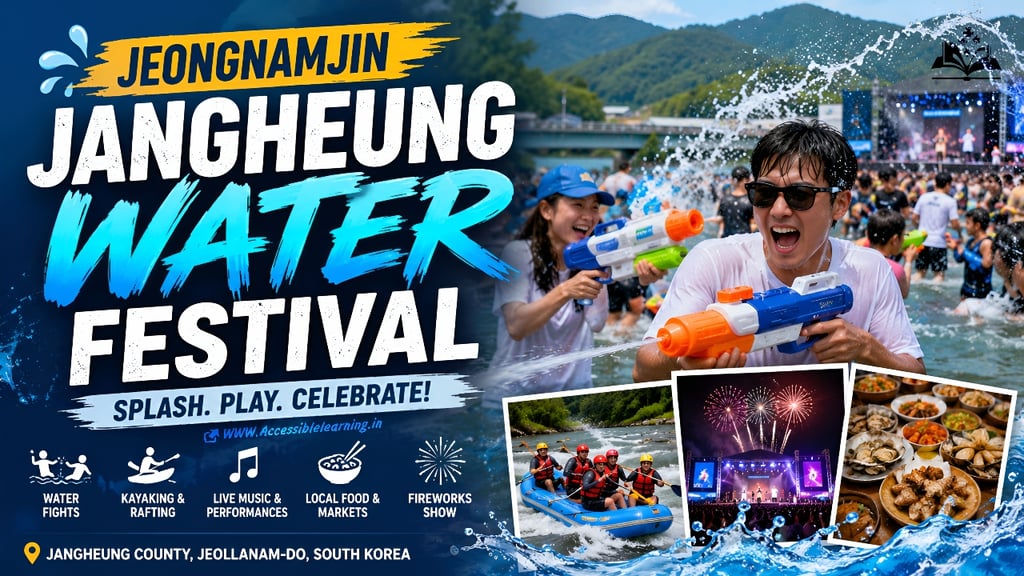
Every summer, thousands of people willingly soak themselves in the clean waters of the Tamjin River. They do not come for a luxury resort or a polished theme park. They come because the Jeongnamjin Jangheung Water Festival turns one of South Korea's richest natural landscapes into a giant playground that celebrates water, local agriculture, and community pride all at once.
Most international travelers never hear about it. That's their loss.
What Is the Jeongnamjin Jangheung Water Festival?
The Jeongnamjin Jangheung Water Festival takes place every summer in Jangheung County, Jeollanam-do, in South Korea's southwest. Unlike heavily commercialized festivals in Seoul or Busan, this event revolves around one thing that actually matters to local life: fresh water.
The festival celebrates the Tamjin River and the surrounding mountain waters that supply clean drinking water and support local farming, fisheries, and daily life. Instead of pretending culture exists only inside museums, Jangheung throws visitors directly into it through water battles, rafting, swimming competitions, kayaking, mud activities, concerts, and local food markets.
This festival attracts families, young travelers, photographers, and domestic tourists looking to escape Korea's intense summer heat without spending a fortune.
Water Isn't a Theme Here. It's the Entire Identity
Many festivals choose random themes because marketing teams need something catchy.
Jangheung doesn't have that problem.
Water shapes almost everything in this region.
The Tamjin River supports agriculture, freshwater fisheries, and tourism. Nearby mountains help preserve remarkably clean water sources that locals proudly promote as some of the country's best.
The festival simply amplifies what already exists.
That authenticity explains why the event feels different from artificial water parks. Visitors splash through rivers that actually sustain nearby communities instead of chlorinated pools built for Instagram.
Why Jangheung Became South Korea's Water Capital
Jangheung lacks the skyscrapers of Seoul.
It lacks the beaches of Busan.
It lacks the nightlife of Daegu.
What it possesses instead is something increasingly valuable across Asia: healthy ecosystems.
The county protects forests, wetlands, rivers, and agricultural land that produce famous local specialties, including premium beef, mushrooms, seafood, and freshwater products.
Officials realized years ago that competing with big cities would fail. Instead, they transformed nature itself into the region's strongest tourism asset. The Water Festival became the flagship result.
The Festival Activities Actually Deliver
Nobody travels to Jangheung just to watch performances from a distance. Visitors become part of the festival.
Popular attractions usually include:
Massive public water fights
River rafting experiences
Kayaking and canoe activities
Giant inflatable water playgrounds
Zipline and adventure zones
Mud-based games
Family swimming areas
Traditional performances
K-pop concerts
Nighttime fireworks
Local craft exhibitions
Children's educational programs
The biggest advantage?
Most activities encourage participation instead of passive observation. People spend hours inside the water rather than standing behind security barriers taking photos.
Local Food Quietly Steals the Festival
Many visitors arrive for water games. They leave talking about the food.
Jangheung has built a strong culinary reputation inside South Korea through products sourced from nearby mountains, rivers, and coastal waters.
Festival food commonly features:
Korean barbecue using local beef
Fresh oysters
Clams
Grilled eel
River fish
Seasonal vegetables
Wild mushrooms
Traditional rice dishes
Korean street food
Regional desserts
Unlike generic festival vendors that sell identical snacks everywhere, many stalls highlight ingredients that originate within Jeollanam-do. That difference matters. Food becomes part of the region's identity instead of an afterthought.


Don't Underestimate the Logistics
Beautiful rivers attract crowds. Crowds create problems.
During peak festival days:
Parking fills early.
Hotels sell out weeks ahead.
Public transportation becomes crowded.
Popular activities develop long queues.
Afternoon temperatures often exceed 30°C (86°F).
Experienced visitors arrive early, reserve accommodation well in advance, and carry waterproof bags, extra clothing, sunscreen, towels, and water shoes.
Ignoring those basics turns an enjoyable day into an exhausting one.
The Festival Boosts More Than Tourism
Calling this "just another summer event" completely misses the point. The Water Festival supports restaurants, farms, hotels, transportation providers, artisans, and local businesses throughout Jangheung County.
Rather than concentrating profits inside one corporate venue, spending spreads across the surrounding community.
That economic model helps smaller rural regions remain competitive despite population decline affecting many parts of South Korea.
For local residents, the festival represents seasonal income, employment opportunities, and national visibility that would otherwise prove difficult to achieve.
Why International Travelers Still Miss It
Search online for South Korea.
Most recommendations repeat endlessly:
Seoul
Busan
Jeju Island
Gyeongju
Jangheung rarely appears. That creates an unusual advantage.
Visitors experience a major Korean cultural festival without the overwhelming international crowds found at better-known destinations.
English services continue improving, but travelers should still expect fewer multilingual signs than in Seoul. Basic Korean phrases or translation apps make the experience much smoother.
Sustainability Isn't Just Marketing Here
Plenty of festivals advertise environmental responsibility.
Few depend on protecting nature as directly as this one.
If river quality declines, the festival loses its core attraction.
That reality pushes organizers to emphasize the following:
River conservation
Waste reduction
Water quality monitoring
Environmental education
Responsible tourism
Community participation
The event succeeds only if the river remains healthy.
Nature isn't decoration.
It's the entire business model.
When Is the Best Time to Visit?
The Jeongnamjin Jangheung Water Festival typically takes place during late July through early August, matching South Korea's hottest period.
Morning visits offer cooler temperatures and shorter lines.
Evening programs provide concerts, performances, illuminated river views, and a more relaxed atmosphere after daytime crowds thin out.
Visitors planning a broader trip often combine Jangheung with nearby destinations in Jeollanam-do for beaches, temples, tea plantations, and coastal scenery.
Essential Travel Tips Before You Go
Prepare for a genuine outdoor festival rather than a polished resort experience.
Bring:
Quick-dry clothing
Waterproof phone protection
Extra shoes
Sunscreen
Towels
Waterproof backpack
Cash for local vendors
Portable battery pack
Book accommodation well before the festival starts, especially if visiting on weekends. Families should also identify children's activity zones before arriving because the festival covers a large area.


The Festival's Real Cultural Value
The Jeongnamjin Jangheung Water Festival proves something many destinations forget.
Culture doesn't always survive inside historic palaces or ancient temples.
Sometimes culture flows through rivers.
This festival celebrates a resource that communities depend upon every single day. It transforms environmental awareness, local agriculture, regional cuisine, recreation, and community identity into one enormous public event.
That makes it far more meaningful than another music festival or temporary amusement park.
The water eventually drains away.
The economic impact, local pride, and environmental message remain long after everyone changes into dry clothes.
The Jeongnamjin Jangheung Water Festival succeeds because it refuses to fake authenticity.
It doesn't invent traditions for tourists. It builds on a real relationship between people and water that has shaped Jangheung for generations.
Yes, you'll face crowds.
Yes, you'll get soaked.
Yes, you'll need planning.
But you'll also experience one of South Korea's most distinctive summer festivals, where the landscape itself becomes the main attraction instead of merely serving as the backdrop.
If your idea of travel means discovering places beyond the predictable itinerary, Jangheung deserves far more attention than it currently receives.
FAQ's
Q: What is the Jeongnamjin Jangheung Water Festival?
The Jeongnamjin Jangheung Water Festival is an annual summer festival held in Jangheung County, Jeollanam-do, South Korea. It celebrates the region's clean rivers and natural water resources through water sports, cultural performances, concerts, family activities, and local food experiences.
Q: When is the Jeongnamjin Jangheung Water Festival held?
The festival is typically held in late July to early August, during South Korea's hottest summer season. Exact dates vary each year, so visitors should check the official festival schedule before planning their trip.
Q: Where does the Jeongnamjin Jangheung Water Festival take place?
The festival takes place along the Tamjin River in Jangheung County, Jeollanam-do, South Korea. The riverside venue features activity zones, food markets, performance stages, and recreational areas.
Q: What activities can visitors enjoy at the Jeongnamjin Jangheung Water Festival?
Popular attractions include giant water fights, kayaking, rafting, inflatable water playgrounds, mud games, live concerts, cultural performances, fireworks, children's activities, and food markets showcasing local specialties.
Q: Is the Jeongnamjin Jangheung Water Festival suitable for families?
Yes. The festival offers dedicated family-friendly areas, shallow water play zones, children's programs, and interactive activities suitable for visitors of all ages, making it one of South Korea's most family-oriented summer festivals.
Q: What should visitors bring to the Jeongnamjin Jangheung Water Festival?
Visitors should pack quick-dry clothing, water shoes, a waterproof phone case, sunscreen, towels, extra clothes, and a waterproof bag. Booking accommodations early is also recommended because hotels often fill up during the festival.
Subscribe To Our Newsletter
All © Copyright reserved by Accessible-Learning Hub
| Terms & Conditions
Knowledge is power. Learn with Us. 📚

