

Japanese Mother: The Quiet Strength Shaping Japan’s Society
An in-depth exploration of Japanese mothers, revealing how tradition, discipline, emotional restraint, education pressure, and quiet sacrifice shape children, families, and Japanese society itself.
JAPANAWARE/VIGILANT
---
12/21/20254 min read
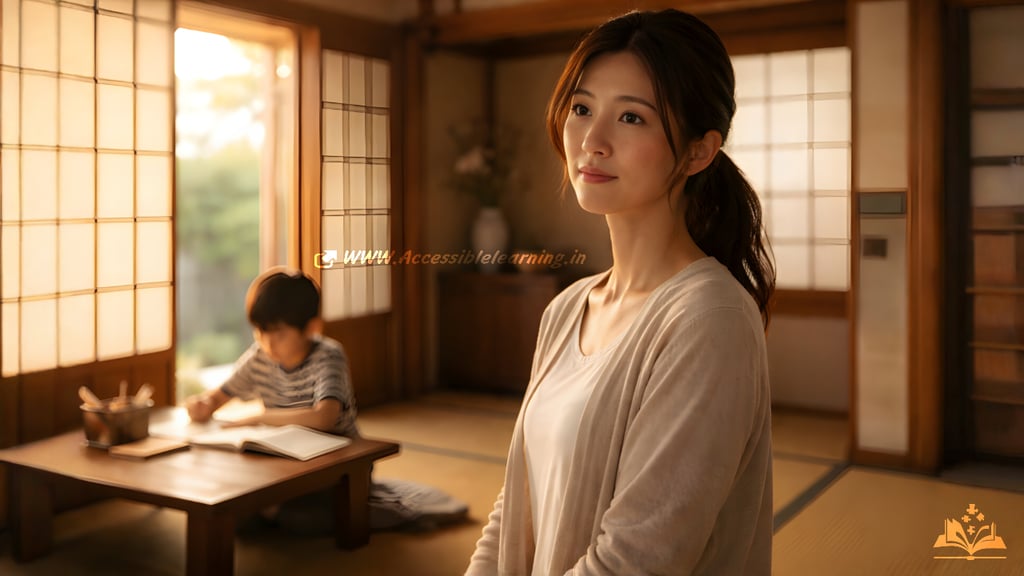

The Japanese mother is rarely visible in loud narratives, yet her influence is everywhere. In classrooms where children clean their own desks, in trains where silence is respected, and in homes where routine is followed without force. She is not just raising a child. She is shaping behavior that must fit into a highly structured society.
Japanese motherhood is built on restraint, responsibility, and endurance. It demands emotional control, personal sacrifice, and social awareness that begins long before a child learns to speak.
Motherhood as Social Responsibility
In Japan, raising a child is not viewed as a private matter. It is a public responsibility. A child’s behavior reflects directly on the mother, not just within the family, but also in schools, neighborhoods, and social circles.
If a child misbehaves in public, blame quietly lands on the mother. This creates constant self-monitoring. Japanese mothers are deeply aware that they are always being observed, even when no one says anything. This silent pressure shapes every parenting decision.
Emotional Education Before Academic Education
Long before formal schooling begins, Japanese mothers focus on emotional discipline.
Children are taught:
How to read social cues
When to remain silent
How to sense discomfort in others
Why harmony matters more than personal expression
Instead of correcting behavior with punishment, mothers often express disappointment through silence or subtle gestures. This teaches children emotional awareness and self-regulation at a very young age.
The Power of Routine and Repetition
Japanese mothers rely heavily on routine. Daily life follows patterns that rarely change. Meals, school preparation, bath time, and sleep follow a predictable order.
Routine is not about control. It is about security.
Children raised this way develop:
Time awareness
Self-discipline
Predictable emotional responses
Reduced dependency on external motivation
The mother becomes the stabilizing force that holds this structure together.
Food as an Expression of Love and Responsibility
Food plays a central role in Japanese motherhood.
Preparing balanced meals, especially lunch boxes known as bento, is a daily expression of care. A well-prepared bento reflects the mother’s attention, effort, and emotional investment.
Many mothers wake early to prepare meals that are
Nutritionally balanced
Visually appealing
Aligned with seasonal ingredients
This is not about perfection. It is about showing love without words.
Silence as a Parenting Tool
Japanese mothers often use silence intentionally.
Silence can mean:
Disapproval
Reflection
Emotional teaching
Boundary-setting
Children quickly learn to interpret silence, making them highly sensitive to emotional environments. While this creates emotionally intelligent individuals, it can also lead to internalized pressure and fear of disappointment.
The Academic Race and Maternal Anxiety
As children enter school, the emotional weight on mothers increases sharply.
Exams, rankings, and future prospects begin early. Mothers become managers of schedules, emotional buffers, and motivators.
They often carry:
Anxiety about school performance
Fear of social comparison
Responsibility for long-term outcomes
This pressure is rarely shared openly. Many mothers suffer quietly to avoid burdening their children.
Relationship With Teachers and Schools
Japanese mothers maintain close communication with teachers. They attend meetings, follow school expectations strictly, and ensure children conform to institutional rules.
Disagreement with schools is rare. Mothers are expected to cooperate rather than challenge authority. This reinforces conformity but also limits parental voice.
Motherhood and Loss of Identity
For many Japanese women, motherhood becomes the dominant identity.
Personal ambitions, hobbies, and careers often pause or disappear entirely. Society praises devotion but rarely acknowledges the cost.
Some mothers experience:
Emotional isolation
Reduced self-worth outside parenting
Fear of returning to work
Social invisibility
These struggles are rarely discussed publicly.
Mental Health and Emotional Suppression
Japanese culture values endurance. Mothers are expected to persevere quietly.
As a result:
Emotional exhaustion goes unnoticed
Depression remains hidden
Asking for help feels like failure
Support systems exist, but stigma still prevents many mothers from using them.
Changing Dynamics and Silent Rebellion
A new generation of Japanese mothers is slowly redefining norms.
They are:
Encouraging emotional expression
Sharing childcare with partners
Setting boundaries with schools
Valuing mental health alongside discipline
This change is not loud or confrontational. It is quiet, gradual, and deeply personal.
The Mother’s Role in Aging Japan
As Japan ages, mothers often transition into caregivers for elderly parents while still supporting adult children. This creates a lifelong cycle of caregiving with little rest. The emotional toll is heavy, yet rarely acknowledged.
The Quiet Legacy of the Japanese Mother
The Japanese mother rarely asks to be seen. Her influence exists in behavior, discipline, respect, and routine. She builds people who understand limits, patience, and responsibility. She carries pressure silently, loves through action, and sacrifices without ceremony. In understanding the Japanese mother, one begins to understand Japan itself.

FAQ's
Q: What is the role of a mother in Japanese culture?
In Japanese culture, the mother is seen as the primary guide for a child’s behavior, discipline, emotional control, and social manners. She is responsible not only for the child’s success but also for how the child represents the family in society.
Q: Why are Japanese mothers so focused on discipline and routine?
Discipline and routine create emotional stability and social harmony. Japanese mothers believe predictable structure helps children develop self-control, responsibility, and respect for others from an early age.
Q: Do Japanese mothers show love differently?
Yes. Japanese mothers often express love through actions rather than words. Preparing meals, maintaining routines, supporting education, and being consistently present are considered stronger expressions of love than verbal affection.
Q: What is “amae” in Japanese parenting?
"Amae" refers to the emotional bond where a child feels safe depending on the mother. It develops through closeness, patience, and emotional security in early childhood and is a key concept in Japanese family relationships.
Q: Why is education such a big responsibility for Japanese mothers?
Academic performance strongly affects future opportunities in Japan. Mothers feel responsible for managing study routines, school communication, and emotional pressure because a child’s success reflects directly on the family.
Q: Are Japanese mothers strict or gentle?
They are often both. Early childhood is nurturing and gentle, while later years involve firm expectations, emotional discipline, and high standards, especially around education and behavior.
Q: Do Japanese mothers work after having children?
Some do, but many reduce work hours or leave jobs during early child-rearing years. Although this is changing, working mothers still face social pressure and heavy workloads at home.
Q: How involved are Japanese fathers in parenting?
Traditionally, fathers were less involved due to long work hours. Modern families are slowly shifting toward shared parenting, but mothers still carry most daily responsibilities.
Q: What challenges do Japanese mothers face today?
Common challenges include social pressure to be perfect, emotional isolation, academic stress related to children, difficulty balancing work and family, and limited discussion around mental health.
Q: How is motherhood changing in modern Japan?
Younger mothers are becoming more open to emotional expression, shared parenting, and mental health awareness. Change is gradual and often happens quietly rather than through open confrontation.
Subscribe to Frontier Intelligence
All © Copyright reserved by Accessible-Learning Hub
| Terms & Conditions
Accessible Learning Hub — Actionable clarity for high-agency minds.
Weekly breakdowns on AI breakthroughs, capital flow, and human performance systems. Zero fluff.