

Inuyama Festival (Aichi): History, Lantern Floats, and Japan’s Famous Spring Celebration
Discover the Inuyama Festival in Aichi, Japan, a historic spring celebration featuring ornate floats, karakuri mechanical puppets, and a breathtaking lantern parade near Inuyama Castle. Learn about its history, traditions, schedule, and cultural significance.
CULTURE/TRADITIONEVENT/SPECIALCELEBRATION/FESTIVALSJAPAN
Sachin K Chaurasiya
3/24/20266 min read
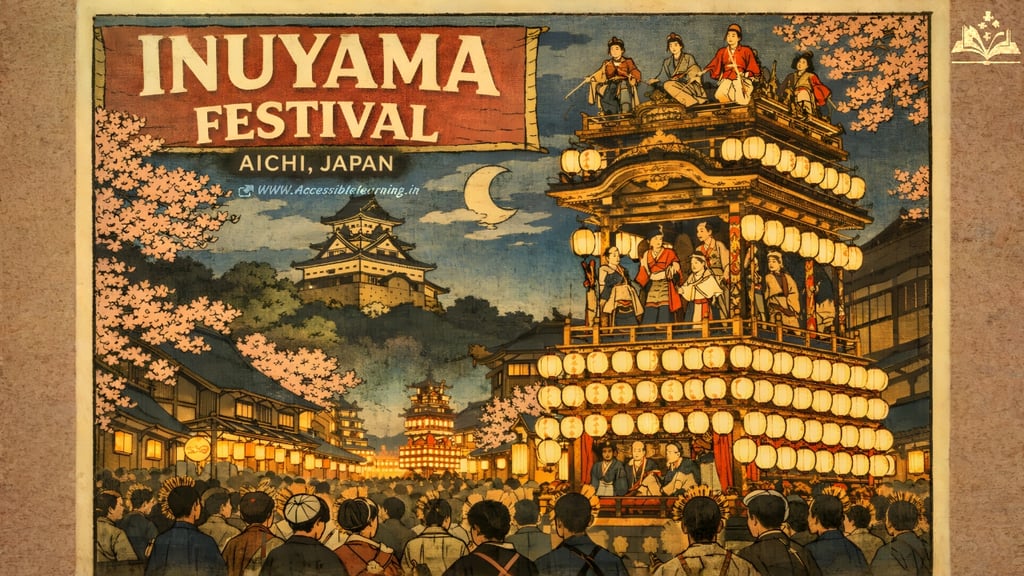
The Inuyama Festival is one of the most celebrated traditional festivals in central Japan. Held each spring in the historic castle town of Inuyama, the festival blends religious rituals, elaborate craftsmanship, mechanical puppetry, and spectacular lantern parades.
The celebration is associated with Haritsuna Shrine, which has long served as the spiritual guardian of the town. The festival’s most recognizable backdrop is the towering Inuyama Castle, one of Japan’s oldest surviving wooden castles.
Designated as an Important Intangible Folk Cultural Property of Japan, the festival reflects the deep cultural traditions and communal pride of the region.
Origins and Historical Development
The Inuyama Festival traces its origins back to 1635 during the early Edo period. At the time, festivals at Haritsuna Shrine were organized as offerings to the local deity to pray for protection, prosperity, and a good harvest.
During the Edo period, merchant families and neighborhood associations began sponsoring elaborate floats. These floats gradually became larger and more ornate, transforming the festival into a grand public spectacle.
Over the centuries, the event evolved into a community-centered celebration, where each district maintained its own float and took pride in presenting it during the annual procession.
Even today, many of the traditions followed in the festival have remained largely unchanged for nearly four centuries.
Structure of the Festival
The festival generally takes place on the first weekend of April, marking the arrival of spring in the region.
Daytime Events
During the day, the floats are paraded through the streets around Haritsuna Shrine and the castle town. Crowds gather to watch the floats move slowly through narrow streets while musicians play traditional festival music.
Highlights of the daytime celebration include:
Ceremonial float processions
Karakuri puppet performances
Shrine rituals and offerings
Traditional musical performances
Evening Lantern Procession
When night falls, the floats are transformed into glowing works of art as hundreds of lanterns are lit. The illuminated floats move through the historic streets in a slow, ceremonial parade. The warm glow of lanterns against the night sky creates one of the most iconic festival scenes in Japan.


The Craftsmanship of the Festival Floats
The festival features 13 magnificent floats, each representing a neighborhood district in Inuyama. These floats are considered masterpieces of traditional Japanese craftsmanship and feature:
Intricately carved wooden panels
Gold-leaf decorations
Silk drapery and banners
Hand-painted details
Traditional lantern displays
Many of the floats were originally built hundreds of years ago and have been carefully preserved and restored by local artisans. Maintaining the floats requires ongoing community cooperation, and repairs are often carried out using historical construction methods.
Karakuri Mechanical Puppets
One of the most unique elements of the Inuyama Festival is the use of karakuri puppets, mechanical dolls designed to perform dramatic stories. These puppets were created centuries ago and function through complex systems of:
Springs
Wooden gears
Strings
Counterweights
The puppets perform choreographed scenes on the top stage of certain floats. Their movements can include bowing, dancing, or reenacting historical legends.
These performances represent an early form of Japanese mechanical engineering and entertainment, long before modern robotics existed.
Music and Festival Atmosphere
Music plays an essential role in the festival’s atmosphere. Each float includes musicians who perform traditional festival music known as hayashi.
Common instruments include:
Taiko drums
Flutes
Hand cymbals
Bells
The rhythmic sound of drums and flutes echoes through the streets, guiding the movement of the floats and energizing the crowds. The music also signals transitions between different performances and procession stages.
The Magical Night Illumination
The nighttime parade is widely considered the most breathtaking moment of the festival. Each float is illuminated by approximately 365 paper lanterns, symbolizing the days of the year. As the lanterns glow softly in the darkness, the floats move slowly through the town’s historic streets.
The scene becomes even more dramatic with Inuyama Castle rising above the town, creating a rare blend of architecture, history, and living tradition. Visitors often describe this moment as one of the most beautiful festival spectacles in Japan.
Community Participation and Local Pride
The Inuyama Festival is deeply rooted in community involvement. Each neighborhood district:
Owns and maintains its float
Organizes performers and musicians
Participates in the procession
Helps preserve traditional techniques
Young residents often begin participating in the festival at an early age, learning the responsibilities of float handling, music, and ceremonial roles. This intergenerational participation helps ensure the festival continues for future generations.
Relationship With Japanese Seasonal Traditions
The festival occurs during Japan’s cherry blossom season, which adds to its visual appeal. Visitors often combine festival viewing with hanami, the traditional activity of appreciating cherry blossoms. The festival also reflects the Japanese cultural concept of seasonal awareness, where celebrations are closely tied to natural cycles and seasonal beauty.
Nearby Cultural Attractions
Visitors attending the festival often explore other attractions in the region. Some notable sites include:
Inuyama Castle – one of Japan’s oldest surviving castles
Meiji Mura – an open-air museum featuring historic buildings from the Meiji era
The historic castle town streets with traditional shops and restaurants
The festival location is easily accessible from Nagoya, making it a popular cultural trip for visitors exploring central Japan.

Interesting Cultural Insights
Here are some lesser-known details about the festival:
The lanterns on the floats are traditionally handmade using Japanese paper.
Many floats contain hidden compartments for musicians and puppet operators.
The festival route follows historic streets that date back to the Edo period.
Some floats require dozens of people to guide and maneuver them safely.
The festival atmosphere combines religious reverence with lively celebration.
Why the Inuyama Festival Is Special
The Inuyama Festival is unique because it brings together art, engineering, history, religion, and community participation in a single event.
From the craftsmanship of the floats to the mesmerizing lantern parade, the festival offers an authentic glimpse into Japan’s living cultural traditions.
For travelers and cultural enthusiasts, it represents one of the most visually captivating and historically meaningful festivals in Japan.
FAQ's
Q: What is the Inuyama Festival?
The Inuyama Festival is a historic Japanese spring festival held in Inuyama. It is known for its beautifully decorated floats, traditional music, mechanical puppet performances, and a spectacular lantern parade at night. The festival has been celebrated for nearly four centuries and remains one of Japan’s most visually striking cultural events.
Q: When is the Inuyama Festival celebrated?
The festival takes place every year on the first weekend of April. The celebration typically lasts two days, with daytime float processions and puppet performances, followed by an illuminated lantern parade in the evening.
Q: Where does the Inuyama Festival take place?
The festival is held around Haritsuna Shrine and throughout the historic castle town near Inuyama Castle. The streets around the shrine become the main route for the festival floats and celebrations.
Q: Why is the Inuyama Festival famous?
The festival is famous for its 13 elaborately decorated floats, traditional karakuri mechanical puppets, and the lantern-lit night procession where each float is illuminated by hundreds of paper lanterns. The historic setting near Inuyama Castle makes the event especially photogenic.
Q: What are karakuri puppets in the Inuyama Festival?
Karakuri puppets are traditional mechanical dolls used in Japanese festivals and theater. During the Inuyama Festival, these puppets perform dramatic stories on top of the floats using hidden mechanisms such as strings, springs, and gears. These performances represent an early form of Japanese mechanical engineering and entertainment.
Q: How many floats participate in the festival?
There are 13 traditional floats, each owned and maintained by a different neighborhood district in Inuyama. The floats are elaborately decorated with carved wood, silk fabrics, gold leaf ornaments, and hanging lanterns.
Q: What happens during the nighttime parade?
At night, the floats are illuminated with around 365 paper lanterns each, symbolizing the days of the year. The glowing floats move slowly through the historic streets while musicians play traditional festival music, creating a magical atmosphere.
Q: Is the Inuyama Festival a UNESCO cultural heritage event?
The festival is recognized by the Japanese government as an Important Intangible Folk Cultural Property. It is also part of Japan’s traditional float festival culture, which contributes to the country’s broader cultural heritage recognized internationally.
Q: How can visitors reach the Inuyama Festival?
The festival is easily accessible from Nagoya, which is about 30 minutes away by train. From Nagoya, travelers can take the Meitetsu railway line directly to Inuyama.
Q: What makes the Inuyama Festival unique compared to other Japanese festivals?
The festival stands out because of its combination of historic floats, mechanical puppet theater, lantern illumination, and a castle-town setting. Few festivals in Japan offer such a dramatic blend of architecture, craftsmanship, and living tradition.
Q: What is the best time to experience the festival?
Visitors often recommend watching both daytime and nighttime events. Daytime offers clear views of the floats and puppet performances, while nighttime provides the unforgettable experience of glowing lantern floats moving through the streets.
Q: Are there other attractions to visit near the festival?
Yes. Visitors often explore nearby attractions such as Inuyama Castle, historic castle-town streets, and Meiji Mura, an open-air architectural museum featuring historic buildings from Japan’s Meiji era.
Subscribe to Frontier Intelligence
All © Copyright reserved by Accessible-Learning Hub
| Terms & Conditions
Accessible Learning Hub — Actionable clarity for high-agency minds.
Weekly breakdowns on AI breakthroughs, capital flow, and human performance systems. Zero fluff.