

Inside Trade Shows: How Major Cities Shape Industry Decisions
Trade shows and exhibitions across major cities bring industries together in one place, revealing real market trends, buyer intent, and business opportunities that digital channels often miss. This article explores why these events still matter, how different cities shape their impact, and how professionals can use them strategically.
AI/FUTURECOMPANY/INDUSTRYSPACE/TECHENTREPRENEUR/BUSINESSMAN
Sachin K Chaurasiya
1/9/20264 min read
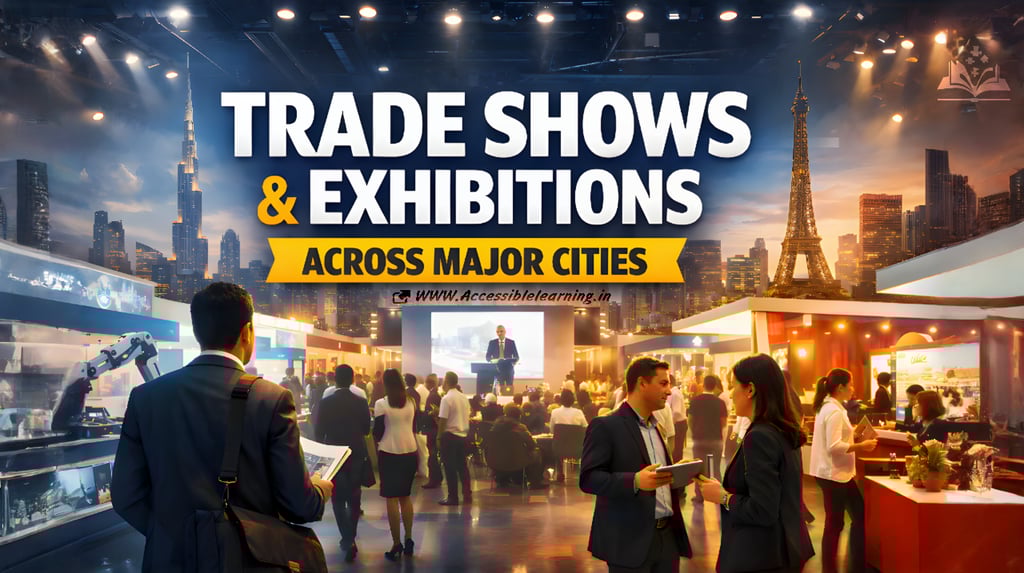
You walk into a huge exhibition hall. Noise everywhere. Screens flashing. People moving fast with badges around their necks. It feels chaotic at first. But within an hour, patterns start to appear. You notice which booths are crowded, which products people are touching, and which companies are struggling to explain what they do.
This is why trade shows still matter. They reveal the truth of a market in real time.
What Trade Shows and Exhibitions Actually Represent
Trade shows are not just events. They are temporary marketplaces where industries expose their current priorities. Every design choice, pricing board, product demo, and sales pitch reflects what a company believes will work now.
Unlike websites or ads, exhibitions don’t hide hesitation. You can see confidence, confusion, or innovation immediately.
Why Trade Shows Continue to Be Relevant
They shorten the learning curve
Months of research can be compressed into a single day. Walking the floor shows you competitors, alternatives, price ranges, and customer reactions without filters.
They reveal buying intent, not just interest
Online views mean nothing. At exhibitions, people ask about minimum order quantities, delivery timelines, compliance, and support. That’s real intent.
They expose the difference between claims and capability
A product page can say anything. A live demo cannot. Trade shows quickly separate marketing talk from operational reality.
They create context that digital channels cannot
You don’t just hear what a company sells. You see who they sell next to, how they position themselves, and which problems dominate conversations.
They accelerate trust through presence
Face-to-face interaction builds confidence faster than any email sequence. Tone, clarity, and responsiveness matter, and exhibitions make them visible.
They support industries where touch and scale matter
Manufacturing, healthcare, food processing, fashion, machinery, and hardware benefit heavily from physical display and comparison.
They bring decision-makers into the same space
Founders, buyers, distributors, policymakers, and investors often attend the same event. That concentration rarely happens elsewhere.
They expose regional demand differences
What sells in one city may fail in another. Trade shows show how preferences shift across regions, budgets, and industries.
They help validate pricing in real conditions
You quickly learn whether your price is competitive, premium, or unrealistic based on actual buyer reactions.
They create unexpected opportunities
Many partnerships start accidentally through casual conversations, shared problems, or mutual observations on the show floor.
How Major Cities Shape Trade Shows Differently
Trade shows reflect the cities that host them. Location affects audience quality, mindset, and outcomes.
Delhi NCR: Scale, Structure, and Policy Influence
Exhibitions in Delhi NCR often involve:
government-linked organizations
large manufacturers
import-export businesses
infrastructure and industrial players
These shows are ideal for businesses dealing with regulations, large tenders, and nationwide distribution.
Mumbai: Brand, Speed, and Commercial Focus
Mumbai exhibitions are sharp and fast-moving. Conversations quickly turn to margins, reach, and positioning.
You commonly find:
FMCG brands
retail buyers
media and marketing companies
financial decision-makers
Visibility and partnerships matter here more than long explanations.
Bengaluru: Validation and Innovation
Bengaluru trade shows are built around questions, not just displays.
They attract:
technology founders
SaaS and AI companies
product managers
early adopters
Feedback is direct, and assumptions get tested quickly.
Hyderabad: Precision and Healthcare Strength
Hyderabad events often focus on:
pharmaceuticals
biotech
healthcare manufacturing
enterprise technology
Attendees are detail-oriented and outcome-focused.
Chennai: Manufacturing Discipline
Chennai exhibitions serve:
automotive supply chains
industrial engineering
electronics manufacturing
port and logistics businesses
Efficiency matters more than showmanship.
Kolkata: Regional Access and Traditional Trade
Kolkata trade shows connect:
eastern Indian markets
MSMEs
food processing and textiles
cultural and trade fairs
They offer strong regional reach and relationship-driven business.
The Global Trade Show Advantage
International cities host exhibitions that define entire industries.
Dubai connects Asia, Europe, and Africa with minimal friction.
Singapore attracts high-quality B2B audiences and global conferences.
Frankfurt and Hannover anchor industrial and manufacturing innovation.
Las Vegas dominates large-scale consumer and technology showcases.
These cities succeed because they combine access, infrastructure, and clear industry focus.

Visitor vs Exhibitor: Choosing the Right Role
Attend when:
you need market clarity
you are exploring suppliers
you want to learn before investing
Exhibit when:
your offering is clear
you can handle inquiries
follow-ups are ready
Exhibiting without preparation costs more than not exhibiting at all.
How to Get Real Value From Trade Shows
Preparation matters more than presence.
Define a single goal before attending.
Identify key booths in advance.
Ask direct questions.
Track conversations carefully.
Follow up quickly with context.
Most value is unlocked after the event, not during it.
Common Reasons Trade Shows Fail for Businesses
attending without a clear purpose
collecting contacts without qualification
focusing on freebies instead of conversations
skipping post-event follow-ups
expecting instant results
Trade shows reward intent, not attendance.
Why Trade Shows Remain Essential in a Digital World
Digital tools scale communication, but they don’t replace judgment. Trade shows provide physical proof, human signals, and shared environments where decisions feel safer.
They don’t replace online strategies. They strengthen them.
Trade shows and exhibitions across major cities are not outdated. They are concentrated decision spaces where industries reveal what they value right now.
Those who treat them as strategic environments gain insight, connections, and leverage. Those who treat them as casual visits leave with bags of paper and no direction. In the end, trade shows are less about showing products and more about understanding people.
FAQs
Q: What is the main purpose of trade shows and exhibitions?
The main purpose is to bring buyers, sellers, and industry professionals into one place to exchange ideas, showcase products, evaluate solutions, and build business relationships in a short time.
Q: Are trade shows still useful in the digital and AI-driven era?
Yes. Digital tools help with research, but trade shows offer face-to-face trust, live product evaluation, and real-time market feedback that online channels cannot fully replace.
Q: Which industries benefit the most from trade shows?
Manufacturing, technology, healthcare, pharmaceuticals, automotive, food processing, fashion, logistics, and consumer goods benefit the most because physical display and direct comparison matter.
Q: Is it better to attend a trade show or exhibit at one?
Attending is better for learning and market research. Exhibiting is better when you have a clear product, pricing, and follow-up plan. The choice depends on your business stage and goals.
Q: How do major cities influence trade show outcomes?
Cities shape the audience and focus. Some attract policymakers and large buyers, while others draw startups, innovators, or regional distributors. Location directly affects the type of opportunities available.
Q: How can first-time attendees get value from a trade show?
By setting a clear goal, planning which booths to visit, asking focused questions, taking notes, and following up quickly after the event.
Q: What are common mistakes businesses make at exhibitions?
Attending without a strategy, collecting contacts without qualification, relying only on brochures, and failing to follow up after the event.
Q: Do trade shows help small businesses and startups?
Yes. They offer exposure, learning, partnerships, and direct feedback, especially for businesses looking to validate products or enter new markets.
Q: How long does it take to see results from trade shows?
Results are rarely instant. Most meaningful outcomes, such as partnerships or deals, happen weeks or months later through consistent follow-ups.
Q: What should businesses prepare before participating in a trade show?
A clear pitch, product understanding, pricing clarity, target audience definition, and a follow-up plan to convert conversations into outcomes.
Subscribe to Frontier Intelligence
All © Copyright reserved by Accessible-Learning Hub
| Terms & Conditions
Accessible Learning Hub — Actionable clarity for high-agency minds.
Weekly breakdowns on AI breakthroughs, capital flow, and human performance systems. Zero fluff.