

Indian Motherhood Then and Now: Tradition, Trauma, and Change
A raw and honest look at old Indian mothers versus modern Indian mothers, exploring tradition, control, emotional silence, generational trauma, and how Indian motherhood is evolving in today’s world.
INDIA/BHARATNEPOTISM/SOCIAL ISSUES
---
12/19/20254 min read
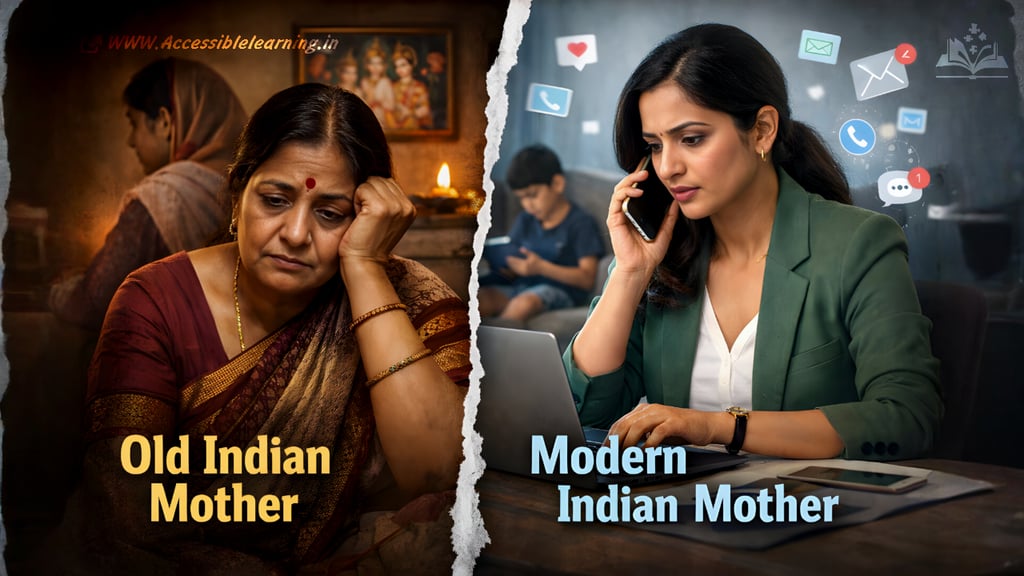
Indian motherhood is often romanticized, but beneath the praise and symbolism lie uncomfortable truths that rarely make it into polite conversation. The comparison between the old Indian mother and the modern Indian mother is not just about tradition versus progress. It is about trauma, control, silence, pressure, and survival across different eras.
To understand Indian motherhood honestly, we must confront both its strengths and its shadows.
The Old Indian Mother: Love Shaped by Control and Silence
The traditional Indian mother is frequently celebrated for her sacrifice, but sacrifice often came at the cost of emotional health, both hers and her children’s. Many older mothers were raised in environments where obedience mattered more than understanding. They internalized suffering as virtue and passed it down unknowingly.
Emotional manipulation was normalized. Guilt became a parenting tool. Phrases implying duty, shame, and fear of social judgment replaced open communication. Children learned early that disagreement was disrespect, and silence was safer than honesty. Love was present, but conditional on compliance.
Gender bias was deeply embedded. Sons were protected and prioritized, while daughters were trained to endure, adjust, and compromise. Emotional neglect, especially toward male children, was dismissed because “boys don’t cry.” For girls, control over clothing, friendships, and ambition was justified in the name of safety and honor.
Many older mothers enforced harmful norms not because they believed in them fully, but because they had no power to resist them themselves. Their authority over children was often the only control they had in a system that denied them autonomy.
The Modern Indian Mother: Freedom With Invisible Pressure
The modern Indian mother appears empowered, but her freedom is fragile. She carries the pressure of proving she can be independent without failing as a caregiver. Society demands perfection. If she focuses on her career, she is labeled neglectful. If she prioritizes her children, she is seen as unambitious.
Burnout is common but rarely acknowledged. Emotional presence is expected even when mental exhaustion is constant. Technology has blurred boundaries. Work enters the home. Parenting advice floods social media, creating anxiety and comparison rather than support.
Children may grow up with more freedom but also more emotional distance. Outsourcing care to screens, schools, and digital platforms can replace deep emotional bonding. In trying to avoid control, some modern parents struggle with boundaries, leaving children confused rather than empowered.
Cultural identity becomes fragile. In rejecting rigid traditions, some modern households abandon structure altogether. Children may grow up disconnected from language, rituals, and community, with little sense of belonging beyond digital spaces.
The Inherited Trauma No One Talks About
What links both generations is unresolved trauma. Older mothers passed down fear-based parenting because it was all they knew. Modern mothers carry generational guilt and overcorrect, sometimes at the cost of stability.
Indian families rarely address emotional wounds openly. Apologies between parents and children are rare. Mental health struggles are minimized. Toxic behaviors are justified as love. This silence allows patterns to repeat across generations, only in different forms.
The real damage is not tradition or modernity. It is the refusal to reflect.
The Cost Paid by Children
Children raised under excessive control often grow up anxious, emotionally withdrawn, or approval-seeking. Children raised with emotional absence or inconsistent boundaries may struggle with attachment, discipline, and identity. Both environments can create adults who are high-functioning but emotionally fractured.
Success becomes a mask. Obedience becomes survival. Independence becomes isolation.
Toward a More Honest Model of Indian Motherhood
The future of Indian motherhood requires accountability, not nostalgia or rebellion. Older mothers deserve compassion, but harmful behaviors must not be excused. Modern mothers deserve respect, but avoidance of responsibility must not be defended.
Real progress begins when mothers are allowed to be human. Not saints. Not symbols. Not sacrifices.
Healing comes from open conversations, emotional literacy, and conscious parenting that acknowledges past harm while choosing better paths forward.
Indian motherhood does not need to be defended or attacked. It needs to be understood, questioned, and allowed to evolve with honesty.
Only then can future generations grow up not just disciplined or free, but emotionally whole.

FAQs
Q: What is the difference between an old Indian mother and a modern Indian mother?
An old Indian mother typically follows traditional parenting rooted in discipline, sacrifice, and obedience, while a modern Indian mother emphasizes emotional awareness, independence, and adaptability. The difference largely comes from the social and economic environments in which they were raised.
Q: Why are modern Indian mothers often criticized?
Modern Indian mothers are criticized for balancing careers and parenting, relying on technology, and questioning traditional norms. Much of this criticism ignores the increased pressure, workload, and expectations placed on women in today’s society.
Q: Did traditional Indian parenting cause emotional trauma?
In some cases, yes. Traditional parenting often prioritized obedience over emotional expression, which led to suppressed feelings, guilt-based discipline, and lack of mental health awareness. While not intentional, this approach contributed to unresolved emotional issues in many adults.
Q: Are modern Indian parents emotionally distant?
Modern parenting can sometimes create emotional distance due to work stress, digital distractions, and time constraints. However, this is not universal and often reflects systemic pressures rather than lack of care.
Q: Is Indian motherhood becoming too westernized?
Indian motherhood is evolving rather than becoming westernized. While some traditional practices are fading, many values like family bonding, respect, and cultural identity still exist, often in more flexible and conscious forms.
Q: How does generational trauma affect Indian families?
Generational trauma in Indian families often appears as emotional silence, fear-based discipline, and avoidance of mental health discussions. These patterns pass from one generation to the next unless actively addressed.
Q: Can traditional and modern parenting coexist in India?
Yes. A balanced approach that combines emotional awareness with cultural grounding can create healthier families. Progress does not require rejecting tradition, and tradition does not need to suppress growth.
Q: Why do Indian parents avoid discussing mental health?
Mental health has long been stigmatized in Indian society and associated with weakness or failure. This has prevented open conversations, leading many families to ignore or minimize emotional struggles.
Q: Is strict parenting better for Indian children?
Strict parenting can create discipline but may also lead to anxiety, fear of failure, and emotional suppression. Long-term well-being often depends on emotional safety, communication, and consistency rather than strict control.
Q: How is Indian motherhood changing today?
Indian motherhood is shifting toward conscious parenting, emotional literacy, and shared responsibility. Mothers today are redefining their roles beyond sacrifice, aiming for healthier relationships with their children.
Subscribe to Frontier Intelligence
All © Copyright reserved by Accessible-Learning Hub
| Terms & Conditions
Accessible Learning Hub — Actionable clarity for high-agency minds.
Weekly breakdowns on AI breakthroughs, capital flow, and human performance systems. Zero fluff.