

India Weekly News: Key Political, Economic, and Governance Updates from Last Week
A comprehensive overview of last week’s major developments in India, covering government decisions, political movements, economic signals, infrastructure progress, national security, and weather disruptions that shaped the nation.
NEWS/CURRENT AFFAIRSINDIA/BHARATNEPOTISM/SOCIAL ISSUES
Kim Shin
12/29/20255 min read
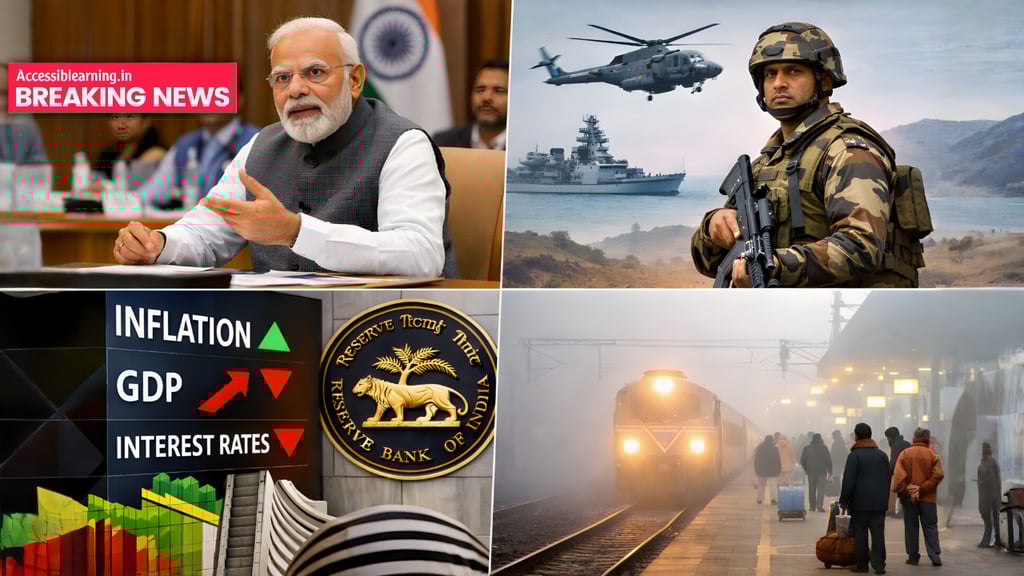
Last week in India was shaped by decisive governance actions, political strategy discussions, economic assessments, and weather-related challenges that directly affected daily life. From high-level administrative meetings to infrastructure reviews and security preparedness, these developments highlighted how policy, planning, and real-world conditions intersect across the country. Together, these events offer a clear snapshot of India’s priorities as it moves toward a new year.
Prime Minister Leads National Conference of Chief Secretaries
Prime Minister Narendra Modi chaired the fifth National Conference of Chief Secretaries in New Delhi, bringing together senior bureaucrats from all Indian states and union territories. The conference focused on strengthening cooperation between the central and state governments.
Key discussion areas included education reform, digital governance, skill development, tourism growth, and the use of technology to improve public service delivery. The Prime Minister emphasized results-based governance and urged states to align development goals with long-term national priorities.
This meeting highlighted the government’s push to improve administrative efficiency and policy execution at the grassroots level.
Government Announces Expanded Anti-Terrorism Measures
The Union Home Ministry unveiled plans to significantly strengthen India’s internal security framework. During a national anti-terrorism conference, the government announced steps to create a more coordinated counter-terror structure across states.
The new approach includes tighter intelligence sharing, improved coordination between central agencies and state police forces, and upgraded technological surveillance systems. The objective is to prevent terrorism, organized crime, and cross-border threats through a unified national response.
This announcement reflects the government’s ongoing focus on national security and internal stability.
Congress Leadership Holds Strategic Meeting in Delhi
The Congress Working Committee held a key meeting in New Delhi to review the party’s political strategy ahead of upcoming state and national elections. Senior leaders discussed organizational reforms, leadership coordination, and regional political challenges.
The meeting aimed to strengthen party unity and refine its political messaging as opposition parties prepare for intensified electoral competition in the coming months.
This internal exercise signals a renewed effort by the Congress to reorganize and position itself more effectively on the national stage.
Political Tensions Rise Over International Political Engagements
Political debate intensified last week following criticism by the ruling party over an opposition leader’s participation in international forums abroad. The issue sparked strong reactions across political circles, with arguments over national image, foreign influence, and political responsibility.
While opposition leaders defended international engagement as part of democratic dialogue, the ruling party questioned its intent and timing. The episode added another layer to the already polarized political environment.
Government Signals Reform Push for the Coming Year
Senior government officials outlined plans for accelerating reforms starting in the new year. The focus areas include easing daily life for citizens, expanding digital public services, simplifying tax processes, and improving welfare delivery systems.
The government reiterated its commitment to economic stability, infrastructure development, and policy continuity, presenting 2026 as a year of execution rather than announcement.
These statements helped set expectations for the policy direction ahead.
Dense Fog and Cold Wave Disrupt Northern India
Severe winter conditions affected large parts of northern India last week. Dense fog reduced visibility to extremely low levels in states such as Punjab, Haryana, Uttar Pradesh, Rajasthan, and Delhi.
The India Meteorological Department issued cold wave and fog warnings, urging caution for commuters. Temperatures dropped below seasonal averages, impacting daily life, especially during early morning and late evening hours.
Flights and Trains Face Major Delays
The fog caused widespread disruption to transportation networks. Several domestic flights were delayed or canceled due to poor visibility at major airports. Rail services also suffered, with numerous trains running late across northern railway zones.
Passengers were advised to check travel schedules in advance, and authorities deployed additional safety measures to manage congestion and delays.
These disruptions highlighted the recurring challenges winter weather poses to India’s transport infrastructure.


National Leaders Emphasize Unity and Development
During a public address at a national memorial site, Defence Minister Rajnath Singh spoke about the contributions of national leaders and freedom fighters. His speech focused on unity, discipline, and collective responsibility in building the country’s future.
The event reinforced themes of national identity and development, aligning with broader government messaging on patriotism and progress.
Reserve Bank of India Reviews Inflation and Credit Growth
Last week, the Reserve Bank of India conducted an internal review of inflation trends and credit flow in the banking system. Officials noted that retail inflation remained within a manageable range, while credit growth continued steadily across sectors such as housing, small businesses, and infrastructure.
The RBI signaled that monetary policy would remain cautious, balancing price stability with economic growth. This assessment reassured markets ahead of the next formal policy announcement.
Supreme Court Addresses Case Backlog and Judicial Reforms
The Supreme Court of India held discussions with high court representatives to address the growing backlog of pending cases. Emphasis was placed on faster case disposal, increased use of digital hearings, and better infrastructure in district courts.
Judicial authorities highlighted the need for more judges and streamlined procedures to improve access to justice. This initiative reflects continued efforts to modernize India’s judicial system.
Centre and States Discuss Water Management Strategy
A high-level meeting between central and state governments focused on water security and river management. Officials discussed groundwater depletion, interstate water sharing, and long-term planning to address future shortages.
The government stressed the importance of sustainable water use, rainwater harvesting, and improved irrigation efficiency, especially in agriculture-dependent regions.
Indian Armed Forces Conduct Joint Preparedness Exercises
The Indian Armed Forces carried out joint military preparedness exercises involving the Army, Navy, and Air Force. The drills focused on coordination, rapid response, and readiness across different terrains and scenarios.
Such exercises are part of regular defense preparedness and aim to strengthen interoperability among the forces while ensuring national security readiness.
Government Reviews Progress of National Infrastructure Projects
Union ministers reviewed the progress of major national infrastructure projects, including highways, rail corridors, and logistics hubs. The review focused on project timelines, cost management, and coordination between ministries.
The government reiterated its commitment to completing key projects on schedule, recognizing infrastructure as a critical driver of economic growth and employment.
Education Ministry Pushes Digital Learning Expansion
The Ministry of Education announced steps to expand digital learning access in government schools and rural institutions. Plans include improved internet connectivity, updated digital classrooms, and teacher training programs.
The initiative aims to reduce the education gap between urban and rural students and strengthen foundational learning across the country.
Last week reflected India’s ongoing effort to balance governance, development, and public welfare. Strategic meetings at the highest levels emphasized coordination and reform, while economic and infrastructure reviews pointed toward long-term stability and growth. At the same time, political debates and severe winter conditions underscored the challenges of managing a vast and diverse nation. As India steps into the coming weeks, these developments set the tone for policy execution, preparedness, and national direction.
Subscribe to Frontier Intelligence
All © Copyright reserved by Accessible-Learning Hub
| Terms & Conditions
Accessible Learning Hub — Actionable clarity for high-agency minds.
Weekly breakdowns on AI breakthroughs, capital flow, and human performance systems. Zero fluff.