

Human Rights Violations in Conflict Zones: A Comprehensive 2024-2025 Analysis
Discover the latest data on human rights violations in conflict zones across Gaza, Sudan, Ukraine & DRC. Learn about civilian casualties, accountability mechanisms, and solutions to protect vulnerable populations in 2024-2025.
HARSH REALITYGLOBAL ISSUESAWARE/VIGILANT
Kim Shin
10/29/20258 min read
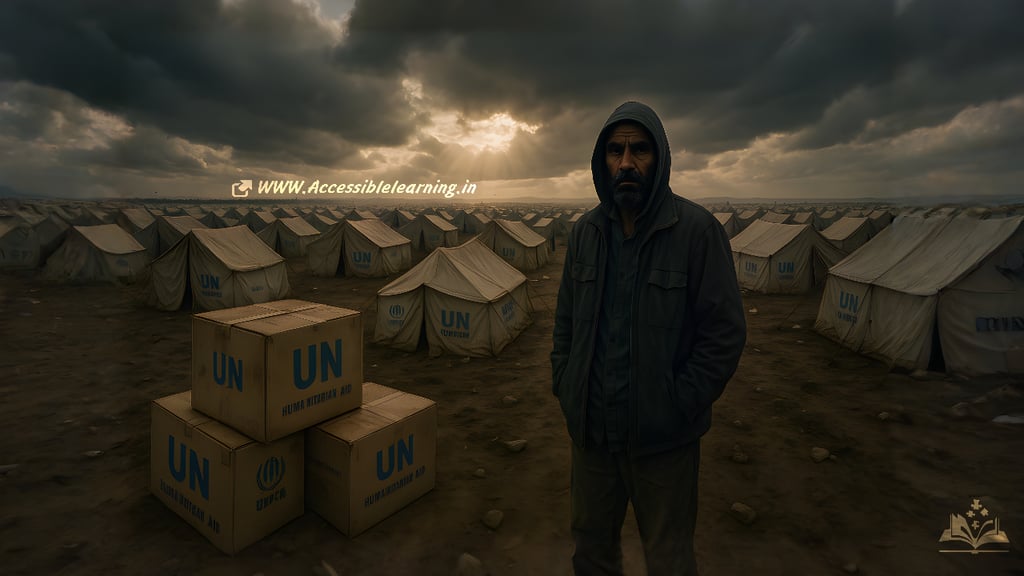
Human Rights Violations During Armed Conflict
Human rights violations in conflict zones represent some of the gravest abuses occurring globally today. As armed conflicts continue across Gaza, Sudan, Ukraine, the Democratic Republic of Congo, and other regions, civilian populations face systematic violence, displacement, and deprivation that challenge the foundations of international humanitarian law.
Recent data reveals an alarming escalation: nearly 123 million people had been forcibly displaced by conflict and persecution by mid-2024, marking an unprecedented humanitarian crisis. Understanding these violations—their nature, scope, and consequences—is essential for accountability, advocacy, and meaningful international response.
What Are Human Rights Violations in War Zones?
Human rights violations during armed conflict encompass actions that breach international humanitarian law, human rights law, and the Geneva Conventions. These violations include:
Attacks on Civilians and Civilian Infrastructure Deliberate targeting of non-combatants, hospitals, schools, and residential areas represents one of the most severe violations. The international community adopted a political declaration to address explosive weapons in populated areas—the leading cause of civilian casualties in armed conflict worldwide.
Forced Displacement and Transfer Systematic removal of populations from their homes constitutes a crime against humanity when conducted as part of an organized policy. Millions experience multiple forced displacements as conflict zones shift.
Torture and Extrajudicial Execution The systematic use of torture, summary executions of prisoners, and cruel treatment of detainees violates fundamental protections under international law.
Sexual Violence as a Weapon of War: Gender-based violence, including rape and sexual torture, is frequently deployed as a deliberate tactic to terrorize populations and destroy community bonds.
Deprivation of Essential Resources Blocking access to food, water, medical care, and humanitarian assistance—tactics that cause mass suffering and death among civilian populations.

Major Conflict Zones: 2024-2025 Human Rights Crisis
Gaza: Unprecedented Civilian Casualties
The conflict in Gaza represents one of the most devastating humanitarian crises in recent history. As of October 2025, over 68,000 Palestinians have been killed, according to the Gaza Health Ministry, though recent research suggests significantly higher figures.
An independent survey estimated almost 84,000 deaths occurred between October 2023 and early January 2025, with Israeli military intelligence data indicating that approximately 83 percent of those killed were civilians—a ratio experts note is almost unparalleled in modern warfare.
The humanitarian impact extends beyond direct casualties. Israeli forces forcibly displaced nearly all of Gaza's population, often multiple times, with over 1.4 million people forced to flee Rafah alone. The destruction of infrastructure is catastrophic: out of every ten buildings in Gaza, eight are either damaged or flattened, and nine out of every ten homes are wrecked.
Sudan: The World's Forgotten Crisis
Armed conflict erupted in Sudan in April 2023 when military generals battled for power, unleashing massive abuses against civilians, particularly in Darfur. More than 20,000 civilian deaths have been reported, with rampant abuses, including widespread sexual violence.
The crisis has displaced 6.4 million people inside the Democratic Republic of Congo, with more than 940,000 people forced to flee in the first half of 2024 alone. Humanitarian organizations warn that without peace efforts, displacement could affect over 16 million people, challenging efforts to meet even basic humanitarian needs.
The international community's response has been criticized as grossly inadequate, with Human Rights Watch condemning the failure to address ethnic cleansing and mass killings in Darfur.
Ukraine: Systematic Violations Continue
The conflict in Ukraine demonstrates persistent patterns of human rights abuses. Between December 2024 and May 2025, conflict-related violence killed 968 civilians and injured 4,807—a 37 percent increase compared to the same period the previous year.
Documentation reveals particularly disturbing violations: Russian armed forces executed at least 35 captured Ukrainian soldiers during this period, consistent with increasing documented executions since late 2024. Released Ukrainian prisoners of war provided detailed accounts of torture, ill-treatment, and sexual violence in Russian-managed facilities.
In occupied territories, Russian authorities increased pressure on residents to obtain Russian citizenship or leave, restricting access to pensions and healthcare for those without Russian documentation.
Democratic Republic of Congo: Decades of Neglect
The DRC crisis remains one of the most complex and neglected globally, with decades of clashes accompanied by widespread human rights violations and gender-based violence. The displacement crisis leaves populations vulnerable in overcrowded camps facing ongoing security risks and disease outbreaks.
Impact on Vulnerable Populations
Children in Conflict: A Generation Under Siege
In 2023, the United Nations verified a record 32,990 grave violations against 22,557 children—the highest number since Security Council-mandated monitoring began. The 2024 data is projected to show another increase, with thousands of children killed and injured in Gaza and record child casualties in Ukraine.
In Haiti, there has been a 1,000 percent increase in reported incidents of sexual violence against children. Education disruption leaves millions without schooling, while around 40 percent of un- and under-vaccinated children live in conflict-affected countries, making them vulnerable to disease outbreaks.
Women and Gender-Based Violence
Sexual violence remains a systematic weapon of war across conflict zones. Widespread reports of rape and sexual violence in conflict settings particularly affect women and girls. Perpetrators often use such violence deliberately to terrorize populations and fracture community structures.
Humanitarian Workers: Operating Under Fire
2024 became the deadliest year on record for humanitarian personnel, with 281 aid workers killed globally. Over 224 humanitarian aid workers have been killed in the Gaza conflict alone, including 179 UNRWA employees.


International Law and Accountability Mechanisms
International Criminal Court Action
Significant accountability measures emerged in 2024. The International Criminal Court issued arrest warrants for Israeli Prime Minister Benjamin Netanyahu and former Defense Minister Yoav Gallant for war crimes and crimes against humanity in Gaza.
State Accountability Cases
Human Rights Watch praised governments for bringing international law violation cases to international courts, including South Africa's case against Israel. These legal actions represent crucial steps toward accountability for alleged violations.
Challenges to Enforcement
Despite legal mechanisms, enforcement remains problematic. Many governments invoke human rights standards weakly or inconsistently, feeding perceptions that human rights lack legitimacy. The selective application of international law undermines the universal protection framework.
Systematic Violations: Patterns and Tactics
Explosive Weapons in Populated Areas
Warring parties' use of aerial bombing, artillery, rockets, and missiles in villages, towns, and cities remains the leading cause of civilian casualties in armed conflict. While international commitments aim to address this practice, implementation remains insufficient.
Siege Warfare and Starvation Tactics
Modern conflicts increasingly employ siege tactics that deliberately deprive civilian populations of essential resources. Israeli authorities have deliberately deprived Palestinians of access to water required for survival, which constitutes a crime against humanity and may amount to genocide.
Attacks on Healthcare Infrastructure
Healthcare facilities face systematic targeting across conflict zones. Russian armed forces struck at least five hospitals directly in Ukraine during the recent reporting period, while Gaza's healthcare system has been devastated, with only 38 percent of 564 health service points functional and only one medical point partially functional in North Gaza.
Food Insecurity and Famine as Warfare
Conflict and armed violence continue as primary drivers of hunger in numerous hotspots, with more than half a million people in five conflict-affected countries living in the most extreme food insecurity situations.
Famine conditions were determined in Sudan's North Darfur, the first famine determination since 2017. In Gaza, the world's leading authority on food crises declared Gaza City had fallen into famine in August 2024.
Economic and Infrastructure Destruction
Beyond human casualties, conflicts systematically destroy economic foundations. In Gaza, Israeli attacks on fishers and fishing infrastructure caused a $17.5 million production loss, with 70 percent of fishing assets damaged by April 2024.
Agricultural infrastructure faces deliberate targeting. Towns that served as breadbaskets have been virtually erased, with entire areas of agricultural land destroyed.
Technology and Modern Warfare Violations
New use of surveillance technologies, artificial intelligence, and digital tools on the battlefield risks further civilian harm and raises questions about accountability for governments and tech companies.
Unconventional weapons deployment continues, including booby-trapped pagers and walkie-talkies distributed among targets that killed at least 32 people and wounded more than 3,250.
Global Displacement Crisis
The scale of forced displacement represents an unprecedented humanitarian emergency. Nearly 123 million people were forcibly displaced by conflict and persecution by mid-2024, with numbers continuing to rise.
Millions remain trapped in prolonged exile, unable to safely return home but lacking possibilities to rebuild their lives in displacement locations. Temporary becomes permanent, with generations growing up in refugee camps.
International Response: Failures and Progress
Inadequate Humanitarian Access
Humanitarian operations face systematic obstruction. Aid convoys are attacked, distribution points bombed, and access deliberately restricted. UN officials called for investigations after Palestinians were killed and injured while seeking assistance at militarized distribution hubs.
Arms Transfers and Complicity
Despite clear evidence of weapons being used to commit atrocities, governments, including the United States and Germany continued providing arms and military support, violating international legal obligations and domestic law.
Promising Developments
Progress exists amid challenges. 83 countries adopted a political declaration to better protect civilians from explosive weapons in populated areas, with six of the world's top eight arms exporters signing.
What Can Be Done: Solutions and Advocacy
Immediate Ceasefire and Protection
Ending active hostilities remains the primary humanitarian imperative. Ceasefires must include robust civilian protection measures and unrestricted humanitarian access.
Accountability Mechanisms
Strengthening international courts, documenting violations systematically, and ensuring perpetrators face consequences are essential for deterrence and justice.
Humanitarian Aid at Scale
The unimpeded entry of assistance at scale to meet enormous needs must be restored immediately. This requires political will from all parties and international pressure on governments obstructing aid.
Arms Embargoes
Governments must cease weapons transfers to parties credibly accused of systematic violations. Legal obligations require halting arms flows that enable atrocities.
Supporting Documentation Efforts
Organizations documenting violations face dangerous conditions but provide crucial evidence. International support for monitoring and documentation strengthens future accountability.

FAQ's
Q: What are the most common human rights violations in war zones?
The most prevalent violations include attacks on civilians, forced displacement, torture and extrajudicial executions, sexual violence, deliberate deprivation of food and water, attacks on healthcare and schools, and use of prohibited weapons. These violations often occur systematically rather than as isolated incidents.
Q: How many people have been affected by conflict-related human rights violations in 2024?
Nearly 123 million people were forcibly displaced by conflict and persecution by mid-2024, representing an unprecedented scale. Specific conflicts have caused massive casualties, with tens of thousands killed in Gaza, Sudan, and Ukraine, along with hundreds of thousands injured.
Q: Why is the civilian death toll so high in recent conflicts?
High civilian casualties result from multiple factors: use of explosive weapons in populated areas, deliberate targeting of civilian infrastructure, siege tactics that deprive populations of essentials, attacks on healthcare facilities, and insufficient adherence to international humanitarian law principles of distinction and proportionality.
Q: What is being done to hold violators accountable?
Accountability mechanisms include International Criminal Court prosecutions, cases at the International Court of Justice, UN Human Rights Council investigations, documentation by international organizations, and domestic courts using universal jurisdiction. However, enforcement remains challenging due to political considerations and lack of cooperation from some states.
Q: How can civilians in conflict zones be better protected?
Enhanced protection requires enforcing international humanitarian law, establishing humanitarian corridors and safe zones, ensuring unimpeded aid access, stopping weapons transfers to violating parties, strengthening international monitoring, and imposing meaningful consequences for violations, including targeted sanctions and arms embargoes.
Q: What is the difference between war crimes and crimes against humanity?
War crimes are serious violations of international humanitarian law during armed conflict, such as deliberately attacking civilians or using prohibited weapons. Crimes against humanity are widespread or systematic attacks against civilian populations, including murder, torture, forced displacement, and persecution, which can occur during peace or war. Both carry individual criminal responsibility under international law.
Q: How do humanitarian organizations operate in active conflict zones?
Humanitarian organizations operate under international humanitarian law protections, negotiating access with all parties, maintaining neutrality and impartiality, coordinating with UN agencies, and documenting needs and violations. However, 2024 saw record deaths among humanitarian workers, demonstrating the extreme risks they face.
Q: What is the long-term impact of human rights violations on survivors?
Long-term impacts include physical disabilities from injuries, psychological trauma including PTSD, loss of livelihoods and economic security, family separation, educational disruption for children, destroyed social structures, chronic health conditions from malnutrition and untreated injuries, and intergenerational trauma affecting entire communities.
The human rights violations documented across conflict zones in 2024-2025 represent a profound crisis of international order and humanitarian protection. This is not a moment to retreat from the protections needed by everyone everywhere.
Children in war zones face daily struggles that deprive them of childhood, with schools bombed, homes destroyed, and families torn apart. The international community's response must match the scale of suffering with urgent, sustained action prioritizing civilian protection, humanitarian access, and accountability.
The patterns documented—systematic targeting of civilians, use of starvation as warfare, attacks on healthcare and aid workers, mass displacement—demand not just condemnation but concrete action. Legal frameworks exist; political will remains the missing element.
As conflicts continue and humanitarian needs escalate, the fundamental question becomes whether the international community will uphold the human rights principles it claims to champion or allow selective application to render these protections meaningless. The answer will determine not only the fate of millions currently suffering but also the viability of international humanitarian law itself.
Subscribe To Our Newsletter
All © Copyright reserved by Accessible-Learning Hub
| Terms & Conditions
Knowledge is power. Learn with Us. 📚

