

How the Internet Is Redefining the Way We Communicate Today
The internet has transformed how people connect, share ideas, and express themselves in everyday life. This article explores how modern communication has evolved through digital platforms, real-time interaction, and global connectivity, while also highlighting the challenges and skills needed to communicate clearly and responsibly in an online world.
A LEARNINGAWARE/VIGILANTNEW YOUTH ISSUES
Shiv Singh Rajput
12/28/20255 min read
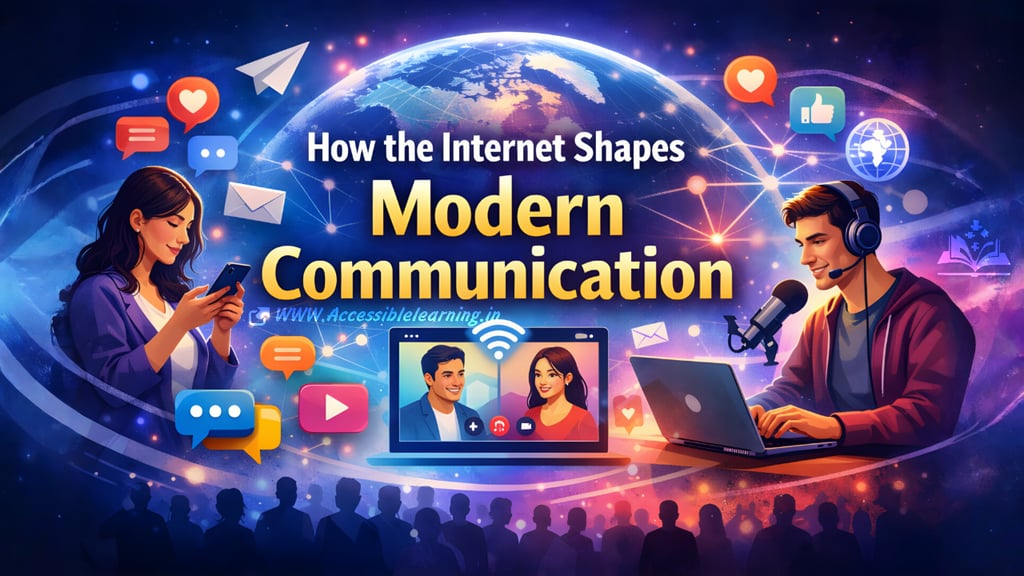
The internet has completely redefined how people communicate with one another. It is no longer just a tool for sending messages. It shapes how relationships form, how information spreads, how businesses operate, and how societies respond to events in real time. Communication today is faster, more visual, more public, and more complex than ever before.
Understanding this shift helps people communicate better, avoid common pitfalls, and stay grounded in a world that is constantly online.
The Shift From One-Way to Two-Way Communication
Traditional communication channels like newspapers, television, and radio were mostly one-way. Information flowed from institutions to audiences.
The internet turned communication into a two-way and multidirectional system. Anyone can publish content, respond instantly, or challenge ideas publicly. This change empowers individuals but also increases responsibility. Every user is now both a consumer and a communicator.
This shift has made conversations more dynamic but also more chaotic, especially when emotions run high or facts are unclear.
Real-Time Communication and the Need for Speed
The internet has removed waiting from communication. Emails replaced letters. Chats replaced emails. Live updates replaced daily news cycles.
Real-time communication helps people make faster decisions, collaborate instantly, and respond to emergencies. It is essential for modern businesses, online education, and global teamwork.
However, speed often comes at the cost of depth. Messages are shorter. Reactions are quicker. People respond before thinking, which can lead to misunderstandings, conflicts, or regret.
Visual Communication Takes the Lead
Modern internet communication is highly visual. Images, videos, infographics, and short clips now communicate more than long text.
Platforms encourage visual storytelling because it captures attention quickly. A short video can explain an idea faster than a full article. Emojis and stickers add emotional context to messages.
While visuals improve engagement, they can also oversimplify complex topics. Important details may be ignored in favor of what looks appealing or goes viral.
Communication Without Physical Boundaries
The internet removed geographical limitations. People can communicate across countries, cultures, and time zones with ease.
This global reach enables international collaboration, online communities, and cross-cultural friendships. Students attend virtual classes taught by global experts. Creators reach audiences worldwide.
At the same time, communication across cultures requires sensitivity. Humor, tone, and expressions can be misunderstood when cultural context is missing.
Personal Branding and Identity Online
The internet allows individuals to shape how they are seen by others. Social profiles, posts, comments, and shared content form a digital identity.
Communication is no longer just about what is said, but how it reflects personal values, beliefs, and professionalism. This matters for careers, networking, and reputation.
One careless post can have long-term consequences. Modern communication demands awareness, consistency, and responsibility.
Workplace Communication in the Digital Era
Internet-based tools have transformed professional communication. Emails, collaboration platforms, shared documents, and virtual meetings are now standard.
Clear writing, tone control, and timely responses are essential skills. Without face-to-face cues, misunderstandings can grow if messages are unclear or emotionally charged.
Remote work also changes team dynamics. Trust, transparency, and structured communication become more important than physical presence.
The Role of Algorithms in Communication
Algorithms silently shape modern communication. They decide which messages are seen, shared, or ignored.
Social platforms prioritize content based on engagement, not accuracy or balance. This affects conversations, public opinion, and emotional responses.
As a result, people often communicate within limited information bubbles. Awareness of algorithm influence helps users seek diverse perspectives and communicate more thoughtfully.
Emotional Expression and Online Behavior
The internet gives people space to express emotions openly. Support, anger, joy, and frustration are shared instantly and publicly.
For many, this creates a sense of connection and validation. Online communities offer comfort during difficult times.
However, emotional communication online lacks real-time feedback. Messages may feel harsher than intended. Anonymity can reduce empathy, leading to toxic behavior and cyber harassment.
Learning emotional intelligence in digital spaces is now essential.
Privacy and Trust in Online Communication
Modern communication depends on trust. People share personal thoughts, photos, and data online.
Privacy concerns influence how openly people communicate. Fear of data misuse, surveillance, or screenshots changes behavior. Some conversations move to encrypted platforms to feel safer.
Trust is fragile in digital communication. Once broken, it is difficult to rebuild.

Information Overload and Attention Challenges
The internet creates constant communication noise. Notifications, messages, news alerts, and content updates compete for attention.
This overload affects how people listen and respond. Conversations become fragmented. Deep discussion is replaced by quick scrolling.
Managing attention is now part of effective communication. Choosing when to engage is as important as knowing how to respond.
Internet Communication and Social Movements
The internet plays a major role in shaping social awareness. Hashtags, online campaigns, and viral content bring attention to social issues quickly.
Digital communication helps mobilize people, share experiences, and challenge authority. Voices that were once ignored can now be heard.
However, online activism can sometimes replace real action. Communication creates awareness, but lasting change requires effort beyond the screen.
Teaching Communication Skills in the Digital Age
Modern communication requires new skills. Writing clearly. Reading critically. Understanding tone. Verifying information. Respecting digital boundaries.
These skills are essential for students, professionals, and creators. Communication education must evolve to include online behavior, ethics, and media literacy.
The internet has reshaped communication into something powerful, immediate, and global. It connects people, amplifies voices, and accelerates ideas.
At the same time, it demands awareness, responsibility, and emotional intelligence. Communication today is not just about being heard. It is about being understood.
When used thoughtfully, the internet can strengthen human connection instead of weakening it.
FAQ's
Q: How has the internet changed the way people communicate daily?
The internet has made communication instant and continuous. People now rely on messaging apps, social media, and video calls instead of letters or long phone calls. Conversations happen faster, more frequently, and often across long distances.
Q: Is online communication replacing face-to-face interaction?
Online communication has reduced the need for physical interaction in many situations, especially work and education. However, it has not fully replaced face-to-face communication. Instead, it complements it by offering convenience and flexibility.
Q: Why do misunderstandings happen more often online?
Digital communication often lacks tone, facial expressions, and body language. Short messages, emojis, or quick replies can be misinterpreted, leading to confusion or conflict if context is missing.
Q: How does social media influence modern communication?
Social media turns communication into a public activity. It amplifies voices, spreads information quickly, and shapes opinions. At the same time, it can encourage emotional reactions, misinformation, and comparison culture.
Q: What role do algorithms play in online communication?
Algorithms decide what content people see most often. They prioritize engagement, which can limit exposure to diverse opinions and shape conversations within information bubbles.
Q: How can people communicate more effectively on the internet?
Effective online communication requires clarity, empathy, and awareness. Thinking before responding, choosing the right platform, respecting privacy, and verifying information all help create healthier digital conversations.
Q: Is internet communication safe and private?
Safety and privacy depend on platforms and user behavior. While encryption and privacy tools exist, oversharing and weak security habits can put personal communication at risk. Being cautious and informed is essential.
Q: How will internet communication evolve in the future?
Future communication will likely include more AI driven tools, voice interaction, and immersive experiences like virtual environments. The challenge will be keeping communication human, ethical, and meaningful as technology advances.
Subscribe to Frontier Intelligence
All © Copyright reserved by Accessible-Learning Hub
| Terms & Conditions
Accessible Learning Hub — Actionable clarity for high-agency minds.
Weekly breakdowns on AI breakthroughs, capital flow, and human performance systems. Zero fluff.