

How Technology Is Changing Human Behaviour
Technology is reshaping how humans think, feel, communicate, and behave in everyday life. This article explores the psychological, social, emotional, and behavioral changes driven by digital tools, social media, and artificial intelligence, and explains how people can adapt in a healthy, balanced way.
A LEARNINGHARSH REALITYEDUCATION/KNOWLEDGEHEALTH/DISEASE
Shiv Singh Rajput
1/8/20266 min read
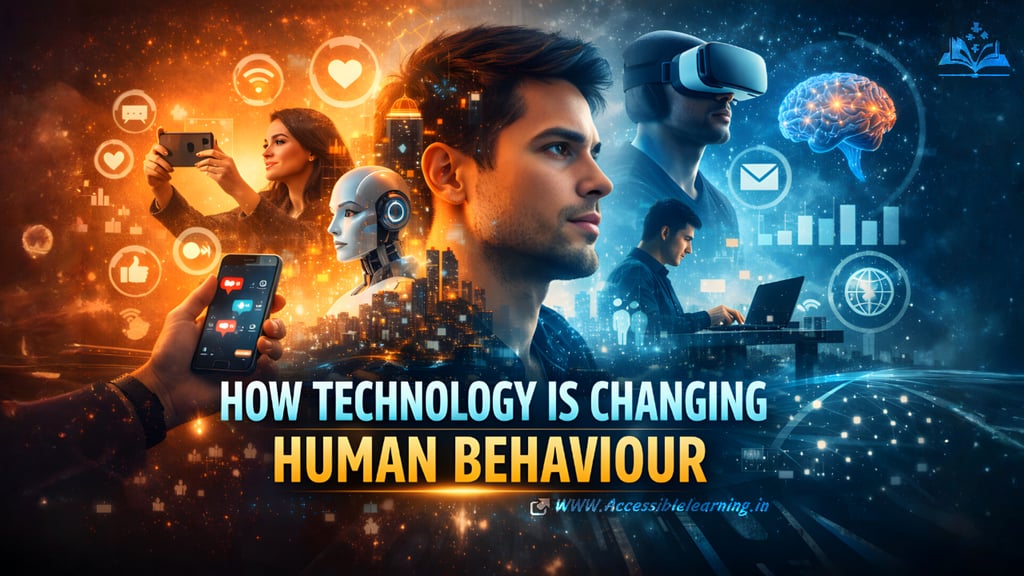
Technology is no longer a background tool. It actively shapes how humans think, feel, communicate, and behave. From smartphones and social media to artificial intelligence and automation, digital systems influence daily habits in subtle but powerful ways. These changes affect attention, emotions, relationships, learning patterns, and even moral decision-making.
Understanding how technology is changing human behavior is essential in a world where digital interaction is constant and unavoidable.
The Psychological Impact of Constant Connectivity
Humans were not designed to be constantly connected. Notifications, messages, and updates create a state of continuous alertness. This changes behavioural patterns by increasing mental fatigue and reducing the ability to relax fully.
Many people now feel uneasy when disconnected from their devices, a behaviour often described as digital dependency. Checking phones repeatedly has become an automatic habit rather than a conscious choice. This constant stimulation keeps the brain in a reactive state, reducing calm reflection and emotional balance.
Changing Communication Styles and Language Use
Technology has reshaped not just how people communicate but also how they use language. Short messages, abbreviations, voice notes, and emojis replace longer conversations. While this increases speed, it reduces depth.
Human behaviour adapts by prioritizing efficiency over clarity. Conversations become shorter and more frequent but less meaningful. Over time, people may struggle to express complex emotions or ideas without digital shortcuts.
At the same time, global connectivity has made communication more inclusive, allowing cross-cultural exchange and collaboration like never before.
Attention Economy and Behaviour Manipulation
Many digital platforms operate within the attention economy, where human focus is the product. Algorithms are designed to maximize engagement, often by triggering emotional responses such as curiosity, anger, or excitement.
This shapes human behaviour by encouraging frequent checking, emotional reactions, and prolonged screen time. People become conditioned to seek stimulation instead of satisfaction. Over time, this can reduce patience, emotional control, and the ability to enjoy slower experiences.
Technology and Memory Behaviour
Human memory has changed significantly. With cloud storage, reminders, and search engines, people rely less on internal memory and more on external digital systems.
This behaviour improves efficiency but weakens long-term memory retention. Humans remember fewer details but remember where to find information. The brain adapts by outsourcing memory to technology, changing how knowledge is processed and stored.
Social Comparison and Behavioural Anxiety
Social media platforms encourage constant comparison. People compare lifestyles, achievements, appearance, and success with carefully curated online images.
This changes behaviour by increasing self-monitoring and social pressure. Many users adjust their actions based on how they will appear online. Anxiety, insecurity, and fear of judgment become more common, especially among young users. Behaviour shifts from authenticity toward performance and approval-seeking.
Technology and Human Relationships
Technology has altered relationship behaviour. Dating apps, online friendships, and virtual interactions have expanded social options but reduced commitment in some cases.
Human behaviour becomes more selective yet more disposable. With endless choices available, people may invest less effort into maintaining deep relationships. At the same time, technology helps long-distance relationships survive and supports connection during isolation. The quality of relationships now depends more on intention than availability.
Learning Behaviour and Cognitive Development
Technology has changed how humans learn and process knowledge. Visual content, interactive tools, and instant answers increase accessibility and motivation.
However, learning behaviour often shifts toward consumption rather than comprehension. Many learners focus on completing content quickly instead of understanding deeply. Critical thinking and problem-solving skills require conscious effort in a technology-rich environment. Children growing up with digital devices may develop different cognitive patterns compared to previous generations.


Work Behaviour, Automation, and Human Identity
Automation and AI are changing how people view work and self-worth. Tasks once done by humans are now handled by machines, pushing people toward creative and strategic roles.
This shift changes behavioural identity. Many individuals tie their sense of value to productivity, and automation challenges that belief. Humans must adapt by redefining purpose beyond repetitive tasks.
Remote work also changes daily behaviour, increasing flexibility while reducing physical movement and social interaction.
Emotional Regulation and Behavioural Resilience
Technology influences how humans cope with emotions. Instant entertainment becomes a way to escape discomfort. Instead of processing emotions, people distract themselves with content.
This weakens emotional resilience over time. However, technology also provides tools for emotional awareness, such as mental health apps, guided practices, and educational resources.
Human behaviour improves when technology is used to support emotional growth rather than avoid it.
Ethics, Morality, and Behavioural Responsibility
Technology introduces new ethical challenges. Anonymity online can reduce accountability, leading to aggressive or insensitive behaviour.
At the same time, digital transparency increases social responsibility. Actions are recorded, shared, and remembered. Human behaviour adapts by becoming more cautious in some spaces and more reckless in others. Ethical behaviour now depends heavily on digital literacy and awareness.
Physical Behaviour and Lifestyle Changes
Extended screen time has changed physical behaviour. Sedentary lifestyles, reduced outdoor activity, and irregular sleep patterns are common.
Technology affects posture, eyesight, and sleep cycles through constant screen exposure. At the same time, fitness trackers and health apps encourage healthier habits. Behaviour shifts based on how consciously technology is integrated into daily routines.
The Role of Artificial Intelligence in Behavioural Change
AI systems influence choices through personalization and automation. From recommendations to decision support, AI shapes behaviour subtly.
Humans may become overly dependent on AI for thinking and creativity. This can reduce confidence in personal judgment if not balanced properly. The challenge is using AI as a tool, not a replacement for human intelligence.
Long-Term Behavioural Evolution
Technology does not just change behaviour temporarily. It reshapes long-term habits, values, and social norms. What feels unnatural today becomes normal tomorrow.
Future human behaviour will likely involve closer integration with digital systems, making awareness and adaptability essential. Humans must actively decide what role technology plays in their lives.
How Humans Can Adapt in a Healthy Way
Healthy behavioural adaptation requires intention. Setting boundaries, practicing digital breaks, and prioritizing offline experiences protect mental and emotional health.
Developing digital literacy helps people understand how technology influences behaviour and make informed choices.
Technology is transforming human behaviour at psychological, emotional, social, and physical levels. It changes how people communicate, learn, work, and relate to themselves and others.
The key is not rejecting technology but understanding its influence. When humans remain aware, technology becomes a powerful ally. When used without awareness, it quietly reshapes behaviour in ways that may not serve human well-being.
The future of human behaviour depends on conscious, balanced, and responsible use of technology today.

FAQs
Q: How does technology affect human behaviour on a daily basis?
Technology influences daily habits such as communication, attention, sleep, learning, and decision-making. Frequent notifications, screen time, and digital interactions shape how people focus, react emotionally, and manage their time.
Q: Does technology reduce human attention span?
Yes, excessive use of fast-paced digital content can reduce attention span. Short videos, constant updates, and multitasking train the brain to seek quick stimulation instead of sustained focus.
Q: How does technology impact mental health and emotions?
Technology can both support and harm mental health. It provides access to support tools and communities, but overuse can increase stress, anxiety, comparison, and emotional fatigue if not managed properly.
Q: Is technology changing how people think and make decisions?
Technology influences thinking by providing instant information and algorithm-based suggestions. While this improves efficiency, it can reduce independent thinking if people rely too heavily on automated recommendations.
Q: How does social media affect human behaviour?
Social media affects behaviour by encouraging comparison, validation-seeking, and self-presentation. It can boost connection and creativity but also lead to anxiety, pressure, and reduced authenticity.
Q: Can technology weaken real-life relationships?
Yes, when digital interaction replaces face-to-face communication, relationship depth can suffer. However, when used intentionally, technology can strengthen connections, especially across distance.
Q: How is technology changing learning behaviour?
Technology makes learning more accessible and flexible. At the same time, it encourages skimming and surface-level understanding unless learners practice deep focus and critical thinking.
Q: What role does artificial intelligence play in shaping behaviour?
AI influences behaviour through personalization, automation, and recommendations. It can improve efficiency but may reduce personal judgment and creativity if used without awareness.
Q: How can people maintain healthy behaviour while using technology?
Setting screen-time boundaries, taking digital breaks, prioritizing offline activities, and using technology intentionally help maintain healthy behaviour.
Q: Will technology continue to change human behaviour in the future?
Yes, as technology evolves, human behaviour will continue to adapt. Awareness, balance, and digital literacy will be essential to ensure technology supports human wellbeing rather than controlling it.
Subscribe To Our Newsletter
All © Copyright reserved by Accessible-Learning Hub
| Terms & Conditions
Knowledge is power. Learn with Us. 📚

