

How Schools Can Prepare Students for AI-Powered Jobs
A detailed guide on how schools can prepare students for AI-powered jobs through modern skills, AI literacy, digital readiness, ethical education, and updated teaching methods. This article explains the essential competencies students need to succeed in an AI-driven future and how schools can integrate them effectively.
A LEARNINGAI/FUTUREEDUCATION/KNOWLEDGE
Sachin K Chaurasiya
12/6/20255 min read
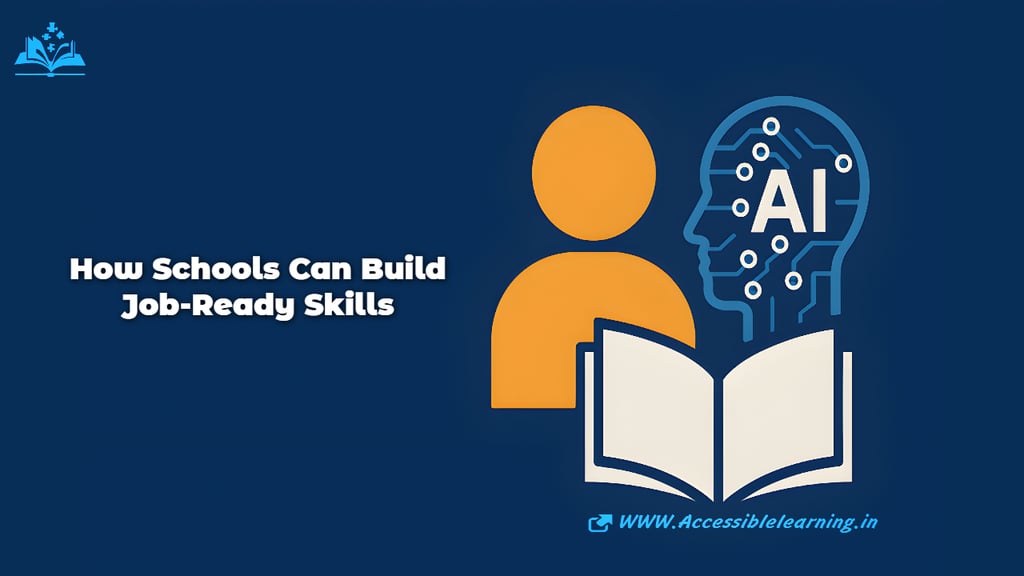
Artificial intelligence is reshaping how industries operate, how decisions are made, and how teams work. Future roles will require people who can collaborate with AI, understand its capabilities, and apply it to solve real problems. Because of this shift, schools must update their curriculum, teaching methods, assessments, and technology to prepare students for tomorrow’s job market.
Below is an expanded, in-depth analysis of how schools can equip students with the skills needed to thrive in an AI-driven world.
Strengthen Foundational Academic Skills
Even with access to advanced AI tools, students still need a strong academic base. Foundational skills help them use AI outputs correctly and avoid relying on technology blindly.
Important areas include:
Reading comprehension: Understanding complex text, data reports, and research summaries.
Written communication: Structuring ideas clearly, editing AI-generated content, and creating reports.
Mathematics: Data analysis, statistics, logical reasoning, and probability.
Scientific reasoning: Hypothesis testing, interpreting results, understanding variables.
These skills make students capable of validating AI-generated information instead of accepting it without question.
Introduce AI Literacy and Awareness Across All Subjects
AI literacy should be taught as a universal skill, similar to digital literacy or media literacy.
Topics to introduce:
How machine learning models work using examples
Neural networks, training data, and pattern recognition
The difference between narrow AI and general AI
Real-world AI applications in healthcare, agriculture, finance, and education
Common AI risks: hallucinations, misinformation, bias, data leakage
The environmental impact of training large AI models
AI literacy helps students understand what AI can and cannot do, making them more prepared for modern workplaces.
Teach Data Literacy and Data Ethics
Most AI-powered jobs use data as their core input. Students should understand how data is collected, cleaned, and used.
Key concepts include:
Reading charts, tables, and dashboards
Understanding data privacy laws (GDPR, COPPA, etc.)
Avoiding misuse of personal information
Recognizing bias in datasets
Using data for decision-making
Basic use of spreadsheets and data analysis tools
Data literacy is now required in marketing, journalism, healthcare, engineering, logistics, and countless other sectors.
Expand Computational Thinking Across Grades
Computational thinking helps students break big problems into smaller, solvable steps. This is essential in AI-driven careers.
Schools should teach:
Pattern recognition
Decomposition
Algorithm design
Abstraction
Flowchart creation
Logic-based reasoning
These skills help students work effectively with automation tools and understand how digital systems solve problems.
Make Project-Based Learning a Core Part of the Curriculum
AI jobs require solution-oriented thinking, not memorization. Project-based learning encourages creativity and real-world application.
Strong PBL tasks include:
Building a simple chatbot
Designing an app prototype assisted by AI tools
Using AI to analyze local climate or economic data
Creating a digital marketing campaign
Developing a business idea and pitch deck with AI support
Using AI tools to model science experiments or simulations
Projects help students learn teamwork, communication, planning, and execution.
Improve Digital Skills and Tool Fluency
Students preparing for AI-powered work must be comfortable with a wide range of digital tools.
Schools should teach:
How to use AI office tools (Doc AI, Excel AI, PowerPoint AI)
Digital content creation: graphics, video editing, UI prototyping
Online research and verification techniques
SIM tools (coding sandboxes, robotics kits)
Cloud platforms and online collaboration tools
Digital fluency helps students adapt quickly as new tools emerge.
Introduce Coding as a Compulsory Skill (Not Optional)
While not all students will become developers, coding builds logic and problem-solving skills.
Schools can offer:
Visual coding (Scratch) for younger learners
Python, JavaScript, or Java for senior classes
Hands-on experimentation with AI coding assistants
Robotics and automation projects
Web development modules
API usage basics
Coding education prepares students to understand how AI integrates into software systems.
Promote Responsible AI Use and Digital Citizenship
Students must learn how to interact with AI ethically and responsibly.
Schools should provide lessons on:
Academic honesty when using AI
Avoiding plagiarism
How to cite AI-generated support
Preventing misuse of deepfake tools
Understanding cyber risks and digital footprints
Clear boundaries for AI use during assignments
Establishing responsible use early builds integrity in future professionals


Develop Advanced Problem-Solving Skills
AI-powered workplaces depend heavily on people who can analyze complex issues and propose strategic solutions.
Schools can strengthen problem-solving through:
Case studies
Real-world simulations
Logic puzzles
Critical reasoning tasks
Research-based assignments
Entrepreneurial challenges
This prepares students for roles in business analysis, data science, operations, and strategy.
Cultivate Human Skills That Complement AI
AI does not replace emotional or relational skills. Human-centered abilities will become even more valuable.
Schools should reinforce:
Communication
Public speaking
Collaboration
Adaptability
Emotional intelligence
Creativity and ideation
Leadership
Time management
Industries still rely on people to manage teams, make ethical decisions, and communicate ideas clearly.
Encourage Career Awareness and Exposure
Students must understand how AI is used in real jobs.
Schools can support this by providing:
Guest lectures from AI-enabled professionals
Virtual industry tours
Mentorship programs
Career fairs focused on emerging tech
Workshops on fields like cybersecurity, data analysis, automation, and robotics
Collaboration with local companies for projects
This gives students clarity about skills they should focus on.
Upgrade Classroom Technology and Infrastructure
To prepare students for AI-powered jobs, schools need modern tools.
Essential upgrades include:
High-speed internet
Computer labs with updated software
Access to AI-powered research and learning tools
Projectors, smartboards, and digital assessment platforms
Cloud-based learning environments
EdTech platforms that adapt learning levels
Infrastructure directly influences learning quality and digital readiness.
Provide Continuous Training for Teachers
AI education is only effective if teachers are confident and knowledgeable.
Schools should offer:
Workshops on AI basics and teaching strategies
Training in digital tools and automation platforms
Guidance on integrating AI into lesson plans
Peer learning groups
Practical sessions using AI for grading or content creation
Time allowances for curriculum development
Teacher empowerment is the foundation of successful AI integration.
Redesign Assessment to Match Modern Skills
Traditional exams evaluate memorization, not thinking. AI tools have made this approach outdated.
Effective modern assessment includes:
In-class writing
Presentations
Oral exams
Portfolio-based evaluation
Practical problem-solving tasks
Real-world case study analysis
Peer-reviewed group projects
AI-enabled critique activities
This ensures that learning reflects actual workplace expectations.
Ensure Digital Equity and Inclusion
Schools must prevent the digital divide from affecting future job opportunities.
They can support equity by:
Offering shared device access
Providing after-school tech labs
Using free AI and coding platforms
Supporting students from low-income families
Ensuring accessibility for students with disabilities
Monitoring AI systems for bias
Equal access ensures every student is prepared, not just a select group.
AI-powered jobs are becoming standard across industries. To prepare students for this future, schools must strengthen foundational academics, integrate AI and data literacy, expand coding education, modernize teaching methods, and build digital fluency. Ethical use, human skills, teacher training, career exposure, and updated assessment models are essential to ensure students can thrive in an AI-driven world.

FAQs
Q: Why is AI education important for students today?
AI is now used in almost every industry. Students who understand how AI works, how to use it, and how to evaluate its outputs will be more employable and better prepared for the modern workplace. AI education builds digital awareness, critical thinking, and adaptability.
Q: Do all students need to learn coding for AI-driven careers?
Not every student needs to become a programmer, but basic coding improves logical thinking and helps them understand how digital systems work. Even non-technical careers benefit from computational thinking and familiarity with automation tools.
Q: What age should students start learning about AI?
AI concepts can be introduced early in simple forms. Primary students can learn pattern recognition and basic automation ideas. Older students can explore machine learning, data literacy, and hands-on projects. AI literacy is most effective when taught progressively across grade levels.
Q: How can teachers prepare themselves to teach AI concepts?
Teachers should participate in training programs, online workshops, and professional development sessions focused on AI tools, digital literacy, and ethical guidelines. Schools must provide resources, lesson plans, and time for teachers to update their skills.
Q: Are AI tools safe for students to use?
AI tools are generally safe when used responsibly. Schools should set guidelines for privacy, avoid sharing personal data, and teach students how to verify information. Safe use also includes restrictions for exams, personal essays, and identity-sensitive tasks.
Q: Will AI replace human jobs in the future?
AI will change many roles but is unlikely to replace humans entirely. Instead, it will automate repetitive tasks and create new opportunities in data analysis, automation management, creative roles, product design, research, and digital operations. Human skills remain essential.
Q: What are the essential skills students need for AI-powered jobs?
Students need a combination of technical and human skills, including AI literacy, data analysis, digital fluency, coding basics, communication, teamwork, problem-solving, and ethical reasoning.
Q: Can schools without advanced technology still prepare students for the AI era?
Yes. Even with limited resources, schools can teach critical thinking, computational thinking, ethics, and AI awareness using low-cost or free tools. Foundational skills do not depend on expensive equipment.
Subscribe To Our Newsletter
All © Copyright reserved by Accessible-Learning Hub
| Terms & Conditions
Knowledge is power. Learn with Us. 📚

