

How AI Will Transform Classrooms by 2032: The Future of Learning
AI is reshaping education faster than ever. This article explores how classrooms will transform in the next seven years, from personalized learning and AI tutors to smarter assessments, VR-powered lessons, and improved support for teachers and students. It breaks down the opportunities, challenges, and real impact AI will have on learning experiences, making it a clear guide for educators, parents, and future-focused readers.
A LEARNINGEDUCATION/KNOWLEDGEAI/FUTURE
Shiv Singh Rajput
12/16/20256 min read
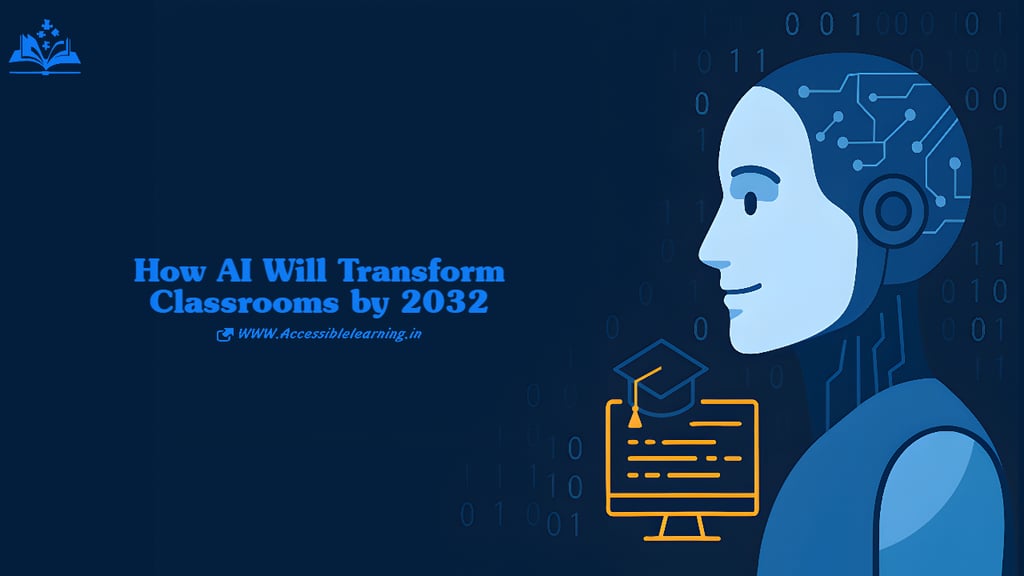
Artificial intelligence is becoming a core part of global education. Within the next seven years, classrooms will shift from traditional, one-size-fits-all teaching to a more personalized, interactive, and data-supported experience. This transformation won’t replace teachers. It will make their work easier, help students learn better, and create a more efficient school system.
Below is an expanded, in-depth look at how AI will shape learning by 2032.
Hyper-Personalized Learning Plans for Every Student
AI will analyze how each student learns and automatically adjust lessons to match their pace and skill level.
What’s coming
Daily personalized study plans
Learning difficulty that adapts in real time
Custom content based on student strengths
Automated early alerts for students who fall behind
Dedicated paths for fast learners to explore advanced topics
This removes the guesswork from teaching and gives every student the right support at the right time.
AI Teaching Assistants to Reduce Teacher Workload
Teachers spend hours on repetitive work. AI assistants will take care of the heavy administrative tasks.
What they’ll handle
Grading objective quizzes
Creating learning materials
Suggesting improvements for lesson plans
Tracking student activity and attendance
Providing quick answers to student queries
Drafting reports for parents and school leaders
This lets teachers focus more on mentoring, creativity, and real human connection.
Real-Time Analytics on Student Engagement
AI systems will monitor engagement and performance during class without invading privacy.
Expected features
Notifications when students lose focus
Patterns that reveal learning gaps
Visual dashboards showing class mood trends
Tools to support silent or shy students
Early behavior insights to prevent dropouts
Teachers get actionable data to make lessons more effective.
Round-the-Clock AI Tutoring and Homework Help
Students often struggle with homework alone. AI tutors will be available anytime.
They’ll offer
Step-by-step solutions
Concept simplification
Voice-based guidance
Practice exercises based on weak topics
Real-time translation for non-native speakers
Emotional check-ins to understand stress
Every learner gets support beyond classroom hours.
Immersive Learning with VR, AR, and AI
AI-enhanced virtual and augmented reality will turn learning into an experience.
Examples
Virtual tours of the solar system
Science experiments done safely in VR labs
History lessons through interactive time travel
AI-driven language role-play environments
Skill training simulations for engineering or medicine
This makes education more engaging, memorable, and practical.
Smarter Assessments That Measure Understanding
AI will shift assessments from memory-based exams to deeper, skill-focused evaluation.
What’s coming
Adaptive quizzes that adjust difficulty
Spoken answers analyzed by AI
Writing evaluations that check clarity and originality
Project-based scoring
Cheats-proof digital exams with intelligent monitoring
Students are judged more fairly and accurately.


AI-Driven Classroom Management
Managing a classroom is challenging. AI will help organize daily operations smoothly.
AI will optimize
Class schedules
Seating arrangements
Homework tracking
Resource management
Digital notice boards and communication
Attendance and progress logs
Schools become faster, smarter, and more organized.
Advanced Support for Students With Special Needs
AI will expand accessibility and independence for students with learning or physical challenges.
Support tools include
Speech-to-text for hearing-impaired students
Visual simplification for cognitive delays
Emotion recognition for autism support
Personalized behavior monitoring
Smart prosthetics and mobility tools powered by AI
Real-time language assistance
This helps schools offer equal opportunities to every student.
AI-Enhanced Teacher Training and Professional Development
Teachers will benefit from AI-powered upskilling.
Possible features
AI coaching based on teaching style
Simulated classroom scenarios for training
Automatic suggestions to improve lesson delivery
Real-time feedback on clarity, tone, and engagement
Personalized growth plans for educators
Teacher training becomes faster, smarter, and more effective.
AI for Reducing Administrative Load
Schools spend enormous time managing paperwork and logistics. AI automates most of it.
Automation areas
Record management
Fees, billing, and financial planning
Library organization
Transport and safety monitoring
Staff scheduling and HR support
Document creation and distribution
This reduces errors and saves school hours every week.
Smart Content Creation for Lessons
AI will generate class-ready materials instantly.
This includes
Worksheets
Slides and presentations
Illustrations and diagrams
Videos explaining complex topics
Interactive quizzes
Summarized notes in simple language
Teachers will no longer start from scratch.
AI-Driven Career and Talent Mapping
AI will help students understand their strengths and prepare for future careers early.
Capabilities
Interest-based career suggestions
Skill gap analysis
Roadmaps for tech, science, creative, and vocational fields
Links to online courses and internships
Predictions of future job markets
Students get clarity and direction from a young age.
Improved Collaboration Between Schools and Parents
AI tools will keep parents connected to their child’s progress.
Benefits
Instant updates on performance
Alerts for attendance, homework, and exams
Personalized progress summaries
Communication translation for multilingual parents
Behavior and activity reports
This helps parents stay involved and informed.
Enhanced Safety and Security with Ethical Controls
Safety will become smarter and more proactive.
AI will support
Entry monitoring with strict privacy rules
Smart alerts for emergencies
Safe-use filters for student internet browsing
Cybersecurity protections
Mental health detection during high-risk behavior
All with strong guidelines to protect student identity and rights.
A Shift Toward Skill-Based Learning
By 2032, AI will guide schools to focus on real-world skills.
Skills that AI will prioritize
Critical thinking
Problem-solving
Creativity
Digital literacy
Collaboration
Communication
Emotional intelligence
These are skills students need for future jobs.
AI is not replacing the classroom. It’s upgrading it. The next seven years will bring smarter tools, deeper personal support, and more efficient systems. Students will learn in ways that match their style. Teachers will have more time for meaningful work. Schools will run better than ever. Education will be more inclusive, practical, and future-ready.

FAQ's
Q: Will AI replace teachers in the future?
No. AI will automate routine tasks, but the role of a teacher involves empathy, motivation, discipline, and human connection. AI supports teachers; it doesn’t replace them.
Q: Is AI safe for students?
Yes, as long as schools follow strong privacy rules. Modern AI tools allow data protection, parental controls, and encrypted storage. Human oversight is always required.
Q: How does AI help slow or struggling learners?
AI detects learning gaps early and adjusts lessons based on the student’s pace. It provides extra practice, simpler explanations, and personalized feedback.
Q: Can AI help gifted or fast learners too?
Absolutely. AI identifies advanced students and provides tougher challenges, deeper content, and accelerated learning paths.
Q: Will students become dependent on AI?
If used correctly, no. AI is designed to assist learning, not replace thinking. Teachers can set boundaries to make sure students learn independently.
Q: How will AI change homework?
Homework becomes more interactive. Students will get step-by-step help, hints, and instant clarifications from AI tutors.
Q: What subjects benefit the most from AI?
Math, science, languages, and coding see the biggest improvements. However, humanities and art also benefit through personalized content and creative tools.
Q: What skills should students learn to prepare for an AI-driven classroom?
Digital literacy, critical thinking, creativity, problem-solving, and communication skills will matter even more.
Q: Do schools need expensive technology to use AI?
Not necessarily. Many AI tools run on regular computers or mobile phones. Cloud-based AI reduces the need for high-end hardware.
Q: Will AI increase screen time for students?
It might, but smart schools will balance digital and offline activities. AI can also shorten unnecessary work, reducing overall screen use.
Good Facts About AI in Classrooms
Personalized learning for every student
AI customizes lessons based on performance, interests, and pace. This reduces frustration and builds confidence.
Reduces teacher workload
Grading, lesson planning, and admin work become easier, giving teachers more time for real teaching.
Supports students 24/7
AI tutors help students anytime, especially during homework or exam preparation.
Improves accessibility
Speech-to-text, visual assistance, and adaptive tools help students with disabilities.
Better engagement through interactive learning
VR, AR, and simulations make lessons feel more like experiences than lectures.
Early identification of learning difficulties
AI can catch patterns in behavior, reading struggles, or attention issues before they grow.
Real-time insights for teachers
AI provides dashboards showing engagement, performance, and attention levels.
Helps parents stay informed
Parents receive instant updates about progress, attendance, and behavior.
Prepares students for future careers
AI maps skills, suggests careers, and helps build early foundations for jobs of the future.
Creates more inclusive classrooms
Students of different abilities get equal support and opportunities to grow.
Bad Facts or Limitations of AI in Classrooms
Risk of over-reliance on technology
Students may depend too much on AI if it’s not balanced with human guidance.
Privacy and data concerns
If schools don’t follow strict rules, student data can be mismanaged or exposed.
Unequal access to technology
Not all schools or families have reliable internet or devices. This can widen learning gaps.
AI cannot understand emotions like humans
Teachers can sense stress, confusion, or family issues. AI cannot fully replace this intuition.
Algorithm bias or inaccurate suggestions
If AI is trained poorly, it may give wrong recommendations or judge students unfairly.
Teachers need training
Schools must invest in teacher training; otherwise, tools may be used incorrectly.
Higher initial setup cost
Good AI platforms require investment in software, devices, and connectivity.
Reduced face-to-face interaction
Excessive use of AI tools may decrease teamwork, socialization, or human communication.
Misuse by students
Some students might try to use AI to complete assignments without learning.
Technical issues
AI tools require stable internet, power, and system updates. Failure can disrupt classes.
Subscribe to Frontier Intelligence
All © Copyright reserved by Accessible-Learning Hub
| Terms & Conditions
Accessible Learning Hub — Actionable clarity for high-agency minds.
Weekly breakdowns on AI breakthroughs, capital flow, and human performance systems. Zero fluff.