

How 19th Century Banking Dynasties Navigated Market Crashes: Lessons for Today
Discover how 19th-century banking dynasties survived market crashes through diversification, liquidity, and disciplined risk management, with lessons for modern investors.
FINANCE, MARKETS & ECONOMY
Shiv Singh Rajput
7/22/20267 min read


Financial history repeatedly demonstrates that fortunes are rarely destroyed by a single market crash. Instead, wealth disappears when individuals or institutions fail to prepare for uncertainty.
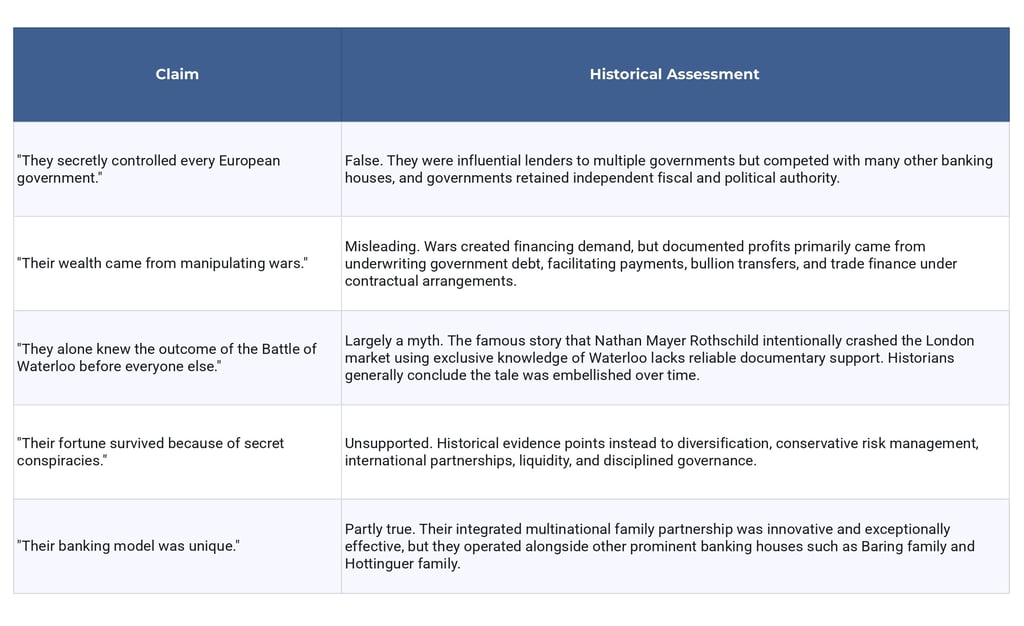
The greatest European banking dynasties of the 19th century, particularly the Rothschild family and later institutions influenced by similar banking principles, survived wars, sovereign defaults, banking panics, currency collapses, and political revolutions without permanently losing their financial dominance.
Their success did not come from predicting every crisis. It came from building systems that could survive almost any crisis.
This article examines the mechanisms behind their resilience during the Napoleonic Wars, the financial crises of the 19th century, and the economic upheavals leading into the early 20th century. Rather than focusing on myths surrounding elite banking families, it analyzes documented financial structures, portfolio construction, communication systems, governance models, and capital allocation strategies that remain relevant for investors today.
Why the Napoleonic Wars Became the Ultimate Financial Stress Test
Between 1803 and 1815, Europe experienced one of the largest military conflicts in modern history.
Financial markets faced the following:
Government defaults
Currency instability
Blocked trade routes
Commodity shortages
Wartime inflation
Political uncertainty
Extremely high sovereign borrowing
Unlike today's central-bank-supported markets, governments depended heavily on private banking houses to raise capital. The largest banking networks became essential financial infrastructure rather than merely investment firms.
The Banking Model That Made Survival Possible
The largest banking dynasties operated differently from today's investment banks. Instead of concentrating activities in one country, they created independent but coordinated banking partnerships across Europe.
Typical network included the following:
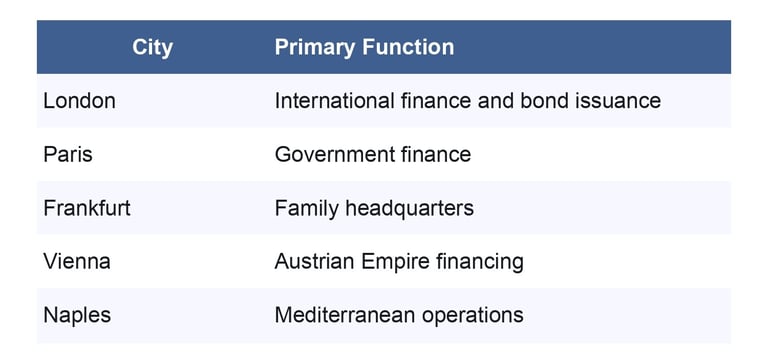
This geographic diversification reduced dependence on any single economy. If one government defaulted, other branches continued operating.
Crisis Playbook: The Financial Strategies That Preserved Wealth
Geographic Diversification Before It Became Standard
Modern investors diversify across stocks.
Major banking houses diversified across:
Countries
Governments
Legal jurisdictions
Currencies
Political systems
Trade routes
Instead of betting on one economy, they spread sovereign risk throughout Europe.
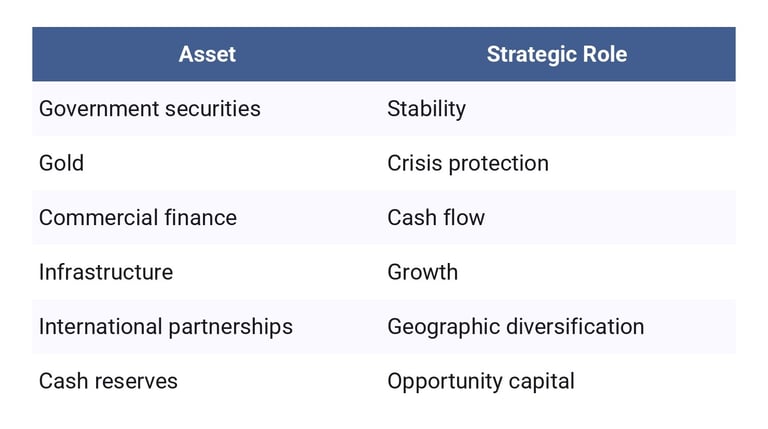
Government Securities as Core Assets
Government bonds became one of the safest long-term holdings available. Although sovereign defaults occurred, diversified bond portfolios often generated stable income while supporting governments during wartime.
Typical allocation included:


Government securities functioned much like today's investment-grade sovereign debt.
Liquidity Was More Valuable Than Maximum Returns
Many competitors became overleveraged. Large banking families maintained substantial liquid reserves. Liquidity enabled them to:
Purchase distressed assets
Finance governments
Extend commercial credit
Avoid forced liquidation
Survive prolonged downturns
Cash became a competitive advantage.
Information Networks Created an Edge
Long before telephones or the internet, private courier systems dramatically accelerated communication. Financial intelligence included the following:
Battle outcomes
Commodity prices
Government borrowing
Currency movements
Shipping conditions
Earlier information improved pricing accuracy.
Historical research indicates these communication networks reduced informational delays compared with ordinary market participants, though popular stories often exaggerate their speed and exclusivity.
Reputation Was Treated as Capital
Trust determined access to capital. Banking houses protected their reputations through:
Conservative lending
Reliable settlements
Confidentiality
Contract enforcement
Long-term government relationships
This reduced financing costs over decades.
Infrastructure Investment During Recovery
After conflicts ended, capital shifted toward reconstruction. Common investments included:
Railways
Mining
Canals
Industrial manufacturing
Public utilities
Rather than speculating during panic, they invested during rebuilding.

Case Study: Navigating the Napoleonic Wars
Rather than viewing the wars only as military events, banking historians often describe them as an unprecedented capital allocation challenge.
Major banking houses:
Raised government financing
Distributed sovereign bonds internationally
Managed cross-border payments
Facilitated bullion transfers
Balanced currency risks
Maintained diversified partnerships
Because revenues originated from multiple countries, localized disruption rarely threatened the entire enterprise.
Transition into the Industrial Revolution
After the wars, Europe entered a period of industrial expansion. Capital increasingly flowed into the following:
Railroads
Steel
Coal
International trade
Insurance
Manufacturing
Successful banking families adapted.
Instead of relying exclusively on sovereign debt, they expanded toward productive private assets. This represents one of history's earliest examples of systematic portfolio rebalancing.
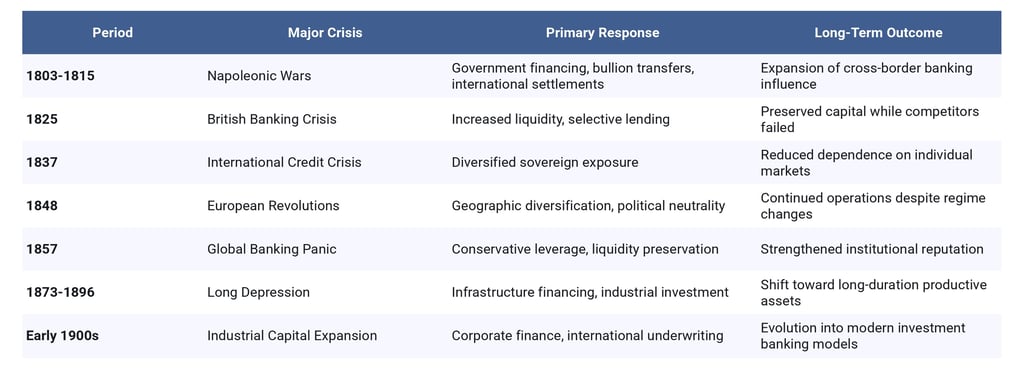
What Happened During Later Financial Panics?
The 19th century experienced repeated banking crises.
Examples include:
Panic of 1825
Panic of 1837
Panic of 1857
Long Depression
Patterns remained consistent.
Instead of abandoning markets, successful banking institutions:
Preserved liquidity
Extended credit selectively
Purchased undervalued assets
Avoided concentrated leverage
Maintained long-term partnerships




The Crisis Playbook: Actionable Lessons for Modern Investors
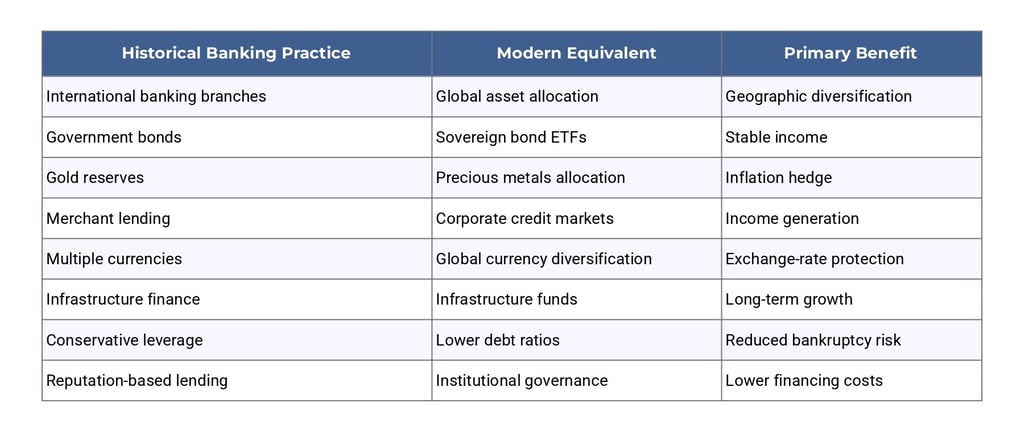
The historical record points to a consistent set of principles rather than a secret formula:
Diversify across countries, not just companies.
Maintain exposure to high-quality government securities for stability.
Keep meaningful liquidity to avoid forced selling and to capitalize on distressed opportunities.
Limit leverage so temporary market declines do not become permanent capital losses.
Balance growth assets with defensive holdings such as high-quality bonds and, where appropriate, precious metals.
Invest in long-duration productive assets, including infrastructure and businesses with durable cash flows.
Prioritize governance, transparency, and reputation, which lower financing costs and improve resilience over decades.
Think in multi-decade cycles rather than reacting to short-term market volatility.
What Modern Wealth Builders Can Learn
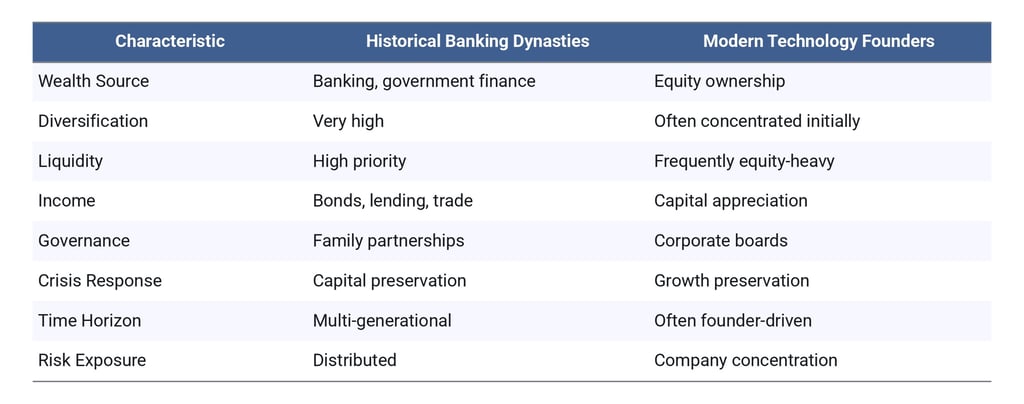
Although today's financial markets differ dramatically from those of the 19th century, the underlying principles of resilience remain remarkably consistent.
The greatest banking dynasties did not rely on perfect market timing. They built institutions capable of surviving unpredictable events through diversified assets, international exposure, disciplined liquidity management, conservative leverage, and adaptable governance.
Modern investors may not finance governments or operate multinational banking partnerships, but they can apply the same structural thinking: diversify beyond a single asset class or geography, maintain adequate liquidity, invest in productive long-term assets, and view crises as periods for disciplined capital allocation rather than panic. These principles have endured through wars, depressions, inflationary episodes, and financial panics, making them as relevant today as they were two centuries ago.
The Legal Structures That Protected Banking Families
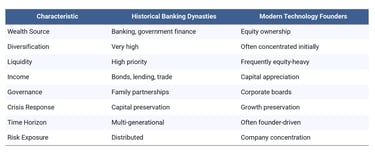
Financial resilience was not achieved solely through investment decisions. Legal organization played an equally important role. Common structural characteristics included:
Family Partnerships
Unlike publicly traded corporations, many banking houses operated as private family partnerships where senior partners retained unlimited liability. This structure encouraged disciplined risk management because owners' personal fortunes were directly exposed.
Cross-Border Branch Independence
Although coordinated strategically, individual branches often maintained separate legal identities. This reduced the risk that financial distress in one jurisdiction would automatically spread across the entire network.
Conservative Succession Planning
Leadership transitions were planned years in advance, ensuring continuity in lending relationships, government contracts, and client confidence.
Long-Term Capital Retention
Profits were frequently reinvested into expanding banking operations, infrastructure finance, and diversified securities rather than being distributed entirely to family members.



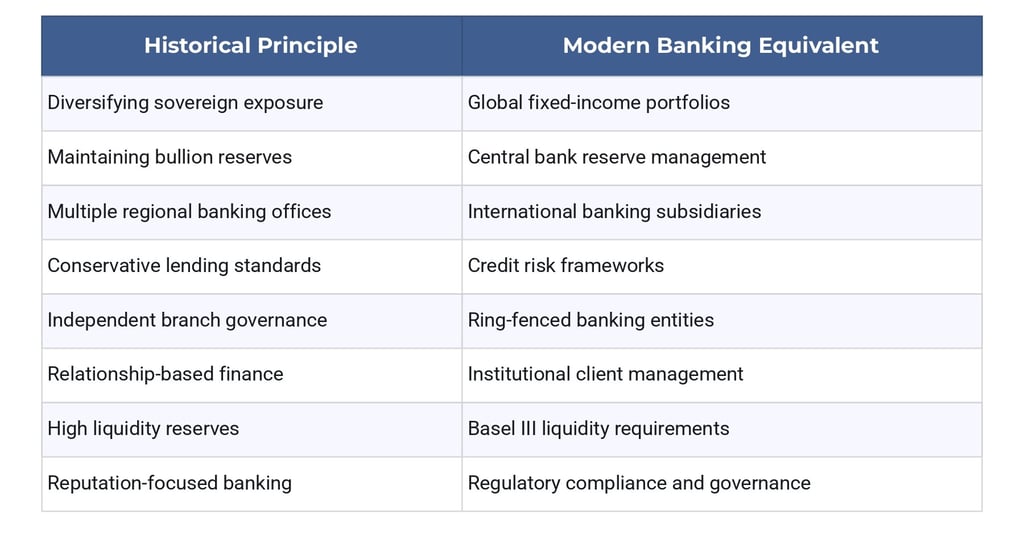

What They Avoided During Market Crashes
Historical records are equally valuable for showing what successful banking dynasties deliberately chose not to do.
During periods of financial stress, they generally avoided:
Excessive borrowing to chase higher returns.
Concentrating capital in a single country or political regime.
Selling quality assets solely because of short-term panic.
Financing highly speculative ventures without collateral.
Allowing political ideology to dominate commercial decision-making.
Depending on one industry for the majority of income.
Making investment decisions based on public speculation or rumors.
Avoiding these mistakes often proved just as important as making successful investments.
Are These Strategies Still Relevant in the 21st Century?
Financial markets have evolved significantly through globalization, digital trading, derivatives, and central bank intervention. Nevertheless, the core principles demonstrated by nineteenth-century banking dynasties remain widely accepted within institutional portfolio management.
Modern investors cannot replicate historical banking networks, but they can adopt the same underlying philosophy:
Diversify across multiple asset classes and geographic regions.
Hold sufficient liquidity to withstand prolonged downturns.
Balance growth investments with defensive assets.
Think in decades rather than quarters.
Establish governance and succession plans for family wealth.
Focus on risk-adjusted returns rather than maximum possible returns.
Allocate capital systematically instead of reacting emotionally to market volatility.
The tools have changed, but the principles of resilience remain remarkably consistent.
FAQ's
Q: How did nineteenth-century banking dynasties survive repeated financial crises?
They combined geographic diversification, conservative lending, substantial liquidity reserves, government bond investments, international banking networks, and disciplined governance. Rather than relying on accurate market predictions, they built financial systems designed to withstand uncertainty.
Q: Did the Napoleonic Wars make banking families wealthy?
The wars increased demand for government financing and international payment services, creating business opportunities for established banking houses. However, profits came from underwriting sovereign debt, facilitating trade finance, and managing financial transactions rather than from warfare itself.
Q: Why were government bonds such an important investment?
Government securities provided predictable income and supported long-term relationships with sovereign borrowers. Although sovereign defaults were possible, diversified exposure across multiple countries reduced overall portfolio risk.
Q: What is the biggest lesson modern investors can learn from these banking dynasties?
The most enduring lesson is that preserving wealth depends more on risk management than on maximizing returns. Diversification, liquidity, disciplined capital allocation, and patience consistently outperformed speculative strategies over multiple generations.
Q: Did banking dynasties predict market crashes?
Historical evidence suggests they did not consistently predict crises. Instead, they prepared for uncertainty by maintaining diversified portfolios, strong liquidity positions, and flexible capital structures capable of adapting to changing conditions.
Q: Were nineteenth-century banking dynasties similar to today's investment banks?
Not entirely. They operated primarily as privately owned family partnerships with extensive international networks. Modern investment banks are generally publicly traded corporations subject to comprehensive financial regulation and shareholder oversight.
Q: How did these banking families preserve wealth across generations?
They emphasized succession planning, retained earnings, diversified investments, prudent leverage, trusted governance structures, and long-term ownership of productive assets. Many also created family offices, holding companies, and later trust structures to coordinate intergenerational wealth management.
Q: Are these historical strategies applicable to individual investors today?
Yes, in principle. While individuals cannot replicate multinational banking operations, they can apply the same foundational ideas by diversifying investments, maintaining emergency liquidity, avoiding excessive debt, investing for the long term, and making decisions based on structured financial planning rather than market emotion.
Subscribe to Frontier Intelligence
All © Copyright reserved by Accessible-Learning Hub
| Terms & Conditions
Accessible Learning Hub — Actionable clarity for high-agency minds.
Weekly breakdowns on AI breakthroughs, capital flow, and human performance systems. Zero fluff.