

Holika Dahan: Meaning, Rituals, Hidden History, and Cultural Significance
Discover the real meaning of Holika Dahan beyond the Prahlad story. Learn its history, science, rituals, symbolism, regional traditions, and lesser-known facts that make this ancient festival so powerful even today.
CULTURE/TRADITIONINDIA/BHARATCELEBRATION/FESTIVALS
Jagdish Nishad
2/21/20266 min read
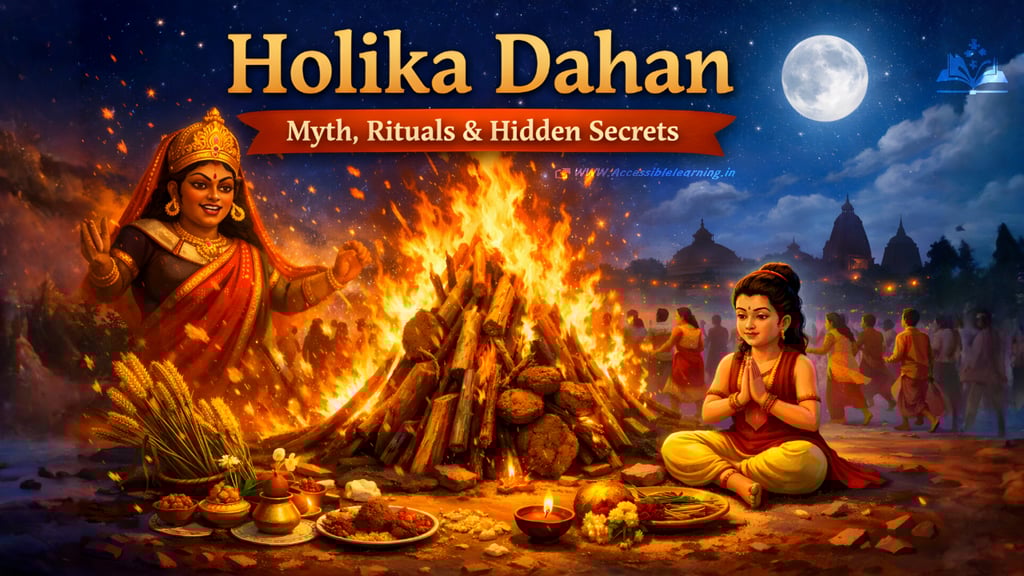
Holika Dahan is more than just a bonfire on the night before Holi. It is one of India’s oldest symbolic rituals, rooted in philosophy, astronomy, seasonal science, and community psychology. While most people know the story of Prahlad and Holika, the deeper layers of this festival are rarely discussed.
This article explores Holika Dahan from multiple angles—mythology, history, rituals, science, regional traditions, and lesser-known facts—to help you understand why this festival has survived for thousands of years.
What is Holika Dahan?
Holika Dahan is a Hindu ritual observed on the full moon night of the Phalguna month (February–March). People gather wood and burn a ceremonial bonfire symbolizing the victory of good over evil.
But historically, Holika Dahan also marked:
The end of winter
Community cleansing rituals
Agricultural transition into spring sowing
Psychological renewal before the new harvest season
So, Holika Dahan is not just mythology—it is a seasonal reset for society.
The Story of Prahlad and Holika (Deeper Interpretation)
The popular legend tells us about King Hiranyakashipu, who demanded worship as a god. His son Prahlad remained devoted to Vishnu Ji. Hiranyakashipu’s sister Holika tried to burn Prahlad using her fire immunity, but she died while Prahlad survived.
Hidden Symbolism in the Story
Most retellings stop here. But the deeper meanings are fascinating:
Prahlad represents faith under pressure.
Holika represents misuse of power and false protection.
Fire represents truth that exposes illusion.
Hiranyakashipu represents ego-driven authority.
In psychological terms, Holika Dahan symbolizes burning negative traits like ego, anger, jealousy, and fear.
The Agricultural Science Behind Holika Dahan
Ancient Indian rituals often had practical reasons. Holika Dahan happened when:
Winter insects were dying
Stored grains were inspected
Fields were prepared for rabi harvest
Burning dried wood and leaves produced smoke that helped:
Reduce bacteria and insects in villages
Clean air after winter stagnation
Protect stored crops
So Holika Dahan was an early form of environmental sanitization.
Astronomical Connection
Holika Dahan occurs on Phalguna Purnima, the last full moon of the Hindu calendar year in many regions. This night symbolized:
Completion of karmic cycle
Emotional closure of the year
Preparation for new beginnings with Holi
Many communities used this night to forgive disputes and restart relationships.

Rituals of Holika Dahan (Step-by-Step)
1. Collection of Wood
Children gather twigs and dry leaves for weeks. This builds community bonding and participation.
2. Holika Idol Setup
In some regions, a symbolic Holika figure is placed in the bonfire with a Prahlad idol beside it.
3. Sacred Circle Ritual
Families walk around the fire and offer:
Coconut
Grains
Mustard seeds
Turmeric
Jaggery
These offerings represent gratitude for harvest and protection from illness.
4. Ash Collection
Next morning, people take Holika ash home and apply it on the forehead. It symbolizes purification and protection.
Regional Variations Across India
North India
Bonfires and Prahlad story rituals dominate.
Maharashtra
People offer puran poli, coconut, and wheat grains into the fire.
Gujarat
Holika Dahan is followed by Dhuleti celebrations with colors.
South India
Some areas call it Kama Dahanam, linked to the burning of Kamadeva by Shiv Ji.
Tribal Communities
In central India, Holika Dahan includes forest worship and ancestor rituals.
These variations show how Holika Dahan adapted to local cultures.
Lesser-Known Traditions
Here are interesting practices many people don’t know:
1. Removing Evil Eye
Women rotate mustard seeds and salt around family members and throw them into the Holika fire to remove negativity.
2. Marriage Rituals
Unmarried girls in some regions pray for a good life partner on Holika night.
3. Business Rituals
Shopkeepers burn old account papers to symbolize new financial beginnings.
4. Seed Blessing Ritual
Farmers roast new crop seeds in the Holika fire before planting season.
Environmental Concerns and Modern Solutions
Today, large bonfires sometimes cause pollution and tree cutting. Many communities now use eco-friendly Holika Dahan:
Using cow dung cakes instead of wood
Burning agricultural waste only
Community bonfires instead of multiple fires
Planting trees after Holi
This keeps tradition alive without harming nature.
Spiritual Meaning of Fire in Holika Dahan
Fire in Hindu philosophy is not destruction—it is transformation. Holika Dahan reminds us to burn:
Ego
Negative habits
Past resentment
Fear of change
It prepares the mind for Holi, which celebrates joy and unity.
Holika Dahan in Modern Psychology
Modern psychologists say symbolic rituals help people release emotional stress. Community fires create a sense of belonging and emotional closure. Holika Dahan works like a group therapy session disguised as a festival.
How to Celebrate Holika Dahan Meaningfully Today
Write down one bad habit and burn it symbolically.
Forgive someone and restart communication.
Donate old clothes or food.
Use eco-friendly materials.
Teach children the deeper meaning of the festival.

Deeper and Lesser-Known Dimensions of Holika Dahan
References in Ancient Texts
Mentions of spring fire rituals appear in texts like the Puranas and regional folk literature. While Prahlad’s story became popular later, seasonal fire ceremonies existed earlier as purification rites before harvest.
Role of Women in Holika Traditions
In many villages, women lead rituals for family protection, fertility blessings, and emotional healing. Songs sung around Holika fires often carry social messages about relationships, marriage, and community ethics.
Economic and Community Role
Holika Dahan historically helped redistribute resources. Families shared grains, sweets, and food around the fire. It acted as a small local economy booster before harvest season and strengthened social trust.
Diaspora Celebrations Around the World
Indian communities celebrate Holika Dahan in countries like Mauritius, Trinidad, Fiji, the UK, and the US. These events help second-generation children connect with culture and identity.
Firewalking and Courage Rituals
In some rural traditions, people symbolically walk near warm ashes to show courage and faith. It is less about miracle and more about mental strength.
Holika Songs and Oral Traditions
Folk songs sung during Holika often include satire about politics, social rules, or village issues. It was one of the few nights when common people could openly criticize leaders through humor.
Connection With Ayurveda and Seasonal Health
Holika Dahan happens when seasonal diseases rise due to climate change from winter to spring. Many rituals included neem leaves, turmeric, and mustard seeds, which have medicinal properties.
Social Equality Night
Historically, caste and status boundaries softened on Holika night. People shared fire, food, and laughter together. This spirit continues into Holi celebrations.
Holika Dahan is not just a ritual—it is a timeless reminder of truth, faith, and renewal. It connects mythology, agriculture, astronomy, psychology, and community life into one powerful tradition.
When you watch the Holika fire this year, remember it is not only burning wood. It is burning fear, ego, and negativity—making space for joy, color, and new beginnings.
FAQs
Q: Why is Holika Dahan celebrated one day before Holi?
Holika Dahan represents purification before celebration. It symbolizes burning negativity, ego, and past conflicts so that Holi, the festival of colors, begins with emotional and spiritual renewal.
Q: What is the scientific reason behind Holika Dahan?
Traditionally, Holika Dahan helped villages during the seasonal change from winter to spring. The smoke from dried herbs, cow dung cakes, and leaves helped reduce insects, bacteria, and winter stagnation in the air. It also marked crop inspection time for farmers.
Q: Why do people take ash from Holika Dahan?
The ash is believed to symbolize protection and purification. In ancient times, ash mixed with herbs was used for skin protection, minor infections, and ritual cleansing. Spiritually, it reminds people that ego and negativity turn to ash.
Q: What is the deeper meaning of Holika’s death?
Holika represents misuse of power and blind arrogance. Her burning shows that immunity without righteousness fails. It is a warning against using privilege for harmful purposes.
Q: Is Holika Dahan mentioned in ancient scriptures?
Yes. While Prahlad’s story appears in texts like the Vishnu Purana and Bhagavata Purana, spring fire rituals existed even earlier in Vedic seasonal traditions as purification ceremonies.
Q: Why do people circle the Holika fire?
Walking around the fire represents surrendering negativity to transformation. It also symbolizes gratitude for harvest, family protection, and seasonal blessings.
Q: Why are grains offered in Holika Dahan?
Offering wheat, barley, or chickpeas represents thanksgiving for crops and prayer for future harvest success. In farming communities, roasted grains from the Holika fire were tasted as a symbolic first harvest.
Q: What is the connection between Holika Dahan and agriculture?
Holika Dahan happens during harvest transition. Farmers checked stored grains, prayed for crop protection, and prepared for new sowing cycles. It was both spiritual and agricultural planning.
Q: Why is Holika Dahan celebrated differently across India?
India’s cultural diversity shaped different meanings. In South India it is linked to Kama Dahanam, in tribal regions it connects with forest spirits, and in western India it marks agricultural thanksgiving rituals.
Q: Is Holika Dahan harmful to the environment?
Traditional Holika Dahan used natural waste materials. Modern large fires can harm the environment. Many communities now promote eco-friendly Holika using cow dung cakes, dry leaves, and community bonfires.
Q: Why is Holika Dahan important for mental health?
Symbolic rituals help people release emotional stress. Writing fears or regrets and burning them creates psychological closure. Community gatherings also reduce loneliness and strengthen social bonds.
Q: Why do children collect wood for Holika Dahan?
This tradition teaches teamwork, community participation, and respect for shared rituals. It also helped villages gather dry waste naturally without cutting trees.
Q: What is the connection between Holika Dahan and forgiveness?
Historically, Holika night was used to settle disputes. People forgave conflicts before Holi. This is why Holi is often called a festival of new beginnings.
Q: Why is Holika Dahan linked with astrology?
Holika Dahan occurs on Phalguna Purnima, the last full moon of the Hindu calendar year, in many regions. It symbolizes karmic closure and preparation for a new cycle.
Q: Can Holika Dahan be celebrated at home?
Yes. A small symbolic fire, diya, or eco-friendly setup can be used. The meaning lies in intention, not the size of the fire.
Q: What life lesson does Holika Dahan teach?
It teaches that faith survives ego, truth survives illusion, and humility defeats arrogance. It reminds us to burn inner negativity before expecting external happiness.
Q: Why do some people pray for marriage or prosperity on Holika night?
Holika Dahan is considered a powerful spiritual transition moment. Many traditions believe prayers made during seasonal change carry stronger intention and clarity.
Q: Why does Holika Dahan still matter today?
In a fast-paced digital world, Holika Dahan reminds people to pause, reflect, forgive, and reconnect with community. Its relevance is emotional, cultural, and psychological.
Subscribe to Frontier Intelligence
All © Copyright reserved by Accessible-Learning Hub
| Terms & Conditions
Accessible Learning Hub — Actionable clarity for high-agency minds.
Weekly breakdowns on AI breakthroughs, capital flow, and human performance systems. Zero fluff.