

Hippie Fest Explained: History, Culture, Vendors, Music, and What to Expect
Discover what Hippie Fest really offers beyond the tie-dye. Explore its history, vendors, music, culture, hidden logistics, and lasting impact on modern America.
EVENT/SPECIALTRAVEL LIFEUSACELEBRATION/FESTIVALS
Sophia Castillo
7/28/20265 min read
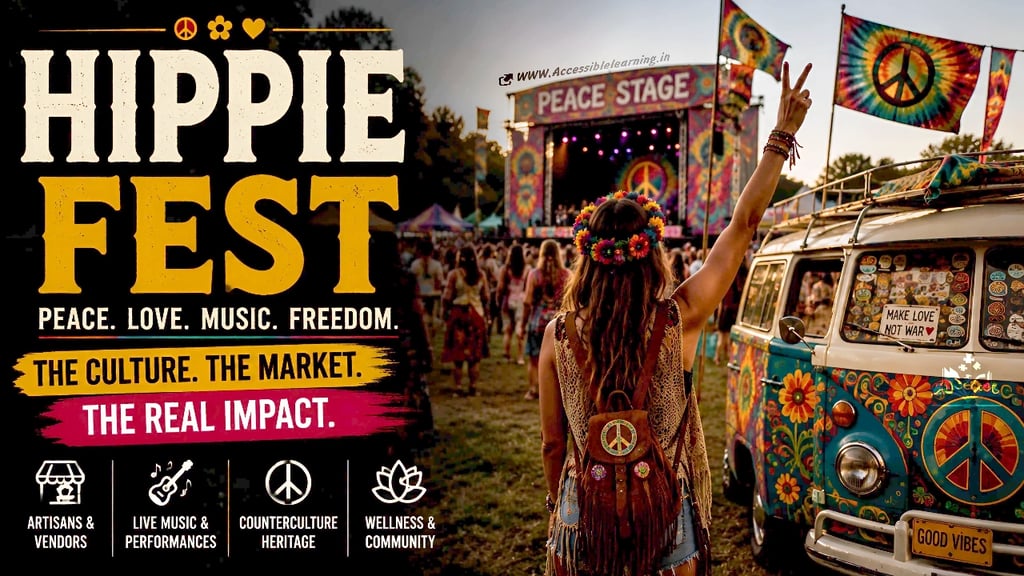
Forget the fantasy. Hippie Fest isn't the Woodstock revival many people imagine. It's a traveling marketplace, music gathering, artisan fair, and nostalgia machine that attracts thousands of visitors across the United States every year. The festival sells freedom, creativity, handcrafted culture, and vintage aesthetics, but it also operates as a well-organized commercial event with vendors, ticketing, logistics, and business objectives.
That contradiction defines Hippie Fest. It celebrates anti-establishment ideals while running on the same economic engine that powers every successful festival.
What Exactly Is Hippie Fest?
Hippie Fest is a traveling American festival inspired by the peace-and-love movement of the 1960s and 1970s. Instead of staying in one location, it moves through multiple cities each season, transforming fairgrounds into temporary communities filled with artisans, musicians, vintage collectors, food vendors, and wellness exhibitors.
Visitors usually encounter:
Live rock, folk, reggae, and jam bands
Handmade arts and crafts
Tie-dye clothing
Vintage fashion
Crystal and jewelry vendors
Holistic wellness booths
Food trucks
Drum circles
Family-friendly entertainment
Classic Volkswagen displays
The event deliberately avoids becoming an elite music festival. Instead, it targets families, casual visitors, collectors, artists, and anyone fascinated by retro counterculture.
Hippie Fest Doesn't Recreate the Hippie Movement
This distinction matters.
The original hippie movement emerged from opposition to war, consumerism, racial injustice, and rigid social structures. It challenged governments, questioned capitalism, experimented with communal living, and transformed music and fashion forever.
Modern Hippie Fest borrows the aesthetics far more than the politics.
Visitors wear bell-bottoms, flower crowns, and colorful tie-dye, yet most arrive by SUV, buy merchandise with credit cards, and leave before sunset. The revolutionary edge has softened into a celebration of creativity and nostalgia.
That doesn't make the festival fake.
It simply makes it honest about its purpose: preserving a recognizable cultural identity without asking attendees to abandon modern life.
The Marketplace Is the Real Headliner
Most first-time visitors expect concerts.
The experienced attendees know better.
The vendor area dominates the festival.
Hundreds of independent businesses often generate the strongest attraction, including:
Handmade soaps
Leather goods
Artisan candles
Natural skincare
Local honey
Metal artwork
Vintage clothing
Handmade jewelry
Organic foods
Home décor
Vinyl records
Bohemian fashion
For many small business owners, Hippie Fest represents one of the year's most profitable weekends.
Instead of competing with multinational retailers, artisans sell directly to customers who specifically appreciate handcrafted products.
That local economic impact often outweighs the entertainment.
Music Still Drives the Atmosphere
Music remains essential, even if it no longer serves as the festival's sole identity.
Unlike massive commercial festivals that rely on superstar headliners, Hippie Fest usually features regional bands, tribute acts, blues musicians, psychedelic rock groups, Americana performers, reggae artists, and classic rock influences.
The goal isn't celebrity.
The goal is atmosphere.
Live performances create the soundtrack while visitors browse booths, eat, dance, and socialize.
That slower pace separates Hippie Fest from today's high-pressure festival culture, where fans sprint between overlapping stages.


Fashion Became the Festival's Universal Language
Walk into Hippie Fest and one pattern dominates almost immediately:
Tie-dye.
Bright colors cover shirts, dresses, scarves, hats, and handmade accessories. Bell-bottom jeans return from retirement. Fringe jackets appear everywhere. Round sunglasses refuse to disappear.
Fashion serves as participation rather than performance.
Nobody expects historical accuracy.
People simply enjoy escaping everyday clothing for a weekend filled with exaggerated color and expressive design. Ironically, many trends once mocked decades ago now dominate mainstream fashion again. The festival didn't invent that comeback, but it certainly benefits from it.
Wellness Culture Has Replaced Political Activism
One major transformation separates today's event from the original counterculture. Modern Hippie Fest emphasizes wellness.
Visitors commonly find:
Yoga sessions
Herbal products
Essential oils
Meditation workshops
Natural remedies
Spiritual readings
Holistic lifestyle vendors
Critics argue that wellness culture replaced meaningful activism.
Supporters counter that personal health, sustainability, and mindfulness still challenge modern consumer habits in their own way.
Both perspectives carry some truth.
The political revolution faded.
Self-improvement filled the vacuum.
Families Now Dominate the Crowd
Woodstock became legendary partly because parents feared it.
Hippie Fest welcomes them.
Parents bring children to craft workshops.
Grandparents browse antiques.
Teenagers hunt vintage fashion.
Dogs appear almost as frequently as guitars.
That multi-generational appeal keeps the festival financially healthy.
Instead of chasing youth culture alone, organizers attract entire households.
That strategy dramatically expands attendance while reducing many of the behavioral problems associated with alcohol-heavy music festivals.
The Logistics Behind the Peace Signs
Peace symbols decorate nearly every corner of Hippie Fest. Behind the scenes, the operation resembles a carefully managed business.
Organizers coordinate:
Vendor applications
Food safety inspections
Local permits
Security staff
Medical teams
Parking management
Waste removal
Entertainment scheduling
Electrical infrastructure
Ticket operations
Without those invisible systems, the relaxed atmosphere would collapse within hours.
Successful festivals rarely succeed through improvisation.
They succeed through meticulous planning that attendees never notice.
Social Media Changed Everything
The original hippie generation communicated through underground newspapers and word of mouth. Today's visitors arrive after watching Instagram reels, TikTok clips, Facebook event pages, and YouTube videos.
That shift transformed the festival experience.
Many guests now photograph outfits before visiting vendors.
Some influencers spend more time filming than exploring.
Photo opportunities became attractions themselves.
The irony feels impossible to ignore.
A movement once famous for rejecting materialism now thrives through highly visual digital marketing.


The Environmental Question Deserves Honest Attention
Hippie branding naturally emphasizes sustainability. Reality looks more complicated. Traveling festivals require trucks, fuel, temporary infrastructure, disposable packaging, electricity, and significant waste management.
Many vendors genuinely prioritize recycled materials, reusable products, and handmade goods. Others simply capitalize on eco-friendly branding.
Visitors who truly care about sustainability should look beyond slogans.
Ask vendors where products come from.
Support local makers.
Reduce single-use plastics.
Bring reusable bottles.
Environmental responsibility requires action, not aesthetics.
Why Vendors Keep Returning
Independent artists often describe Hippie Fest as more than another craft fair.
The audience already values handmade work.
That dramatically improves sales opportunities.
Unlike conventional flea markets, visitors expect artisan pricing instead of discount pricing.
Customers frequently seek conversations with creators rather than anonymous transactions.
That personal interaction builds loyal communities that return every season.
Many vendors measure success less by immediate profits and more by repeat relationships.
The Festival's Real Cultural Impact
Hippie Fest won't ignite another social revolution.
It doesn't pretend to.
Its real contribution lies elsewhere.
The festival preserves independent craftsmanship in an era dominated by mass production.
It introduces younger generations to music, fashion, and artistic traditions that shaped modern culture.
It gives small businesses direct access to customers.
It creates temporary communities where strangers actually speak to one another instead of staring at phones.
Those outcomes matter. Even if they arrive wrapped in commercial packaging.
Is Hippie Fest Worth Visiting?
Yes, if expectations stay realistic.
Don't expect another Woodstock.
Don't expect political revolution.
Don't expect celebrity concerts.
Expect independent creators.
Expect colorful fashion.
Expect relaxed live music.
Expect nostalgia mixed with entrepreneurship.
Expect handcrafted products that rarely appear inside shopping malls.
Most importantly, expect contradiction.
Hippie Fest sells anti-consumer aesthetics through consumer spending.
It celebrates freedom within carefully organized event rules.
It honors rebellion while operating as a profitable business.
Those contradictions don't weaken the festival.
They explain why it continues attracting crowds long after the original hippie movement faded from headlines.
Hippie Fest survives because it understands something many festivals forget: people don't just buy tickets for entertainment. They buy belonging.
The flower crowns, tie-dye shirts, vintage vans, handmade jewelry, and folk music create an environment where visitors temporarily escape everyday routines without abandoning modern comforts.
Purists may dismiss it as commercialized nostalgia.
Fans call it a community.
The truth sits somewhere in the middle.
Hippie Fest no longer leads a cultural revolution, but it successfully preserves pieces of one. In an entertainment industry obsessed with bigger stages and louder spectacles, that quiet persistence may be its most rebellious achievement.
Subscribe To Our Newsletter
All © Copyright reserved by Accessible-Learning Hub
| Terms & Conditions
Knowledge is power. Learn with Us. 📚

