

Harela Festival: The Himalayan Environmental Ritual That Modern India Pretends to Celebrate
Discover the real story behind Harela, the ancient Himalayan festival of Uttarakhand and Himachal Pradesh. Explore its agricultural roots, environmental significance, cultural traditions, and why its message matters more than ever in the age of climate change.
CULTURE/TRADITIONEVENT/SPECIALINDIA/BHARAT
Jagdish Nishad
7/5/20263 min read
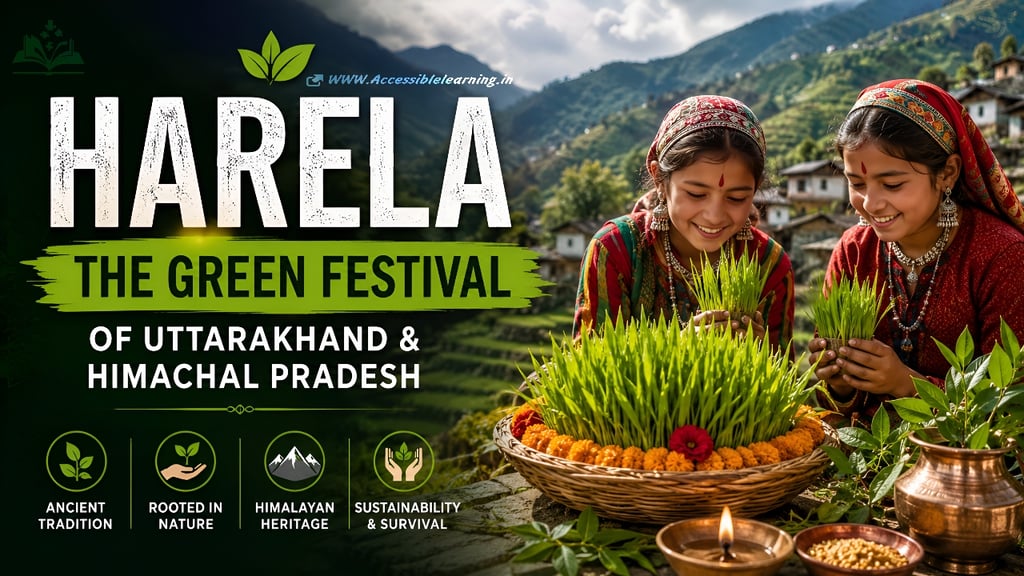
Harela is not just a festival. It is one of the oldest environmental warning systems ever created by human civilization.
Long before climate conferences, carbon credits, and sustainability campaigns became fashionable, communities across Uttarakhand and parts of Himachal Pradesh used Harela to measure their relationship with the land. Today, politicians plant saplings for photo opportunities while the original agricultural wisdom behind the festival quietly disappears.
Harela Was Never About Celebration Alone
Most people describe Harela as a harvest or monsoon festival. That explanation barely scratches the surface.
The word "Harela" comes from "Hariyali," meaning greenery. The festival arrives during the Hindu month of Shravan, typically in July, when monsoon rains begin transforming the Himalayan landscape.
Families sow seeds of barley, wheat, maize, mustard, or other grains in small bamboo baskets around ten days before the festival. When the shoots grow several inches tall, people cut them and place them behind the ears of family members as a blessing.
That simple ritual carries a powerful message: if the seeds thrive, the farming season stands a better chance. If they struggle, the community pays attention. This is environmental observation disguised as religion.
Uttarakhand Built Harela Into Its Identity
No state embraces Harela more deeply than Uttarakhand.
Across the Kumaon region, villages prepare the festival with remarkable discipline. Families clean homes, perform prayers, exchange blessings, and gather for community events. Traditional songs celebrate nature, fertility, agriculture, and local deities.
The festival also marks respect for women, family bonds, and the agricultural cycle. Unlike many modern festivals driven by consumption, Harela remains rooted in production. It celebrates farmers, not shoppers.
That distinction matters. Many urban festivals generate revenue. Harela generates awareness of food, soil, rainfall, and survival.
Himachal Pradesh Shares the Spirit, Even Without the Spotlight
Harela receives less publicity in Himachal Pradesh, but many Himalayan communities share similar seasonal traditions linked to agriculture and monsoon cycles.
The cultural overlap between Uttarakhand and Himachal reflects a broader Himalayan reality. Mountain societies depend heavily on weather patterns, water sources, forests, and fertile land.
For generations, people understood that environmental damage directly threatened survival.
Modern audiences often view these rituals as folklore. The mountain communities that created them viewed them as practical knowledge. They were not romanticizing nature. They were managing risk.
The Sapling Campaigns Miss the Point
Every year government departments, schools, and organizations promote mass tree-planting drives under the Harela banner. Planting trees sounds admirable. The problem lies in what happens afterward.
Many campaigns focus on planting numbers rather than survival rates. Thousands of saplings enter the ground. A significant percentage never reach maturity. That creates impressive headlines but limited ecological impact.
The original spirit of Harela demanded long-term stewardship. People did not simply plant. They protected, monitored, and depended on what they grew.
Without accountability, modern campaigns reduce a profound ecological tradition into a public relations exercise.
The Real Logistics Behind Harela
Most outsiders see colorful ceremonies. They rarely notice the logistics. The festival revolves around agricultural timing, seed selection, rainfall expectations, household participation, and community coordination.
Families prepare seed trays days in advance. Communities organize collective gatherings. Local markets experience increased activity. Religious institutions coordinate ceremonies. Schools conduct environmental programs.
Behind every visible ritual stands a network of labor.
The festival survives because ordinary people continue doing the work.
Not because tourism brochures celebrate it.

Climate Change Makes Harela More Relevant Than Ever
The Himalayas face increasing pressure from erratic rainfall, landslides, water stress, deforestation, and rapid development. That reality makes Harela surprisingly modern.
The festival reminds communities that prosperity depends on ecological balance. When forests disappear, rivers suffer. When rainfall patterns shift, agriculture suffers. When agriculture suffers, entire local economies suffer.
This is not symbolism.
It is cause and effect.
The communities that created Harela understood interconnected systems centuries before environmental science became a formal discipline.
Why Harela Deserves National Attention
India celebrates countless festivals, but few combine culture, agriculture, environmental awareness, and community participation as effectively as Harela. Yet outside Uttarakhand, many people have never heard of it.
That lack of recognition reveals a broader problem. Urban India often treats rural traditions as outdated until modern experts repackage the same ideas with new terminology.
Harela deserves attention not because it is ancient.
It deserves attention because it remains useful.
The festival offers a reminder that environmental responsibility cannot survive as a social media trend. It must become a daily practice rooted in local communities.
That was the original purpose of Harela.
And that remains its most important lesson today.
The Bottom Line
Harela stands as one of the strongest examples of ecological wisdom embedded within Indian culture.
It is not merely a religious observance. It is a living reminder that human survival depends on healthy soil, reliable rainfall, thriving forests, and responsible stewardship.
The festival's greatest threat is not modernization itself. The real danger comes when people preserve the rituals while forgetting the reason those rituals existed in the first place.
Subscribe To Our Newsletter
All © Copyright reserved by Accessible-Learning Hub
| Terms & Conditions
Knowledge is power. Learn with Us. 📚

