

Haeundae Light Festival: How Busan Turns Winter Nights Into Art
The Haeundae Light Festival in Busan transforms Korea’s most famous beach into a glowing winter art space. Featuring immersive light installations, ocean-inspired designs, and peaceful seaside walks, this seasonal festival offers a unique way to experience Busan after dark during winter.
EVENT/SPECIALTRAVEL LIFESOUTH KOREACELEBRATION/FESTIVALS
Kim Shin
1/18/20265 min read
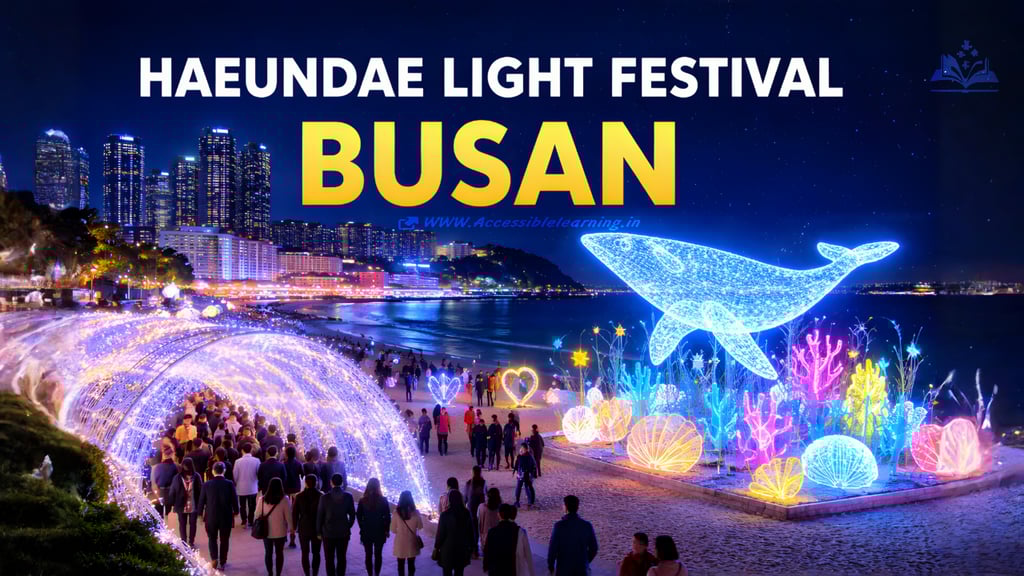
The Haeundae Light Festival is a signature winter event in Busan that transforms the city’s most iconic beach into a glowing coastal art space. Set against the sound of waves and the winter sea breeze, the festival turns nighttime walks into immersive visual journeys. It is not loud or overwhelming. Instead, it feels thoughtful, artistic, and deeply connected to Busan’s identity as a modern port city shaped by the ocean.
Held every winter, the festival has gradually become a key attraction for both domestic travelers and international visitors who want to experience Busan beyond its summer beach culture.
Origins and Evolution of the Festival
The Haeundae Light Festival began as part of Busan’s effort to promote winter tourism and revive nighttime foot traffic in Haeundae during the off-season. While Haeundae Beach is crowded and energetic in summer, winter traditionally brought quieter streets. The city responded by reimagining public spaces through light-based art.
Over the years, the festival has evolved from simple decorative lighting into a curated cultural event featuring professional lighting designers, digital artists, and urban planners. Each edition improves in scale, technology, and storytelling, reflecting Busan’s growing reputation as a creative city.
Festival Themes and Storytelling
Every year, the festival follows a central theme that shapes the design and layout of installations. These themes often draw inspiration from:
The sea and marine ecosystems
Winter fantasy and seasonal transformation
Dreams, hope, and human connection
The relationship between nature and technology
Busan’s future as a global coastal city
Rather than isolated displays, the lights are arranged to guide visitors along a narrative path. Walking through the festival feels like moving through chapters of a visual story.
Detailed Look at Key Festival Zones
Haeundae Beach Illumination Zone
The beach itself becomes the heart of the festival. Soft lighting lines the sand paths and promenade, while large-scale sculptures glow against the dark sea. The contrast between artificial light and natural darkness is intentional, highlighting the horizon and ocean rather than competing with them.
Haeundae Square and Urban Light Art
Near Haeundae Station and the main commercial area, the lighting becomes more dynamic and playful. Bright installations, animated LED structures, and themed photo zones attract younger crowds and families. This area often includes seasonal symbols, abstract shapes, and modern design elements.
Dongbaekseom Island Nature Lights
Dongbaekseom Island offers a completely different mood. Here, lighting is subtle and respectful of the natural landscape. Trees, rocks, and pathways are gently illuminated, making nighttime walks safe while preserving the island’s calm atmosphere. This section appeals to couples and visitors looking for quiet reflection.
Projection Mapping and Media Art
Projection mapping is used on select buildings and surfaces to display short visual sequences. These shows blend animation, light, and music, often telling short stories related to Busan’s culture, maritime history, or future aspirations.
Technology Behind the Festival
The festival relies heavily on energy-efficient LED systems and smart lighting controls. Many installations use programmable lighting that changes color, rhythm, and brightness based on time or movement. Some interactive zones respond to footsteps, hand movements, or sound, turning visitors into part of the artwork.
This focus on sustainable technology aligns with Busan’s environmental goals and ensures the festival remains visually impressive without excessive energy use.
Best Time to Visit and Crowd Patterns
The festival typically runs daily from early evening until late night. The best experience is usually
Shortly after sunset, when the lights contrast sharply with the remaining daylight
Late evening on weekdays, when crowds are thinner and the atmosphere is calmer
Weekends and holidays tend to be busier, especially around popular photo spots.
Food, Cafes, and Nearby Attractions
One of the festival’s advantages is its location. After exploring the lights, visitors can easily:
Enjoy fresh seafood at local restaurants
Visit ocean-view cafes and dessert shops
Walk to The Bay 101 for skyline night views
Explore nearby hotels and cultural venues
This combination of art, food, and scenery makes the festival a full evening experience rather than a short visit.

Who Should Visit the Haeundae Light Festival?
The festival appeals to a wide range of visitors:
Families with children enjoy interactive installations
Couples appreciate the romantic seaside atmosphere
Solo travelers find it peaceful and photogenic
Photographers value the balance of light, space, and reflections
Culture-focused travelers gain insight into modern Korean urban design
It is especially appealing to those who prefer calm experiences over crowded concerts or loud events.
Accessibility and Practical Information
The festival is free and open to the public. Most areas are wheelchair-accessible, and paths are well-lit for safety. Haeundae Station on Busan Metro Line 2 provides easy access, and buses run frequently throughout the evening.
Winter weather in Busan is generally mild compared to inland regions, but warm clothing is recommended due to sea winds.
Cultural Significance for Busan
Beyond tourism, the Haeundae Light Festival represents Busan’s approach to cultural development. It shows how public art can enhance everyday spaces, encourage seasonal travel, and strengthen the city’s nighttime economy without relying on heavy commercialization.
The festival also reflects a broader trend in South Korea toward experiential tourism, where visitors seek atmosphere, emotion, and meaning rather than just landmarks.
The Haeundae Light Festival is not just about bright lights. It is about mood, place, and timing. By combining winter silence, ocean views, and carefully designed illumination, the festival offers a side of Busan that feels intimate and modern at the same time.
For anyone visiting Busan in winter, this festival is not an optional stop. It is one of the clearest expressions of how the city blends nature, technology, and human-centered design into a memorable experience.
FAQs
Q: What is the Haeundae Light Festival?
The Haeundae Light Festival is a winter illumination event held in Busan, South Korea. It features large-scale light installations, artistic displays, and interactive lighting zones along Haeundae Beach and nearby areas, creating a nighttime art experience by the sea.
Q: When does the Haeundae Light Festival usually take place?
The festival is typically held from December to January, with some editions extending into early February. The exact dates can vary each year depending on weather conditions and city planning.
Q: Is the Haeundae Light Festival free to visit?
Yes, the festival is usually free. All major display areas are set in public spaces, so visitors can explore without buying tickets or making reservations.
Q: What time do the lights turn on?
The lights generally turn on around sunset, usually between 5:00 PM and 6:00 PM, and remain on until late at night. Exact timings may vary slightly by location.
Q: Where is the main location of the festival?
The main festival areas include Haeundae Beach, Haeundae Square, the beachfront promenade, and Dongbaekseom Island. Some installations may also appear near nearby landmarks like The Bay 101.
Q: How do I get to the Haeundae Light Festival?
You can reach the festival easily by public transport. Take Busan Metro Line 2 and get off at Haeundae Station. From there, the beach and festival zones are within walking distance.
Q: Is the festival suitable for families and children?
Yes. Many installations are family-friendly, and some interactive light zones are especially popular with children. The walking routes are safe, well-lit, and easy to navigate.
Q: Is the festival crowded?
Crowds are usually moderate. Weekends, holidays, and early evening hours tend to be busier. Weekday nights and later evening hours offer a quieter experience.
Q: What should I wear when visiting?
Winter in Busan is milder than in many other regions, but it can feel cold near the sea. Warm clothing, a jacket, and comfortable walking shoes are recommended.
Q: Can I take photos at the festival?
Yes, photography is allowed and encouraged. The festival is very popular with photographers due to reflections on the water and creative lighting. Tripods are usually allowed, but visitors should be mindful of crowds.
Q: Is the Haeundae Light Festival accessible for elderly or disabled visitors?
Most festival areas are accessible, with flat walking paths and ramps. Dongbaekseom Island paths are also well maintained, though some sections may have gentle slopes.
Q: Are food and restrooms available nearby?
Yes. Haeundae is a major tourist area with plenty of restaurants, cafes, convenience stores, and public restrooms located close to the festival zones.
Q: Can I visit the festival on the same day as other Busan attractions?
Absolutely. Many visitors combine the festival with visits to nearby spots like The Bay 101, Nurimaru APEC House, or local seafood markets, making it a full evening outing.
Q: Is the Haeundae Light Festival worth visiting in winter?
Yes. The festival is one of the main reasons winter is a good time to visit Busan. It offers a calm, scenic, and culturally rich experience that feels very different from Busan’s busy summer season.
Subscribe To Our Newsletter
All © Copyright reserved by Accessible-Learning Hub
| Terms & Conditions
Knowledge is power. Learn with Us. 📚

