

Hadaka Matsuri (Naked Festival): Japan’s Powerful Winter Ritual of Purification, Luck, and Brotherhood
Discover Hadaka Matsuri, Japan’s famous “Naked Festival,” a powerful winter purification ritual held at temples like Saidai-ji. Learn its history, meaning, traditions, sacred objects, and travel tips in this in-depth guide.
CULTURE/TRADITIONEVENT/SPECIALTRAVEL LIFECELEBRATION/FESTIVALSJAPAN
Kim Shin
2/10/20266 min read
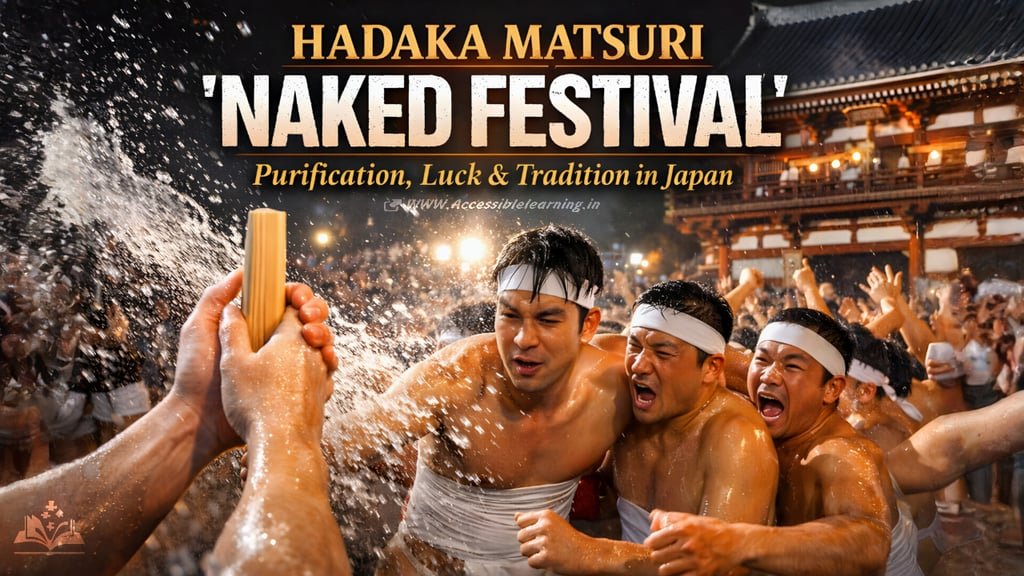

If you ever see visuals of thousands of men wearing only a loincloth, soaked in cold water, shouting in a temple courtyard while chaos erupts around a sacred object, that isn’t a random wild event.
That is Hadaka Matsuri (裸祭り), widely known as the Naked Festival of Japan a tradition that sits at the intersection of spiritual discipline, ritual purification, social bonding, and cultural identity.
In modern times it’s often described as one of Japan’s strangest festivals, but for people who take part, Hadaka Matsuri is not meant to look normal. It is meant to shake off bad luck, cleanse the spirit, and begin the year with strength.
This article dives deep into the history, meaning, rituals, temple culture, participant mindset, modern adaptations, and what visitors should know to experience it respectfully.
What is Hadaka Matsuri?
Hadaka Matsuri literally means “Naked Festival,” but the translation can mislead people. Participants are not typically fully naked. Most wear:
Fundoshi (褌): traditional Japanese loincloth
Tabi socks (足袋): split-toe socks
sometimes short festival coats depending on region
The core purpose of Hadaka Matsuri is misogi (purification), a Shinto-inspired cleansing process believed to remove spiritual impurity and invite blessings.
Why the Body is Exposed: Not for Shock, but for Purity
The “nakedness” in Hadaka Matsuri is not vulgar or sexual. It is symbolic. In many Japanese traditions, being close to the natural state of the body represents:
honesty (nothing is hidden)
equality (no one shows wealth through clothing)
humility (ego is stripped away)
purification (the body becomes a clean vessel)
courage (one must endure discomfort)
This is why Hadaka Matsuri is often held in the freezing cold. The harsh conditions are meant to break the comfort of the body so the spirit becomes stronger.
Historical Roots: A Festival Older Than Modern Japan
Hadaka Matsuri has roots going back more than 1,000 years, with regional versions evolving across Japan.
Historically, it was linked to:
agricultural survival (praying for harvest and rainfall)
warding off disasters
preventing sickness
strengthening social unity
ritual protection of temples
When communities depended on nature and luck, purification rituals were not optional. They were sacred insurance.
The Most Famous Event: Saidai-ji Eyo (Okayama)
The most globally recognized Hadaka Matsuri is:
Saidai-ji Eyo Hadaka Matsuri
📍 Saidai-ji Temple, Okayama Prefecture
🗓️ Usually in February
👥 Thousands of participants
This event is famous because of the massive crowd and the ritual fight for sacred talismans. It’s not “fighting” like violence, but a controlled storm of bodies, where men push, collide, form groups, and struggle to secure the sacred object.
What Happens During the Festival? (Detailed Ritual Flow)
Hadaka Matsuri follows an organized ritual structure, even if it looks chaotic.
Preparation and Entry
Participants gather, dressed in fundoshi. Many also mark themselves with symbolic cloth strips or temple items.
Ritual Purification
The temple performs prayers and purification rituals. This moment is quiet and serious.
Water Purification (Cold Water Splash)
Men are splashed with cold water repeatedly. This is a direct form of misogi purification:
shock the body
sharpen alertness
cleanse impurity
prepare the spirit
The Darkness Moment
In major events like Saidai-ji, lighting is reduced or turned off briefly, building suspense and spiritual intensity.
The Sacred Object is Released
A priest throws sacred sticks/talismans into the crowd.
The Struggle for Fortune Begins
Thousands attempt to catch it. Groups protect the holder. Bodies form walls. Momentum becomes unstoppable.
Final Delivery = Year’s Luck
The sacred object must be brought to a designated sacred spot. The successful holder/group earns the title of the year’s blessed ones.


The Sacred Object: What Are They Really Fighting For?
In Saidai-ji, the main object is called Shingi (神木). It represents:
divine fortune
protection from misfortune
prosperity and success
cleansing of bad luck
It’s not about “winning.” It’s about becoming the chosen carrier of good fortune for the community.
Many participants believe the blessing spreads beyond the winner, reaching their families and their village.
The Psychology of Hadaka Matsuri: Why People Keep Returning
This is one of the most interesting parts. Many men participate year after year because Hadaka Matsuri provides experiences that modern life lacks:
1) Brotherhood Without Words
In the crush of bodies, there is no status.
Only survival, teamwork, and trust.
2) A Public Reset Button
The festival is like a spiritual restart:
“Whatever happened last year, I begin again.”
3) Controlled Chaos
In a society known for order, Hadaka Matsuri is a rare cultural space where chaos is allowed but sacred and disciplined chaos.
4) Proof of Strength
Not ego strength. Real inner strength:
endurance, humility, and self-control.
Why Winter is the Perfect Season for Hadaka Matsuri
Hadaka Matsuri is often held in January or February because winter in Japan symbolically represents:
hardship
endurance
discipline
purification through suffering
Cold weather is not just background. It is part of the ritual itself.
Regional Variations: Hadaka Matsuri is Not One Festival
Hadaka Matsuri is a category of festivals, not one single event. Different regions have unique features like:
carrying sacred objects through streets
community chants and drumming
running through water
fire rituals
temple obstacle paths
different dress rules
Some are huge and famous, while many are small village-based rituals where participation is more intimate and spiritual.
Women in Hadaka Matsuri: A Tradition Evolving
Traditionally, many major Hadaka Matsuri festivals were male-only due to older temple customs. But modern times have introduced:
women-only Hadaka Matsuri events
mixed participation in some regions
separate purification rituals for women
This evolution is important. It shows that while Japan respects tradition deeply, some traditions are also adapting to modern society.
Rules and Discipline: It’s Not a Free-for-All
Even though it looks wild, there are rules:
participants must respect temple grounds
no intentional violence
no modern “party behavior”
instructions from temple leaders must be followed
drunken behavior is strictly discouraged
The mood is intense, but it is not careless. It is controlled tradition.
The Role of the Temple: Spiritual Authority Over Spectacle
The festival belongs to the temple. Priests are not just organizers; they are spiritual authorities maintaining the meaning of the ritual.
Temples use Hadaka Matsuri as:
purification of the local community
renewal of faith
continuation of cultural identity
sacred offering of endurance
Common Myths About Hadaka Matsuri (What People Get Wrong)
Myth 1: “It’s a tourist attraction.”
Truth: It’s a living ritual. Tourism came later.
Myth 2: “It’s a nudist festival.”
Truth: It has nothing to do with nudism.
Myth 3: “It’s all violent.”
Truth: It’s intense but ritualized and community-controlled.
Myth 4: “It’s only for fun.”
Truth: Most participants treat it like a sacred duty.
How Tourists Can Experience Hadaka Matsuri Respectfully,
If you’re visiting Japan, attending Hadaka Matsuri can be one of the most unforgettable cultural experiences.
Best visitor tips
arrive early (crowds get massive)
dress in layers (you’ll stand in cold for long hours)
respect sacred boundaries of temple areas
avoid jokes or mocking language
photography must be respectful; no flash in sacred moments
A good mindset is:
You’re not watching a show. You’re witnessing a ritual.


Why Hadaka Matsuri Still Matters in Modern Japan
Japan is one of the most technologically advanced countries in the world, yet traditions like Hadaka Matsuri remain powerful. Why?
Because human nature doesn’t change. People still need:
purification from anxiety
a sense of belonging
spiritual discipline
cultural identity
community blessings
Hadaka Matsuri continues because it answers a deep human need:
to feel cleansed, strong, and connected.
Hadaka Matsuri is Not About Nakedness; It’s About Spirit
Hadaka Matsuri is raw, loud, freezing, intense, and unforgettable. But at its core, it is a festival that says:
Let go of last year’s bad luck
Strip away ego
Face discomfort
Earn blessings
Strengthen the community
The body may be exposed, but the purpose is spiritual. Hadaka Matsuri is not a strange Japanese tradition. It’s one of the most human traditions on earth.
FAQ's
Q: What is Hadaka Matsuri in Japan?
Hadaka Matsuri is a traditional Japanese festival where participants (usually men) wear a fundoshi loincloth and take part in purification rituals at temples. It is mainly performed to remove bad luck, cleanse spiritual impurity, and receive blessings for the new year.
Q: Why is Hadaka Matsuri called the “Naked Festival”?
It is called the “Naked Festival” because participants wear minimal clothing, mainly a fundoshi. However, it is not about nudity for entertainment. The near-naked style symbolizes purity, equality, courage, and spiritual cleansing.
Q: Are participants completely naked during Hadaka Matsuri?
No. Most participants are not fully naked. They usually wear:
Fundoshi (loincloth)
Tabi socks
Sometimes a short jacket is also worn depending on the region.
Q: What is the purpose of Hadaka Matsuri?
The main purpose is misogi (purification), cleansing the body and spirit to remove:
bad luck
spiritual impurity
negative energy
Participants believe the ritual brings good fortune, health, and prosperity.
Q: Where is the most famous Hadaka Matsuri held?
The most famous event is:
✅ Saidai-ji Eyo Hadaka Matsuri
📍 Saidai-ji Temple, Okayama, Japan
It is known for the large crowd and the ritual struggle for sacred objects (Shingi).
Q: What is the Shingi in Hadaka Matsuri?
Shingi (神木) is a sacred object (often wooden talisman) thrown into the crowd. The person or group who successfully secures and delivers it is believed to receive great luck and blessings for the year.
Q: When does Hadaka Matsuri happen?
Most Hadaka Matsuri festivals take place during winter, mainly in:
📌 January and February
Winter is chosen because harsh cold conditions represent strong purification and endurance.
Q: Is Hadaka Matsuri dangerous?
It can be intense due to crowd pushing, cold weather, and physical struggle. Minor injuries like bruises can happen, but major events are usually carefully managed with strict discipline and temple supervision.
Q: Can tourists participate in Hadaka Matsuri?
In most large festivals, tourists typically attend as observers. However, in some smaller local Hadaka Matsuri events:
outsiders may be allowed to join
registration and dress rules may apply
It depends on the region and temple policy.
Q: Is Hadaka Matsuri religious?
Yes. Hadaka Matsuri is strongly connected to traditional Japanese temple rituals and Shinto purification practices, making it a spiritual tradition rather than a modern celebration.
Subscribe To Our Newsletter
All © Copyright reserved by Accessible-Learning Hub
| Terms & Conditions
Knowledge is power. Learn with Us. 📚

