

Gwangyang Maehwa Festival Guide: Best Time to Visit, Travel Tips, and Hidden Spots
Discover the beauty of South Korea’s earliest spring festival in Gwangyang. This complete guide to the Gwangyang Maehwa Festival covers history, cultural meaning, best travel tips, photography ideas, food experiences, and everything you need to plan a memorable visit to Korea’s famous plum blossom valley.
EVENT/SPECIALTRAVEL LIFESOUTH KOREACELEBRATION/FESTIVALS
Kim Shin
2/26/20265 min read
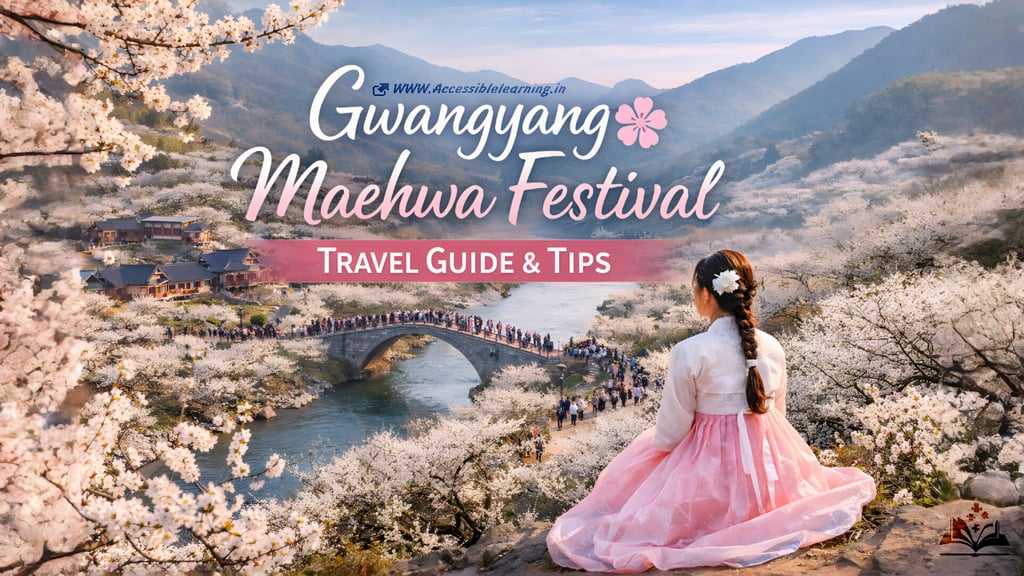
The Gwangyang Maehwa Festival is one of South Korea’s earliest spring celebrations, held in Gwangyang, Jeollanam-do. Before cherry blossoms bloom across Korea, white plum flowers quietly cover the hills of Maehwa Village, creating a peaceful, cinematic landscape.
If you enjoy soft, warm visual storytelling like the nature-based projects you’ve been creating recently, this festival offers beautiful organic scenes that feel calm, natural, and meditative.
Deep Cultural History of Plum Blossoms
Plum blossoms are called Maehwa in Korean culture. They appear in classical Korean paintings, poetry, and calligraphy.
Why they are respected:
They bloom during cold weather
They symbolize patience and inner strength
Scholars in the Joseon Dynasty admired them
They represent new beginnings after hardship
In East Asian art, plum blossoms are part of the “Four Gentlemen” plants along with bamboo, orchid, and chrysanthemum.
Geography and Natural Landscape
The festival takes place along the Seomjingang River, surrounded by hills filled with plum orchards.
What makes this location unique:
River reflections with blossoms
Traditional Korean houses
Mountain fog in mornings
Farming village authenticity
White blossom waves across hills
Unlike cherry blossom festivals in cities, this feels quiet and real.
Festival Schedule & Events
Typical activities include:
Blossom Trails
Multiple walking paths with viewpoints, wooden decks, and scenic bridges.
Cultural Shows
Traditional Korean music
Folk dances
Poetry recitations
Calligraphy writing events
Hanbok photo experiences
Food & Tea Experience
Local specialties:
Plum tea (Maesil-cha)
Plum wine (Maesil-ju)
Plum jam desserts
Traditional rice cakes
Fresh seafood from nearby coast
Artisan Market
Local farmers and artists sell handmade crafts and plum products.
Night Views & Cinematic Atmosphere
Some evenings feature gentle lighting among trees.
The soft lights create a peaceful scene perfect for slow cinematic videos or emotional storytelling visuals.


Photography & Creative Inspiration
Because you work on cinematic visuals and brand storytelling, here are strong visual ideas:
Creative shot ideas
Silhouette portrait inside blossom tunnel
Slow-motion petals falling
Drone shot over white orchard hills
Reflection shot in river water
Traditional hanbok portrait
Color palette inspiration
Soft white
Warm beige
Light green
Pale sky blue
These tones match calm and elegant branding aesthetics.
Travel Planning Guide
Best Time
Early bloom: Late February
Peak bloom: Early–Mid March
Late bloom: Late March
Weather affects timing each year.
How to Reach
From Seoul:
KTX train to Suncheon
Taxi or bus to Maehwa Village
From Busan:
Direct bus or train to Gwangyang
Travel time: 2–4 hours.
Where to Stay
Nearby options:
Hotels in Gwangyang city
Guesthouses in Suncheon
Countryside hanok stays
Nearby attraction: Suncheon Bay Wetland Reserve, famous for wetlands and sunsets.
Hidden Spots Most Tourists Miss
Upper hill viewpoints for sunrise
Quiet riverside paths far from main gate
Local tea houses inside village
Small plum farms with homemade products
These places offer peaceful visuals without crowds.
Practical Travel Tips
✔ Visit early morning for best photos
✔ Wear warm clothes; mornings are cold
✔ Bring cash for small stalls
✔ Respect farm boundaries
✔ Weekdays are less crowded
✔ Carry portable tripod for low-light shots
Responsible Tourism Tips
Since the festival takes place on real farms:
Do not climb trees
Stay on marked paths
Avoid picking flowers
Support local vendors
Dispose trash properly
This helps protect orchards for future visitors.
Local Stories & Legends
Some local stories say plum blossoms bring good fortune to farmers. In Korean literature, poets compared blooming plum trees to brave people who stay strong in hard times.
This deeper meaning makes the festival more than just photography. It becomes a reflection on patience and renewal.
Creative Ideas for Content Creators
If you plan to shoot content like your tree-transformation videos, try:
Time-lapse from sunrise to sunset
Drone reveal from river to blossom hills
Soft piano background music
Voice-over poetry narration
Warm color grading
Why This Festival Feels Special
Many festivals are loud and crowded. The Gwangyang Maehwa Festival feels quiet and reflective.
You hear wind in trees, smell plum blossoms, drink warm tea, and watch spring arrive slowly.
It’s not just a flower event. It’s a peaceful cultural experience.

Frequently Asked Questions
Q: What makes the Gwangyang Maehwa Festival different from cherry blossom festivals?
The Gwangyang Maehwa Festival happens earlier and feels calmer. Plum blossoms bloom in quiet countryside orchards instead of busy city streets. The flowers are white and fragrant, and the atmosphere is peaceful compared to crowded cherry blossom festivals in Seoul or Busan.
Q: Where exactly is the festival held?
The festival takes place in Maehwa Village in Gwangyang, Jeollanam-do, along the scenic Seomjingang River.
Q: When is the best time to visit for peak blossoms?
Usually early to mid-March.
If the winter is warm, blossoms come earlier. If it is cold, peak bloom may shift later.Tip: Check Korea blossom forecasts before booking flights.
Q: Is there an entry fee for the festival?
Most years, entry is free.
Some special exhibitions or parking areas may have small charges.
Q: How crowded does the festival get?
Weekends can be busy, especially during peak bloom.
Weekday mornings are peaceful and best for photography.
Q: How long should I plan to stay?
Half a day is enough to see blossoms, but one full day lets you enjoy food stalls, cultural shows, and sunset views.
Many travelers combine it with a visit to Suncheon Bay Wetland Reserve.
Q: What food should I try at the festival?
Must-try items include:
Plum tea
Plum wine
Plum jam desserts
Korean rice cakes
Local seafood dishes
These are made using locally grown plums.
Q: Is the festival good for photography and video shoots?
Yes, it’s one of Korea’s best spring locations. Great shots include:
Blossom tunnels
River reflections
Sunrise fog scenes
Traditional hanbok portraits
If you’re creating cinematic visuals like your nature-based video projects, this place gives very organic, warm scenes.
Q: Can I wear hanbok at the festival?
Yes. Many rental shops nearby offer hanbok rentals.
Traditional clothing looks beautiful in white blossom backgrounds.
Q: Is the festival family-friendly?
Absolutely. Walking paths are safe and easy. There are food stalls, small performances, and open areas for children.
Q: How do I get there without a car?
From Seoul:
KTX to Suncheon
Bus or taxi to Maehwa Village
From Busan:
Train or bus to Gwangyang
Taxi to festival site
Public transport is easy, but allow extra travel time.
Q: What should I wear to the festival?
Early March weather is cool. Bring:
Warm jacket
Comfortable walking shoes
Scarf or gloves for mornings
Afternoons can be mild.
Q: Can I pick plum blossoms or enter farms?
No. Orchards are private property. Stay on marked paths and respect local farmers.
Q: Is the festival suitable for solo travelers?
Yes. It’s safe and peaceful. Many photographers and travelers visit alone.
Q: Are there English signs or guides?
Major areas have English information boards. Translation apps help for small shops.
Q: What nearby places can I visit on the same trip?
Popular nearby attractions:
Suncheon Bay Wetland Reserve
Yeosu coastal area
Boseong Green Tea Fields
Jirisan National Park
These places make a great 2-day itinerary.
Q: What time of day is best to visit?
Sunrise: Misty and quiet
Late afternoon: Warm golden light
Evening: Soft lighting among blossoms
Photographers prefer early morning.
Q: Does the festival happen every year?
Yes, unless weather or special circumstances prevent it. Dates may change depending on bloom timing.
Q: Is it worth visiting from another country?
If you love nature, calm cultural travel, or photography, it is absolutely worth it. It feels authentic and less commercial than big festivals.
Q: What’s the biggest mistake visitors make?
Arriving too late in the day. Crowds increase quickly, and parking becomes difficult. Plan an early start.
Subscribe To Our Newsletter
All © Copyright reserved by Accessible-Learning Hub
| Terms & Conditions
Knowledge is power. Learn with Us. 📚

