

Guyu (Grain Rain): Meaning, Significance, Traditions, and Seasonal Insights
Discover the meaning, significance, and traditions of Guyu (Grain Rain), the sixth solar term marking the end of spring. Learn how this seasonal phase influences agriculture, tea culture, health, and nature, along with its cultural importance and modern relevance.
CULTURE/TRADITIONEVENT/SPECIALCHINACELEBRATION/FESTIVALS
Kim Shin
4/10/20265 min read
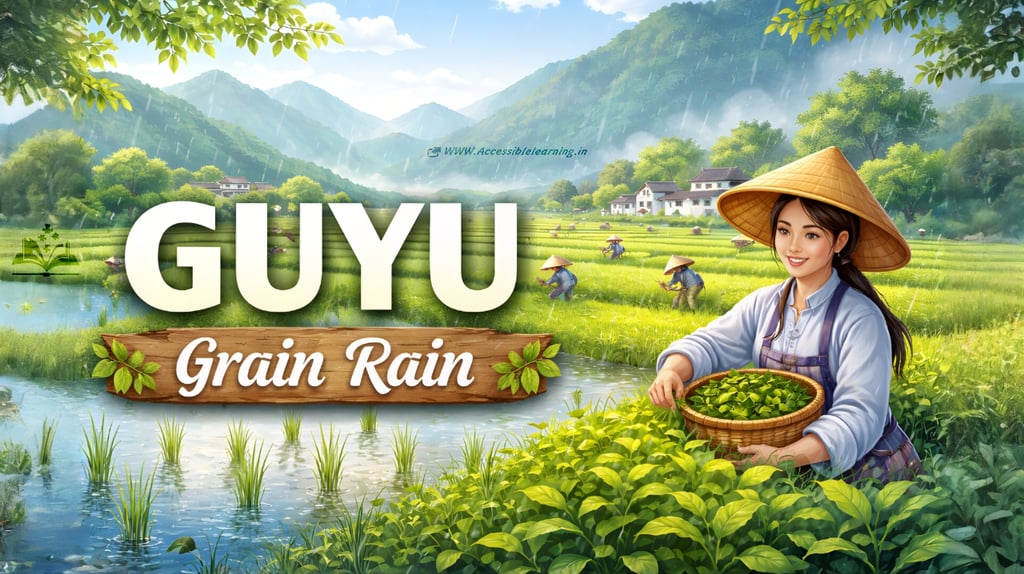
Guyu, meaning “Grain Rain,” is the sixth solar term in the traditional East Asian calendar, usually beginning around April 19–21. It marks the final phase of spring and a critical agricultural window when rainfall increases and crops begin to grow vigorously.
More than just a seasonal indicator, Guyu reflects a deep understanding of nature’s rhythm—where rainfall, warmth, and soil fertility align to support life. It’s a time when both farmers and nature work in harmony to prepare for abundance.
What is Guyu?
Guyu is part of the 24 Solar Terms, an ancient system based on the sun’s position along the ecliptic. It begins when the sun reaches 30° celestial longitude.
The name “Grain Rain” symbolizes:
Rainfall that nurtures grains
The transition from gentle spring to active growth phase
A time when nature becomes fully alive
During this period:
Rainfall becomes more frequent but still gentle
Frost disappears completely
Plants absorb nutrients rapidly
Historical Origins and Evolution
The concept of Guyu dates back over 2,000 years, formalized during ancient Chinese dynasties as part of agricultural planning.
Key Historical Aspects:
Developed to guide farming cycles and seasonal timing
Recorded in ancient texts like the Huainanzi
Used by imperial governments to organize agriculture and taxation systems
In traditional societies, missing the Guyu sowing period could lead to poor harvests, making it one of the most respected solar terms.
Agricultural Importance: A Farmer’s Golden Window
Guyu is often described as a make-or-break period for crops.
Major Agricultural Activities:
Sowing staple crops: rice, maize, millet, soybeans
Transplanting rice seedlings in southern regions
Fertilizing soil naturally with rainwater
Weed and pest management
Regional Variations:
Southern China: Focus on rice cultivation
Northern regions: Wheat and corn growth accelerate
Mountain areas: Tea harvesting peaks
A well-known proverb says:
“If it rains during Guyu, there will be a good harvest.”


Cultural Traditions and Folk Practices
1. Drinking Guyu Tea
Tea harvested during this time is prized for its:
Fresh aroma
Balanced taste
Higher nutritional value
It is often considered the last high-quality spring tea before summer heat changes leaf texture.
2. Eating Seasonal Foods
Toona Sinensis (Chinese Toon) is widely consumed:
Rich in vitamins
Known for its strong, unique flavor
Often stir-fried with eggs or tofu
Other seasonal foods include:
Bamboo shoots
Spinach and tender greens
Spring herbs
3. Honoring Cangjie
Legend says that when Cangjie, the inventor of Chinese writing, created characters, the heavens rained grains—giving rise to the name “Grain Rain.”
People commemorate him to:
Celebrate knowledge and literacy
Honor cultural heritage
Natural and Ecological Changes
Guyu is one of the most visibly transformative periods in nature.
Key Environmental Shifts:
Rapid plant growth due to moisture and warmth
Increased insect activity, including beneficial pollinators
Bird migration peaks
Rivers and lakes refill, supporting ecosystems
This period represents a burst of biodiversity, where life becomes more active and interconnected.
Guyu and Tea Culture: A Deeper Look
Tea culture during Guyu is deeply refined.
Why Guyu Tea is Special:
Leaves are mature but still tender
Rain enhances mineral absorption
Cooler climate preserves flavor compounds
Types of Tea Harvested:
Green tea
White tea
Early oolong varieties
Tea picked after Guyu is still good, but Guyu tea sits at the balance point between delicacy and strength.
Health and Wellness During Guyu
Traditional health practices emphasize adapting to seasonal shifts.
Health Tips:
Eat cooling and hydrating foods
Avoid overly greasy or spicy meals
Maintain hygiene to prevent humidity-related illnesses
Exercise lightly, such as walking or stretching
Common Concerns:
Allergies due to pollen
Digestive imbalance
Skin sensitivity from humidity
Guyu encourages a gentle lifestyle adjustment rather than drastic changes.
Philosophical and Symbolic Meaning
Guyu is often seen as a metaphor for life itself.
Symbolism:
Timely nourishment leads to growth
Patience brings results
Balance between effort and nature
It reflects a deeper truth: success depends not just on effort, but on right timing and conditions.

Guyu in Modern Life
Even outside farming communities, Guyu still holds value today.
Modern Relevance:
Promotes seasonal eating habits
Encourages eco-awareness and sustainability
Inspires slow living and mindfulness
Supports interest in traditional knowledge systems
Urban lifestyles are increasingly rediscovering these seasonal markers as a way to reconnect with natural rhythms.
Interesting Facts About Guyu
It is the last solar term of spring
Marks the beginning of more humid weather patterns
Strongly associated with tea culture
Linked to ancient myths about language and civilization
Considered an ideal planting period worldwide, not just in China
Guyu, or Grain Rain, is a powerful reminder of nature’s timing and generosity. It represents a moment when the earth is fully ready to support growth and when human effort aligns with natural forces.
From agriculture and tea culture to health and philosophy, Guyu carries lessons that remain relevant even today. It teaches that growth is not rushed—it happens steadily, nourished by the right conditions.
In a fast-moving world, Guyu quietly reminds us to slow down, observe, and grow in harmony with nature.
FAQ's
Q: What is Guyu (Grain Rain)?
Guyu is the sixth of the 24 solar terms in the traditional East Asian calendar, occurring around April 19–21. It marks a period of increased rainfall that supports the growth of crops, especially grains, making it vital for agriculture.
Q: When does Guyu occur each year?
Guyu typically begins between April 19 and April 21 and lasts for about 15 days. The exact date varies slightly depending on the sun’s position in the solar calendar.
Q: Why is Guyu important in agriculture?
Guyu is crucial because it provides the ideal rainfall and temperature conditions needed for sowing and growing crops like rice, maize, and millet. Farmers consider it a key planting season that directly impacts harvest quality.
Q: What does the term “Grain Rain” mean?
“Grain Rain” refers to the rainfall that nourishes grains and promotes their growth. It symbolizes nature’s support for agriculture during this important seasonal phase.
Q: What are the traditional customs during Guyu?
Some common traditions include:
Drinking Guyu tea for health benefits
Eating Toona Sinensis (Chinese toon)
Honoring Cangjie, the legendary creator of Chinese characters
Celebrating seasonal changes through food and farming rituals
Q: What is Guyu tea, and why is it special?
Guyu tea is tea harvested during this solar term. It is valued for its fresh taste, rich nutrients, and balanced flavor, as the leaves grow under optimal spring conditions with sufficient rainfall.
Q: How does the weather change during Guyu?
During Guyu:
Rainfall becomes more frequent
Temperatures rise steadily
Humidity increases
Frost disappears
These changes create a perfect environment for plant growth.
Q: What foods are recommended during Guyu?
Seasonal and light foods are preferred, such as:
Fresh leafy greens
Bamboo shoots
Toona Sinensis
Herbal and hydrating dishes
These help the body adapt to warmer and more humid conditions.
Q: Is Guyu still relevant in modern times?
Yes, Guyu remains relevant as it promotes:
Seasonal awareness
Sustainable agriculture
Healthy eating habits
Connection with nature
Even in urban settings, people follow Guyu traditions for wellness and mindfulness.
Q: What is the cultural significance of Guyu?
Guyu symbolizes growth, renewal, and harmony between humans and nature. It is also linked to cultural legends, such as the story of Cangjie, representing the connection between nature and human civilization.
Q: How is Guyu connected to the 24 Solar Terms?
Guyu is one of the 24 Solar Terms, a traditional system that divides the year based on the sun’s movement. Each term reflects seasonal changes and guides agricultural activities.
Q: What are the health tips for the Guyu season?
Stay hydrated
Eat light and fresh foods
Maintain hygiene due to humidity
Engage in mild outdoor activities
These practices help maintain balance during seasonal transitions.
Q: Which regions celebrate Guyu the most?
Guyu is primarily observed in:
China
Taiwan
Some parts of East Asia
However, its agricultural principles are applicable worldwide.
Q: What happens in nature during Guyu?
Nature becomes highly active:
Plants grow rapidly
Flowers bloom abundantly
Insects and birds become more active
Ecosystems thrive due to rainfall
Q: Why is Guyu considered the last solar term of spring?
Guyu marks the transition from spring to early summer. After this period, temperatures rise more significantly, and the climate shifts toward summer conditions.
Subscribe to Frontier Intelligence
All © Copyright reserved by Accessible-Learning Hub
| Terms & Conditions
Accessible Learning Hub — Actionable clarity for high-agency minds.
Weekly breakdowns on AI breakthroughs, capital flow, and human performance systems. Zero fluff.