

Gudi Padwa / Ugadi: The Science, Stories, and Soul Behind India’s Lunar New Year
Discover the deeper meaning of Gudi Padwa and Ugadi. Explore their history, science, rituals, hidden traditions, and cultural wisdom behind India’s lunar New Year celebrations.
CULTURE/TRADITIONINDIA/BHARATCELEBRATION/FESTIVALS
Jagdish Nishad
3/6/20264 min read
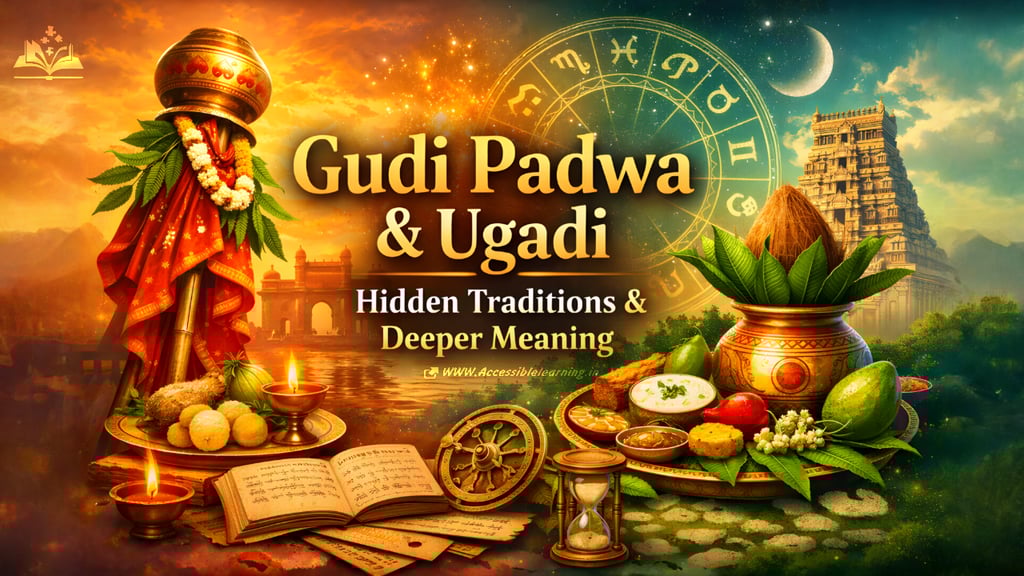

Gudi Padwa in Maharashtra and Ugadi in Karnataka, Andhra Pradesh, and Telangana are more than regional New Year celebrations. They are time-tested cultural systems that blend astronomy, agriculture, philosophy, and psychology into a meaningful start of the year. This article explores not just the rituals you already know, but the deeper layers, forgotten history, scientific logic, and lesser-known traditions that make these festivals timeless.
Why Gudi Padwa and Ugadi Fall on the Same Day
Both festivals mark the first day of the Chaitra month in the Hindu lunisolar calendar. This timing is not random.
It occurs right after the Spring Equinox period when day and night are nearly equal.
It marks the real agricultural cycle in India’s tropical climate.
It aligns with ancient Indian astronomy texts like the Surya Siddhanta.
In simple terms, this is when nature itself begins a new cycle. Trees sprout fresh leaves, crops are harvested, and temperatures stabilize. Ancient Indians chose this as the New Year because it reflects natural renewal, not just calendar counting.
The Hidden Meaning of the Gudi Flag
The Gudi is not just decoration. It is a symbolic structure filled with layered meaning. Parts of the Gudi and Their Meaning
Silk cloth – victory and prosperity
Neem leaves – health and immunity
Sugar garland – sweetness in life
Copper pot – abundance and divine energy
Bamboo stick – strength and flexibility
Some historians believe Gudis were originally victory flags raised after battles, especially linked with the Maratha Empire. Others connect them to the return of Ram Ji to Ayodhya. But anthropologists suggest an even older origin: ancient harvest victory rituals where farmers celebrated surviving another agricultural year. In modern psychology terms, raising a Gudi is like setting a visible intention for the year ahead.
Ugadi Pachadi: The Psychology of Life in One Bowl
The Ugadi Pachadi dish includes six tastes: sweet, sour, salty, bitter, pungent, and astringent.
These represent emotions you will face in life. The idea is simple but powerful: accept every experience equally.
Unknown insight: Ayurvedic practitioners say eating bitter neem and jaggery at the start of spring helps detox the body after winter metabolism slowdown. It prepares digestion for summer heat.
So Ugadi Pachadi is not just symbolic. It is seasonal nutrition planning from 2000 years ago.
Why Neem Leaves Are Important on Gudi Padwa
Neem consumption during this festival has strong scientific reasoning.
Spring is peak season for infections and allergies. Neem has antibacterial, antifungal, and immune-boosting properties. Eating neem with jaggery balances taste and improves compliance, especially for children.
Ancient festivals often doubled as public health campaigns without people realizing it.
The Forgotten Connection With King Shalivahana
In Maharashtra, Gudi Padwa is also believed to mark the victory of King Shalivahana over invaders, starting the Shalivahana Shaka calendar still used in India today for official purposes.
This connects the festival to Indian civil calendar history, not just mythology.
The Real Meaning of Cleaning Homes Before Ugadi
Cleaning homes is not only ritual purity. It was practical sanitation.
Before modern medicine, spring cleaning removed insects, mold, and bacteria after damp winters. Lime-washing walls also disinfected homes naturally.
Rangoli at doorsteps originally used rice flour to feed ants and birds. It was an ecological act, not only decoration.
Panchanga Shravanam: Listening to the Year Ahead
In many Ugadi traditions, priests read the Panchanga, forecasting planetary positions and seasonal predictions.
This was an ancient form of data science. Farmers relied on it to plan crops, travel, and trade. Panchangas used astronomical calculations more accurate than many medieval European calendars.
Why These Festivals Are Regional But Unified
Across India, New Year is celebrated around March–April with different names:
Gudi Padwa – Maharashtra
Ugadi – Karnataka, Andhra Pradesh, Telangana
Cheti Chand – Sindhi community
Navreh – Kashmir
Sajibu Nongma Panba – Manipur
This shows how diverse cultures aligned with the same astronomical logic. India’s unity often comes from shared natural cycles rather than uniform traditions.
Environmental Wisdom in Gudi Padwa and Ugadi
Old traditions used biodegradable materials: neem leaves, mango leaves, turmeric, rice flour, and clay pots. No plastic, no artificial dyes.
Festivals were seasonal and local. Today, returning to these practices can reduce environmental impact.

How Gudi Padwa and Ugadi Improve Mental Health
These festivals combine three psychological tools:
Reflection – New Year resolutions
Gratitude – prayers and family meals
Optimism – fresh clothes and decorations
Rituals create emotional reset points. That is why festivals feel calming and motivating.
Modern Ways to Celebrate With Meaning
Plant a neem or mango tree
Write yearly goals and raise them with the Gudi
Cook traditional food with children to pass knowledge
Donate food or clothes
Reduce plastic decorations
These actions keep tradition alive while staying relevant.
Lesser-Known Traditions Across Regions
In some villages, people check wind direction on Ugadi morning to predict monsoon strength.
Some Maharashtrian homes place turmeric roots in the Gudi to symbolize fertility.
Certain Kannada families read poetry written only on Ugadi day.
Farmers used to release cattle into fields as a blessing ritual.
These small traditions carry centuries of local wisdom.
Gudi Padwa and Ugadi in the Global Context
Many cultures celebrate New Year in spring: Persian Nowruz, Thai Songkran, and Chinese Lunar New Year. This shows a universal human instinct to begin fresh when nature renews itself.
Ancient civilizations observed the sky, seasons, and crops to define time. Festivals were calendars people could feel, not just numbers on paper.
Gudi Padwa and Ugadi are not just festivals. They are a living knowledge system connecting astronomy, agriculture, health, psychology, and spirituality.
Understanding their deeper meaning helps us celebrate with awareness instead of habit. And that awareness is what keeps traditions alive across centuries. Happy Gudi Padwa and Ugadi. May your year bring balance in every taste of life.
Frequently Asked Questions
Q: Is Gudi Padwa only a Marathi festival?
No. It shares roots with Ugadi and other regional New Year traditions.
Q: Why eat neem and jaggery together?
To accept both bitter and sweet experiences of life and improve seasonal immunity.
Q: Is the date fixed every year?
No. It depends on lunar calculations of the Chaitra month.
Q: What is the best greeting?
Gudi Padwa Shubhechha or Ugadi Subhakankshalu.
Subscribe to Frontier Intelligence
All © Copyright reserved by Accessible-Learning Hub
| Terms & Conditions
Accessible Learning Hub — Actionable clarity for high-agency minds.
Weekly breakdowns on AI breakthroughs, capital flow, and human performance systems. Zero fluff.