

Gion Matsuri: The Living Heart of Kyoto's Summer Tradition
Discover Gion Matsuri, Kyoto's legendary summer festival with over 1,100 years of history. Explore its origins, iconic Yamaboko floats, Yoiyama celebrations, UNESCO recognition, travel tips, and cultural significance in Japan.
CULTURE/TRADITIONEVENT/SPECIALTRAVEL LIFEJAPAN
Kim Shin
6/21/20265 min read
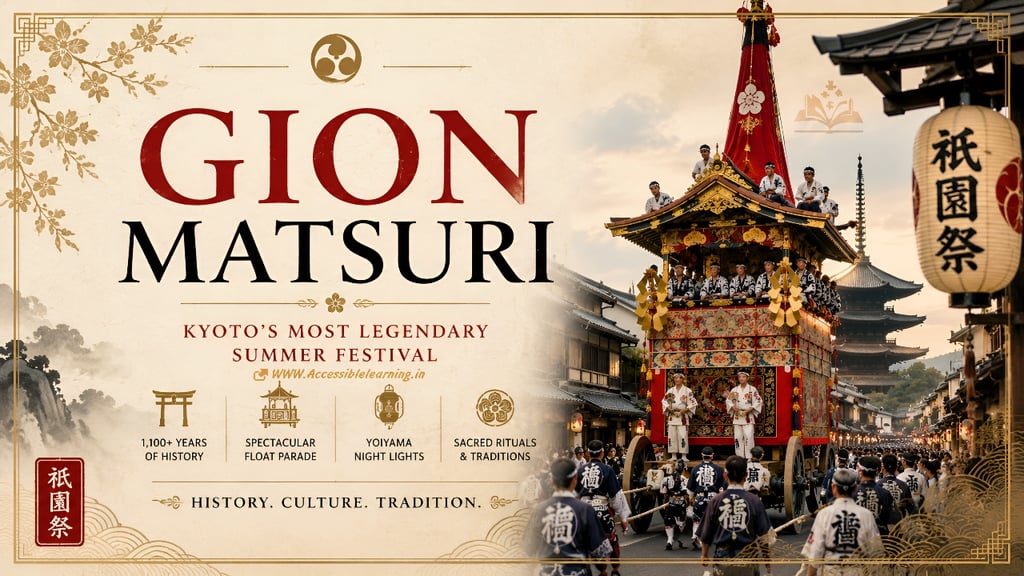
Every July, the ancient streets of Kyoto transform into a stage for one of the world's most remarkable cultural celebrations: Gion Matsuri. More than just a festival, Gion Matsuri is a month-long expression of history, spirituality, community pride, and artistic excellence that has survived wars, natural disasters, and centuries of social change.
Recognized as one of Japan's most important traditional festivals, Gion Matsuri attracts millions of visitors annually who come to witness magnificent floats, vibrant processions, sacred rituals, and the timeless atmosphere of old Kyoto. For travelers seeking an authentic connection with Japanese culture, few experiences rival the grandeur and significance of this extraordinary event.
Whether you are a history enthusiast, cultural traveler, photographer, or festival lover, Gion Matsuri offers a rare opportunity to witness a tradition that has remained deeply rooted in Japanese society for more than a thousand years.
What Is Gion Matsuri?
Gion Matsuri is Kyoto's most famous annual festival, held throughout July and centered around Yasaka Shrine. The festival combines Shinto religious ceremonies with elaborate public celebrations designed to purify the city, ward off misfortune, and pray for prosperity.
The event is best known for its spectacular float parades known as the following:
Yamaboko Junko (Float Processions)
Yoiyama Evening Celebrations
Sacred Shrine Rituals
Traditional Music Performances
Community Cultural Events
While many visitors focus on the famous float parades, Gion Matsuri is actually a collection of numerous ceremonies and celebrations that unfold over an entire month.
The Origins of Gion Matsuri
The roots of Gion Matsuri date back to 869 CE, during Japan's Heian Period.
At the time, a devastating epidemic swept across the country. People believed the outbreak was caused by angry spirits and divine displeasure. In response, Emperor Seiwa ordered a religious ceremony to appease the gods and pray for protection.
Sixty-six halberds representing Japan's provinces were erected, and sacred rituals were performed at what is now Yasaka Shrine. The ceremony was believed to have successfully ended the epidemic, and it evolved into an annual tradition that eventually became Gion Matsuri. More than 1,100 years later, the festival continues to serve as a symbol of resilience, purification, and community unity.
Why Gion Matsuri Matters
Gion Matsuri is not merely entertainment. Its deeper purpose includes the following:
Spiritual Purification
The festival seeks divine protection against disease, disaster, and misfortune.
Cultural Preservation
Many traditions have been passed down through generations of Kyoto families for centuries.
Community Identity
Neighborhood associations spend months preparing floats, decorations, performances, and ceremonies.
Historical Continuity
The festival connects modern Japan with its ancient heritage in a way few cultural events can achieve.
The Magnificent Yamaboko Floats
The centerpiece of Gion Matsuri is undoubtedly the spectacular Yamaboko floats. These massive wooden structures are engineering masterpieces built without the use of modern nails.
Some floats:
Reach heights of 25 meters (82 feet)
Weigh over 12 tons
Feature priceless textiles
Display imported tapestries from Europe, Persia, and China
Showcase centuries-old craftsmanship
Because of their beauty and cultural importance, these floats are often called the following:
"Moving Museums of Kyoto."
Each float represents a unique story drawn from:
Japanese mythology
Chinese legends
Historical events
Religious traditions

Yamaboko Junko: The Grand Float Procession
The most famous event of Gion Matsuri is the Yamaboko Junko parade. There are two major processions:
First Procession (Saki Matsuri)
July 17
This is the larger and more famous parade featuring numerous elaborate floats.
Second Procession (Ato Matsuri)
July 24
A slightly smaller but equally impressive parade showcasing additional floats and traditions.
Thousands of spectators gather along Kyoto's streets to witness these massive structures slowly navigate the city.
One of the highlights is the dramatic turning maneuver known as the:
Tsuji Mawashi
Because the floats cannot turn easily, workers place bamboo beneath the wheels and use water to reduce friction, allowing the enormous structures to pivot at intersections.
The maneuver requires exceptional coordination and skill, making it one of the festival's most exciting moments.
Yoiyama: Kyoto's Most Atmospheric Nights
For many visitors, the true magic of Gion Matsuri lies in the evenings leading up to the parade. These celebrations are known as:
Yoiyama
During Yoiyama:
Major streets become pedestrian-only zones
Traditional lanterns illuminate the city
Historic townhouses open to the public
Residents display family heirlooms
Street food vendors line the roads
Traditional music fills the air
Visitors can stroll through Kyoto while enjoying the following:
Yakitori
Takoyaki
Kakigori (shaved ice)
Festival sweets
Local specialties
The combination of lantern-lit streets, traditional attire, and centuries-old architecture creates an unforgettable atmosphere.
The Role of Yasaka Shrine
At the spiritual center of Gion Matsuri stands Yasaka Shrine. The shrine serves as the primary religious site for the festival and hosts numerous ceremonies throughout July.
Important rituals include:
Purification ceremonies
Sacred offerings
Processions of divine spirits
Traditional prayers
Community blessings
The festival's religious foundation remains deeply important despite its growing international popularity.
Traditional Clothing and Festival Culture
Visitors often notice many locals wearing traditional Japanese attire. Common festival clothing includes:
Yukata
A lightweight summer kimono popular during festivals.
Happi Coats
Traditional coats worn by float operators and festival participants.
Traditional Footwear
Wooden sandals and classic Japanese footwear remain common during celebrations.
The sight of thousands of people dressed in traditional clothing adds to the historical atmosphere of the event.
UNESCO Recognition
The cultural significance of Gion Matsuri extends beyond Japan. The festival's float tradition forms part of the Yama, Hoko, and Yatai Float Festivals, which are recognized by the UNESCO Intangible Cultural Heritage program.
This recognition highlights the following:
Exceptional craftsmanship
Cultural continuity
Community participation
Historical value
Preservation of traditional knowledge
UNESCO status has helped strengthen international awareness of the festival and its importance.
Economic and Tourism Impact
Gion Matsuri is one of Japan's largest tourism events. Every year, millions of visitors contribute significantly to Kyoto's economy through:
Hotels
Restaurants
Transportation
Local crafts
Cultural attractions
Guided tours
The festival also supports artisans who specialize in traditional float construction, textile preservation, woodworking, and ceremonial arts.
Best Time to Visit Gion Matsuri
Although celebrations occur throughout July, several periods are particularly popular.
July 14–16
Yoiyama festivities before the first parade.
July 17
First Yamaboko Junko procession.
July 21–23
Second Yoiyama celebrations.
July 24
Second Yamaboko Junko procession.
Travelers should book accommodations months in advance due to high demand.

Travel Tips for First-Time Visitors
To enjoy Gion Matsuri fully:
Arrive Early
Popular viewing spots fill quickly.
Use Public Transportation
Road closures make driving impractical.
Stay Hydrated
Kyoto summers are hot and humid.
Respect Local Customs
Remember that many ceremonies have religious significance.
Explore Beyond the Main Streets
Some of the most authentic experiences can be found in smaller neighborhood celebrations.
Bring a Camera
The floats, costumes, and evening lantern displays offer incredible photographic opportunities.
Travel Guild's Guide to Experiencing Gion Matsuri
For travelers seeking a deeper cultural experience, Travel Guild recommends approaching Gion Matsuri as more than a sightseeing event.
Instead of focusing solely on the famous parade, visitors should explore the festival's historical and spiritual dimensions by:
Attending Yoiyama evening celebrations
Visiting Yasaka Shrine during ceremonial events
Learning the stories behind individual floats
Exploring Kyoto's traditional neighborhoods
Engaging with local cultural exhibitions
Supporting artisans preserving centuries-old craftsmanship
Travel Guild encourages responsible cultural tourism that respects local traditions while helping travelers gain a richer understanding of Kyoto's heritage.
The festival rewards curiosity. Those who take time to understand its history often discover that Gion Matsuri is not simply a festival but a living connection between Japan's past and present.
The Future of Gion Matsuri
Despite modernization, Gion Matsuri continues to thrive.
Kyoto's communities remain committed to preserving the festival while adapting to contemporary challenges such as tourism management, urban development, and cultural preservation.
Its enduring popularity demonstrates that ancient traditions still hold powerful meaning in the modern world.
As long as future generations continue to honor its customs, Gion Matsuri will remain one of humanity's most extraordinary cultural celebrations.
Gion Matsuri is far more than Kyoto's summer festival. It is a living testament to resilience, faith, artistry, and community spirit. Originating as a response to a devastating epidemic over a thousand years ago, it has evolved into one of the world's most respected cultural events.
From towering Yamaboko floats and lantern-lit streets to sacred shrine ceremonies and centuries-old craftsmanship, every aspect of the festival reflects Japan's dedication to preserving its cultural heritage.
For travelers, historians, and culture enthusiasts alike, Gion Matsuri offers a rare opportunity to witness history not in a museum but alive in the streets of Kyoto. It remains one of the finest examples of how tradition can endure, inspire, and unite people across generations.
Subscribe To Our Newsletter
All © Copyright reserved by Accessible-Learning Hub
| Terms & Conditions
Knowledge is power. Learn with Us. 📚

