

Generative Engine Optimization (GEO): The New SEO Strategy for AI Search in 2026
Learn what Generative Engine Optimization (GEO) is and how it’s reshaping search in 2026. Discover practical strategies to make your brand appear in AI-generated answers from platforms like Perplexity and next-generation AI search engines.
AI ASSISTANTCOMPANY/INDUSTRYDIGITAL MARKETINGSEARCH ENGINEAI/FUTURE
Sachin K Chaurasiya
3/12/20267 min read
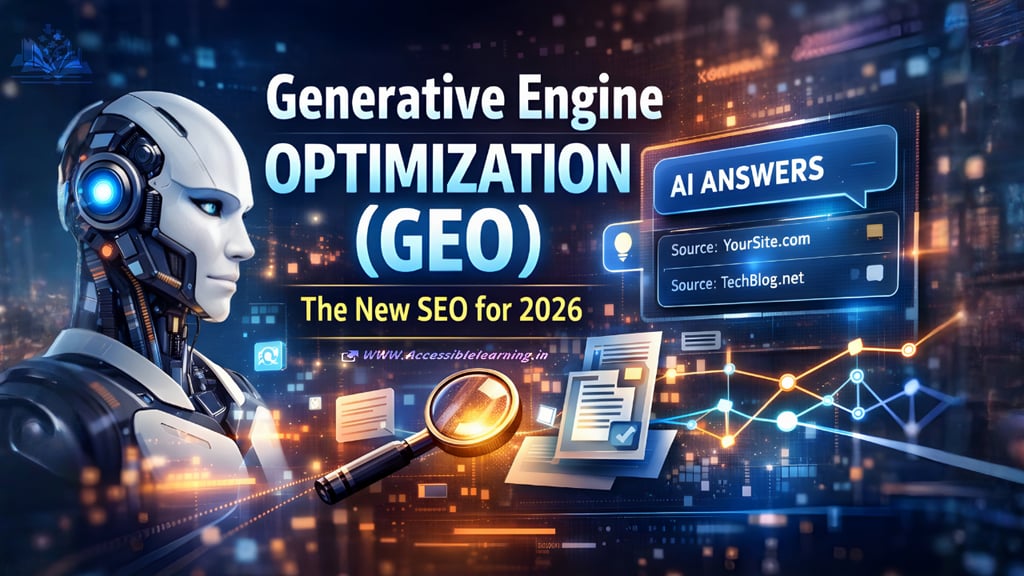
Search is undergoing one of the biggest transformations since the early days of Google. Instead of returning a list of websites, modern AI-powered search engines increasingly generate complete answers directly for users. Platforms such as Perplexity, conversational search systems similar to SearchGPT, and AI assistants are becoming the primary interface for discovering information.
This shift is creating a new discipline known as Generative Engine Optimization (GEO).
GEO focuses on optimizing your content so AI engines use your information as a source when generating answers. Instead of simply ranking on a search results page, your goal becomes being quoted, summarized, or cited inside AI responses.
For brands, publishers, and creators, this means visibility in the AI era depends on how well your content feeds generative systems.
What is Generative Engine Optimization (GEO)?
Generative Engine Optimization is the process of structuring and publishing content so AI-powered search engines can easily understand, retrieve, and reference it when generating answers.
Unlike traditional SEO, which focuses on ranking web pages in search results, GEO focuses on becoming a trusted knowledge source for AI models.
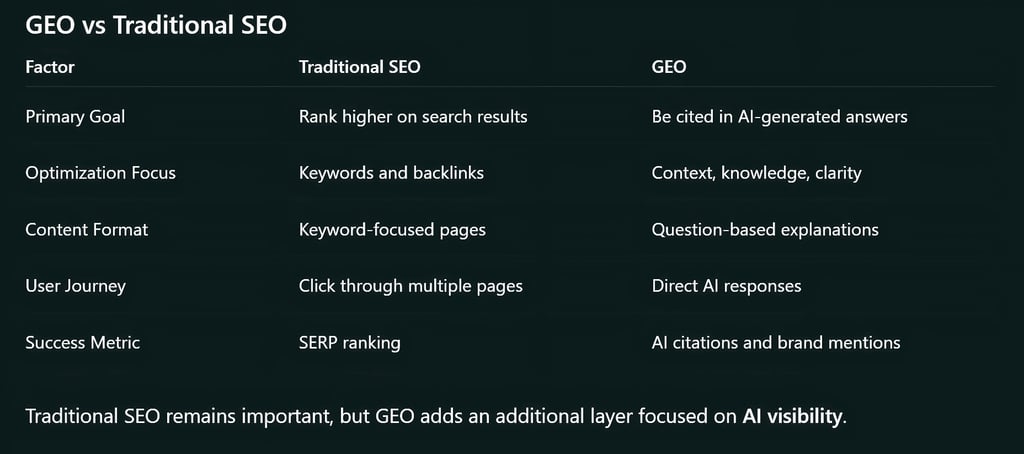
A simplified comparison:
Traditional SEO
Optimize for rankings
Focus on keywords
Drive clicks to websites
Generative Engine Optimization
Optimize for AI-generated answers
Focus on context and knowledge
Become a cited source
If someone asks an AI search engine a question like:
“Which AI video generator is best for creators?”
The AI system gathers information from various sources and generates a summarized answer. GEO ensures your brand or website becomes one of those trusted sources referenced in the response.
Why GEO Matters in 2026
AI-driven search is not just an emerging trend. It is becoming the dominant way people find information. Several major changes are pushing GEO to the forefront.
AI Interfaces Are Replacing Search Pages
Users increasingly interact with search engines as if they are assistants. Instead of typing keywords, they ask full questions. Examples:
“What is the best AI coding assistant?”
“How does AlphaFold work?”
“Which AI video generator should beginners use?”
AI engines respond with complete explanations, often eliminating the need to click multiple websites.
Zero-Click Searches Are Increasing
In traditional search, users clicked results to find answers. With generative AI, answers appear directly in the interface. This means:
Visibility now comes from being cited within AI answers, not just from ranking on a page.
AI Systems Prefer High-Quality Knowledge Sources
AI engines prioritize sources that provide:
clear explanations
structured information
reliable data
topical authority
Websites that behave like knowledge hubs are more likely to be referenced.
Conversational Search Is Growing
AI search tools allow users to ask follow-up questions, creating a conversation rather than a single search query.
Example flow:
User question
“What is Generative Engine Optimization?”Follow-up question
“How is it different from SEO?”Another follow-up
“How can brands optimize for it?”
Content that answers multiple related questions becomes highly valuable.
How Generative Search Engines Work
Understanding how AI search works helps explain why GEO matters. Most generative search systems follow a similar pipeline.
Query Understanding
The AI analyzes the user’s question and identifies intent, context, and key entities.
Information Retrieval
The system retrieves relevant documents from the web using search indexes.
Content Extraction
AI models scan the retrieved sources and extract relevant information.
Knowledge Synthesis
The model summarizes the information into a coherent answer.
Source Attribution
Many AI systems cite the sources used to generate the answer.
GEO focuses on making sure your content appears during the retrieval and extraction stages.

Core GEO Strategies for 2026
Write Direct, Answer-Focused Content
AI engines extract answers from content that clearly explains concepts. Instead of long vague introductions, include clear definitions and explanations early in the article.
Example structure:
Question: What is Generative Engine Optimization?
Answer: Generative Engine Optimization is the practice of structuring content so AI search engines can easily extract and cite it when generating answers.
Optimize for Natural Language Queries
AI searches resemble natural conversations rather than keyword strings. Instead of targeting "AI video generator tools”
Optimize for questions such as
“What is the best AI video generator?”
“How does AI video generation work?”
“Which AI video tools are best for creators?”
This aligns with how people interact with conversational AI systems.
Use Structured Content Hierarchies
AI models prefer content with logical structure. Best practices include:
clear headings
short paragraphs
bullet points
structured explanations
consistent formatting
Well-organized content improves machine readability.
Build Topical Authority
Generative search systems identify websites that consistently publish knowledge around a topic. Instead of writing random posts, build topic clusters. Example cluster around AI tools:
AI video generators
AI coding assistants
AI research models
AI comparison guides
AI workflow tutorials
The deeper your topic coverage, the more authority AI systems assign.
Use Entity-Based Optimization
AI models understand entities rather than just keywords. Entities include:
technologies
software tools
research models
organizations
platforms
When describing tools or technologies, provide clear definitions.
Example:
Instead of writing, "Runway is a video generator.”
Write: “Runway AI is a generative video platform that allows creators to generate and edit videos using AI models.”
This improves contextual understanding.
Provide Data, Examples, and Context
AI systems prefer sources that provide substantive information rather than surface-level summaries.
Include:
technical explanations
examples
frameworks
statistics
comparisons
Detailed content increases credibility.
Optimize for AI Citations
Some AI systems display source citations alongside generated answers. Content that performs well typically includes:
clear definitions
factual accuracy
topic authority
structured sections
helpful comparisons
These elements make it easier for AI models to extract information.
Create Comparison Content
Comparison articles perform extremely well in AI search because they help answer decision-making questions. Examples:
AI coding tools comparison
generative video platform comparisons
machine learning model comparisons
These formats are frequently referenced by AI systems.
Publish Long-Form Knowledge Content
Short, shallow articles are less useful for AI extraction. Long-form knowledge resources perform better because they contain:
multiple subtopics
definitions
contextual explanations
structured insights
This makes them richer information sources.
Use Clear Definitions for Important Concepts
AI models often extract definition-style content. Example structure:
Definition: Generative Engine Optimization (GEO) is a strategy focused on optimizing content so AI search engines can reference it when generating answers.
These definition blocks increase extractability.

Improve Content Freshness
AI engines favor recent and updated information, especially for fast-changing industries like AI. Update content regularly with:
new tools
platform updates
industry trends
technological developments
Fresh content signals relevance.
Strengthen Brand Mentions and Context
AI systems identify brands through repeated contextual mentions. For example, when writing about a tool or technology, consistently explain:
what it does
who uses it
why it matters
Clear contextual branding increases the chance of AI recognition.
Content Formats That Work Best for GEO
Certain content structures are naturally easier for AI systems to interpret and cite.
Definition Articles
Clear explanations of important concepts. Example: What is Generative Engine Optimization?
Comparison Guides
These help AI answer “which is better” style questions. Example topics:
AI tool comparisons
technology comparisons
platform comparisons
Step-by-Step Tutorials
AI systems often summarize procedural content. Example: How to optimize content for AI search engines.
List-Based Articles
List formats are easy for AI to extract. Examples:
Top AI tools for developers
Best generative AI platforms
Key strategies for GEO
Framework and Strategy Guides
Detailed frameworks help AI generate structured answers.
Example: 10 strategies to improve AI search visibility.
Measuring GEO Performance
GEO success requires new metrics beyond traditional search rankings. Important indicators include
AI Citations
How often AI engines reference your content.
Brand Mentions in AI Answers
Whether your brand appears in generated responses.
AI Search Traffic
Visitors are arriving from AI search platforms.
Knowledge Authority
How frequently your site appears across multiple AI engines.
The Role of Technical SEO in GEO
Even in the AI search era, technical SEO remains important. AI engines still rely on web infrastructure such as:
crawlable pages
structured metadata
fast loading speed
clear HTML structure
Technical optimization ensures AI systems can access your content.
The Future of GEO Search is transitioning from link discovery to answer generation.
Instead of browsing dozens of pages, users interact with AI assistants that synthesize knowledge instantly. For brands, this means the goal is no longer just visibility on search results pages.
The goal is to become a trusted knowledge source that AI engines rely on when generating answers. Organizations that adapt early by building structured knowledge content, topical authority, and AI-friendly information architecture will dominate the next generation of search.


Generative Engine Optimization represents the next evolution of digital visibility. As AI-powered search engines become the primary gateway to information, brands must rethink how content is created and structured.
Success in this new environment depends on producing content that is not only helpful for readers but also clear, structured, and authoritative enough for AI systems to reference.
In the coming years, the most visible brands online will not simply be those that rank on search pages. They will be the ones whose information becomes part of the AI-generated answers themselves.
FAQ's
Q: What is Generative Engine Optimization (GEO)?
Generative Engine Optimization (GEO) is the practice of optimizing content so AI-powered search engines can easily understand, extract, and cite it when generating answers. Instead of focusing only on ranking in search results, GEO focuses on making your content appear directly inside AI-generated responses.
Q: How is GEO different from traditional SEO?
Traditional SEO focuses on ranking web pages on search engine results pages using keywords, backlinks, and technical optimization. GEO focuses on making content machine-readable and context-rich so AI engines can use it as a source when generating answers.
In simple terms, SEO helps you rank, while GEO helps you become part of the answer.
Q: Why is GEO becoming important in 2026?
AI-powered search platforms are rapidly changing how people find information. Many users now prefer conversational AI tools that provide direct answers instead of browsing multiple websites. Because of this shift, brands need to optimize their content so AI engines can reference and cite their information in generated responses.
Q: How do AI search engines choose which sources to cite?
AI engines typically prioritize sources that provide:
clear explanations
structured content
accurate information
strong topical authority
contextual depth
Content that looks like a reliable knowledge source is more likely to be selected and cited in AI-generated answers.
Q: How can a brand appear in AI-generated answers?
To increase the chances of appearing in AI responses, brands should focus on:
publishing in-depth knowledge content
answering real user questions
using structured headings and clear explanations
building topical authority around specific subjects
creating comparison and educational articles
These practices make it easier for AI systems to extract and reference information.
Q: Does GEO replace SEO?
No. GEO does not replace SEO; it expands it. Traditional SEO is still essential for indexing, crawlability, and website visibility. GEO builds on top of SEO by optimizing content so it can be used by generative AI systems when producing answers.
Q: What type of content performs best for GEO?
Some content formats are especially effective for generative search engines:
definition articles
comparison guides
step-by-step tutorials
knowledge hubs
list-based resources
detailed technology explanations
These formats make it easier for AI engines to summarize and reference information.
Q: How can you measure GEO performance?
Unlike traditional SEO rankings, GEO success is measured using different indicators such as:
AI citations
brand mentions in AI answers
traffic coming from AI search platforms
increased authority across AI knowledge sources
These metrics help determine whether AI engines are using your content as a reference.
Q: Will AI search replace traditional search engines?
Traditional search engines will likely continue to exist, but AI-generated answers are becoming a major part of the search experience. Many platforms are already integrating conversational AI into search results, meaning GEO will become increasingly important for online visibility.
Subscribe to Frontier Intelligence
All © Copyright reserved by Accessible-Learning Hub
| Terms & Conditions
Accessible Learning Hub — Actionable clarity for high-agency minds.
Weekly breakdowns on AI breakthroughs, capital flow, and human performance systems. Zero fluff.