

Friendship Day & Sankashti Ganesh Chaturthi 2026: Meaning, Rituals, History, and Cultural Impact
Celebrate Friendship Day & Sankashti Ganesh Chaturthi with a deeper perspective. Learn about their history, cultural importance, rituals, commercialization, spiritual meaning and impact on the modern world.
CULTURE/TRADITIONEVENT/SPECIALINDIA/BHARATCELEBRATION/FESTIVALS
Jagdish Nishad
7/26/20265 min read
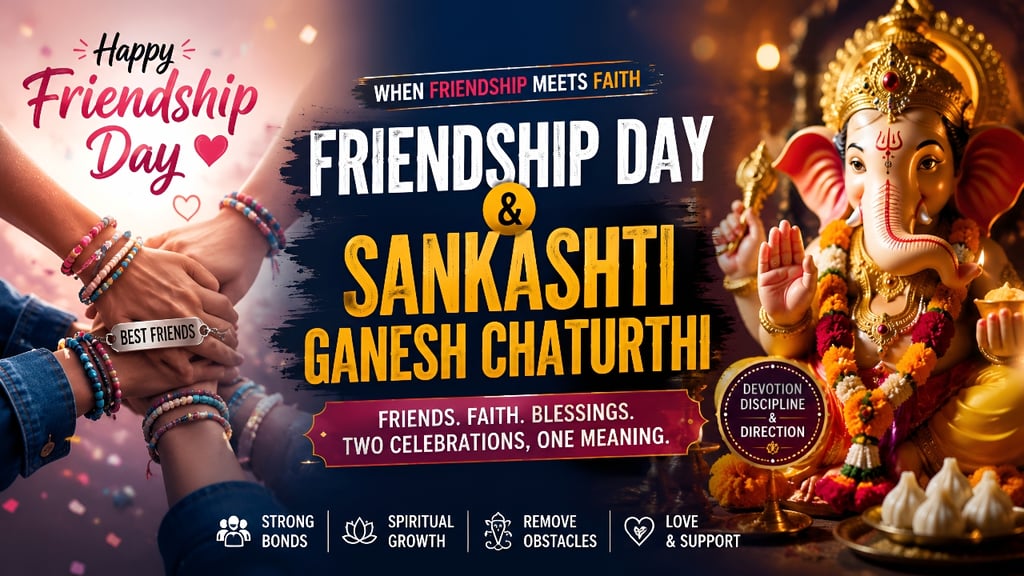
Friendship Day Isn't About Gifts. It's About Showing Up.
Every year, millions of people post Friendship Day photos, exchange colorful bands, and flood social media with nostalgic captions. Yet most of those connections disappear the moment life becomes inconvenient. Friendship Day exposes a truth many people avoid: real friendship demands consistency, not content.
Unlike religious festivals rooted in centuries of tradition, Friendship Day emerged through modern culture and commercial influence. Greeting card companies, brands, restaurants, cafés, and digital platforms quickly realized that friendship could become another marketable occasion.
That does not make the celebration meaningless. It simply means consumers must decide whether they celebrate relationships or marketing campaigns.
Why Friendship Day Matters Today
Modern life creates more connections than ever before while weakening genuine relationships.
People now have:
Hundreds or thousands of online contacts
Fewer close friends they truly trust
Less time for meaningful conversations
More digital interaction than face-to-face communication
Friendship Day reminds people to rebuild relationships that algorithms cannot replace.
The strongest friendships usually share four qualities:
Honest communication
Mutual respect
Reliability during difficult times
Growth without competition
None of those qualities can be purchased with an expensive gift.
Friendship Day Around the World Isn't One Universal Event
Many countries celebrate friendship differently.
Some observe International Friendship Day on 30 July, following recognition by the United Nations. India, however, largely celebrates Friendship Day on the first Sunday of August, influenced by popular culture, youth communities, schools, and media.
That difference creates confusion every year.
The reality is simple:
International Friendship Day follows the UN calendar.
Indian Friendship Day follows cultural tradition and widespread public acceptance.
Both coexist because culture rarely follows a single rulebook.
The Business Behind Friendship Day
Retailers understand emotional spending better than most consumers.
Friendship Day drives sales across:
Greeting cards
Friendship bands
Flowers
Chocolates
Personalized gifts
Jewelry
Online food delivery
Travel experiences
Digital gift cards
Brands package ordinary products as emotional necessities. Consumers often confuse spending with appreciation.
Ironically, many friendships strengthen more through a phone call, shared meal, or sincere conversation than through expensive presents.
Sankashti Ganesh Chaturthi Is About Discipline, Not Convenience
While Friendship Day celebrates human relationships, Sankashti Ganesh Chaturthi focuses on personal discipline and spiritual resilience.
The observance occurs every month during the Krishna Paksha Chaturthi, the fourth day after the full moon. Devotees fast throughout the day and worship Ganesha Ji after moonrise.
Unlike annual Ganesh Chaturthi celebrations filled with massive public processions, Sankashti remains quieter, deeply personal, and centered on self-control.
That difference matters.
One celebrates devotion publicly.
The other tests devotion privately.
Why People Observe Sankashti Ganesh Chaturthi
The Sanskrit word "Sankashti" means freedom from difficulties.
Devotees believe sincere worship of Ganesha Ji helps remove obstacles involving the following:
Family challenges
Financial struggles
Education
Career decisions
Health concerns
Mental stress
The emphasis remains on inner transformation rather than miraculous shortcuts. Many people misunderstand fasting as a transaction with God. Traditional teachings suggest something far more demanding.
The fast trains' discipline.
Prayer strengthens focus.
Reflection encourages wiser decisions.
Together, those habits often change outcomes because people change first.


The Rituals Follow a Clear Structure
Although regional customs differ, most devotees follow a similar sequence.
Morning
Wake before sunrise.
Take a ritual bath.
Begin the fast.
Offer prayers to Lord Ganesha.
Throughout the Day
Chant Ganesh mantras.
Read or listen to the Sankashti Vrat Katha.
Practice restraint in speech and behavior.
Avoid unnecessary distractions.
After Moonrise
View the moon.
Offer arghya (water offering).
Perform Ganesh Puja.
Offer modaks, durva grass, fruits, and flowers.
Break the fast after completing the rituals.
The moonrise timing remains essential because devotees conclude the fast only after sighting the moon and completing worship.
Every Sankashti Has Its Own Identity
Each monthly Sankashti Ganesh Chaturthi is associated with a different form of Lord Ganesha and carries unique traditional significance.
This rotating cycle encourages continuous devotion rather than limiting worship to one annual celebration. Many families have observed this monthly practice for generations.
That continuity explains why Sankashti remains spiritually influential despite receiving far less media attention than major festivals.
Why These Two Celebrations Fall Together So Often
When Friendship Day and Sankashti Ganesh Chaturthi occur on the same date, they create an unexpected contrast.
Friendship asks:
"Who stands beside you?"
Sankashti asks:
"Who are you becoming?"
One strengthens external relationships. The other strengthens internal character.
Together, they remind people that strong friendships rarely survive without patience, honesty, humility, and self-control.
The Digital Age Is Changing Both Traditions
Technology reshapes nearly every celebration.
Friendship Day now revolves around the following:
Instagram stories
WhatsApp status updates
AI-generated greeting cards
Personalized videos
Online gaming meetups
Virtual reunions
Meanwhile, Sankashti devotees increasingly use the following:
Live temple streams
Digital Panchang calendars
Moonrise tracking apps
Online mantra sessions
Virtual spiritual communities
Technology improves accessibility. It cannot replace presence.
Watching a livestream never equals standing inside a temple.
Sending an emoji never equals helping a friend during hardship.
Common Myths That Need Correction
Myth: Friendship Day only belongs to teenagers.
Reality: Adults often need stronger friendships than students because careers and responsibilities isolate people over time.
Myth: Expensive gifts prove friendship.
Reality: Reliability proves friendship.
Myth: Fasting automatically removes problems.
Reality: Traditional belief combines devotion with ethical action, patience, and discipline.
Myth: Sankashti and Ganesh Chaturthi are the same festival.
Reality: Annual Ganesh Chaturthi celebrates Ganesha Ji's birth, while Sankashti Ganesh Chaturthi is a recurring monthly observance dedicated to overcoming obstacles through prayer and fasting.

The Cultural Impact Runs Deeper Than Social Media Trends
Friendship Day reflects changing social values.
Young people increasingly build communities beyond family, religion, geography, and nationality.
Sankashti reflects continuity.
It preserves rituals that have survived centuries despite changing empires, technologies, and lifestyles.
Together, they show two different forces shaping modern India.
One pushes culture forward through evolving relationships.
The other anchors society through enduring traditions.
Healthy societies need both.
Practical Ways to Celebrate With Meaning
Instead of chasing trends, focus on actions that actually matter.
For Friendship Day:
Call a friend you have ignored.
Resolve an old misunderstanding.
Spend uninterrupted time together.
Thank someone who supported you during difficult moments.
For Sankashti Ganesh Chaturthi:
Observe the fast sincerely if your health permits.
Learn the meaning behind the rituals.
Pray with attention rather than speed.
Donate food or help someone in need after completing the vrat.
Small actions often carry more weight than elaborate displays.
Final Thoughts
Friendship Day and Sankashti Ganesh Chaturthi represent two completely different traditions, yet they converge around one powerful principle.
Life becomes stronger when people build dependable relationships and disciplined character at the same time.
Social media rewards appearances.
Consumer culture rewards spending.
Ancient traditions reward consistency.
History suggests that the last one survives the longest.
FAQs
Q: Is Friendship Day always celebrated on the same date in India?
No. India celebrates Friendship Day on the first Sunday of August, so the calendar date changes every year.
Q: What is the purpose of Sankashti Ganesh Chaturthi?
Devotees observe the fast and worship Ganesha Ji to seek strength, wisdom, and the removal of obstacles through disciplined spiritual practice.
Q: Can people celebrate Friendship Day and observe Sankashti Ganesh Chaturthi on the same day?
Yes. Many people spend time with friends while also observing the Sankashti fast and completing evening Ganesh Puja after moonrise.
Q: What foods do devotees commonly offer during Sankashti Ganesh Chaturthi?
Traditional offerings include modaks, durva grass, fruits, coconut, and flowers, followed by prasad after the fast ends.
Q: Why does Friendship Day remain popular despite criticism of commercialization?
People value the opportunity to reconnect with friends. Commercial marketing may amplify the event, but genuine relationships keep it meaningful.
Subscribe To Our Newsletter
All © Copyright reserved by Accessible-Learning Hub
| Terms & Conditions
Knowledge is power. Learn with Us. 📚

