

FLIP (Paraty International Literary Festival): The Literary Festival That Turned a Colonial Town into Brazil's Intellectual Battleground
Discover why FLIP (Paraty International Literary Festival) is Brazil's most influential literary event. Explore its cultural impact, hidden challenges, tourism boom, famous authors, and why it shapes global conversations beyond books.
EVENT/SPECIALTRAVEL LIFEBRAZILCELEBRATION/FESTIVALS
Helena | Kim Shin
7/11/20264 min read
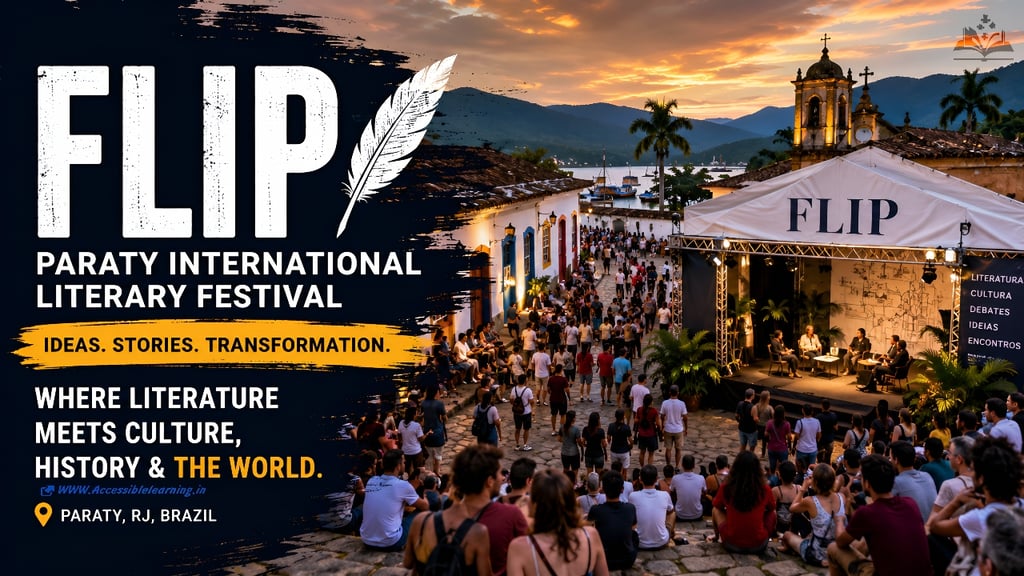
Every year, thousands of readers, writers, publishers, and cultural elites flood the tiny colonial town of Paraty. They do not arrive for beaches or nightlife. They come because FLIP has transformed a quiet UNESCO-listed destination into the most influential literary gathering in Latin America. That success deserves applause. It also deserves scrutiny.
FLIP Is More Than a Book Festival
Founded in 2003, the Festa Literária Internacional de Paraty, better known as FLIP, emerged from an ambitious idea: make literature a public celebration instead of an academic privilege.
The formula worked.
Instead of locking authors inside university lecture halls, FLIP placed conversations in historic squares, restored churches, theaters, cafés, and temporary venues scattered throughout Paraty's cobblestone streets. International literary stars now share the stage with Brazilian voices, translators, journalists, poets, historians, and activists.
The festival quickly evolved into one of the Southern Hemisphere's most respected literary events.
That reputation did not happen by accident. Brazil lacked an international literary festival capable of competing with Hay Festival or the Edinburgh literary circuit. FLIP filled that gap with remarkable speed.
The Real Star Is Not the Celebrity Author
Most headlines focus on famous speakers. That misses the point. FLIP succeeds because it creates conversations rather than celebrity appearances.
Panels regularly tackle issues that many festivals avoid, including:
Political polarization
Colonial history
Indigenous identity
Race and inequality
Climate change
Press freedom
Artificial intelligence and culture
Book censorship
These discussions often generate more attention than the book launches themselves. Attendees rarely leave talking only about a novel. They leave debating Brazil's future. That makes FLIP culturally significant rather than commercially entertaining.
Paraty Pays the Price for Success
The festival transformed Paraty's economy.
Hotels reach full occupancy months before opening day.
Restaurants extend operating hours.
Independent bookstores multiply temporary pop-up locations.
Local guides, artists, musicians, drivers, photographers, and vendors experience one of the year's strongest income periods.
Yet success comes with obvious costs.
Accommodation prices spike dramatically.
Traffic overwhelms narrow colonial streets.
Public services face intense pressure.
Residents often find themselves sharing a town designed for thousands with crowds that feel several times larger.
This creates an uncomfortable contradiction.
FLIP celebrates accessibility while becoming increasingly expensive for ordinary visitors.
Literature Meets Tourism and Nobody Pretends Otherwise
Calling FLIP "just a literary festival" ignores economic reality.
It functions as one of Brazil's strongest cultural tourism engines.
Visitors rarely attend one discussion and leave.
Instead, they spend days exploring:
Historic architecture
Independent bookstores
Local art galleries
Music performances
Traditional restaurants
Nearby Atlantic Forest landscapes
Businesses understand this perfectly.
The festival generates revenue far beyond publishing.
Hotels sell experiences.
Restaurants build literary-themed menus.
Shops redesign displays around authors and books.
Culture becomes commerce without abandoning intellectual ambition.
That balance explains why FLIP continues attracting public and private investment.
Diversity Became More Than Marketing
Many cultural festivals advertise diversity. FLIP increasingly builds programming around it.
Over the years, organizers expanded representation for Black Brazilian writers, Indigenous intellectuals, women authors, LGBTQ+ voices, and emerging regional publishers.
This shift reflects changing conversations across Brazilian society. It also strengthens the festival's credibility.
A literary event cannot claim cultural leadership while repeatedly showcasing the same narrow collection of established voices.
FLIP has made visible progress, although critics still argue that representation should continue expanding beyond headline speakers into publishing opportunities and institutional leadership.


Independent Publishing Finally Gets a Stage
Major publishing houses dominate media coverage. Independent publishers often create the festival's most exciting discoveries.
Smaller presses introduce experimental fiction, translated literature, regional histories, graphic novels, and emerging poets who rarely receive national attention.
Readers willing to explore beyond bestseller lists often leave FLIP carrying books unavailable in mainstream bookstores.
That discovery culture remains one of the festival's greatest strengths. It rewards curiosity instead of algorithms.
The Logistics Nobody Mentions
Beautiful photographs rarely show the practical reality. Paraty's preserved colonial layout creates logistical challenges. The famous stone streets become crowded throughout the festival.
Many venues operate with limited seating.
Popular sessions reach capacity quickly.
Weather also complicates planning.
Rain turns uneven streets slippery.
Heat and humidity exhaust visitors moving repeatedly between venues.
Reliable transportation requires advance planning because parking remains limited and vehicle access inside the historic center stays heavily restricted.
Experienced attendees schedule fewer sessions than newcomers.
Trying to attend everything usually guarantees frustration.
Why FLIP Matters Beyond Brazil
International festivals often import famous authors.
FLIP exports Brazilian intellectual life.
Foreign publishers discover new writers.
Literary translators identify overlooked voices.
International journalists cover debates that rarely appear outside Portuguese-language media.
Academic collaborations emerge.
Publishing contracts begin.
Translation rights change hands.
The festival quietly shapes global understanding of Brazilian literature far more than most international readers realize. Its influence stretches well beyond the days marked on the calendar.
Critics Have a Point
No major cultural institution escapes criticism. FLIP faces recurring questions.
Has commercialization diluted literary quality?
Do ticket prices discourage younger audiences?
Does growing international prestige create distance from local communities?
Can a globally recognized festival remain genuinely accessible?
These questions deserve honest discussion.
Ignoring them would weaken the festival's future.
Fortunately, FLIP has repeatedly demonstrated a willingness to evolve rather than protect outdated traditions.
That flexibility explains its continued relevance after more than two decades.
Should You Attend?
Attend if you want serious conversations instead of celebrity selfies.
Attend if you enjoy discovering writers before global recognition arrives.
Attend if you accept that literature can challenge political assumptions rather than confirm them.
Skip it if you expect a relaxed vacation built around casual sightseeing. FLIP demands attention, curiosity, patience, and planning. It rewards readers willing to engage instead of consume.
FLIP stands among the world's most intellectually ambitious literary festivals because it refuses to reduce books to entertainment.
It transforms literature into public debate.
It forces conversations about identity, democracy, history, inequality, language, and culture.
Its success has reshaped Paraty's economy while exposing tensions between tourism and authenticity.
The crowds will continue growing.
The debates will become louder.
The logistical headaches will persist.
None of that weakens FLIP.
If anything, it proves literature still possesses something increasingly rare in the digital age: the power to gather thousands of people around difficult ideas instead of easy answers.
Subscribe To Our Newsletter
All © Copyright reserved by Accessible-Learning Hub
| Terms & Conditions
Knowledge is power. Learn with Us. 📚

