

Empress Sisi's Extreme Beauty Routine: The 19-Inch Waist, Raw Meat Masks & Bio-Hacking of the Austro-Hungarian Empire
Discover the shocking true story of Empress Sisi's extreme beauty rituals, from raw veal face masks and ankle-length hair to a 19-inch waist and bizarre diets.
UNITED KINGDOMWEALTHY FAMILYEMPIRES/HISTORYHISTORY
Jack Henderson
7/30/20269 min read


Imagine waking up every morning after sleeping with a leather face mask stuffed with slices of raw veal pressed against your skin. Then spending three hours having your hair brushed before forcing down steak juice instead of breakfast, all while trying to keep your waist smaller than the width of a modern laptop.
That was not a Victorian horror novel. It was the daily life of Empress Elisabeth of Austria, better known as Empress Sisi, one of the most photographed, admired, and tragically obsessed women of the 19th century.
Today, social media is filled with cold plunges, collagen drinks, anti-aging routines, and "bio-hacking" influencers promising eternal youth. More than 140 years ago, Sisi was already living an extreme version of that lifestyle, except many of her methods were far stranger, far harsher, and far more dangerous.
Quick Facts
Full Name: Empress Elisabeth Amalie Eugenie of Austria ("Sisi")
Born: December 24, 1837
Empire: Austro-Hungarian Empire
Waist Size: Around 19 inches (48 cm) during much of adulthood
Height: Approximately 5 feet 8 inches (172 cm)
Hair Length: Reached her ankles
Hair Routine: About 3 hours every day
Beauty Treatment: Leather sleeping mask lined with raw veal
Diet: Raw milk, egg whites, steak juice, light broths, oranges, and restrictive meals
Exercise Habit: Private gymnasium installed in nearly every royal residence
Death: Assassinated in 1898 by Italian anarchist Luigi Lucheni
What Made Empress Sisi the World's First Celebrity Beauty Obsessive?
The answer is simple: she turned her entire life into a relentless anti-aging experiment.
Unlike many European queens who embraced royal ceremony, Sisi hated court life. She disliked formal receptions, escaped the palace whenever possible, and became intensely focused on preserving her beauty.
As she entered her thirties, she became terrified that aging would erase the one quality the public adored most: her extraordinary appearance.
That fear shaped almost every hour of her day.
Did Empress Sisi Really Sleep Wearing Raw Meat?
Yes. Multiple contemporary accounts and palace memoirs describe one of her strangest beauty rituals.
Sisi reportedly wore specially designed leather facial masks while sleeping. Inside these masks, servants placed thin slices of raw veal or raw calf meat against her skin.
The belief was simple.
Fresh meat supposedly kept the skin cool, moist, and youthful overnight.
Victorian Europe had no retinol creams, Botox, hyaluronic acid, or laser treatments. Wealthy aristocrats experimented with homemade beauty remedies ranging from cucumber masks to donkey milk baths.
Sisi simply pushed those ideas to an astonishing extreme.
Historians debate how often she used the raw veal treatment, but it appears often enough in court records and memoirs that it became one of her most famous beauty habits.
By modern medical standards, it would have been ineffective and potentially unhygienic.
Yet for Sisi, preserving flawless skin outweighed almost every concern.
Why Did Her Hair Require Three Hours Every Single Day?
Because her hair became almost as famous as she was.
By adulthood, Sisi's dark chestnut hair stretched nearly to her ankles.
It was thick, exceptionally heavy, and required extraordinary maintenance.
Every morning, royal hairdresser Franziska "Fanny" Feifalik spent roughly three hours brushing, washing, braiding, and arranging it.
The process demanded incredible patience.
Hair brushing alone could last well over an hour.
Natural oils had to be distributed evenly across its enormous length.
Braids were arranged with mathematical precision.
Even washing became an all-day event because the hair had to dry naturally.
What Happened If a Hair Fell Out?
Sisi wanted proof.
During brushing, every strand that broke naturally had to be collected.
Servants placed the fallen hairs into a silver bowl.
The bowl was presented to the Empress for inspection.
If she believed too much hair had been lost, she became visibly upset.
Some servants reportedly tried to hide broken hairs beneath their clothing or inside aprons to avoid her disappointment.
The ritual sounds unbelievable today, but it reflects how deeply her identity became tied to maintaining physical perfection.
How Did She Keep a 19-Inch Waist?
Through relentless self-discipline that modern physicians would likely consider dangerous.
Sisi's waist measured approximately 19 inches, an astonishing figure for a woman standing around 172 centimeters (5 feet 8 inches) tall.
Corsets certainly helped shape the silhouette, but they were only part of the story.
She pursued an almost military approach to exercise.

Did She Really Have a Gym Inside Her Palaces?
Yes. Long before home gyms became fashionable, Sisi installed dedicated exercise rooms inside her residences.
These rooms contained:
Gymnastic rings
Balance bars
Climbing equipment
Wall bars
Exercise apparatus uncommon for aristocratic women
She trained almost daily.
Walking also became an obsession. Sisi frequently completed exhausting mountain hikes and fast-paced walks that left companions struggling to keep up.
Many nobles preferred ballroom dancing or horseback riding.
Sisi treated fitness almost like an elite athlete preparing for competition.
What Did Empress Sisi Actually Eat?
Very little, and what she did consume often shocked even those around her. Her eating habits shifted constantly, but many periods followed the same restrictive pattern.
Common foods included:
Raw milk
Egg whites
Beef broth
Steak juice squeezed from partially cooked meat
Oranges
Thin soups
Occasional fruit
Steak juice deserves special attention.
Servants prepared steaks, then extracted the liquid using presses or cloth so Sisi could drink the concentrated meat juices while avoiding most of the solid food.
She believed this provided nourishment without causing weight gain.
She also periodically followed liquid-only diets.
Today, many historians suspect she struggled with behaviors resembling eating disorders, although diagnosing historical figures carries obvious limitations.
Regardless of the label, her relationship with food was deeply obsessive.
Why Was Horse Riding So Important to Sisi?
Horse riding became both an escape and another form of physical training. She became one of Europe's finest female equestrians.
Rather than participating casually, Sisi trained intensely and rode difficult hunting courses across England, Ireland, and Hungary.
These demanding rides strengthened her muscles, maintained her weight, and offered freedom from Vienna's rigid court etiquette.
Eventually, years of high-impact riding caused chronic pain, forcing her to reduce the activity she loved most.
Did Sisi Invent Modern Fitness Culture?
Not exactly, but she anticipated many ideas that dominate wellness culture today.
She tracked her measurements obsessively.
She weighed herself frequently.
She followed restrictive diets.
She exercised almost every day.
She experimented with unconventional beauty treatments.
She pursued youth as though it were a scientific project.
Replace raw veal with collagen masks, steak juice with protein shakes, and palace gymnasiums with luxury fitness studios, and parts of her routine suddenly feel surprisingly familiar.
The biggest difference is that modern medicine has tested many health claims that Sisi accepted through trial and error.
Was Her Beauty Worth the Cost?
Probably not.
Behind the legendary beauty stood an increasingly isolated woman.
She disliked public appearances after turning thirty.
She avoided portraits that showed signs of aging.
She often concealed her face behind fans, parasols, or veils.
The pressure to remain beautiful became emotionally exhausting.
Meanwhile, tragedy repeatedly struck her family.
Her young daughter Sophie died in infancy.
Her only son, Crown Prince Rudolf, died in the Mayerling Incident in 1889, a devastating event that shattered her emotionally.
For the rest of her life, Sisi dressed almost entirely in black.
Her beauty rituals continued, but the joy disappeared.
How Did Empress Sisi's Story End?
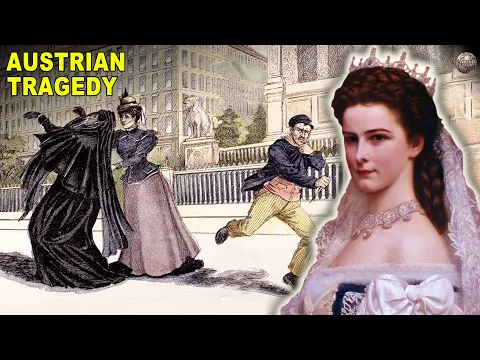
Violently and unexpectedly. On September 10, 1898, while traveling in Geneva, Switzerland, Sisi was attacked by Italian anarchist Luigi Lucheni.
Rather than using a knife with a broad blade, Lucheni sharpened a metal file into a narrow weapon. The wound looked so small that Sisi initially believed she had merely been struck.
She even boarded a steamship before collapsing.
The weapon had pierced her heart.
She died shortly afterward at age sixty.
Ironically, after spending decades trying to defeat aging, her life ended not from illness, but from political violence.


How Did Sisi Become Empress So Unexpectedly?
One of the greatest twists in European royal history is that Elisabeth was never supposed to become Empress.
In 1853, Emperor Franz Joseph I of Austria traveled to meet his intended bride, Princess Helene of Bavaria, Sisi's older sister. Instead, he fell in love with the shy 15-year-old Elisabeth almost immediately and announced that he would marry her instead.
The sudden engagement transformed an adventurous teenager into one of Europe's most scrutinized women overnight. Unlike girls raised specifically for royal life, Elisabeth had enjoyed a relatively relaxed childhood filled with horseback riding, hiking, poetry, and travel. The transition into Vienna's rigid imperial court became emotionally overwhelming and shaped much of her later behavior.
Why Did Sisi Spend So Little Time in Vienna?
She believed the imperial court was emotionally suffocating.
The Habsburg Court operated under one of Europe's strictest systems of etiquette. Every meal, conversation, appearance, and ceremony followed detailed rules that left little room for personal freedom.
Sisi escaped whenever possible.
She spent long periods in the following:
Hungary
Greece
Madeira
Corfu
England
Ireland
She often remained away from Vienna for months at a time, earning a reputation as one of the most widely traveled monarchs of the nineteenth century.
Why Was Hungary So Important to Sisi?
Hungary became her second home.
Unlike many members of the Austrian court, Elisabeth genuinely admired Hungarian culture, learned the Hungarian language, and formed close friendships with Hungarian nobles.
Her influence helped improve relations between Austria and Hungary during a politically sensitive period. Many historians believe her support contributed to the atmosphere that eventually produced the Austro-Hungarian Compromise of 1867, creating the Dual Monarchy.
As a result, Hungarians often viewed Sisi far more warmly than many Viennese courtiers did.
Was Sisi Interested in Education and Languages?
Yes. She was remarkably well educated for her time. Although famous for her beauty, Elisabeth devoted enormous effort to intellectual pursuits.
She studied:
Hungarian
English
Modern Greek
Classical Greek
French
She also enjoyed reading philosophy and classical literature and wrote hundreds of personal poems inspired by the works of Heinrich Heine, whom she deeply admired.
Her private writings reveal a thoughtful, often melancholic personality very different from the glamorous public image.
Why Did She Stop Allowing Portraits?
Because she feared aging more than losing public visibility. After turning about thirty, Sisi became increasingly reluctant to sit for artists or photographers.
Most famous portraits showing her youthful beauty were repeatedly reproduced for decades, helping create the illusion that she never aged.
When appearing in public, she frequently carried the following:
Fans
Lace veils
Parasols
These accessories helped obscure her face from photographers and curious crowds. Ironically, this mystery only increased her celebrity status.
Did Sisi Have Tattoos?
Surprisingly, yes. During a visit to Greece in 1888, Elisabeth reportedly had a small anchor tattoo placed on her shoulder.
For European royalty of that era, tattoos were highly unusual, making this another example of her independent personality.
The anchor symbol reflected her lifelong fascination with the sea and her love of travel.
Why Is the Palace on Corfu Called the Achilleion?
Because Sisi admired the legendary Greek hero Achilles.
She commissioned the magnificent Achilleion as a personal retreat dedicated to Greek mythology.
The palace contains statues of Achilles throughout its gardens and interiors, reflecting Elisabeth's fascination with strength, heroism, and classical ideals.
It became one of her favorite escapes from the formal atmosphere of Vienna.


Were These Beauty Rituals Common Among European Royalty?
No. They were exceptional even by aristocratic standards. Victorian elites certainly valued pale skin, slim figures, and elaborate grooming, but Sisi's routines stood apart because of their intensity.
Other royals wore corsets.
Few pursued a 19-inch waist with such determination.
Other aristocrats cared for long hair.
Very few demanded every fallen strand be counted.
Many noblewomen experimented with skincare.
Almost none became famous for sleeping with raw veal strapped to their faces.
Her habits fascinated contemporaries just as much as they fascinate historians today.
Why This Matters Today
Empress Sisi's story feels surprisingly modern because the technology has changed, but the pressure has not.
Today's wellness industry promotes wearable health trackers, longevity supplements, anti-aging injections, personalized nutrition plans, red-light therapy, and endless skincare routines. Social media rewards flawless appearances in much the same way 19th-century Europe celebrated royal beauty.
Sisi lived in a world without smartphones, yet she experienced something remarkably similar to modern image culture. Every portrait, public appearance, and newspaper description reinforced the expectation that she remain eternally youthful. She responded by treating her body like a lifelong experiment, measuring, restricting, exercising, and testing beauty treatments with unwavering discipline.
History also reminds us that perfection rarely brings peace. Despite possessing extraordinary beauty admired across Europe, Sisi struggled with anxiety, grief, isolation, and relentless self-criticism. Her routines became increasingly demanding, while the satisfaction they promised remained out of reach.
The next time an influencer claims to have discovered the secret to reversing aging, remember the Empress who wrapped raw veal around her face, drank steak juice, trained like an athlete, and inspected every fallen strand of hair. Extreme bio-hacking is not a modern invention. It has simply traded palace servants and leather masks for laboratories, luxury clinics, and viral videos.
FAQ's
Q: Was Empress Sisi considered the most beautiful woman in Europe?
Many contemporaries described her as one of Europe's greatest beauties. Her exceptionally long hair, athletic figure, and elegant riding skills became legendary, although beauty standards naturally varied across countries and eras.
Q: Was Sisi's 19-inch waist natural?
Not entirely. Historical evidence suggests she combined naturally slim proportions with tightly laced corsets, strict dieting, and intensive daily exercise to maintain her famous measurements.
Q: Did doctors approve of her extreme diets?
Medical advice during the nineteenth century differed greatly from modern nutrition science. While royal physicians often supervised her meals, many of her restrictive eating habits would today be considered unhealthy.
Q: Why is Empress Sisi still so famous?
Her life combined extraordinary beauty, personal tragedy, political influence, unconventional behavior, and a dramatic assassination. These elements have inspired countless books, films, documentaries, and historical studies.
Q: Can the raw veal face mask actually improve skin?
Modern dermatology offers no reliable evidence that sleeping with raw meat on the skin provides anti-aging benefits. It would also pose hygiene and food safety concerns.
Q: Where can visitors learn more about Empress Sisi today?
Many of her personal belongings, portraits, dresses, and historical artifacts are displayed at the Sisi Museum inside the Hofburg Palace. Visitors can also explore the Schönbrunn Palace and the Achilleion, all of which preserve important parts of her story.
Q: What happened to Sisi's famous hair after her death?
There is no evidence that her hair was preserved as a single complete artifact. Contemporary descriptions, portraits, photographs, and hair accessories remain the primary records of one of history's most famous hairstyles.
Subscribe To Our Newsletter
All © Copyright reserved by Accessible-Learning Hub
| Terms & Conditions
Knowledge is power. Learn with Us. 📚

