

Emperor’s Birthday in Japan: History, Meaning, Traditions & Facts
Discover the full meaning of Japan’s Emperor’s Birthday, its history, traditions, celebration at the Imperial Palace, why the date changes, and unique facts most people don’t know.
EVENT/SPECIALJAPAN HISTORYCELEBRATION/FESTIVALS
Kim Shin
2/12/20267 min read
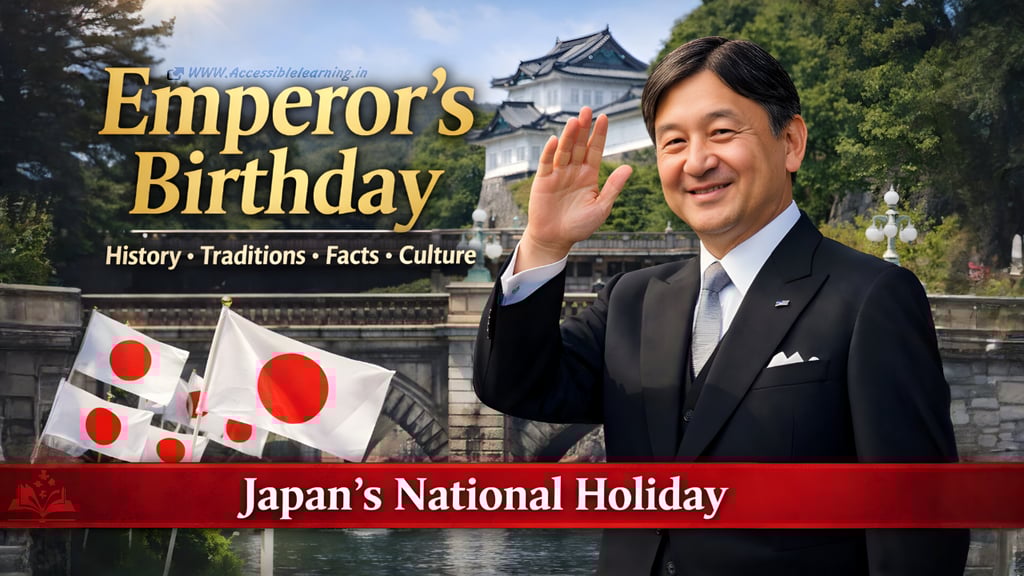
If you visit Japan at the right time of year, you’ll notice something special: flags outside homes, quiet ceremonies at a grand palace, and a subtle but powerful national mood. This isn’t a military parade or loud political festival. It’s a deeply cultural day, tied to identity, continuity, and respect.
That day is the Emperor’s Birthday.
It is one of Japan’s most unique national holidays because it isn’t simply about a person’s age or personal celebration. It’s a symbolic national event, tied to the role of the Emperor as a cultural figure, a historic institution, and a living connection to Japan’s long timeline.
In this article, we’ll explore what Emperor’s Birthday is, when it happens, why it matters, how it is celebrated, and interesting lesser-known facts that make it one of Japan’s most meaningful holidays.
What Is the Emperor’s Birthday?
Emperor’s Birthday (in Japanese: 天皇誕生日, Tennō Tanjōbi) is a national holiday in Japan that celebrates the birthday of the reigning Emperor.
Unlike many countries where birthdays of national leaders don’t become public holidays, Japan recognizes the Emperor’s birthday as a state holiday. But the focus is not on political leadership. Instead, the holiday reflects:
respect for the position of Emperor
the continuity of the Japanese state
national unity and shared heritage
It’s also one of the few days when parts of the Imperial Palace in Tokyo open to the public.
When Is the Emperor’s Birthday Celebrated?
The date of the Emperor’s Birthday changes when a new Emperor ascends the throne, because the holiday always matches the current Emperor’s birthday.
Current Emperor’s Birthday (Today)
Japan currently celebrates the Emperor’s Birthday on:
✅ February 23: birthday of Emperor Naruhito (current Emperor)
This date became official after Emperor Naruhito’s accession and the start of the Reiwa era.
Earlier Dates (Past Emperors)
Because it depends on who is reigning, the holiday date has moved across history:
December 23: Emperor Akihito (Heisei era)
April 29: Emperor Hirohito (Shōwa era), later transformed into “Shōwa Day”
This shifting date itself is a fascinating reminder: the holiday tracks the living continuity of the throne.
Why Does Japan Celebrate the Emperor’s Birthday?
To understand the Emperor’s Birthday properly, it helps to know what the Emperor represents in Japan.
The Emperor’s Modern Role
In modern Japan, the Emperor is officially defined as:
“the symbol of the State and of the unity of the people”
This is not just a cultural phrase. It’s written into Japan’s post-war constitution.
So the Emperor’s Birthday is not about government policy. It’s not a political holiday. It’s more like:
a national cultural observance
a public expression of respect
a moment of national reflection
A Deep Connection to Japanese History
Japan’s imperial institution is among the oldest continuous hereditary monarchies in the world. Even though the political system has dramatically changed across centuries, the symbolic importance has remained.
That’s why the Emperor’s Birthday feels “quiet but serious.” It is less about celebration and more about continuity.
How Is the Emperor’s Birthday Celebrated in Japan?
The Emperor’s Birthday is observed nationwide, but celebrations are modest and respectful. It’s a public holiday, so offices, banks, and many institutions close, though tourist and shopping areas remain active.
The Imperial Palace Greeting (Most Famous Tradition)
The most iconic event is the Emperor’s public greeting at:
📍 Tokyo Imperial Palace (Kōkyo)
On this day:
the public is allowed inside restricted palace grounds
visitors gather near the palace plaza
the Emperor appears on a balcony behind protective glass
the Emperor delivers short remarks
the crowd waves Japanese flags (often small handheld flags)
This is one of the only times ordinary citizens can see the Emperor in person.
Flag Display and National Sentiment
Across Japan, many people mark the day by:
displaying the Japanese flag (Hinomaru)
watching the palace ceremony coverage
visiting shrines or cultural landmarks
spending time with family in a calm, reflective mood
Special Broadcasts and News Coverage
Japanese media often covers:
the Emperor’s speech
the crowd at the palace
highlights of imperial public service and cultural work
It’s a reminder of the Emperor’s role in cultural diplomacy, social connection, and national unity.


Emperor’s Birthday Meaning: Cultural Symbolism
If you’re researching “What is the meaning of Emperor’s Birthday?” here’s the core:
It represents continuity, not power.
Historically, emperors were divine sovereigns in the older worldview. In modern Japan, that has been replaced with constitutional symbolism. Yet the emotional thread continues.
The Emperor is treated as a cultural anchor—someone who represents Japan’s history as a living civilization, not merely a modern state.
It’s one of Japan’s most “identity-based” holidays.
Unlike holidays such as “Sports Day” or “Respect for the Aged Day,” Emperor’s Birthday touches something deeper:
historical memory
national continuity
unity beyond politics
Interesting and Lesser-Known Facts About Emperor’s Birthday
Let’s make this truly in-depth with some surprising insights most people don’t know.
It’s not a “fixed holiday” like Christmas or New Year
This is unusual worldwide. In most countries, public holidays do not change simply because leadership changes. But in Japan, the holiday date shifts with the Emperor.
This means:
calendars get officially updated
yearly holiday scheduling changes
the national rhythm adjusts to new era transitions
It used to be called “Tenchōsetsu.”
Historically, Emperor’s Birthday was known as:
天長節 (Tenchōsetsu): meaning “Long Life Festival”
This older name reflects how the holiday originally emphasized wishing the Emperor a long life, linked to traditional court culture.
Emperor’s Birthday influences tourism patterns
Because it’s a public holiday and occurs in late February, it contributes to:
seasonal domestic travel
Tokyo tourist footfall near palace areas
winter holiday tourism planning
Many international tourists accidentally discover it and are surprised by the palace opening.
A rare “public access” moment
The Imperial Palace is not like Buckingham Palace, where crowds gather frequently at gates. Tokyo’s palace grounds are highly controlled.
So the birthday greeting is not only symbolic but also a rare moment of openness.
It reflects how Japan modernized without breaking its continuity
One of Japan’s most remarkable national transformations is how it shifted from imperial rule to constitutional democracy while retaining the emperor as a symbol. Emperor’s Birthday quietly expresses that balance:
tradition preserved
politics modernized
continuity maintained
Emperor’s Birthday and the Reiwa Era
Emperor Naruhito’s reign began the Reiwa era. For many Japanese citizens, Reiwa symbolizes:
stability after changes
generational transition
modern Japan’s future while honoring the past
Therefore, Emperor’s Birthday in the Reiwa era is also indirectly connected to:
national renewal
cultural optimism
a modern expression of tradition
Even for people not personally attached to the monarchy, the day is socially recognized as part of the national fabric.
Is the Emperor’s Birthday Like a National Day?
Not exactly. A national day typically celebrates:
independence
a revolution
the founding of the state
Japan’s Emperor’s Birthday is different. It celebrates:
a living symbol
the continuity of the state through the imperial institution
In spirit, it can feel like a national day, but it remains distinct.

Is the Emperor’s Birthday a Religious Holiday?
No, it is officially a national holiday, not a religious one. However, Japan’s historical connection between imperial tradition and Shinto culture means the holiday carries cultural spiritual undertones for some people. Many may visit shrines or engage in quiet reflection.
Yet legally and officially:
✅ it’s civic
✅ not religious
✅ not political campaigning
How Foreigners and Tourists Experience Emperor’s Birthday
For visitors, Emperor’s Birthday is a rare chance to witness Japanese culture in a pure form. It’s not created for tourists, which makes it authentic.
What tourists can do:
visit palace-area events (if open that year)
see cultural exhibits
observe the respectful crowd behavior
enjoy the holiday season. Tokyo without heavy business rush
It’s also a good day to understand Japan beyond pop culture.
Why Emperor’s Birthday Still Matters Today
In an era of fast-changing politics, technology, and global culture, many countries struggle to keep a stable cultural identity.
Japan’s Emperor’s Birthday plays a subtle role in national stability because it reminds people of:
shared identity
continuity across generations
respect as a cultural value
unity without conflict
It’s “quiet power” in holiday form.
Emperor’s Birthday is not a loud festival or a grand parade. It’s a uniquely Japanese holiday where history and modern life meet in a calm, dignified way.
It’s a reminder that Japan’s identity is not only built on modern innovation but also on traditions that continue without interruption. Whether you view it as a cultural ceremony, a historic institution, or a national symbol, the Emperor’s Birthday remains one of Japan’s most distinctive and meaningful holidays.
FAQ's
Q: What is the Emperor’s Birthday in Japan?
Emperor’s Birthday is a national public holiday in Japan celebrated on the birthday of the reigning Emperor. It honors the Emperor as a symbol of the state and unity of the people, not as a political leader.
Q: When is the Emperor’s Birthday celebrated?
It is celebrated on February 23, which is the birthday of Emperor Naruhito, the current Emperor of Japan.
Q: Does the date of the Emperor’s Birthday ever change?
Yes. The date changes when a new Emperor ascends the throne, because the holiday always matches the current emperor’s birth date.
Q: Is the Emperor’s Birthday a public holiday in Japan?
Yes, it is an official national holiday, meaning schools, government offices, and many workplaces are closed (though shops and tourist places often remain open).
Q: How do Japanese people celebrate the Emperor’s Birthday?
Most celebrations are respectful and calm. People may:
watch the Emperor’s address on TV
visit the Imperial Palace area (if public greeting is held)
display Japanese flags
spend time quietly with family
Q: Can the public visit the Imperial Palace on the Emperor’s Birthday?
Yes, this is one of the few special days when parts of the Tokyo Imperial Palace are open to the public for the Emperor’s greeting (availability may depend on official arrangements each year).
Q: What does the Emperor do on the Emperor’s Birthday?
Typically, the Emperor:
appears at the palace balcony
greets the public
delivers a short message expressing gratitude and hopes for the people and nation
Q: Is the Emperor’s Birthday celebrated outside Japan?
Officially, it’s a Japanese holiday. However, some Japanese embassies and cultural organizations abroad may hold small receptions or cultural events to mark the occasion.
Q: Is the Emperor’s Birthday a religious festival?
No. It is officially a state holiday, not a religious one. But it may feel culturally spiritual for some people due to Japan’s historical traditions around the imperial institution.
Q: What was the Emperor’s Birthday called in the past?
Historically, it was called Tenchōsetsu (天長節), meaning something like a “festival of long life,” reflecting older imperial-era traditions.
Q: What was the Emperor’s Birthday before February 23?
Before Emperor Naruhito, Japan celebrated:
December 23 as Emperor’s Birthday (Emperor Akihito’s birthday)
Earlier in history, it was:
April 29 (Emperor Hirohito), which later became Shōwa Day
Q: Why is the Emperor’s Birthday important to Japan?
Because it represents:
cultural identity
national unity
continuity of Japan’s history
respect for tradition in a modern democratic society
Subscribe To Our Newsletter
All © Copyright reserved by Accessible-Learning Hub
| Terms & Conditions
Knowledge is power. Learn with Us. 📚

